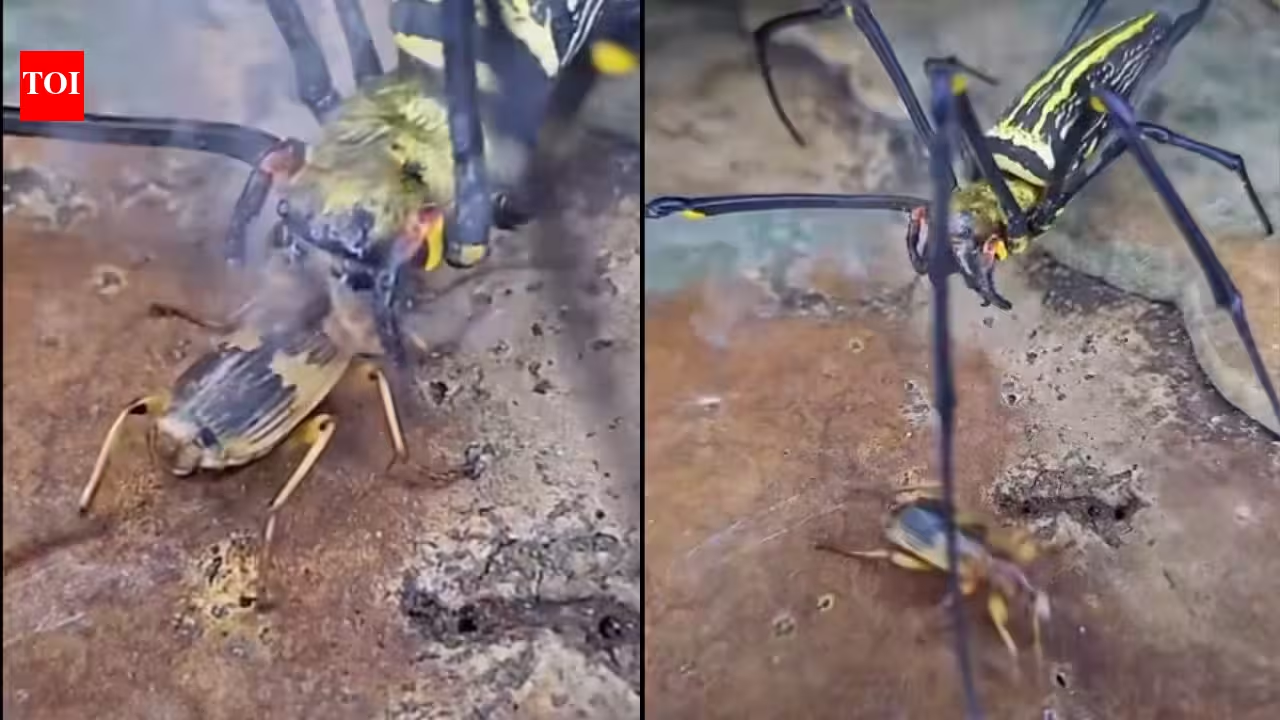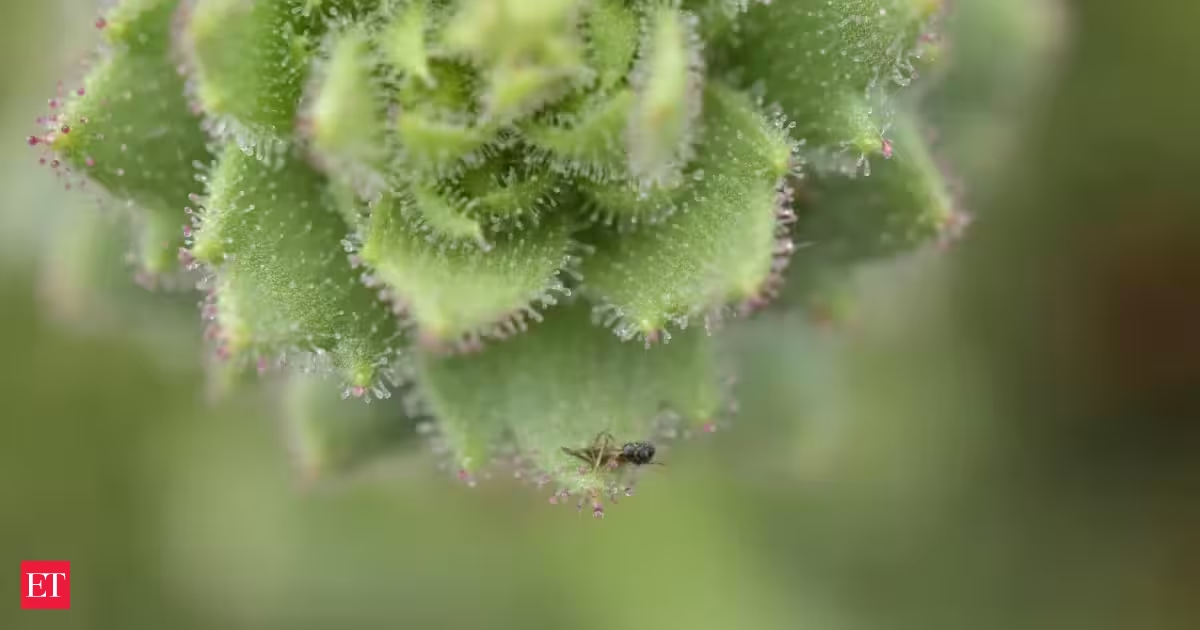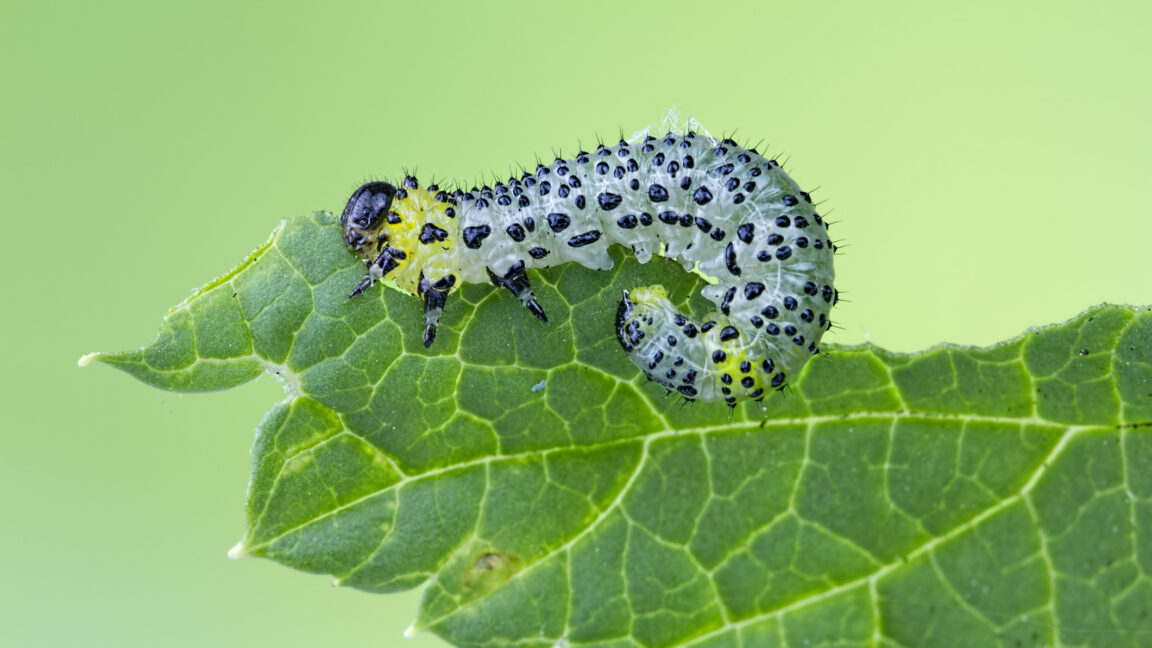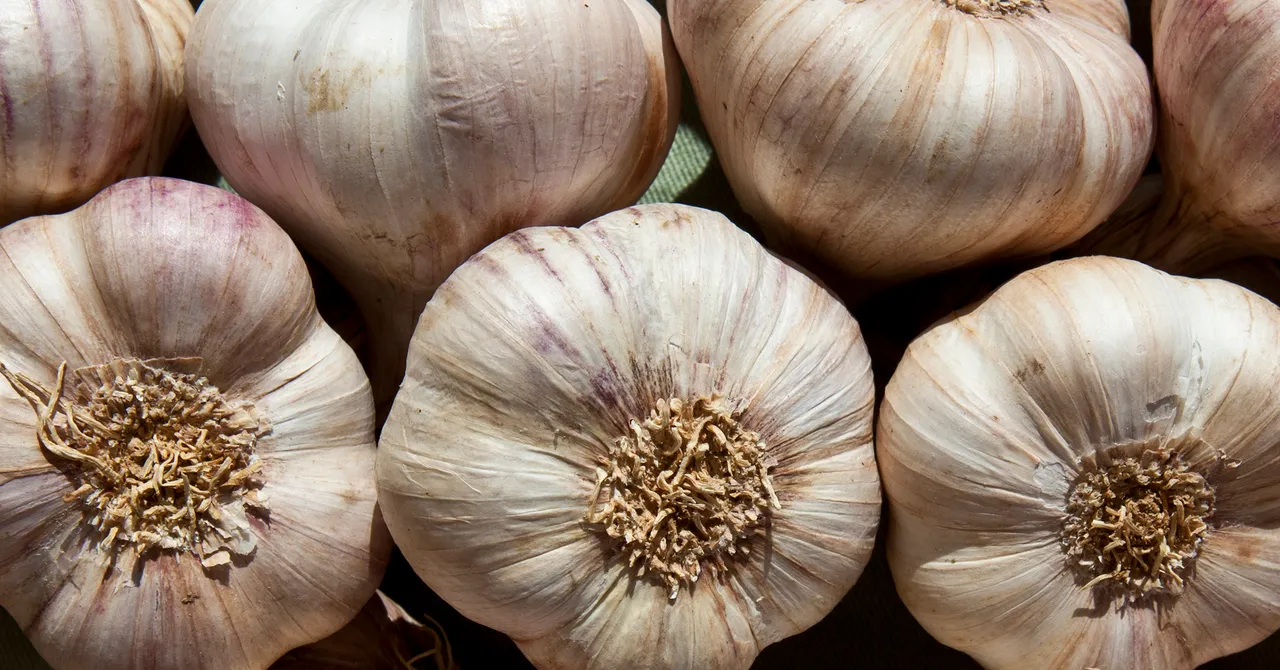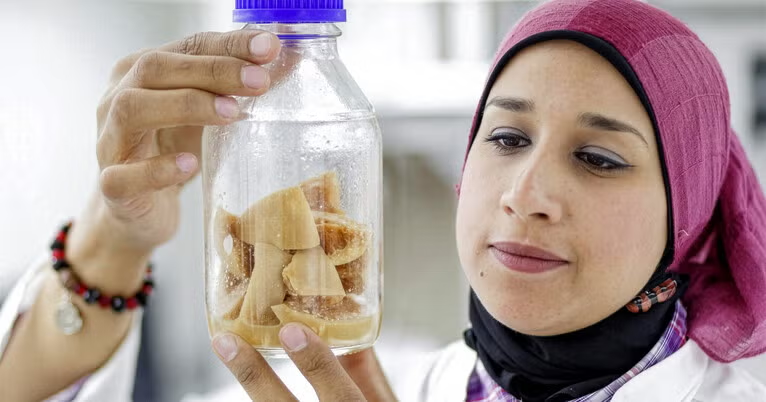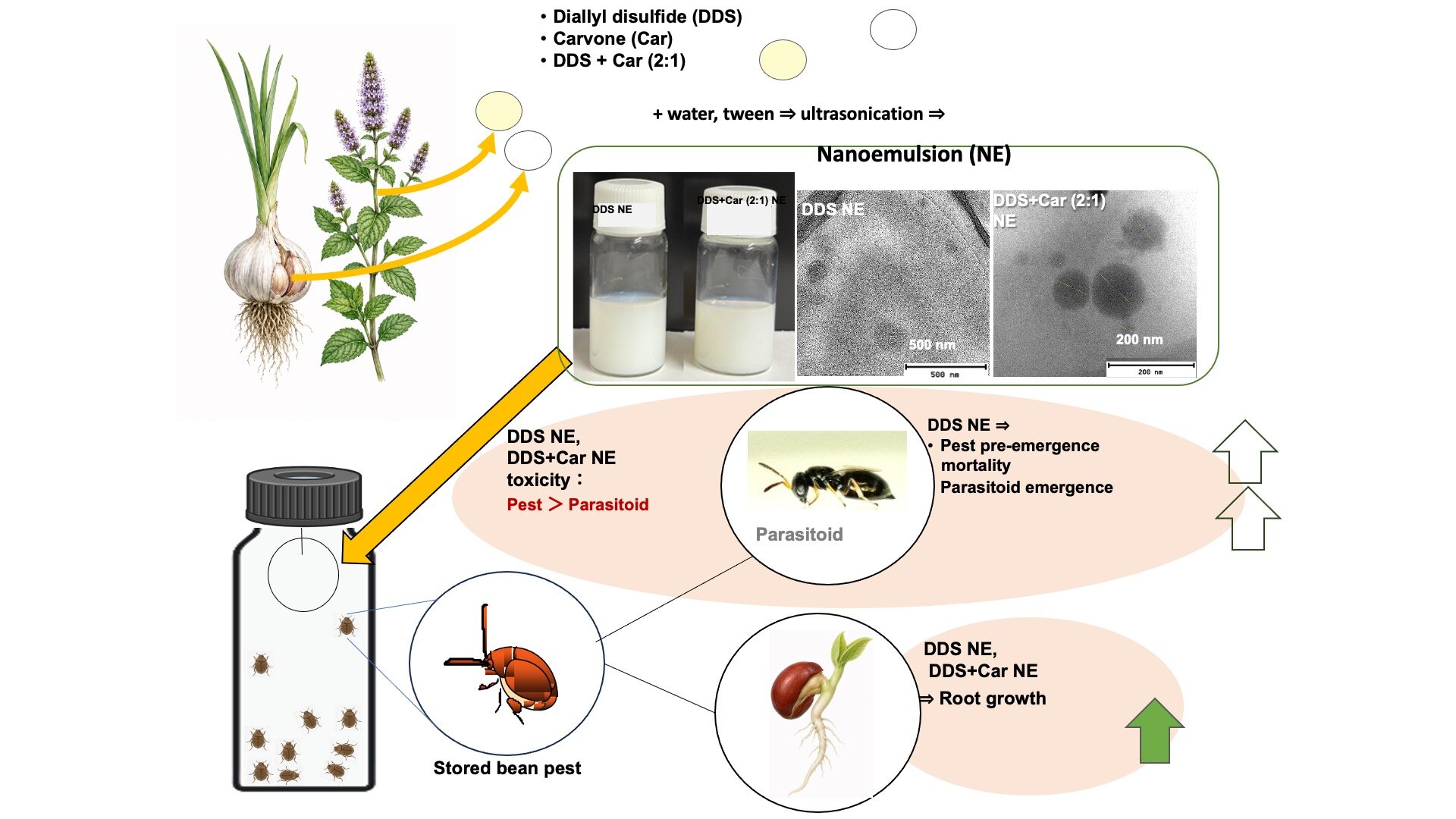
Diallyl disulfide (DDS) is an organosulfur compound derived from garlic and (R)-carvone (Car) is a monoterpenoid derived from spearmint. These compounds were processed into oil-in-water nanoemulsions via ultrasonication. The nanoemulsions exhibited high toxicity and improved insecticidal efficacy against the adzuki bean beetle. Additionally, the nanoemulsions of both only DDS and its mixture with Car exhibited relatively low toxicity against the Anisopteromalus calandrae, a parasitic wasp that is the natural enemy of adzuki bean beetle. Credit: Midori Tuda/Kyushu University
In an effort to develop more environmentally friendly alternatives to synthetic insecticides, researchers from Kyushu University have developed and tested a new insecticide made from compounds derived from garlic and spearmint.
In their paper published in Ecotoxicology and Environmental Safety, the research team processed diallyl disulfide, an organosulfur compound derived from garlic, and R-carvone, a monoterpenoid from spearmint, into an oil-in-water emulsion of nanometer-sized droplets. These nanoemulsions were then tested on a known legume pest called the adzuki bean beetle. They found that the insecticidal efficacy of the individual compounds was enhanced and that mixing the two compounds increased their toxicity toward the pest.