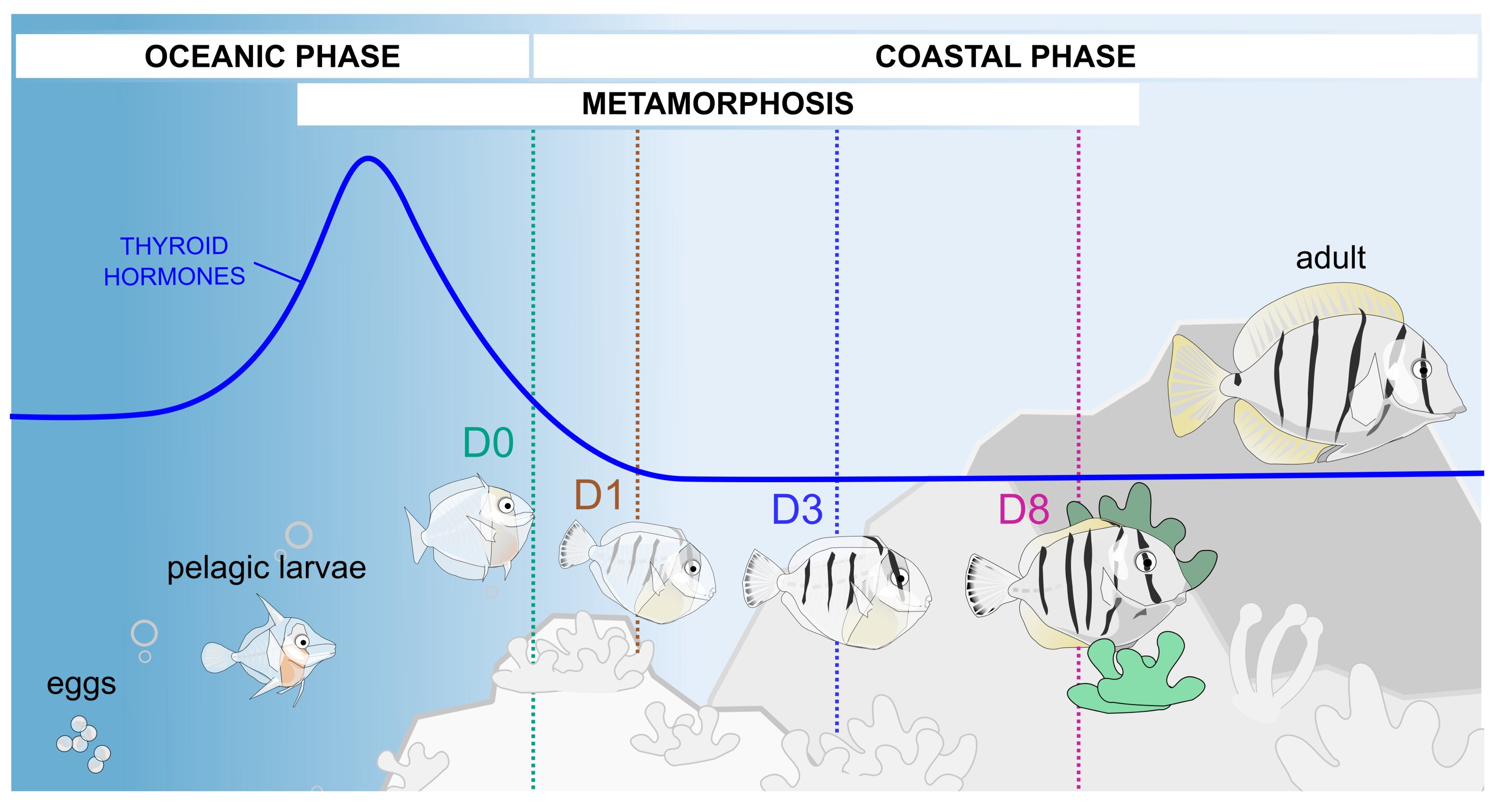
The infographic shows the typical growth of convict surgeonfish as they transition from open ocean (pelagic) life to life at the reef, growing in size and changing in patterning and pigmentation. D0 represent the very start of their coastal phase, with D1–D8 representing the number of days following this coastal settlement. Thyroid hormones peak at the end of their oceanic phase, in preparation for this transition. Credit: Herrera et al., Science Advances, 2026 DOI: 10.1126/sciadv.aec5359
In the animal kingdom, only those that adapt to their environment survive. This adaptation takes a wide range of forms, from invisible internal shifts in gene expression to dramatic anatomical changes, such as tadpoles growing legs and transitioning to life on land as frogs.
Environmental pressures are known to drive many major animal developmental transitions. Yet the mechanisms behind this physical and environmental relationship remain somewhat of a mystery.
Published in Science Advances, a new multiyear study led by researchers at the International Research Laboratory 2028 (IRL EARLY), a joint laboratory between the Okinawa Institute of Science and Technology (OIST) and CNRS, together with Dr. David Lecchini, an ecologist at CRIOBE in Moorea, sheds light on the mechanistic link between environmental variation and developmental adaptability.