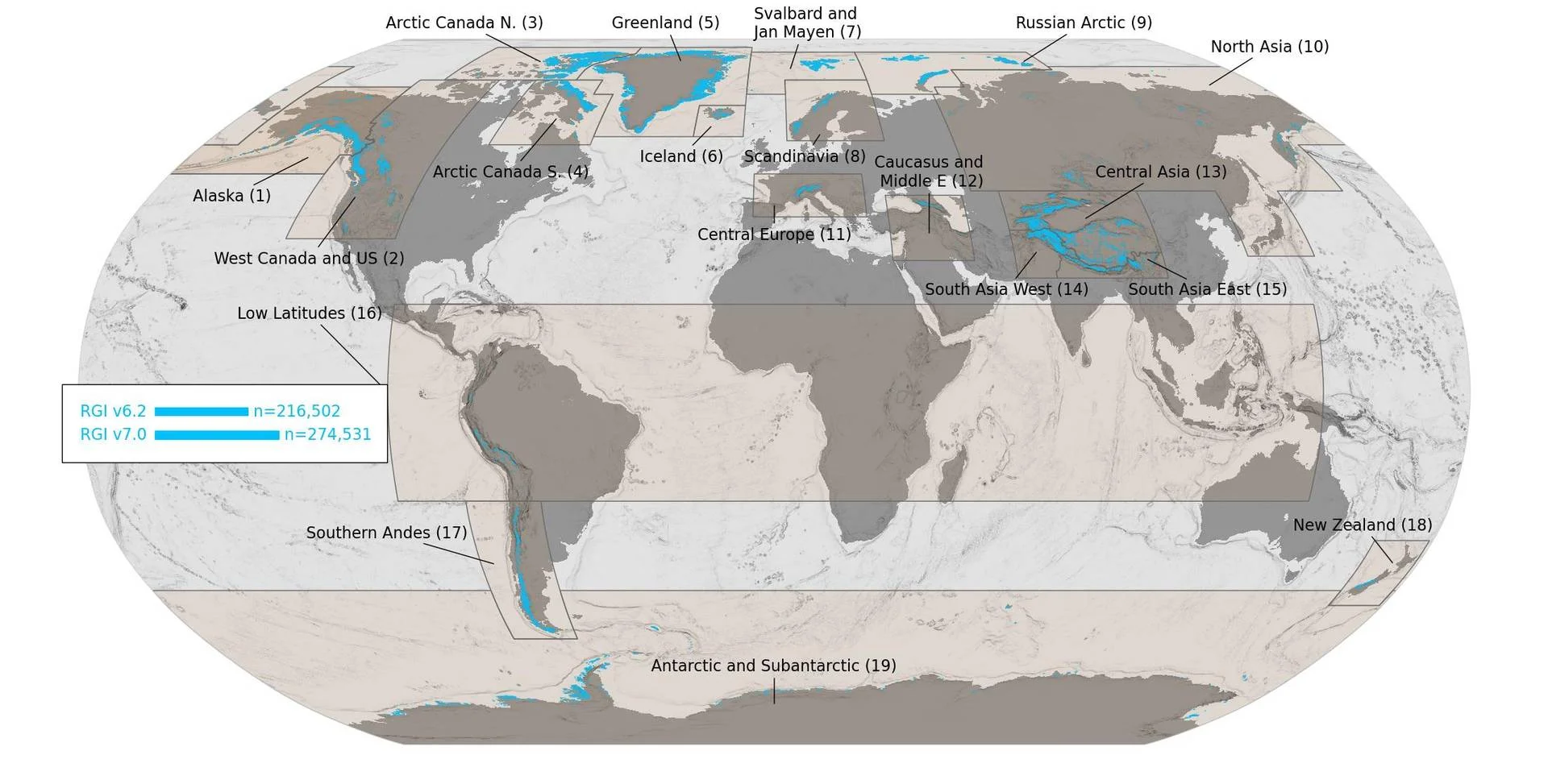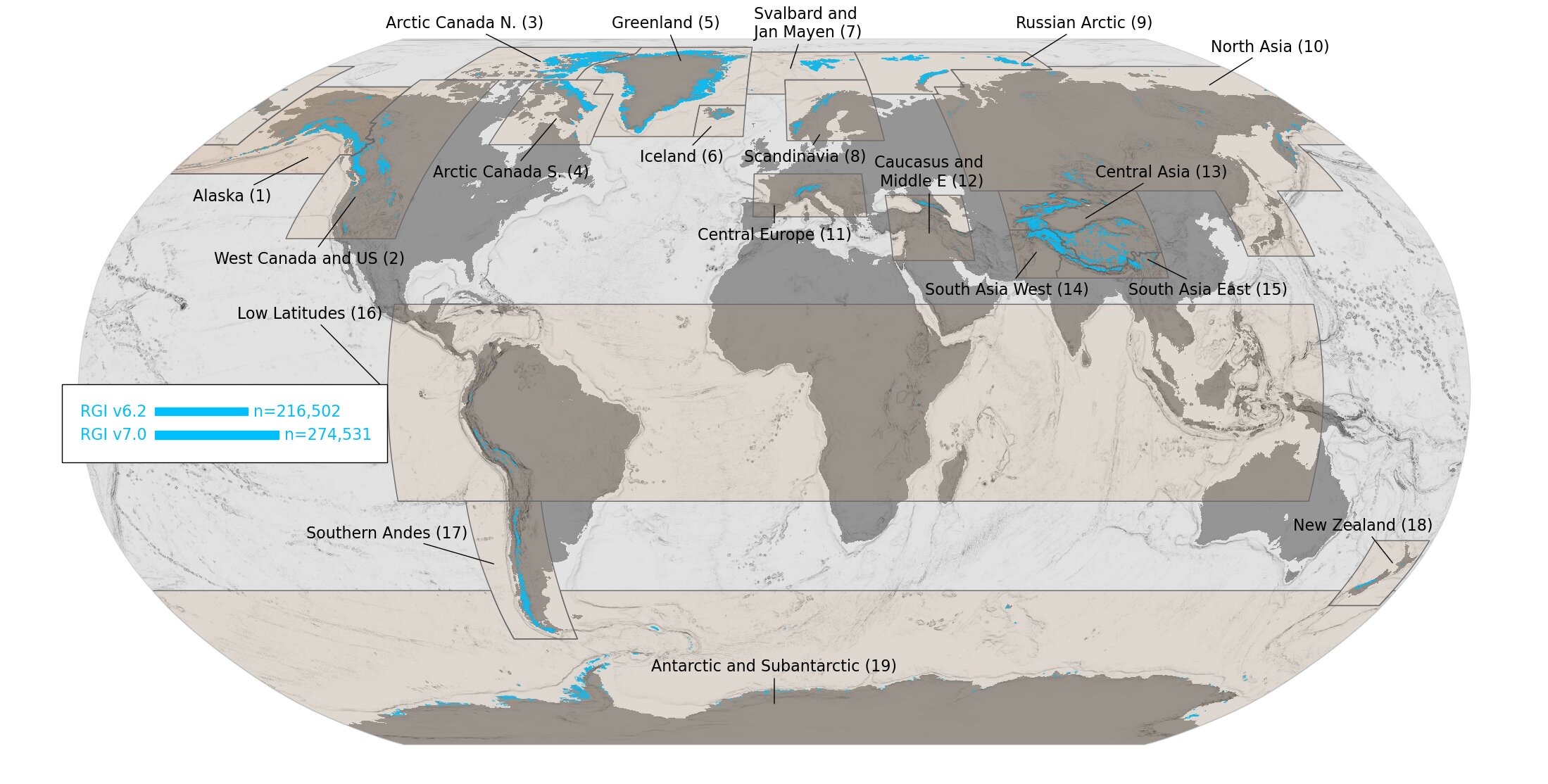
The World’s glaciers, divided into the 19 regions of the Randolph Glacier Inventory. The box indicates the total number of glaciers in the latest two versions, RGI v6 and RGI v7. Credit: Ca' Foscari University of Venice
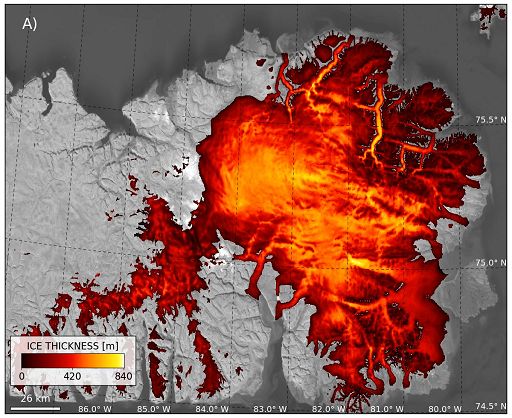
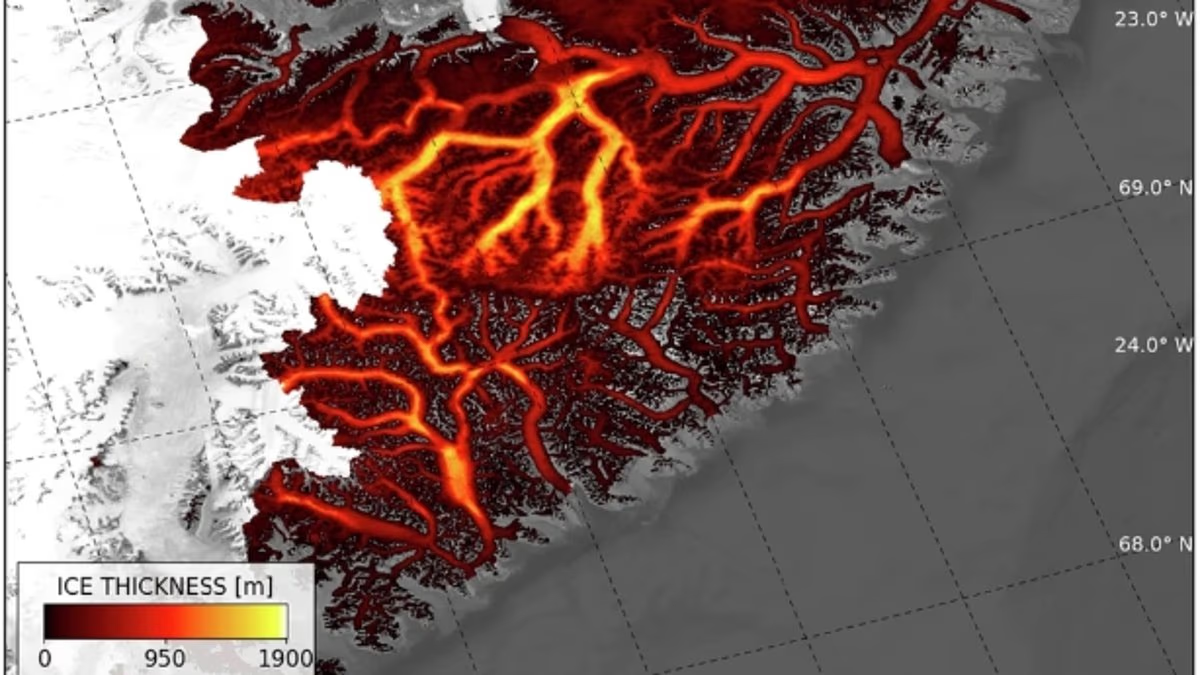
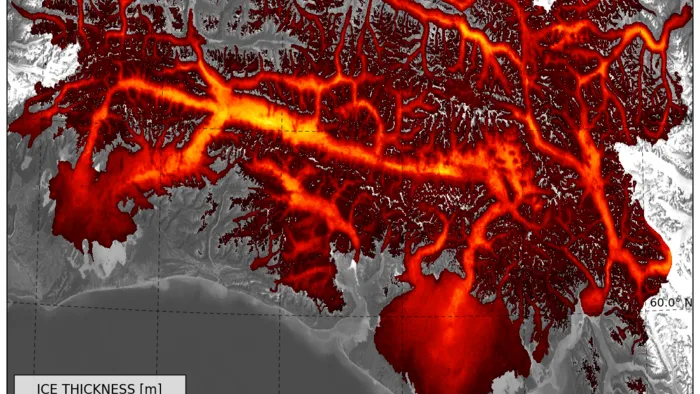
How much ice is stored in the world's glaciers? And where exactly is it located? A new study led by Ca' Foscari University of Venice, in collaboration with the Institute of Polar Sciences of the National Research Council of Italy (CNR-ISP), provides an updated global map of glacier ice volume.
Published in Scientific Data, the study introduces IceBoost v2.0, a machine-learning model developed by Niccolò Maffezzoli, physicist and researcher at Ca' Foscari University of Venice and affiliated with CNR-ISP. IceBoost v2.0 was trained on more than 7 million ice-thickness measurements collected from glaciers across the globe.
The model combines these observations with 26 physical and geometrical variables (including topographic slope and curvature, ice velocity, and temperature) to reconstruct, on a point-by-point basis, the ice thickness and thus the volume of every glacier included in the Randolph Glacier Inventory (RGI), the world's most up-to-date global glacier inventory, excluding the polar ice sheets.