So you've finally gotten your LangGraph + MCP agent working on your local machine - it's responding to queries, adapting to new information, and generally behaving itself. But as soon as you try to deploy it to a server, things start to fall apart. The agent crashes after a few hours, or it starts producing bizarre, out-of-context responses. You're left scratching your head, wondering why your carefully crafted agent can't seem to stay up and running in production.
The problem often lies in the way we've structured our agent's lifecycle. When we're running locally, it's easy to just spin up the agent, test it out, and then shut it down when we're done. But in a production environment, our agent needs to be able to recover from failures, adapt to changing circumstances, and handle a constant stream of incoming requests. This requires a more robust approach to deployment, one that takes into account the realities of distributed systems and the unpredictability of the real world.
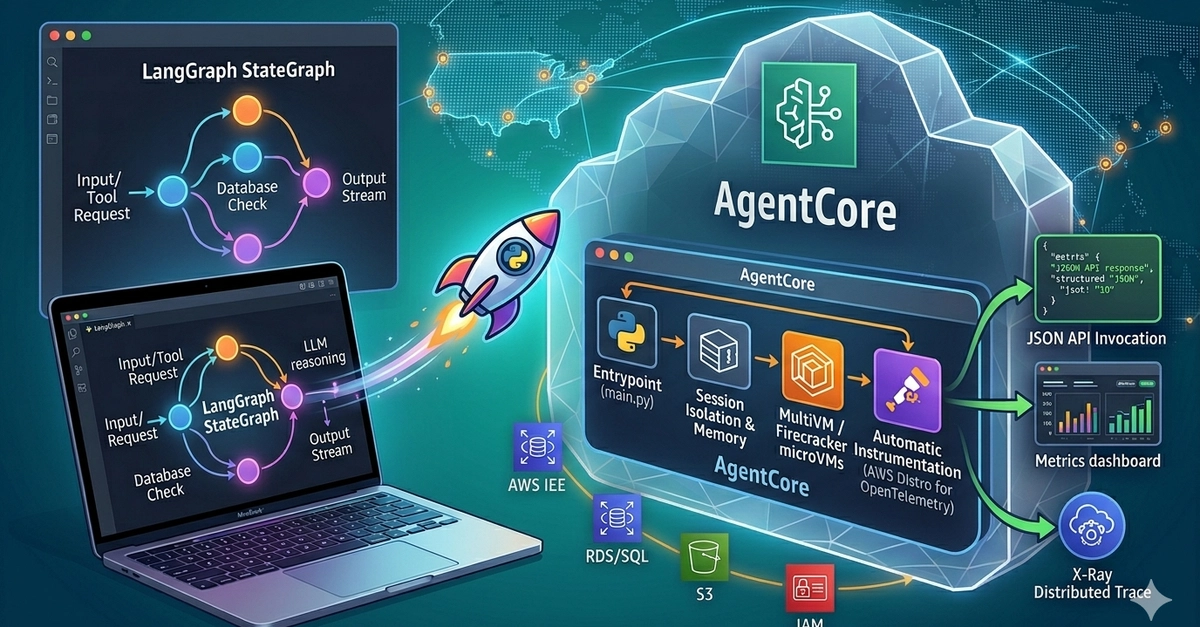
One key concept here is the idea of a "service" - a long-running process that provides some kind of functionality to the outside world. In our case, we want to deploy our LangGraph + MCP agent as a service that can receive incoming requests, process them, and respond accordingly. To do this, we'll need to use a combination of tools and techniques to ensure our agent stays up and running, even in the face of unexpected failures or changes.