Story audio is generated using AI
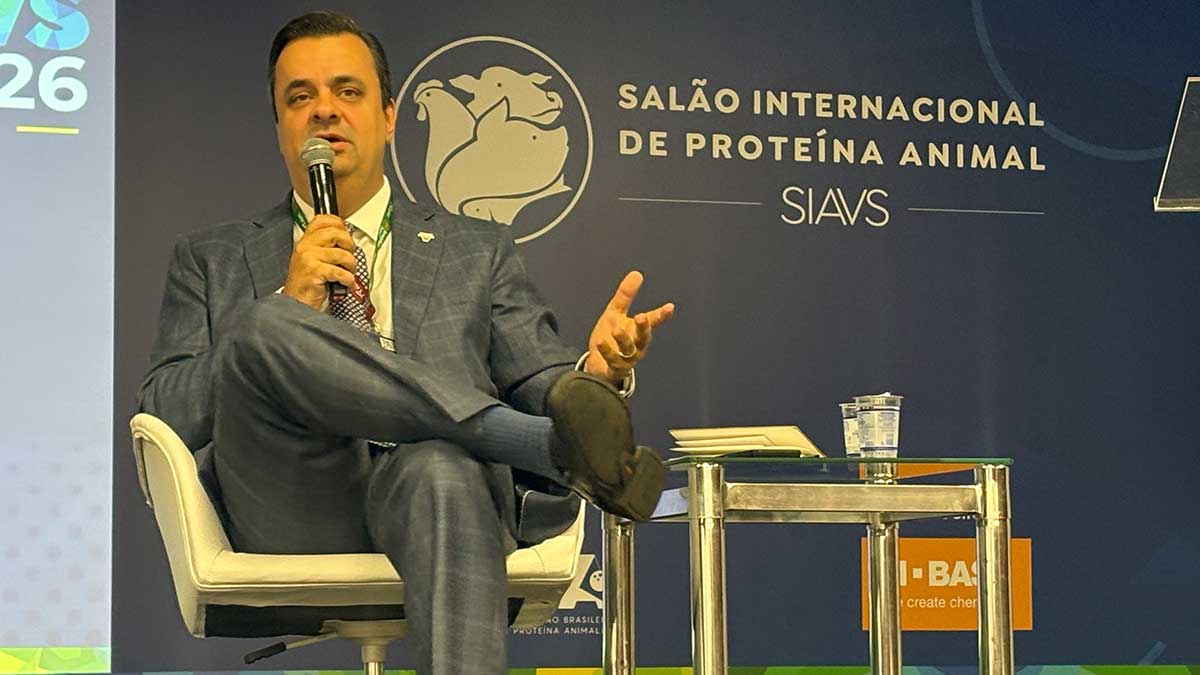
Brazilian poultry exporters have defended their business dealings with South Africa, saying they have played a supplementary and complementary role in the local poultry market and strongly denying accusations of dumping and exploitation.Ricardo Santin, president of the Brazilian Association of Animal Protein (ABPA), said poultry producers in Brazil welcomed the opportunity to meet the animal protein needs of markets including South Africa and support the response to challenges like avian influenza and shortages of mechanically deboned meat (MDM).“South Africa is a great example of our complementarity with markets that we supply with animal protein products,” Santin said. “We give the market MDM for their sausages and their cold cuts. There is protectionism, not from the government, but from industry.“They say that we harm their businesses, and this is not true. We support meat protein supply in instances where there are supply shocks such as avian flu, and we aim to continue supplying the market as a valued partner.”Santin was speaking at the ABPA’s International Animal Protein Trade Show (SIAVS) in São Paulo, Brazil, this week. Since 2012, South African poultry producers have lodged disputes with Brazilian poultry exporters over dumping and have also faced pressure from avian influenza and MDM supply shortages. Santin said a report by ABPA launched at SIAVS showed that South Africa was the fourth largest destination for Brazilian chicken meat in 2025, taking in 336,022t that year, or 6.5% of total exported volumes, behind only the UAE with 479,944t (9.29%); Japan with 402,901t (7.79%); and Saudi Arabia with 397,225t (7.68%).“Complementary production in Brazil is ready to supplement the food production needs of the world. In Brazil, we want to be part of the solution. We have 140 companies as members, accounting for 15% of our poultry exports and 98% of Brazil’s pork exports.”Estevao Carvalho, ABPA’s executive manager of markets, said the trade relationship that South Africa and Brazil had was overwhelmingly positive and yielded benefits for both countries.“We have special trade relations that are often distorted by narratives that do not accurately reflect reality,” he said. “Much of the poultry in South Africa is MDM because South Africa does not produce MDM, and without this technology South Africa cannot produce products such as cold cuts and pet food.”He said imports into South Africa faced duties of 42% on deboned poultry, 62% on boned chicken, and 82% on whole chicken. “The commercial relationship with South Africa is complementary and is not a threat. We try to demonstrate that through data and facts,” Carvalho said.Also at SIAVS, Paul Matthew, CEO of South Africa’s Association of Meat Importers and Exporters, told Business Times that South Africa not only benefited from the importation of Brazilian poultry but could become a key exporter itself if it paid attention to Brazil’s model as the world’s largest poultry exporter. “This African agricultural side, if you take poultry, can learn so much from Brazil,” he said. “You know, you have a look at how Brazil works, how the farmers are integrated into the whole system, and they feed the world. If South Africa and Africa got their act together, we could also be in that position, but we just focus on this whole protection [issue] and [don’t look] at the bigger picture.”Matthew said the government’s poultry master plan has been in existence for about six years, and the local poultry sector remains no closer to becoming a poultry exporting powerhouse, as outlined in the plan.“The poultry master plan was set up in 2019 … [and] one of the pillars of the poultry master plan was that local poultry had to export. [It is now] 2026, and they have every excuse under the sun not to export.”Georg Southey, GM of Merlog Foods, told Business Times that South Africa’s trade agenda with Brazil should be driven by the imperative of protecting food security, ensuring affordability of a critical protein source and always be based on science-based animal health management.“Imports play a stabilising role in South Africa’s food security by filling specific gaps where domestic production cannot meet demand, particularly in products that cannot be rapidly replaced at scale,” he said.“Imports account for approximately 10% of South Africa’s total meat consumption, but their importance is far greater in particular parts of the market. This is most evident in poultry, where Brazil supplies the overwhelming majority of the mechanically deboned meat used in affordable processed products such as viennas and polony.”Southey said these imports support more than 100-million meals per week and are deeply embedded in the South African food system. He added that foot-and-mouth disease constrains beef and pork production, African swine fever affects the recovery of the pork sector, and a future avian influenza outbreak remains a risk to both local poultry production and international supply.Magubane was invited to the SIAVS 2026 conference by the ABPA