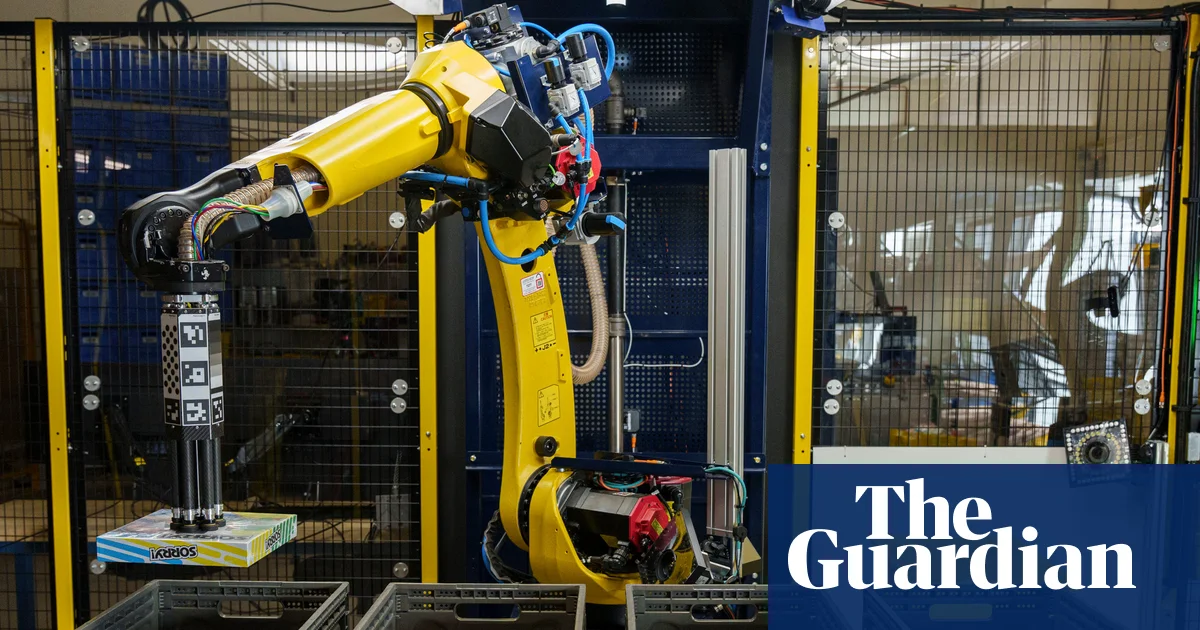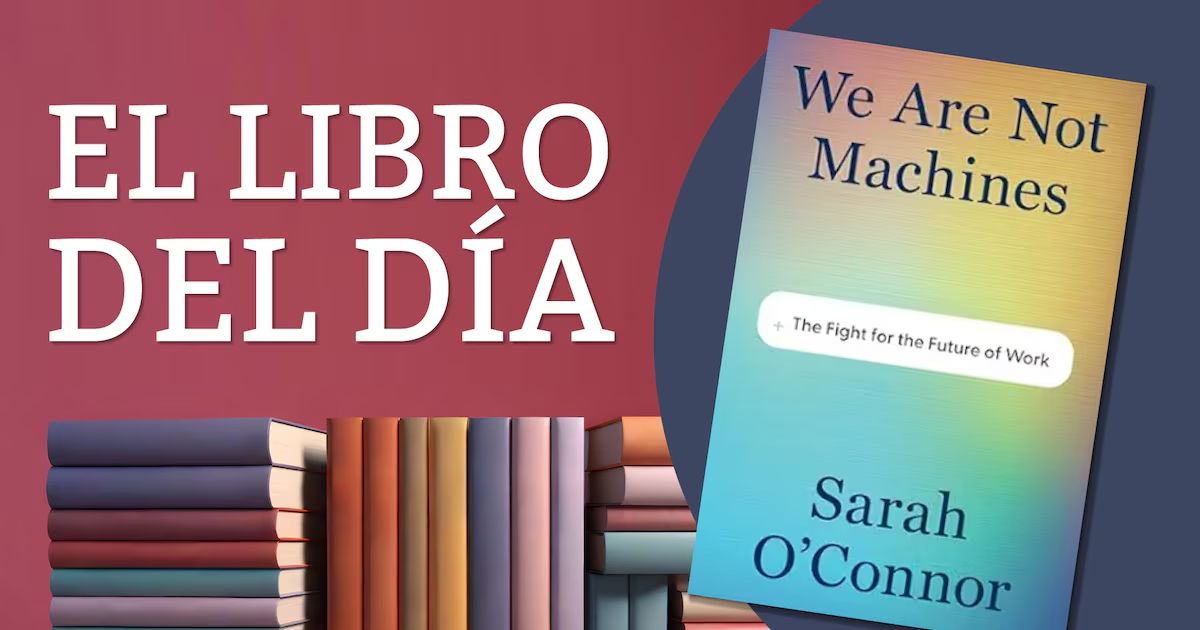
We Are Not Machines: the Fight for the Future of Work Author: Sarah O’Connor ISBN-13: 978-0241704226Publisher: Allen LaneGuideline Price: £20; 237ppUsers: How Big Tech Took Control and How to Fight Back Author: Beeban KidronISBN-13: 978-0753562468Publisher: WH AllenGuideline Price: £22; 399ppThe Nerd Reich: Silicon Valley Fascism and the War on Democracy Author: Gil Durán ISBN-13: 978-1398555921Publisher: Simon & Schuster Guideline Price: £25; 352ppAt the start of a chapter halfway through We Are Not Machines, Sarah O’Connor quotes the 19th-century American essayist-philosopher Henry David Thoreau. “Men have become the tools of their tools,” Thoreau wrote in Walden. That succinct observation is a reminder that tools and tech have long been disrupters. It is a fitting epigraph for three powerful books, each of which, in its own penetrating way, engages with one of the most serious, quite possibly existential, questions of our time: what are technology and the Big Tech companies doing to us, as individuals and as a society? The answers, and they are many, are mostly bleak and often bewildering but, as each author shows, outcomes are not necessarily written in stone (or computer code). As with climate change, these companies and the individuals who lead and fund them pose a perplexing challenge that we cannot continue to disregard or view as some other nation’s problem to resolve. We are all in this together.The subtitles of the books spell out how wide-ranging and complex the search for coherent answers can be. The Fight for the Future of Work (from O’Connor’s We Are Not Machines), How Big Tech Took Control and How to Fight Back (from Beeban Kidron’s Users), and – brace yourself – Silicon Valley Fascism and the War on Democracy (from Gil Durán’s gloriously titled The Nerd Reich) come from different angles but dovetail rewardingly. Each is thoughtful, well researched and a vigorous call to act before our collective humanity is sacrificed to increasing the vast wealth of tech millionaires and billionaires.For those seeking to better understand how technology, especially artificial intelligence (AI) in various forms may affect how we live and work in the future, and how it already is transforming jobs and careers, O’Connor’s We Are Not Machines is sharp-eyed and empathetic. The Financial Times journalist uses solid reporting and the stories of individuals and workplaces to reveal the directions technology is taking us, trying to unpick who ultimately benefits and who does not. Translators and film subtitlers, workers in robot-staffed Amazon warehouses, truck drivers in a just-in-time gig economy, workers in a mine a kilometre beneath a Swedish forest – all face surprising, daunting change. The scale and speed of this digital transformation can astonish. “Robot density” – the number of industrial robots per 10,000 employees – doubled between 2016 and 2023. The arrival of large language models (LLMs), the term for AI assistants such as ChatGPT and Claude that are built on vast amounts of training data and communicate in human-like conversation, “suddenly made white-collar jobs . . . seem ripe for disruption, too: everything from journalism to accountancy, law, advertising, software development, graphic design, finance and marketing”, O’Connor writes. Last year, Dario Amodei, the head of Claude parent company Anthropic, predicted half of all entry-level white-collar jobs might be eliminated. Sam Altman, the head of ChatGPT parent OpenAI, has suggested that AI will get rid of the boring and repetitive aspects of jobs.Sam Altman, CEO of OpenAI. Photograph: Prakash Singh/Bloomberg But just the opposite has happened so far for the majority of those O’Connor speaks to. In automated Amazon warehouses, pickers no longer trek kilometres per work shift to gather items for orders. Instead, they stand and load items into shelving units brought to them by robots, surveilled by a camera system that records which item has been placed where. Shifts can be 12 hours of standing and doing work so dull that the company provides games on the workspace computer for relief.She talks to translators who are finding that employers increasingly use AI translation for the skilled and sensitive work they once did in capturing the essence of a writer or film dialogue for international audiences. O’Connor wonders whether the humans are being turned into robots and doing the most tedious work – the tools of their tools – while AI and robots take a mediocre stab at the work humans actually excel at.Yet there are positive AI integrations. In Sweden, where unions are strong and collective negotiation with employer groups is a norm, employers and workers in a mine have brought in automated below-ground trucks. Drivers’ jobs were lost, but they retrained to operate the vehicles remotely at the same pay. And there are stories of how workers can seize power and negotiate for better AI outcomes, as screenwriters did by striking in Hollywood. O’Connor argues that, like many of her examples, people can be “protagonists” in their story, observing that “the outcome of technological change is not inevitable, but must be navigated and determined by us all”.This is also the main message in Beeban Kidron’s passionately-argued Users, which turns up the rhetorical heat in contrast to O’Connor’s more traditional reporting. Kidron is a documentary and feature film-maker (including the second instalment in the Bridget Jones series) and since 2012, a peer in the UK House of Lords where she sits on the democracy and digital technologies committee. But the book makes clear that her deepest passion is as an activist for children and online safety. Users is a fervent hurricane of a book, a persuasive, driven, no-nonsense blend of crusade, righteous anger, compassion and realpolitik. This is not, counter to what I expected, a fluffy piece of political campaigning levered off an easy-win topic. Who doesn’t want children to be at less risk online? Surprise, Kidron argues: an awful lot of us, because politicians, regulators and other decision makers have dithered over putting in place functional protections that would not only shield children but also adults from the digital world’s most predatory and debilitating aspects.As Kidron argues again and again, we are all heavily affected by how Big Tech operates, its algorithmic and surveilled extraction of data, attention, privacy and advertising product value from us. But “children make the problem visible”. We see the harms – the anxiety, the vulnerability, the exploitation, the targeting, the manipulation – when children are affected, but often fail to see that, like a distorted computer coding if/then statement, if children, then us, too.Kidron packs in data and studies and, most compelling of all, personal experience and conversations with children, artists, workers, parents, teachers, students, ordinary people, lawmakers and celebrities. One of the surprising strengths of Kidron’s book is that, as a prominent film-maker and parliamentarian, she can go talk to people few others could. She name-drops political, corporate and cultural figures. This is a woman who rings Elton John and gets him to back a campaign to disallow tech and AI companies from scraping creator content and ignoring copyright.So many of her analyses resonate. One example: the Big Tech Bro defence of free speech and user freedom is a “convenient mirage”, says Kidron. “Untruth, rage and opinion – all free speech if left untouched – is no longer ‘free’ when orchestrated, monetised and unevenly spread in a system determined by the commercial interests of the few.” Exactly.Though well-paced, at nearly 400 pages the book is long, a challenge for attention spans attenuated by the fast scroll of digital technology. Disappointingly, Kidron also avoids engaging with key arguments that undercut age-related social media bans (France recently brought one in and Ireland is considering one). Yet some of the proposed methods for verifying age place children under other forms of risky online surveillance and data gathering. And, oddly, though she rightly rails against AI companies swallowing whole oeuvres of creative content, she uploads her book chapters to an AI for feedback and critique. Oh no. Perhaps Elton would like a word.Children face many risks online, with limited efforts being made to counteract those risks. Photograph: Peter Byrne/PA Wire But overall, Users is an important, timely and moving book that doesn’t just outline the grievous trouble we and especially children are in, but galvanises readers to act. Kidron closes with a “Fightback” chapter with practical individual and collective next-steps. If Kidron’s Users is unabashedly feisty and opinionated, Durán’s The Nerd Reich is deliciously polemical. There’s zero chance that a reader will be uncertain where Durán, a seasoned journalist, stands as he delves into the astonishing and mostly hidden, until now, connections between enormously wealthy figures – mostly venture capitalists (VCs) in Silicon Valley – and how they’ve captured the US government, regulators and agencies because of the easily flattered and manipulable Donald Trump. Most readers won’t know most of these men – some, truly bonkers – unless they’ve wasted enormous amounts of time on dystopian zones of X/Twitter and right-wing tech and crypto-oriented podcasts. Suffice to say that all rocky roads lead back to prince of VC darkness Peter Thiel and his ongoing obsession with an obscure 1997 book The Sovereign Individual: Mastering the Transition to the Information Age by James Dale Davidson and William Rees-Mogg (father of irritating Boris Johnson-era parliamentarian, Jacob). The book sounds prescient now in the chaotic, cruel, tech billionaire-driven moment we’re in but that’s in great part due to a perfect storm of preposterously weird alignments pushed into place quietly by Thiel and others over the years. Many – like the rise and rise of US vice-president JD Vance, very much Thiel’s creature, or the free rein given to cryptocurrencies by Trump – were a mix of long-game manoeuvring and chance. But here, unfortunately, we are.The Nerd Reich is a fantastically unputdownable must-read, a book with claims I at first thought bordered on tech conspiracy theory. Yet Durán documents his case persuasively and convinces the reader that he is not misusing the F-word when he alleges his key figures qualify as fascists. He’s done his homework, researched and demonstrated the connections, and now raises an urgent alarm to recognise how at risk democracy is, at least in the US, from this particularly odious far-right consortium (but also too-tolerant Democrats). “The second coming of Trump . . . exposed the stunning radicalisation of Silicon Valley venture capitalists, who had used crypto to capture the election, AI to seize the government, and in turn, used the power of government to push the network state under the guise of freedom cities [locations evading regulation],” Durán writes. Quite possibly, we’re screwed.His final chapter was, for me, a bit too feverish, but on The Nerd Reich’s evidence, his conclusion convinces. “To create a better future, we must create a world without billionaires. We can have billionaires or we can have democracy. We cannot have both. If we continue to allow a tiny group of men to stockpile the majority of the world’s wealth, they will continue to buy the power they need” to control and oppress. We do not want to become the tools of our tools. Or the tools of these absolute tools.Karlin Lillington is a contributor to The Irish Times on technology and businessFurther readingThe Contrarian: Peter Thiel and Silicon Valley’s Pursuit of Power by Max Chafkin (Bloomsbury, 2022). An entertaining biography of the Silicon Valley venture capitalist who has quietly consolidated vast power, wealth and influence.The Age of Extraction: How Tech Platforms Conquered the Economy and Threaten Our Future Prosperity by Timothy Wu (Vintage, 2026). A pioneer of anti-monopoly law picks apart how Big Tech controls the economy and sets out a path for wresting back power and true innovation.The Anxious Generation: How the Great Rewiring of Childhood Is Causing an Epidemic of Mental Illness by Jonathan Haidt (Penguin, 2024). Very controversial but influential study that claims childhood is being destroyed by time spent online.
We Are Not Machines; Users; The Nerd Reich: New books examine the wreckage caused by big tech
‘We can have billionaires or we can have democracy. We cannot have both,’ writes Gil Durán in his stunning new work
1,959 words~9 min read