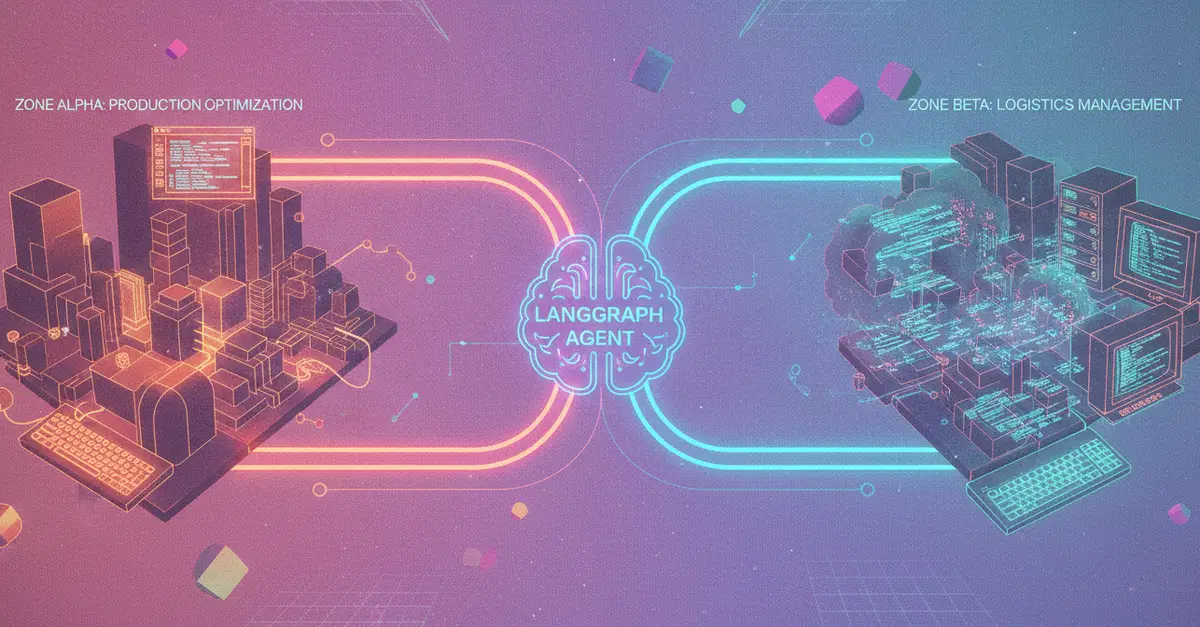
This is Part 5, the last part of this series. Part 4 let a human step into the loop before a risky decision executes. Every part so far, though, has shared one assumption: a zone is evaluated completely on its own.
That assumption hides a real inconsistency. driver_bonus and surge_pricing both attract "new drivers," as if from an unlimited outside pool. But a real regional driver pool is finite, and it's shared. Two zones both running an aggressive incentive at the same hour can't both be right about where their new drivers are actually coming from. Part 5 is the first part where the agent has to notice that.
Two zones, evaluated together every cycle — fixed at 2, not a general N, more on that below. Each zone gets two new supply channels, on top of its existing zone-local response:
A local dormant pool. Off-platform drivers a zone can entice with a big enough incentive. It's fully local, finite, and it depletes as it's used.
A cross-zone pull request. Asking to draw from the adjacent zone's genuine surplus. This is only ever a request at evaluation time — granting it depends on a resource the requesting zone doesn't unilaterally control, so nothing is finalized until both zones' evaluations are in.