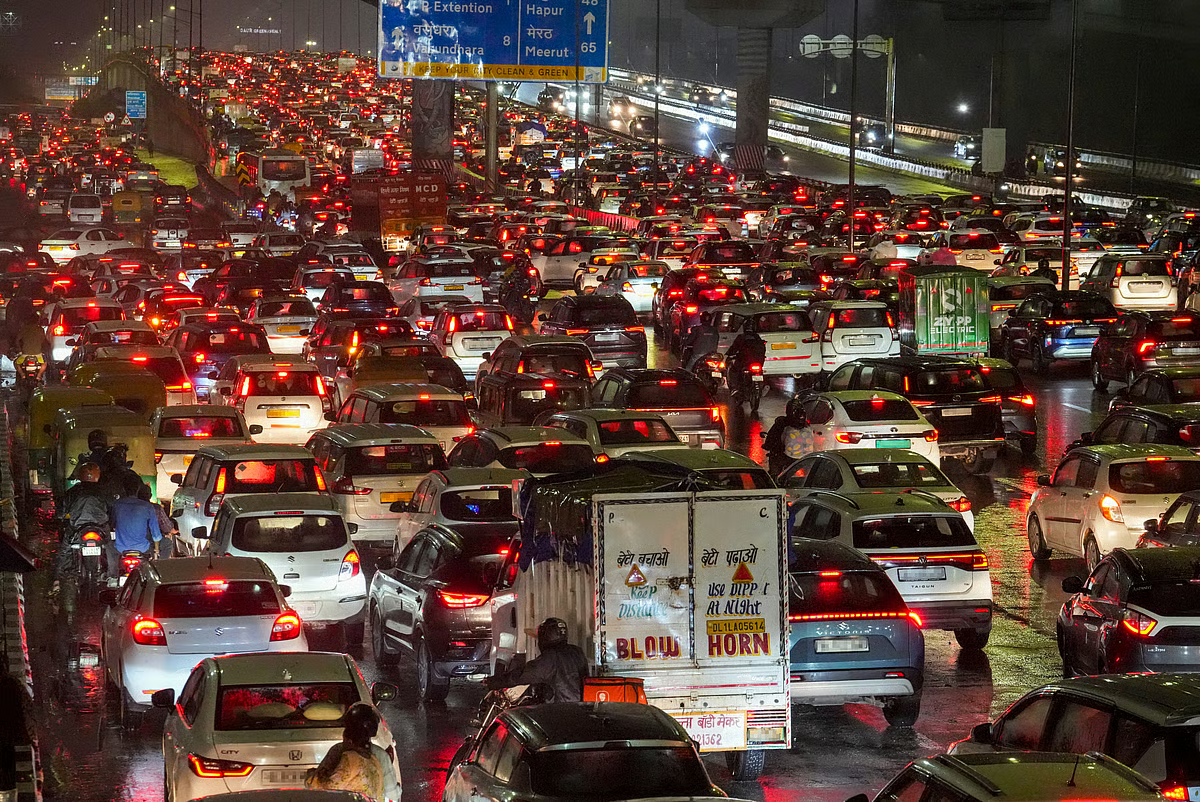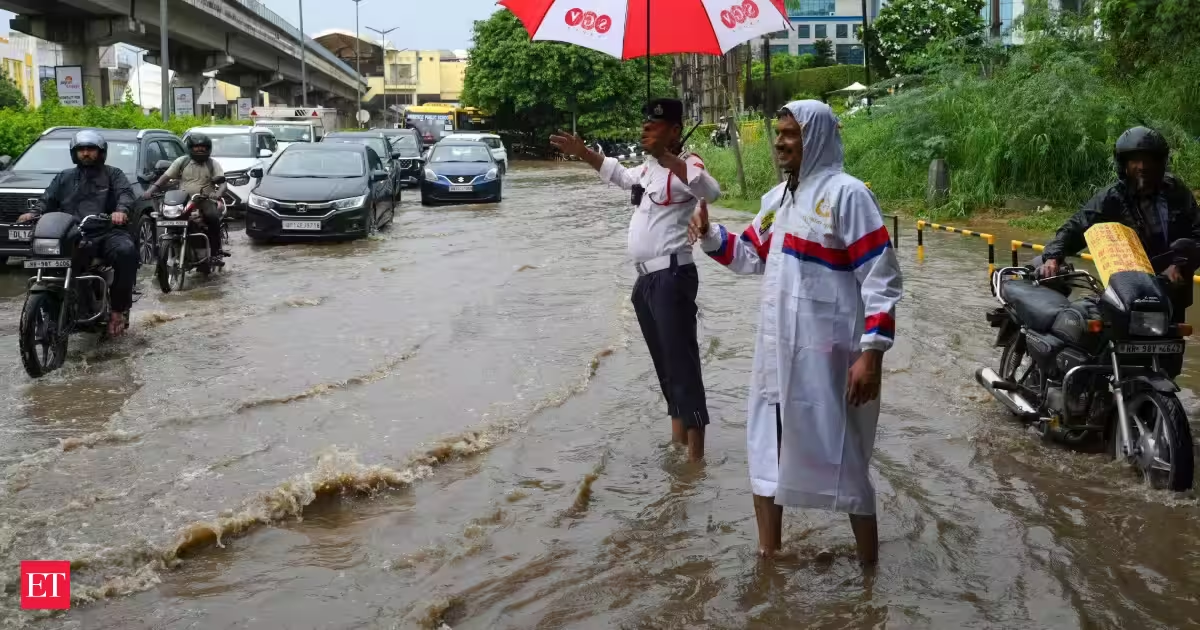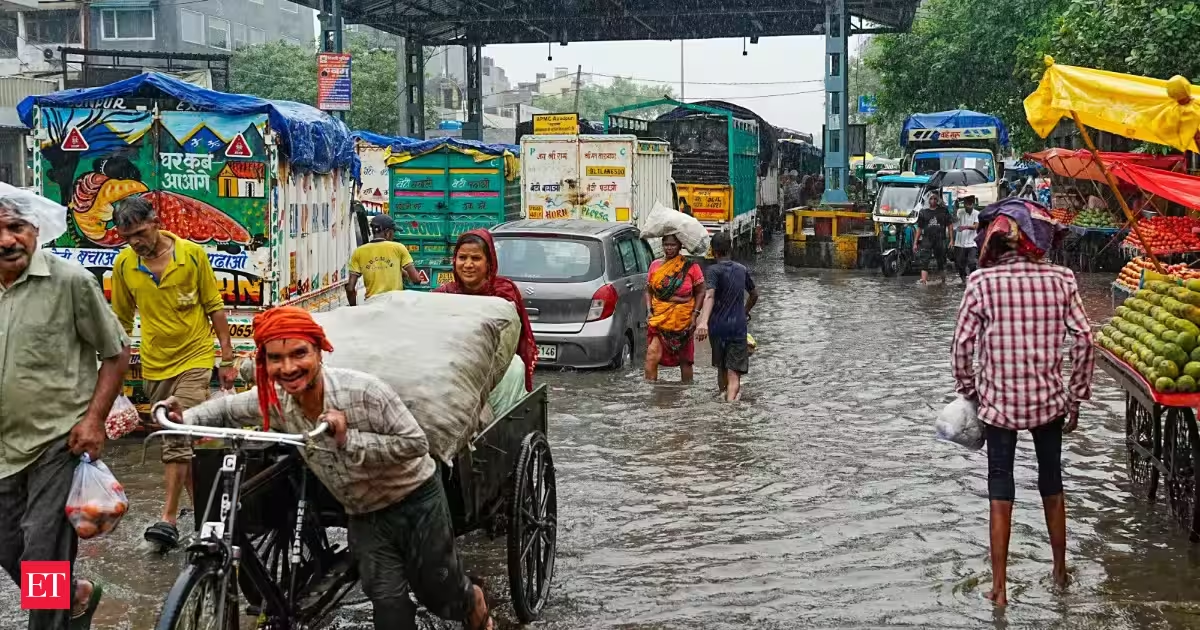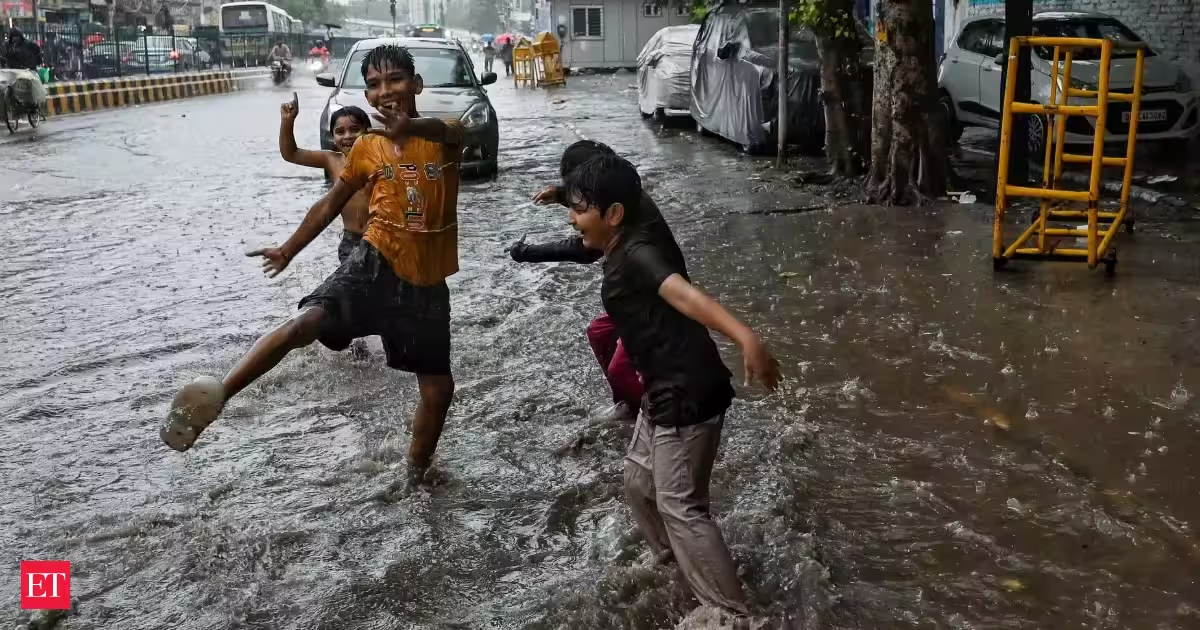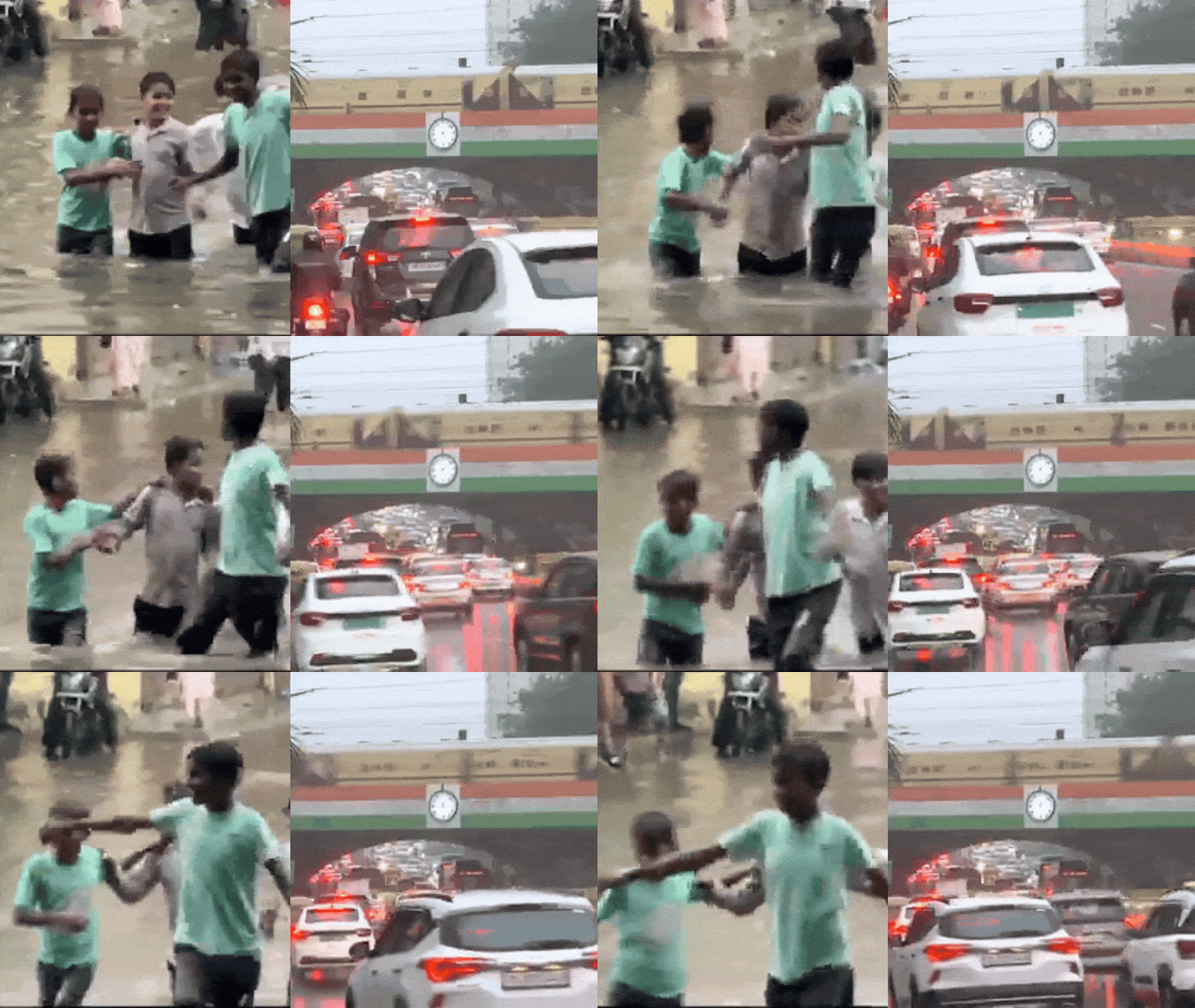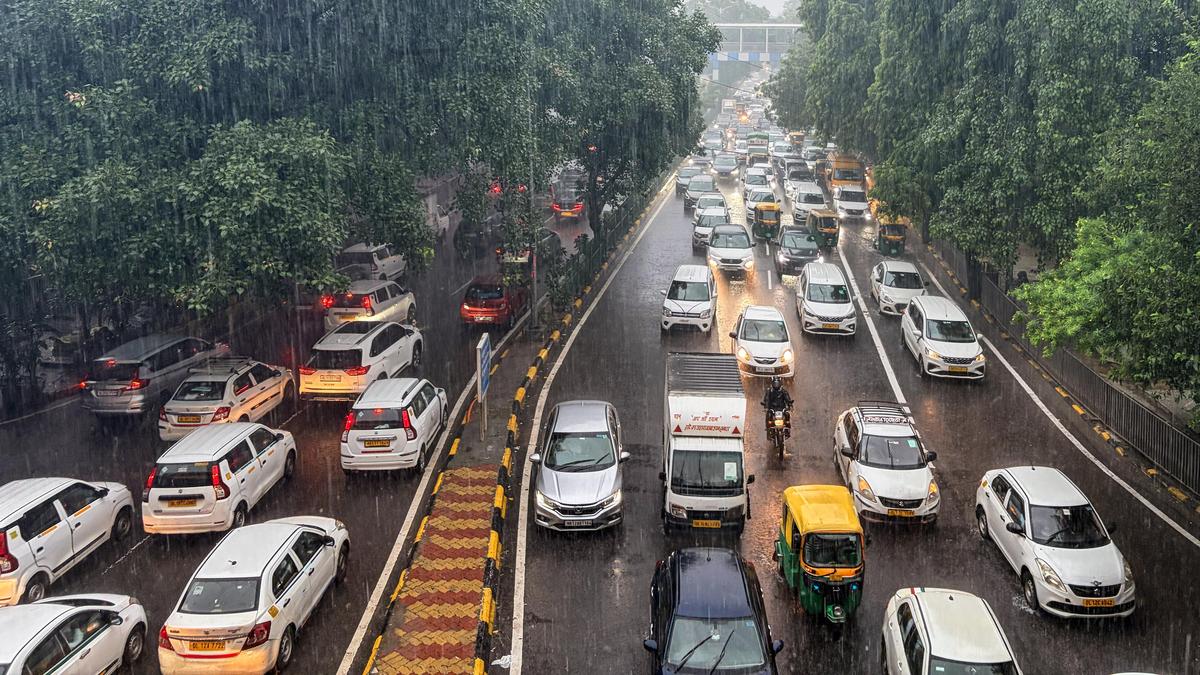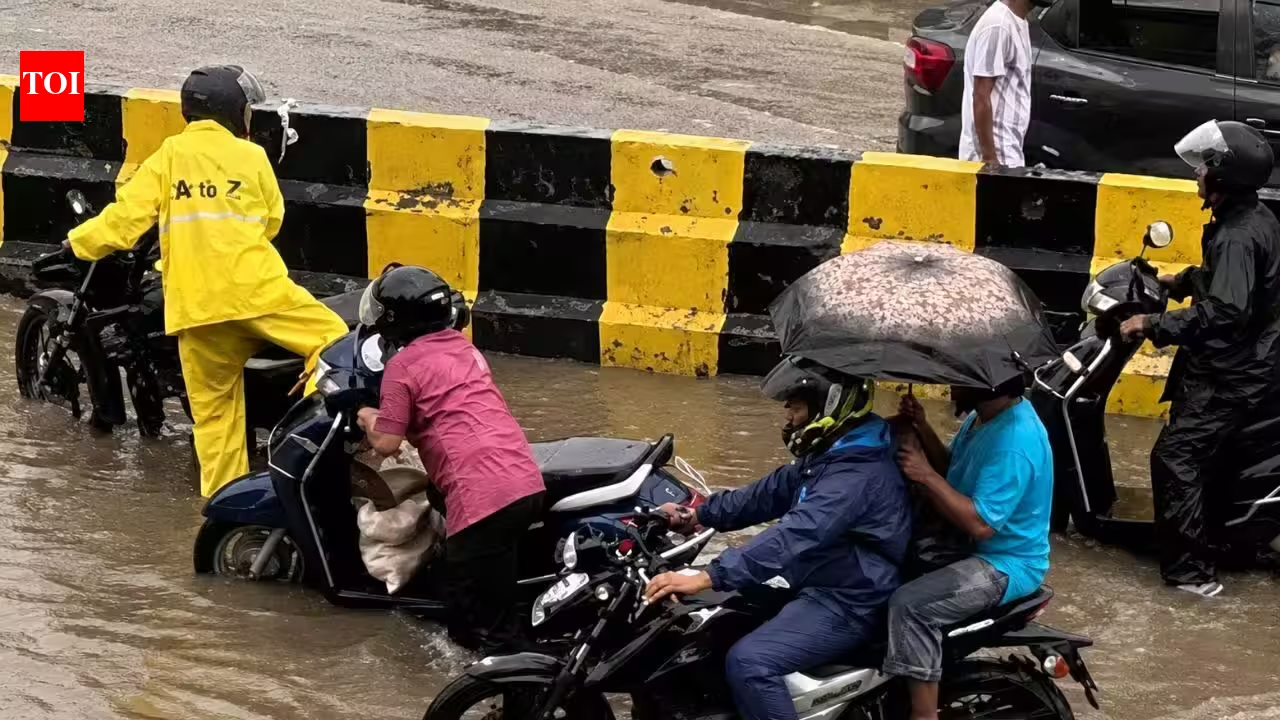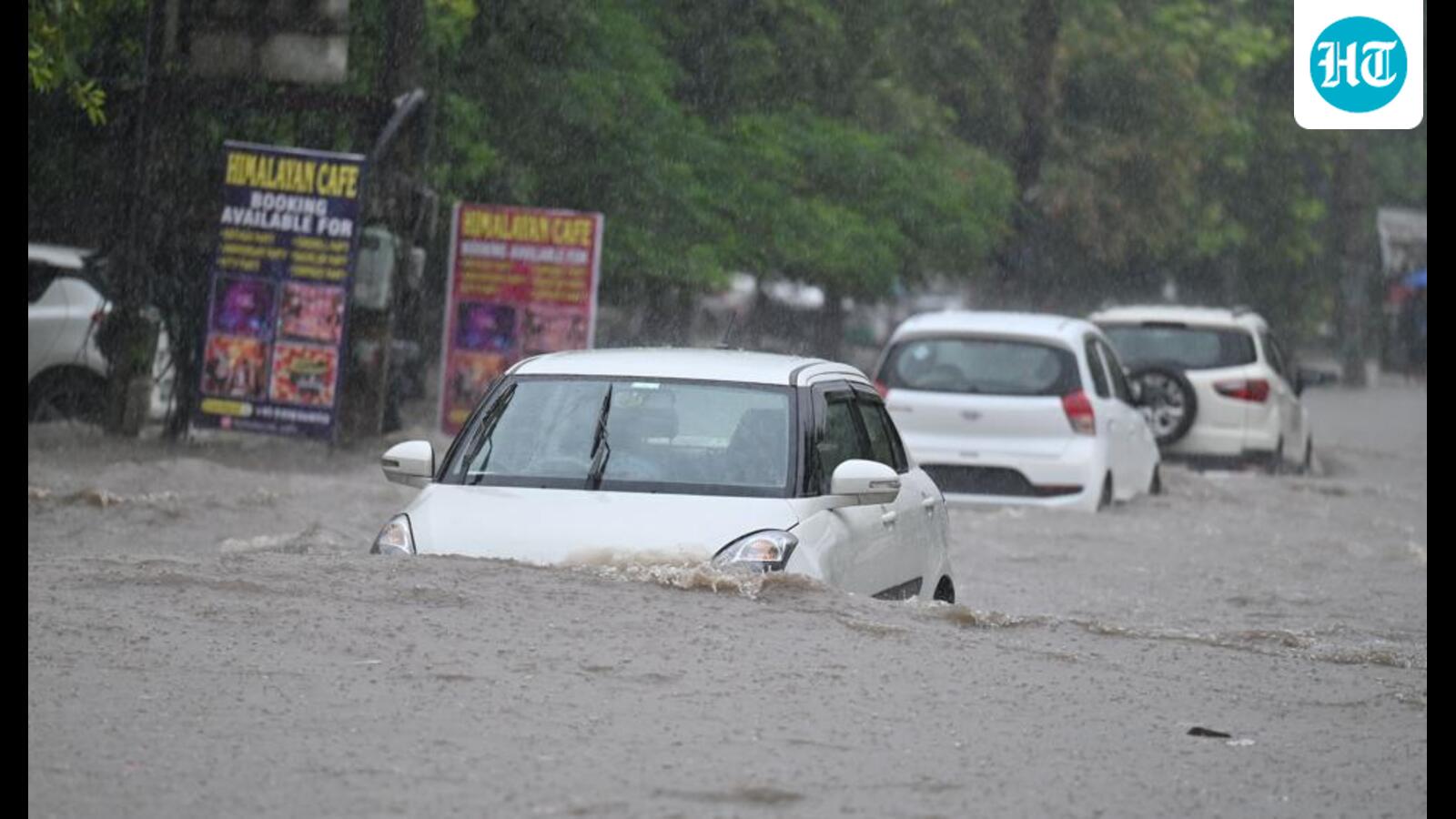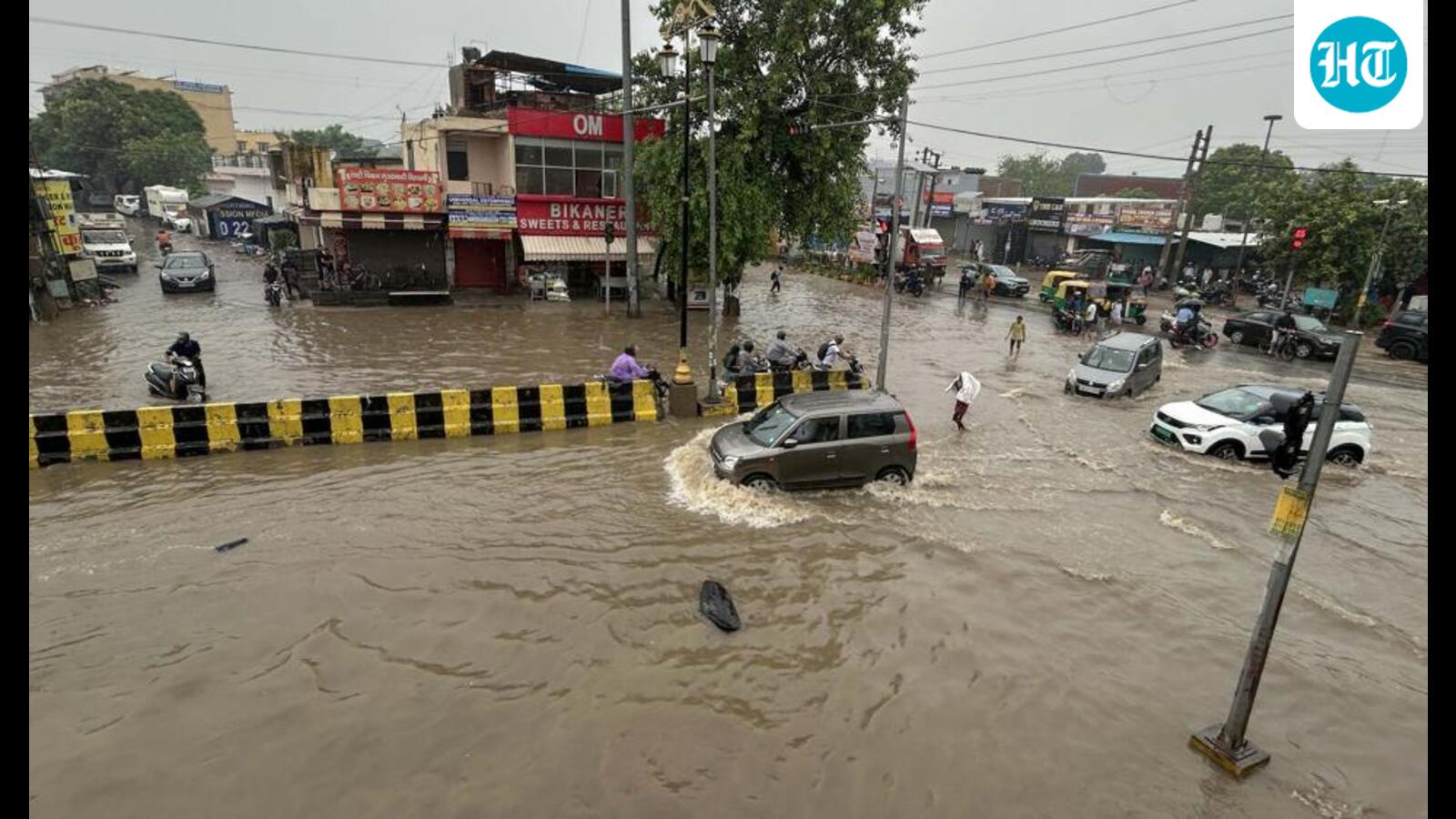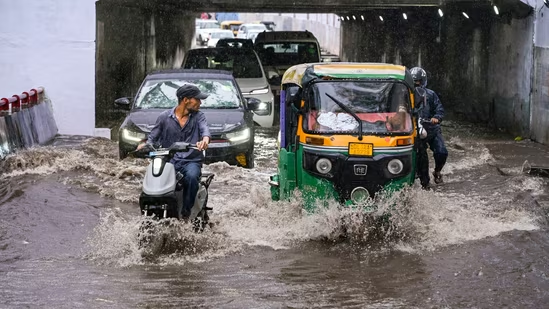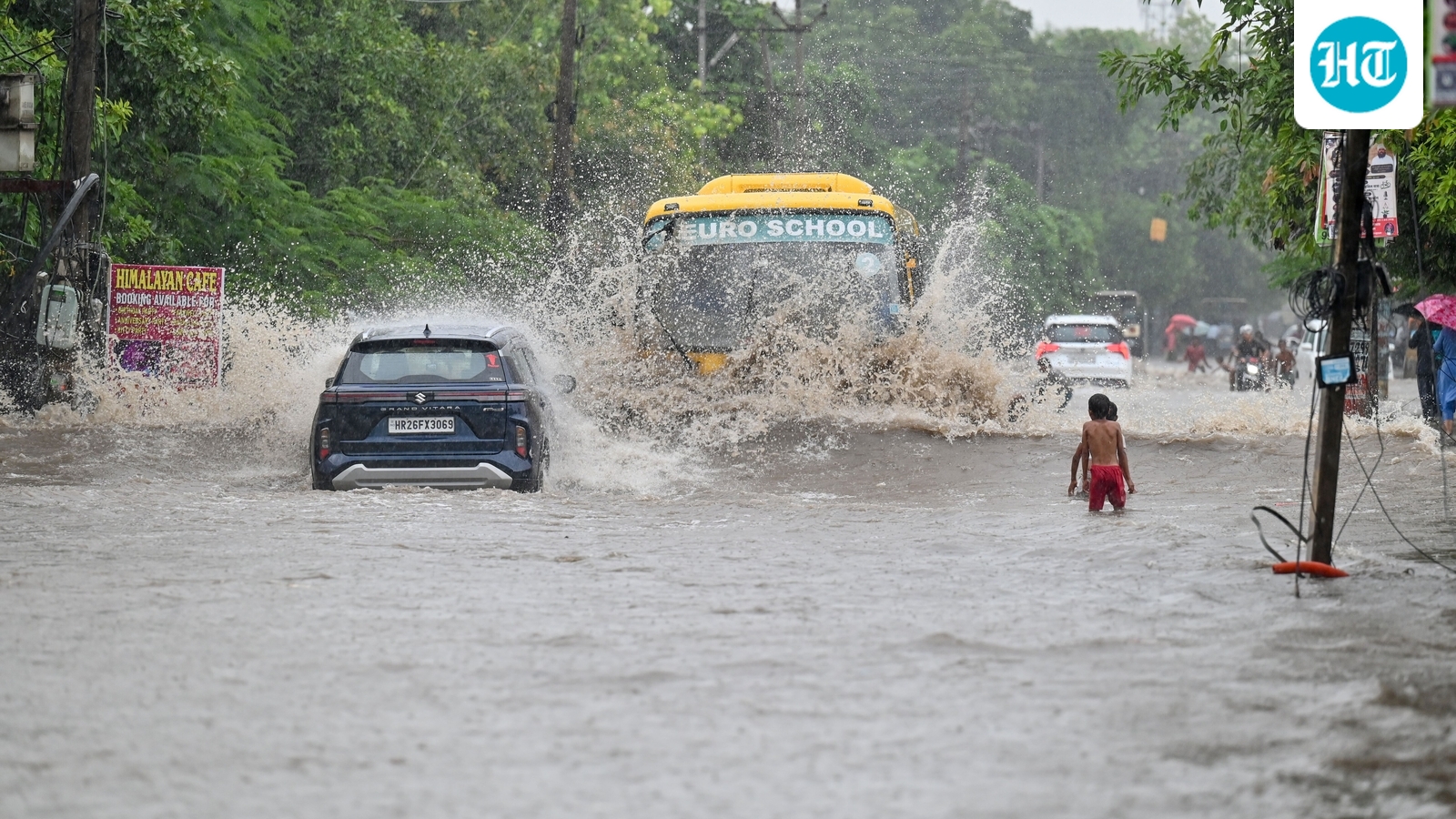
In Gurugram, heavy rain inundated major parts of the city for the third consecutive day on Friday, crippling traffic on key arterial roads Over 12 hours of torrential rainfall on Friday inundated the Capital, marooned entire neighbourhoods and submerged roads under up to four feet of water, leaving vehicles stranded, choking traffic, and laying bare the sorry state of infrastructure in Delhi that wilted in the face of three consecutive days of monsoon showers.Delhi's Safdarjung is all set to record the rainiest first eight days of August since 2011, the first year for which Safdarjung’s data is publicly available from IMD. (File Photo (Parveen Kumar/HT))Safdarjung, the city’s base station for weather, recorded its wettest first week of August since 2011, receiving 127 mm of rainfall during the first seven days of the month till 8.30 am on Friday. It received another 77.1 mm through the day, bringing the station’s total for August till 8:30 pm on Friday to 204.1 mm, which is 90% of the station’s normal figure for the entire month of August.Delhi-NCR rainsTwo people died in a building collapse in Gurugram. In Delhi, around 90 complaints of wall collapse, fallen trees, power outages and waterlogging were fielded by the authorities.From the Mehrauli-Badarpur Road in south Delhi to Mahipalpur, ITO, Shakarpur and Chhatarpur, commuters were trapped in traffic for hours, motorists abandoned flooded stretches and office-goers struggled to book cabs.Some of the worst flooding was reported on the Mehrauli-Badarpur (MB) Road.Water entered Safdarjung Hospital and the entrance of the Greater Kailash metro station, Kapashera near the IGI airport resembled a river, water sloshed around pavements in Greater Kailash 2 and entered the Jahapanah urban forest, and residents struggled to wade through puddles in Okhla, Sadar Bazaar, Mahipalpur and Saket.“The city gets flooded every year. This is due to poor sewage and drainage infrastructure,” said BK Dutt, 62, a resident of Burari.Visuals from Chhatarpur showed school students wading through knee-deep water as vehicles crawled along submerged stretches of the MB Road. In Sangam Vihar, visuals showed residents pushing vehicles in waist-deep water while people on two-wheelers were stranded.Chaos also unfolded in the Capital’s neighbouring region. In Gurugram, heavy rain inundated major parts of the city for the third consecutive day on Friday, crippling traffic on key arterial roads, flooding public facilities, as civic agencies scrambled to deploy pumps and clear water. The scale of disruption once again laid bare the city’s vulnerability to rain, with roads, underpasses, drains and even recently built infrastructure struggling to cope with the downpour. According to IMD, Gurugram recorded 172mm of rainfall in the 72 hours till Friday, including 60mm till 5.30 pm.Vehicles wade through a waterlogged stretch following heavy monsoon rainfall on the Sector-10 road, in Gurugram, on Friday, 07 August 2026. (Parveen Kumar/HT)Also Read | Delhi: IMD issues ‘red alert’ for parts of city amid heavy rain; AQI ‘satisfactory’Several parts of Noida and Greater Noida also witnessed mess of flooded roads, submerged underpasses and snarling traffic. According to the India Meteorological Department (IMD), the Noida region recorded 39mm of rainfall in the 24 hours ending at 8.30 am on FridayCommuters making their way through a waterlogged path at the Sector 96 underpass following heavy rain, in Noida, India, on Friday, August 07, 2026. (Sunil Ghosh/HT)Delhi traffic crawlsIn Delhi, traffic crawled for kilometres between Khanpur and Okhla Mor, while adjoining stretches at Sangam Vihar, Deoli and Ambedkar Nagar also remained inundated. In Fatehpur Beri’s Valmiki Basti, residents waded through waist-deep water while schoolchildren, unable to cross flooded lanes, were carried by locals on a large blue plastic sheet used as a makeshift raft.Rameshwari Devi, 39, who works as a domestic help and lives in Begumpur, was stuck in traffic for at least two hours near Chirag Dilli, barely 3 km from her home. “Even ambulances were stuck. What usually takes me an hour to get to work took me at least three today. When I returned home, I realised my lane and my house were flooded.”Traffic moved at snail’s pace on Sardar Patel Marg, Teen Murti Marg, Panchsheel Marg, Mother Teresa Crescent, around the Gol Dak Khana roundabout, Rafi Marg, Ashoka Road, C-Hexagon, and around ITO.In the southern parts of the city, heavy traffic choked multiple places on the Ring Road between Dhaula Kuan and Indraprastha flyover via Ashram Chowk, Delhi-Gurugram national highway-48 via Mahipalpur, and Mathura Road between Badarpur and Ashram Chowk.Sangam Vihar, Durga Vihar and Deoli-Khanpur were among the worst-hit areas, with roads flooded with rainwater and traffic movement severely disrupted.“Despite everyone being aware that waterlogging is an annual problem, our complaints over multiple years have fallen on deaf ears. Today again it has been a very big problem, with multiple main and arterial roads waterlogged. Additionally, due to the rain, multiple trees got uprooted and fell during the day,” said Anantmala Potdar, Saket D61 to D125 Resident Welfare Association (RWA) president.A traffic jam occurred in the evening on the route from Noida to Delhi and from Delhi to the Greater Noida Expressway due to heavy rain in Noida, India, on Friday, August 07, 2026. (Sunil Ghosh/HT)IMD's Pushp Vihar station records highest rainfallThe Pushp Vihar station of the India Meteorological Department (IMD) recorded the highest rainfall at 147.5 mm, from 8:30 am to 8:30 pm, followed by Chhatarpur (131 mm), Palam (88.7 mm), and Ayanagar (87.4 mm), all of which would qualify as different degrees of heavy rain – the category IMD assigns to rain of more than 35.5 mm for a 24-hour period.Safdarjung is also all set to record the rainiest first eight days of August since 2011, the first year for which Safdarjung’s data is publicly available from IMD. The total up to 05:30 pm on August 7 is already higher than the previous record of 135 mm rain up to 08:30 am on August 8 held by 2024.Also Read | NCR rain woes: Gurugram takes to social media to rantIMD records rain for a date as the rainfall up to 08:30 am on the date. The August 1-7 period, which includes rain from 08:30 am on July 31 to 08:30 am on August 7, is also the rainiest this year since 2011. To be sure, most of the rain of the first week fell only starting August 5. This makes the total rain in the four-day period ending 08:30 am on August 8 the rainiest four-day period this monsoon.“The widespread rainfall over Delhi since yesterday has been influenced by the active monsoon trough, which continues to pass through Delhi and other parts of north and east India before extending into the east-central Bay of Bengal. Rainfall activity over Delhi is expected to decrease from tomorrow, with light rain likely over the city during the next two days,” an IMD official said.What the residents and govt saidThe widespread chaos sparked angry responses from residents, many of whom blamed choked drains, poorly designed roads and inaction by authorities.Ashok Singh, a resident of Sunlight Colony, said, “Our area has witnessed waterlogging for two days now, and the water seeped into my car and my house today. Power cuts worsened the situation.”A waterlogged stretch at Azad Market on Friday. (RAJ K RAJ/HT)Also Read | ‘ ₹400 for 8 km and still no cab’: Gurgaon woman shares struggle to commute to office in rainBut public works department minister Parvesh Verma said waterlogging in the city’s major hotspots was resolved, adding that inundation was reported mainly in some villages and rural areas where drainage projects were still in progress.“The rain is the same, but the preparation has changed, and that’s why, today, monsoon in Delhi no longer means waterlogging, but is becoming synonymous with better management,” he posted on X, along with visuals of Minto Bridge, Vinod Nagar, Jhilmil Underpass, among others.Abhishek Jha is Assistant Editor-Data at Hindustan Times. He uses statistical programming to generate newsworthy insights from large datasets. He is part of the team that produces Number Theory, a daily data story feature of the paper’s print edition. Since March 2024, he has been writing Weather Bee, a weekly column for the Hindustan Times website. He is a chemical engineer by training, who specialises in stories related to weather, climate, and the environment.
Delhi-NCR rain cripples daily life, triggers waterlogging, traffic chaos
In Gurugram, heavy rain inundated major parts of the city for the third consecutive day on Friday, crippling traffic on key arterial roads | Latest News Delhi
1,479 words~7 min read