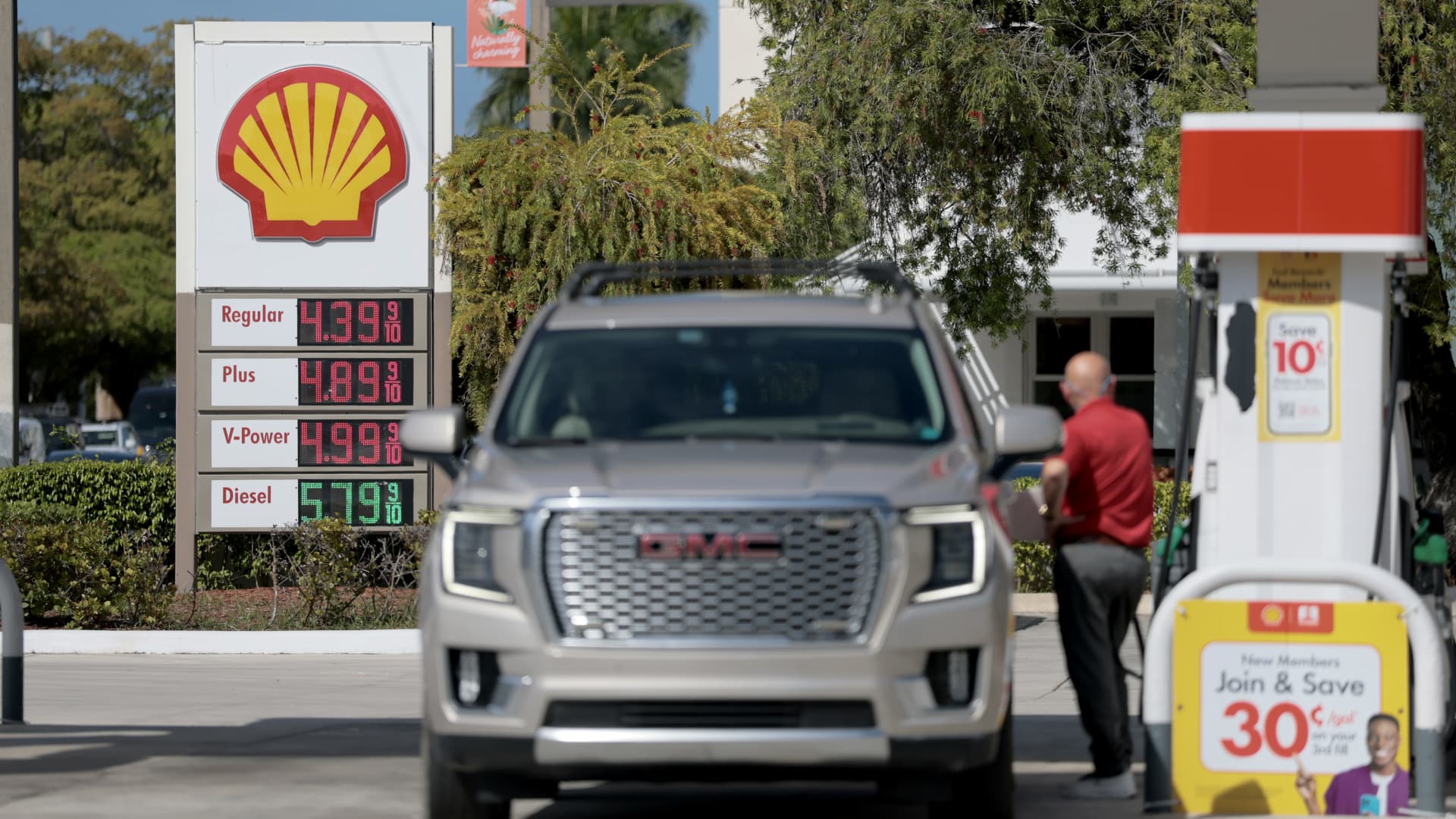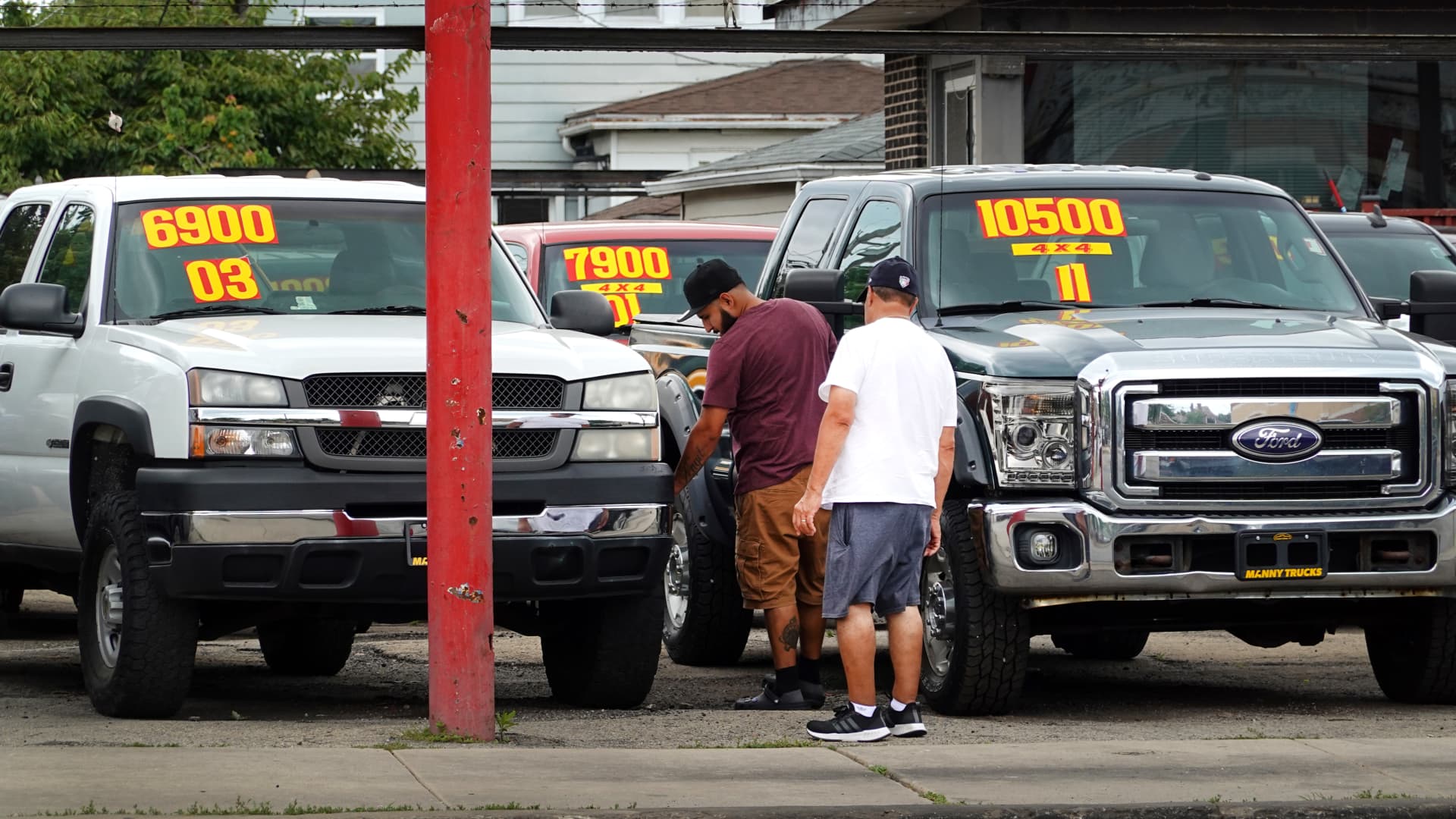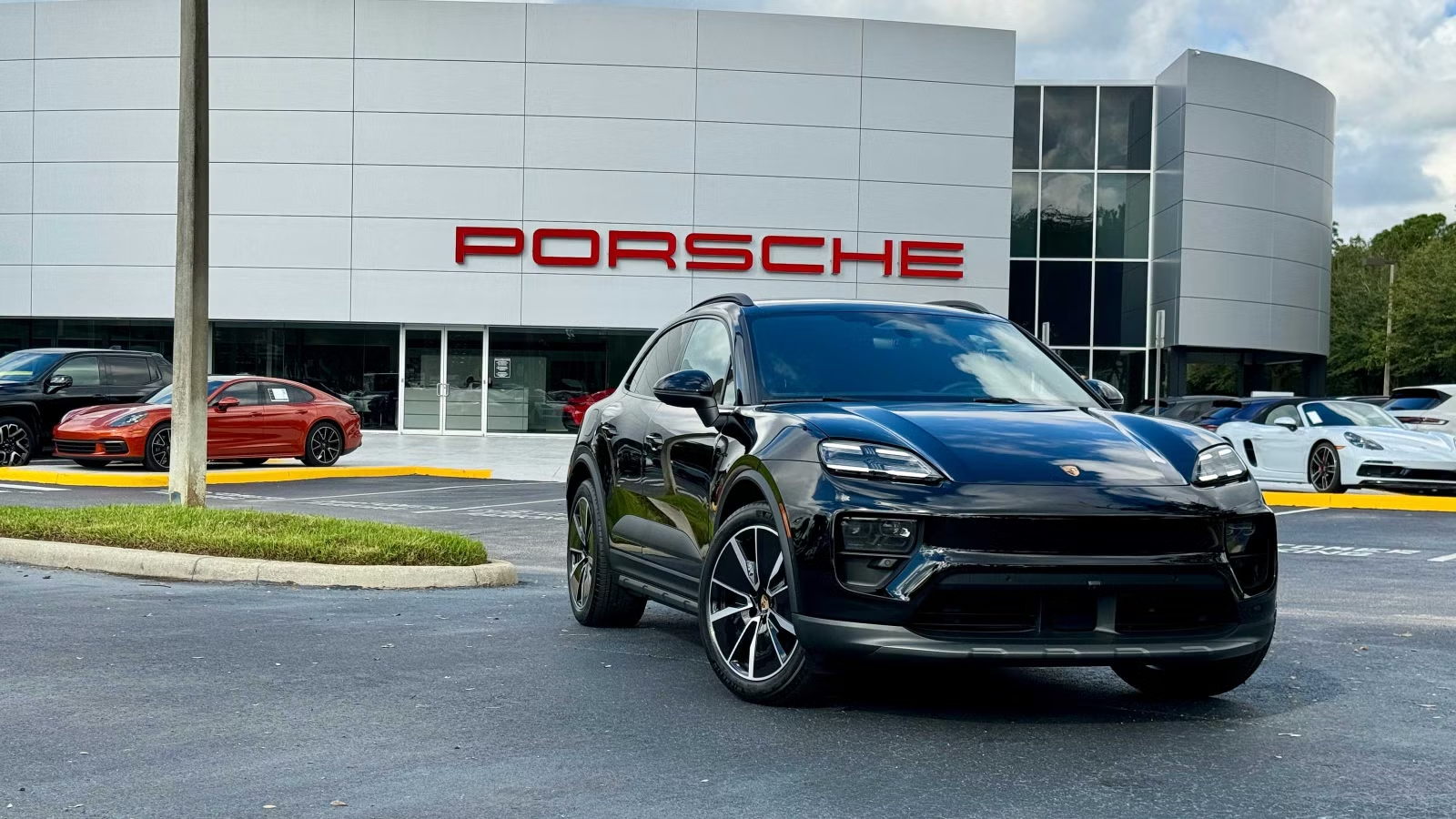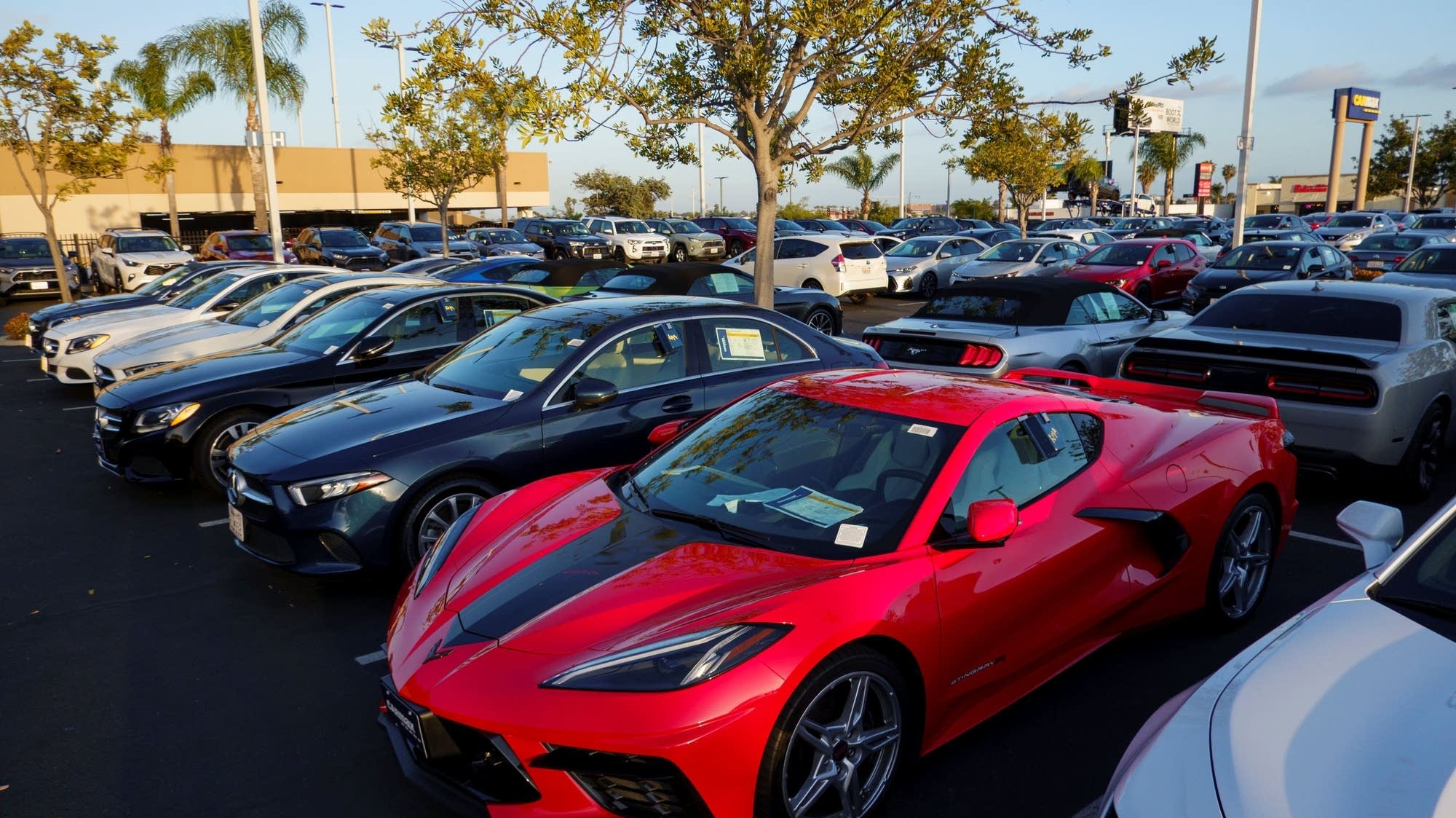
As everything gets more expensive, borrowing is on the rise. The latest consumer credit report from the Federal Reserve — which gives us a sense of how Americans are handling their debt from credit cards and car and student loans — showed revolving credit increased at an annual rate of 3.9% in the second quarter. One especially troubled corner of the market is auto loans, where delinquencies and repossession rates are hovering near historic highs. Inflation and high gas prices are squeezing budgets. Also, interest rates on car loans are high, averaging about 7% for borrowers with “good” credit. But Ray Shefska, co-founder of the car-buying service CarEdge, argued there’s a bigger problem.“The price of cars is too damn high!” he said. Shefska would know. He has spent decades selling cars and has watched the average price of a new vehicle climb to $50,000. That makes the average payment more than $750. And buyers are taking out loans that last up to eight years.“That’s in order to get an affordable monthly payment that ultimately comes back to bite the customer,” Shefska said. Long-term loans rack up a lot of interest, and they far exceed the length of a standard warranty, which means a lot of people end up paying for repairs while they’re still trying to pay off their car. In a lot of ways, extended loans have become a cultural norm.“It’s the subscription society,” said Cox Automotive Chief Economist Jeremy Robb.People have gotten used to paying for stuff over time, and that can help them justify buying more expensive cars. “When we pay for Netflix, and you pay for Apple TV, and you pay for your iPhone, you know, $30 a month,” he said. “I think it’s pretty easy to get yourself sideways.”But if consumers get sideways and stop paying their loans, dealers and lenders get sideways, too. Jessica Caldwell, head of insights at Edmunds, said lenders have become so concerned about losing money that they’re negotiating with borrowers. Companies want to avoid repossessing cars.“It just makes everybody in the whole process not happy — except maybe the repo guy who makes money on this,” she said. And these long-term loans have created a looming and much bigger problem: They’ve shrunk the pool of buyers. Trade-ins are a big driver of churn for carmakers, and most people who trade in their cars do so after six years. But if a borrower’s loan term is longer than that, they are walking into the dealership with negative equity. In other words, the longer it takes someone to pay off their car, the longer they are likely to hold onto it.“If people are keeping their vehicles for longer periods of time, that means you just don’t have as many people cycling through as often,” said Caldwell. The average age of a car in the U.S. is growing. It’s now 13 years old. And auto sales are below what they were pre-pandemic. Shefska said he expects them to be flat for the next decade or so. “How long is it really sustainable?” Shefska said. “How long can we continue to extend loan terms to seven and eight and nine — and we know of some banks that are offering 10 year auto loans.”He said it’s sustainable as long as people keep signing up.
Car prices continue to rise. Auto lenders compensate with long-term loans
Experts say it's putting consumers and the car industry under pressure.
550 words~3 min read