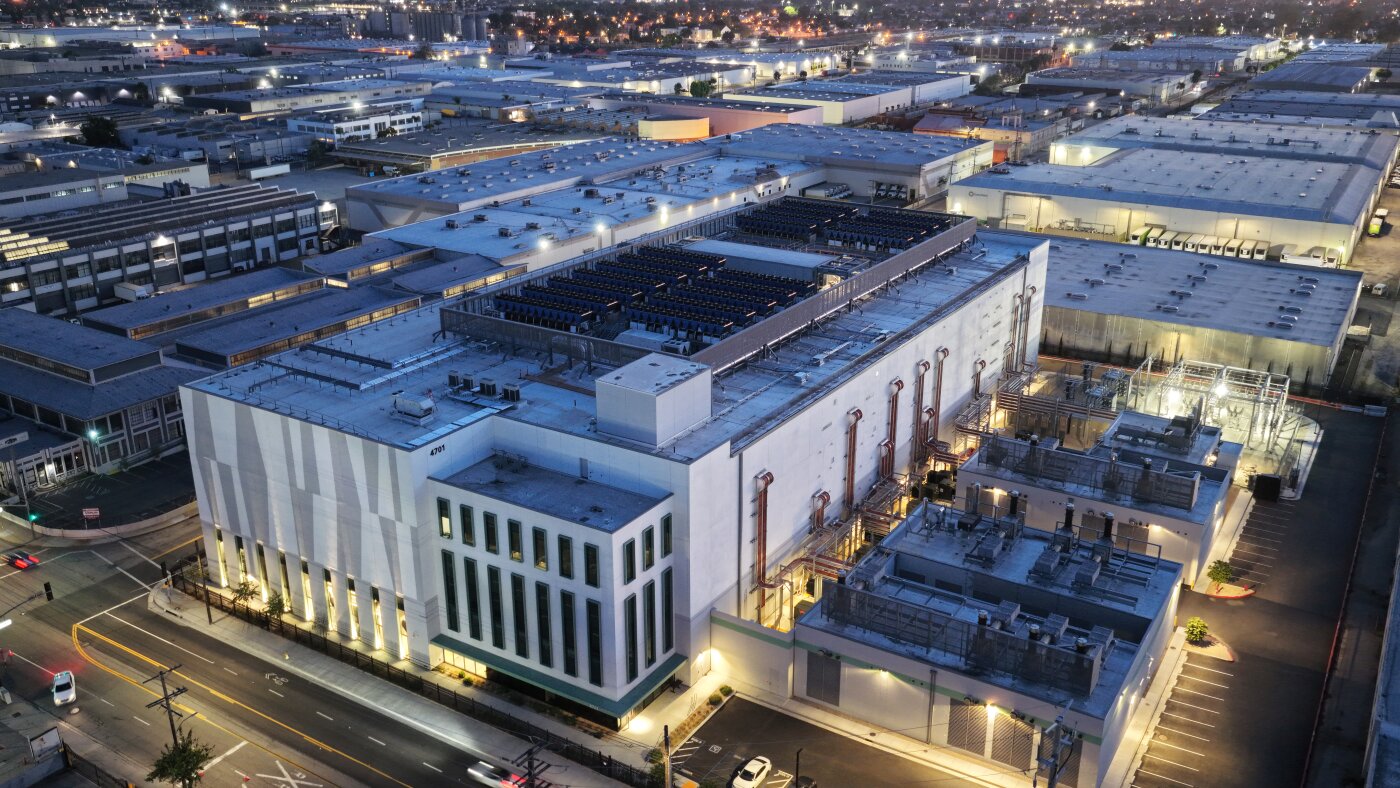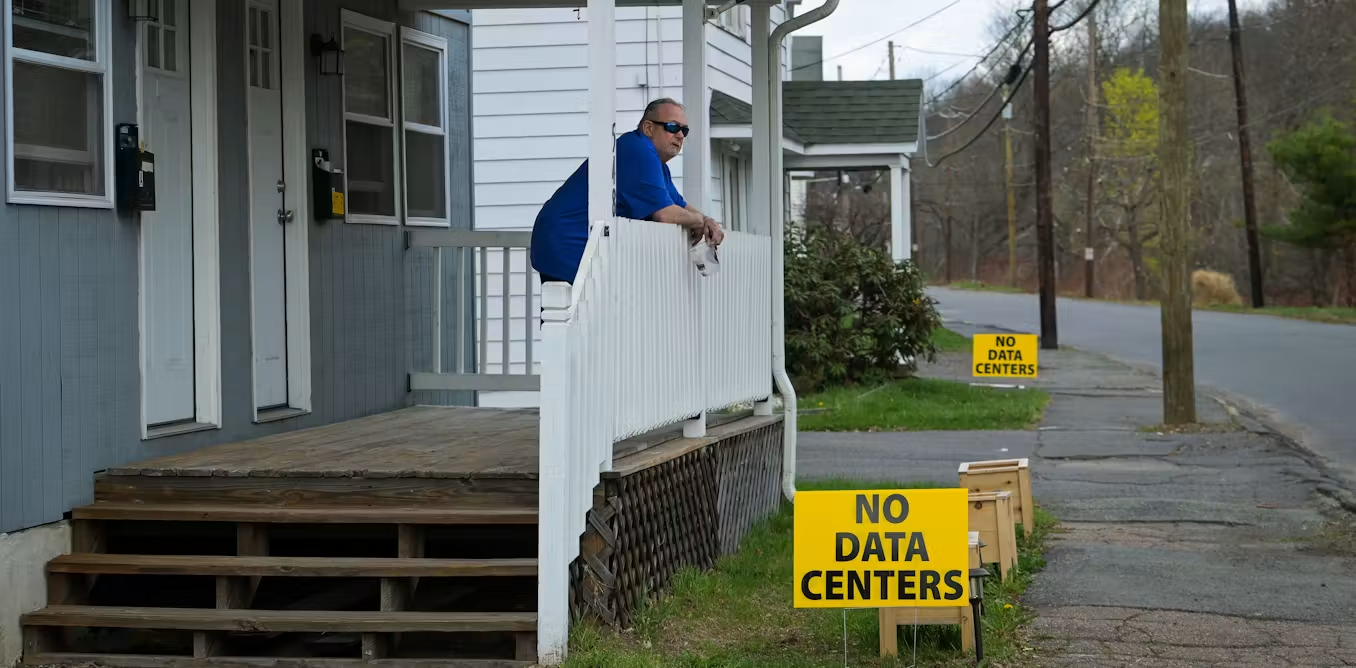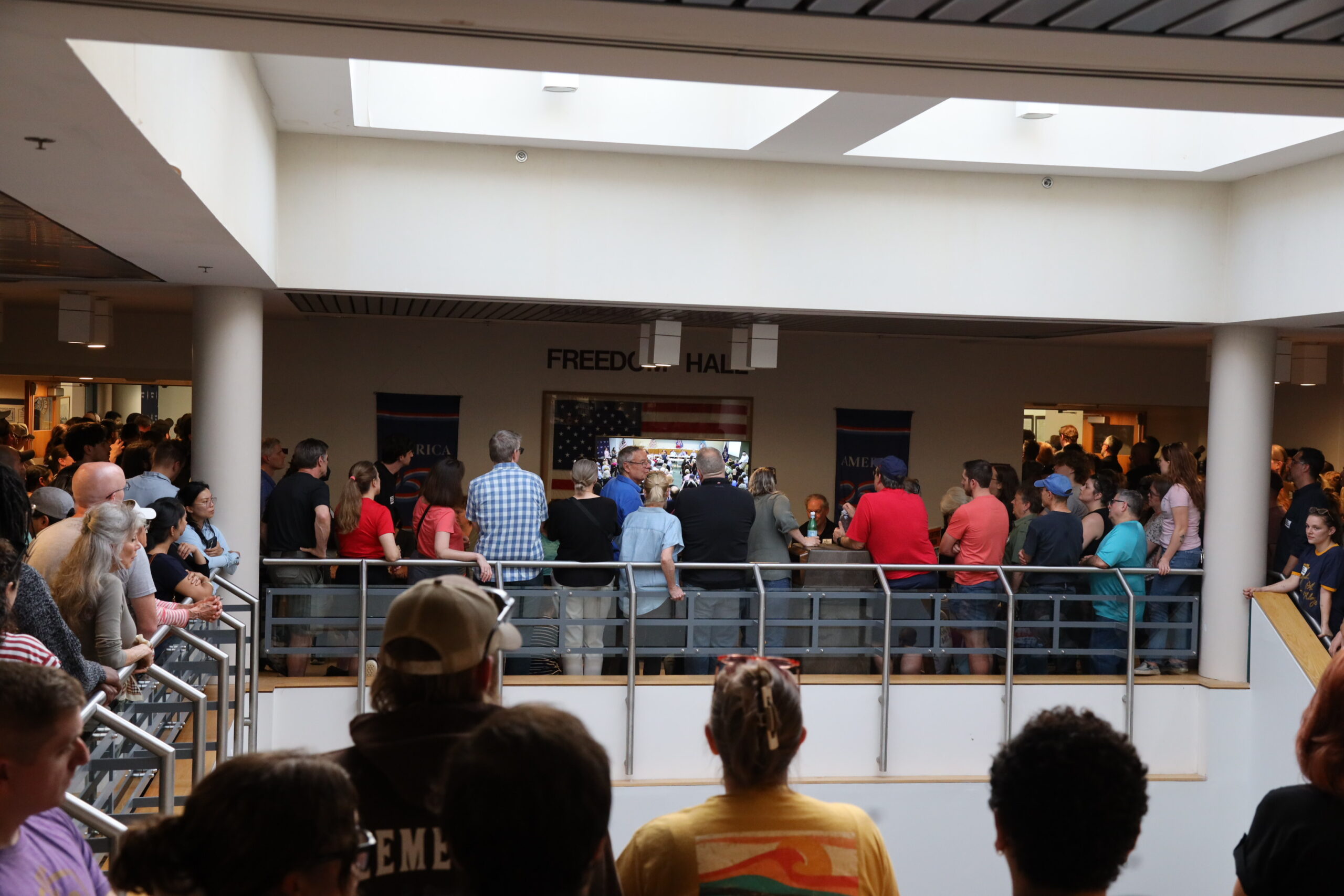
Freedom Hall, packed with more than 200 people, was jammed to capacity. Hundreds more people gathered in the lobby in stifling heat, many wearing “No Data Centers” stickers on their T-shirts. Inside the meeting room, Pennsylvania real estate executive Brian O’Neill was presenting plans for an enormous data center complex to the Upper Merion Township Planning Commission. An improvised sound system piped his voice to those stuck outside.
“We make cell and gene therapies which cure genetic diseases and cancer,” O’Neill said, referring to his company’s Discovery Labs medical research center in Upper Merion which he now wants to augment with AI data centers.
As O’Neill listed his project’s potential benefits, including a promised 54 percent increase in local tax revenue, the crowd grew agitated. “We don’t want it!” somebody yelled.
“I’ll get on with the show,” said O’Neill, flipping through a PowerPoint presentation, amid booing from the crowd in the lobby. The data centers would be quiet, conserve water, and emit no air pollution, O’Neill promised. “Liar!’’ another person shouted.
The crowd had converged on the Upper Merion Township Building on the evening of May 27, soon after learning about O’Neill’s plans to build a cluster of data centers and gas-fired power plants in the middle of their suburban community. Located in Pennsylvania’s Montgomery County, about 15 miles northwest of downtown Philadelphia, Upper Merion is home to 36,000 people. The area is best known to outsiders for its huge King of Prussia Mall and the Valley Forge National Historical Park, where George Washington’s Continental Army endured a brutal winter during the Revolutionary War.