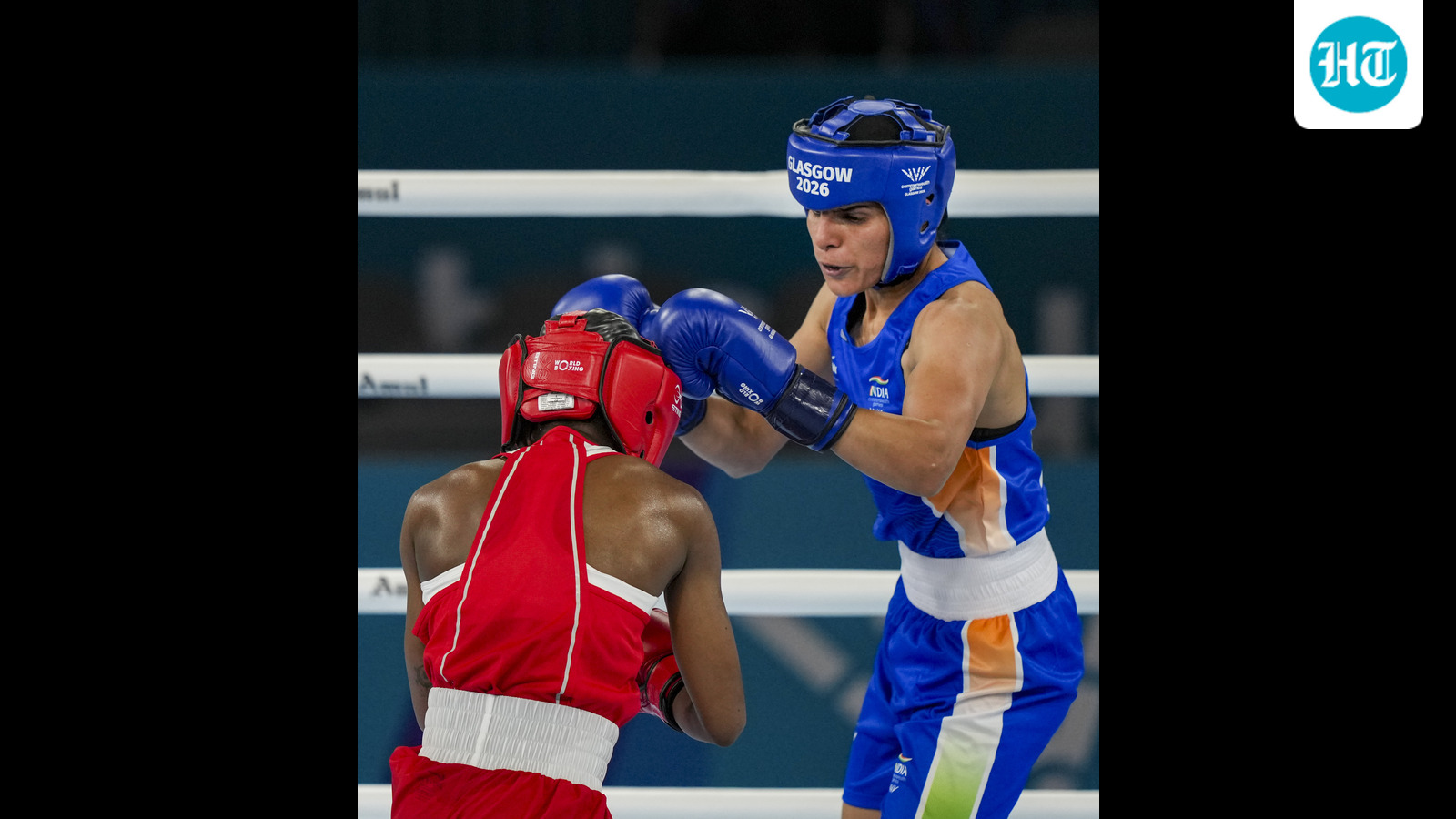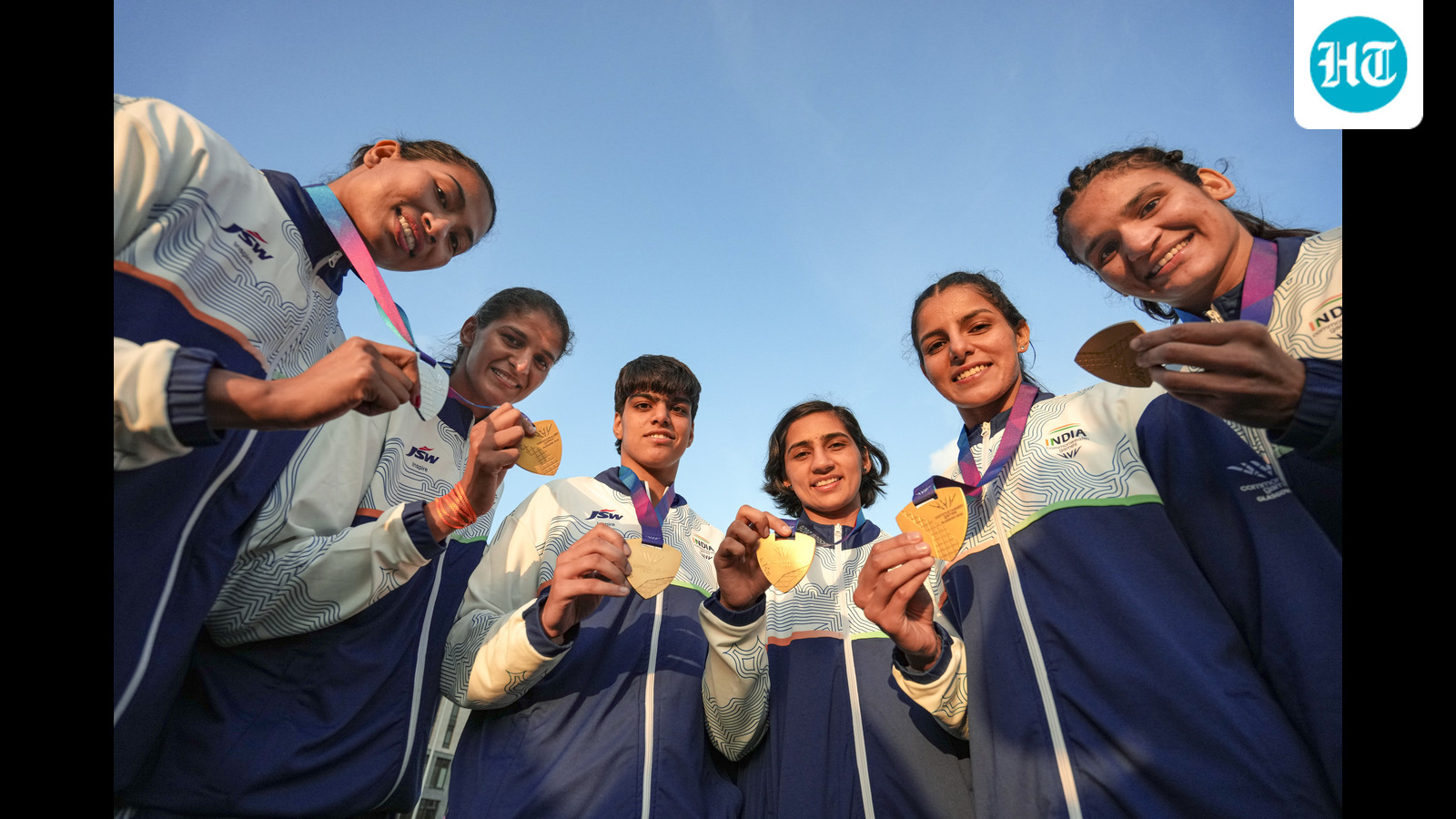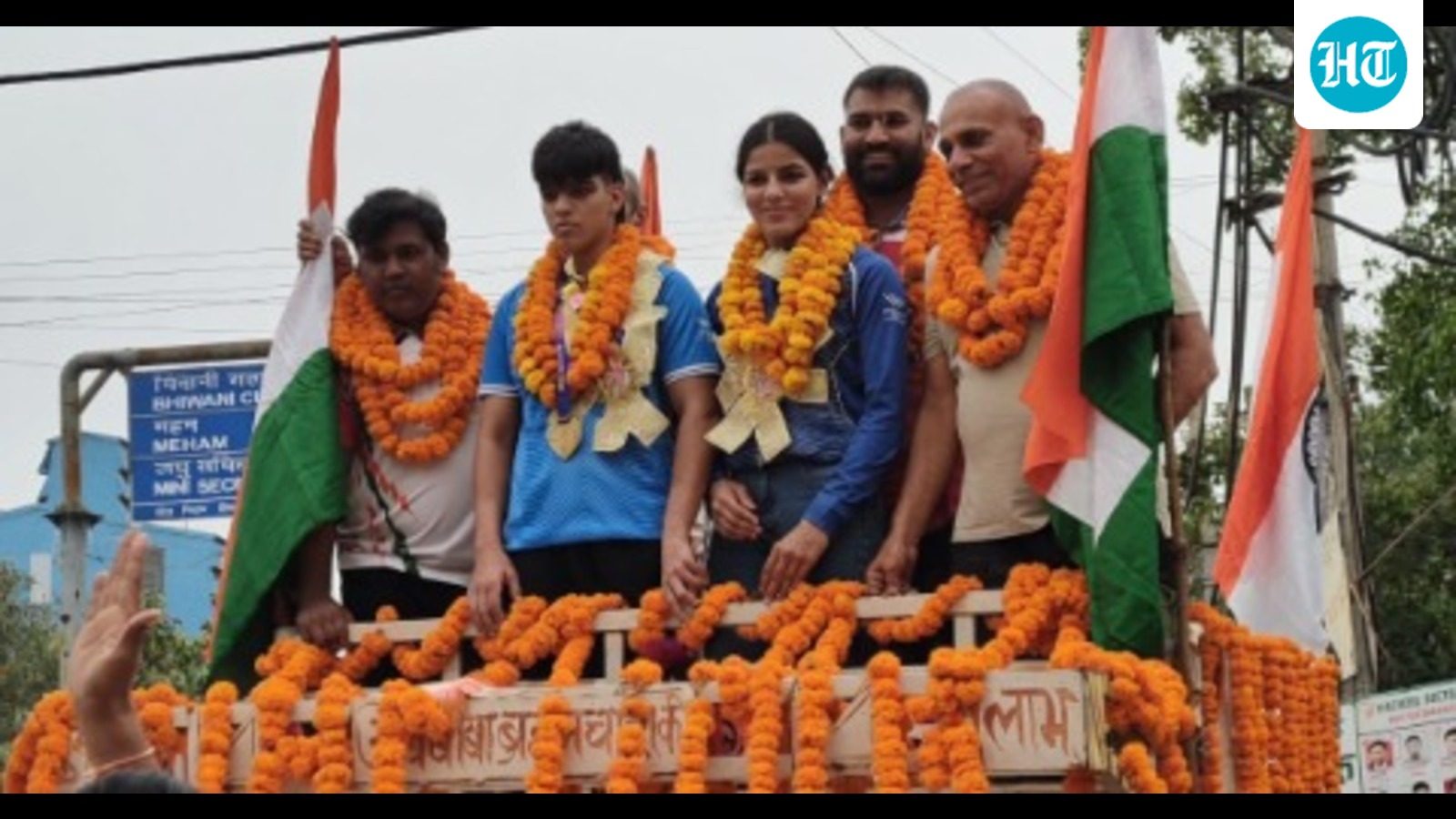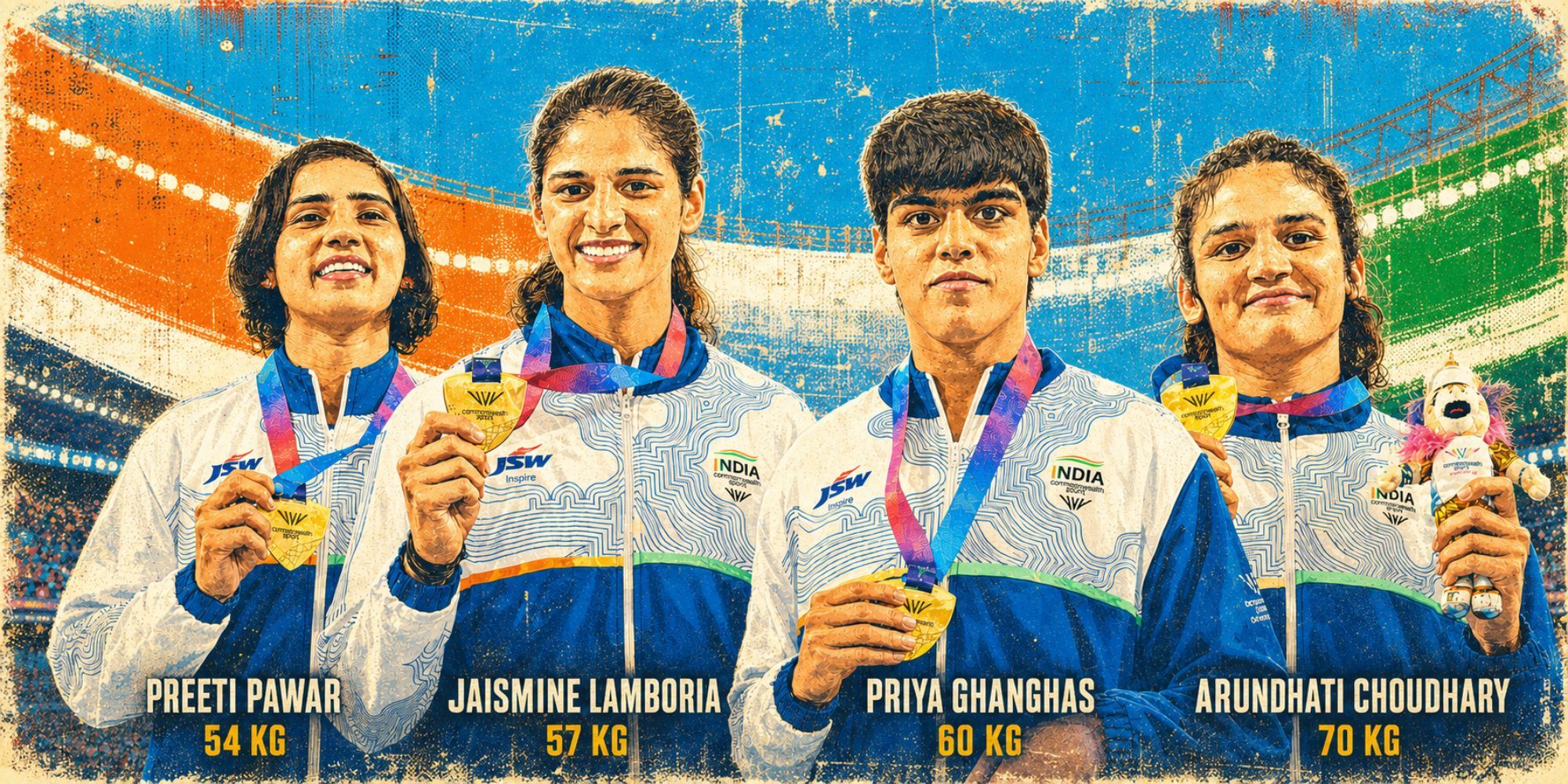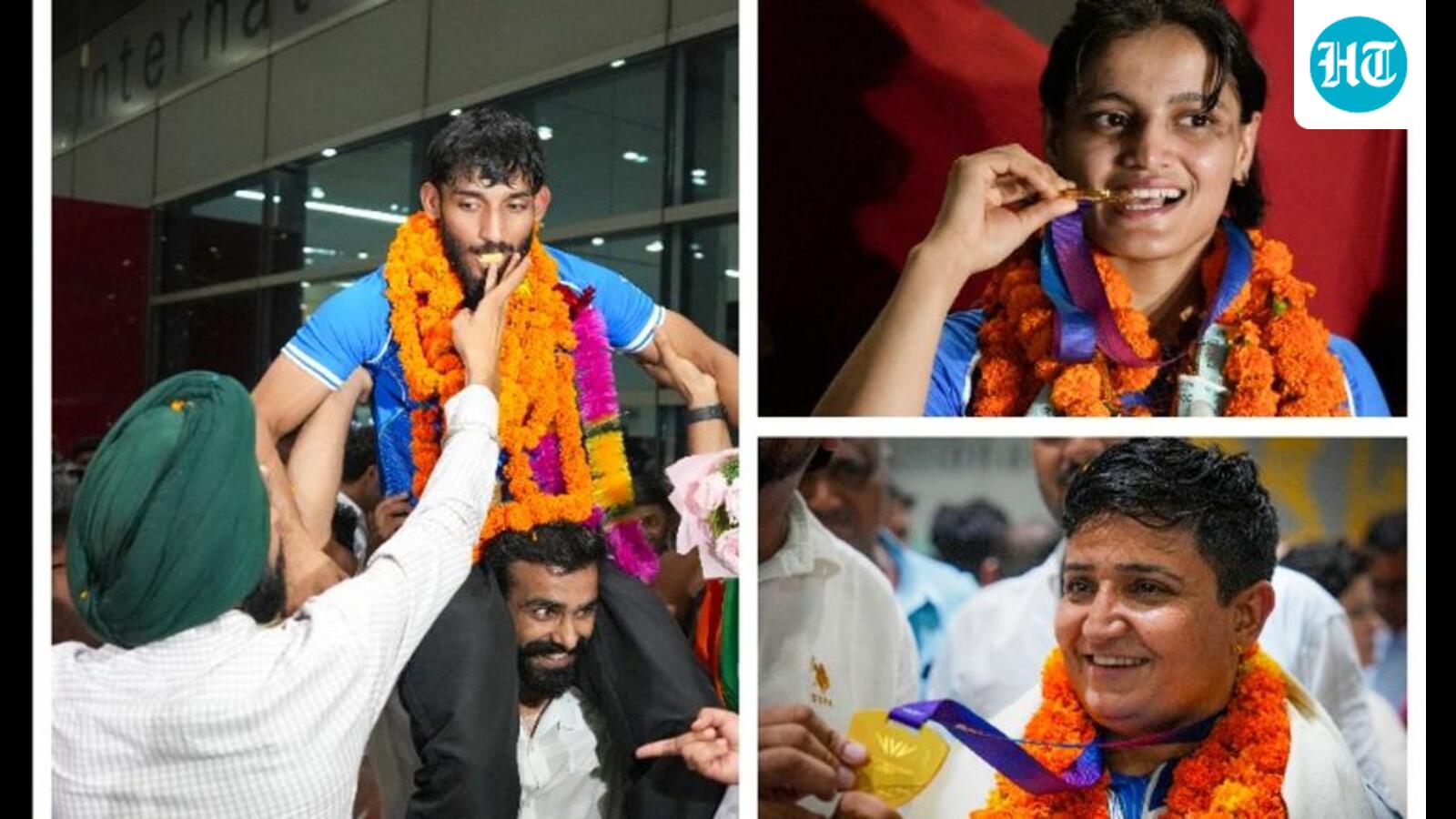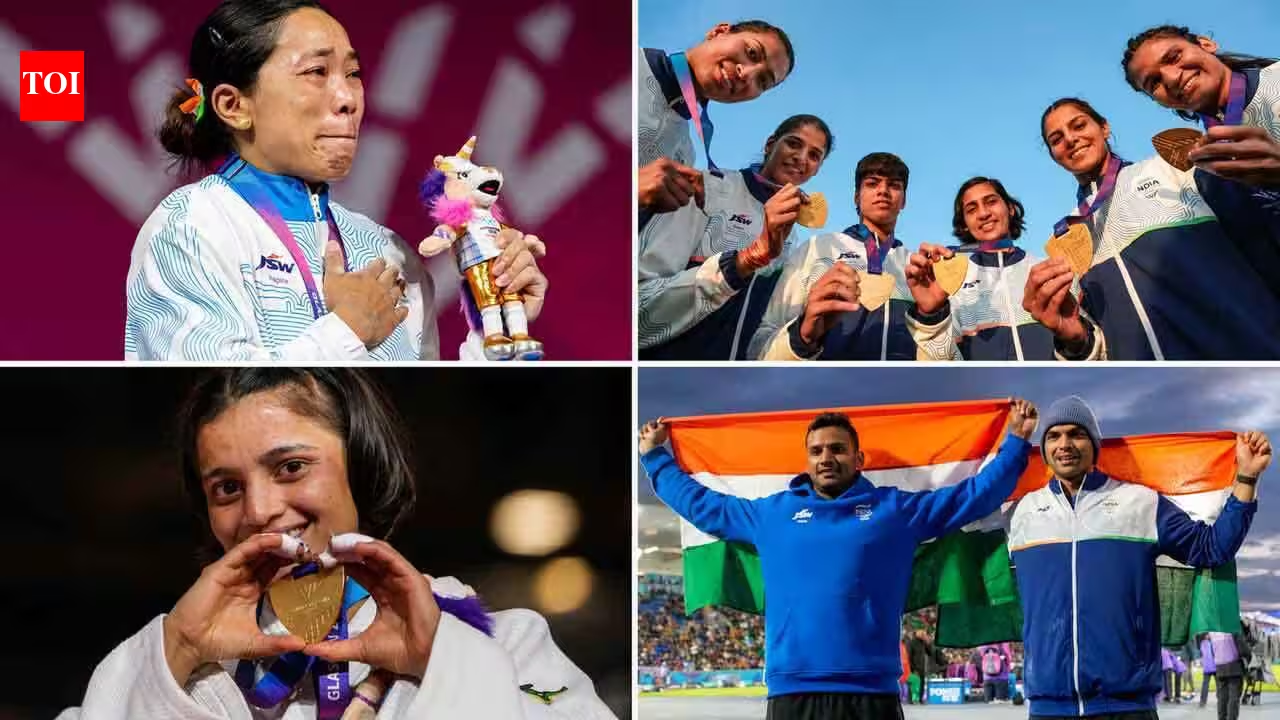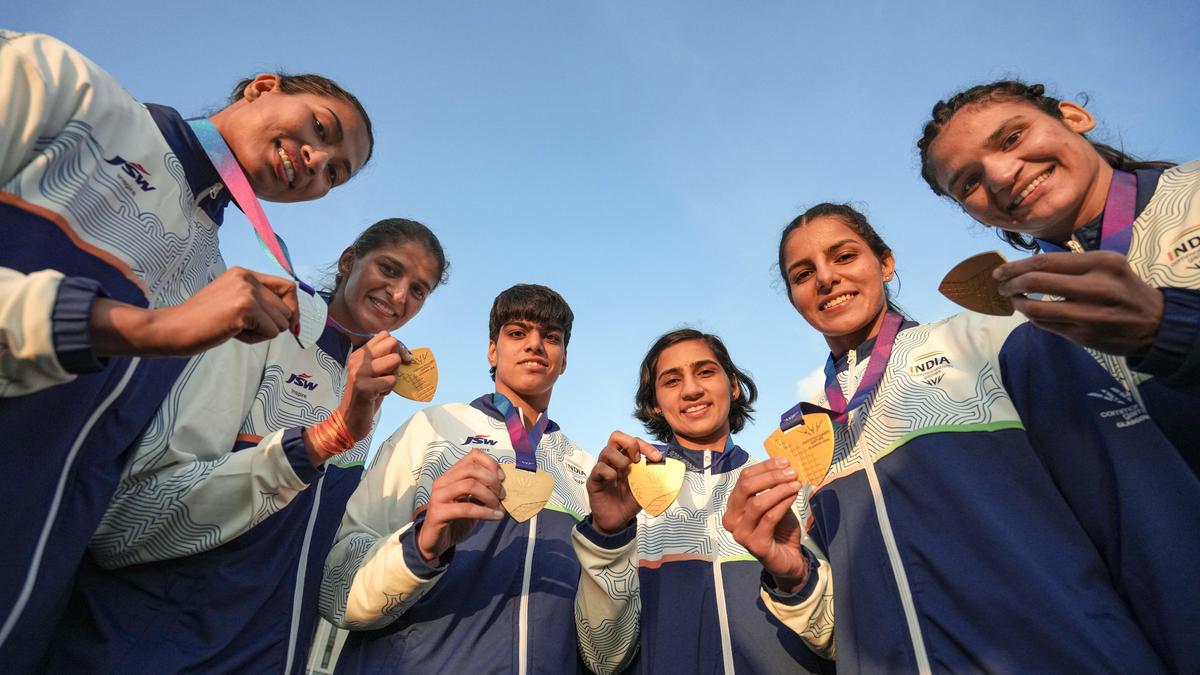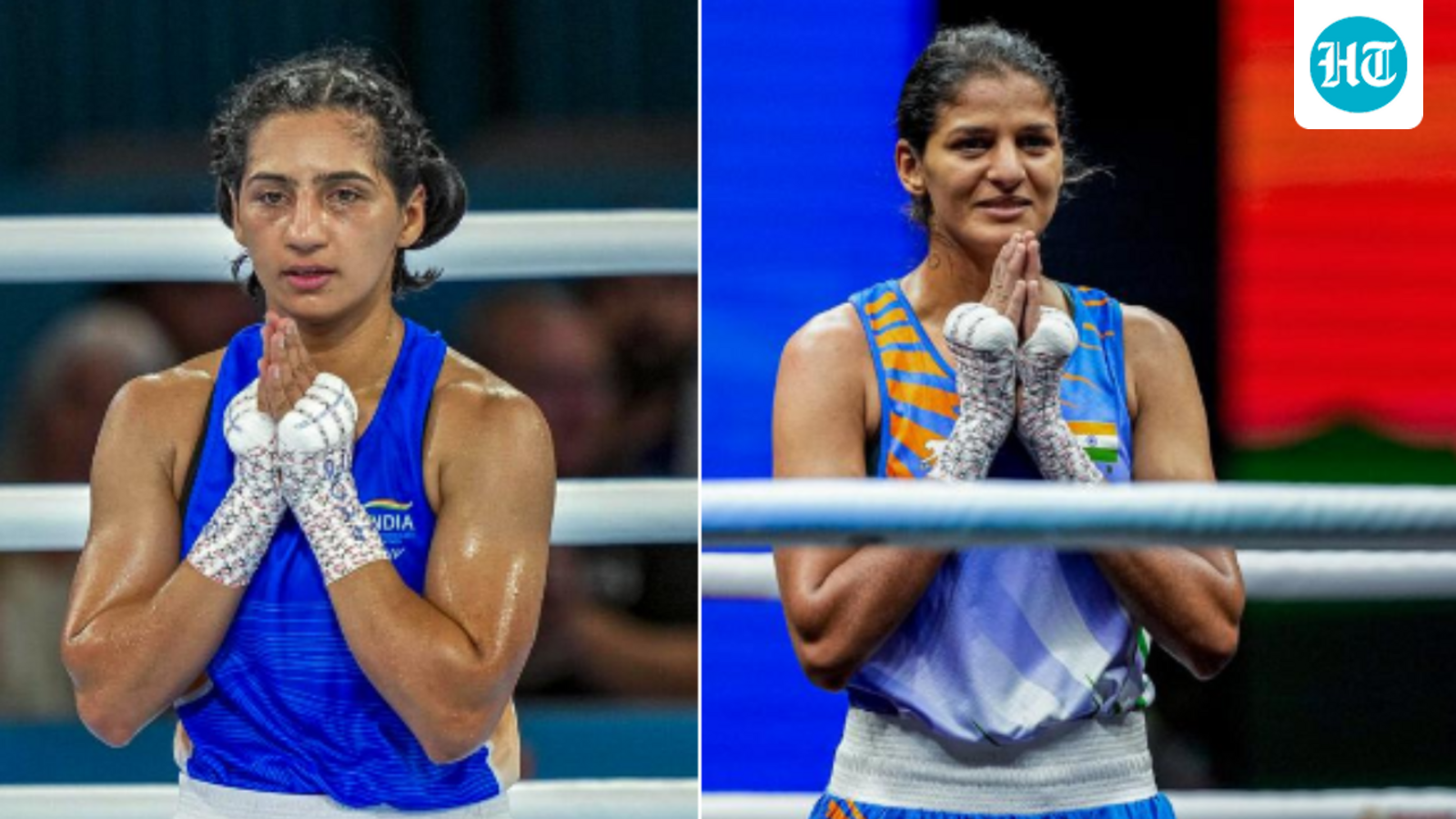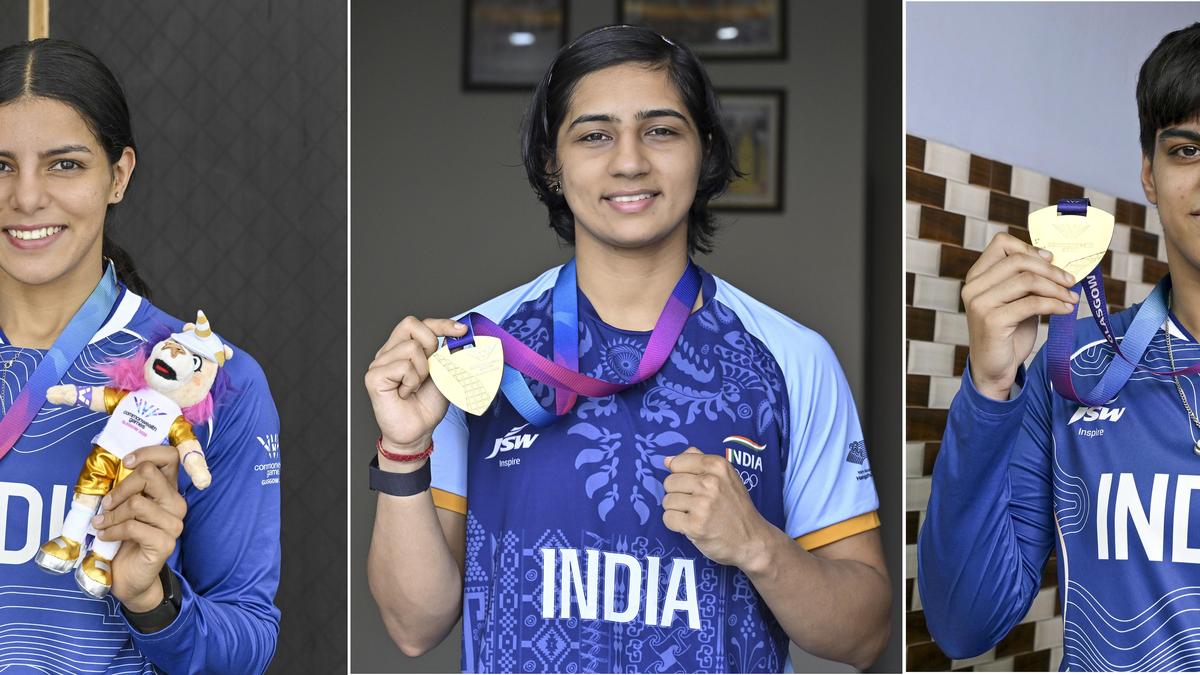
In the heart of Dhanana village, in Haryana’s Bhiwani district, where most houses have unplastered brick walls, one conspicuously stands out. It is a sprawling kothi or bungalow, just a stone’s throw away from the bus stop. A temple spire rises from its courtyard, reaching for the grey sky.It is the overcast morning of August 4. Two days earlier, the curtains had come down on the Commonwealth Games in Glasgow, Scotland. Inside the kothi, there is no time to wait for the sun. Despite a light drizzle, two painters stand on ladders on opposite corners of the compound, brushes in hand. They have a day to complete their work. Sakshi Chaudhary is coming home, with a gold medal.Inside the baithak (sitting room), there is plenty of commotion. Sakshi’s father, Manoj Dhanda, a farmer, is pacing, phone glued to his ear. He is trying to finalise a Haryana cabinet minister for the felicitation.A few feet away, his friend Wazir Singh, a former serviceman, is negotiating with a local Ragini singer — a folk art form that blends poetry, storytelling, and music. Ticking off his list, he says, “500 chairs for the elders. Ladoos, jalebis, hot tea, coffee, and paneer pakoras for everyone.”In the corner, Kaptan Ghanghas, a brick kiln owner, is multitasking. Shouting instructions to a man nearby, he says, “I want 150 banners. All up by tomorrow. I want the entire 20 kilometre-route [from Bhiwani city to Dhanana] covered.”He then picks up his phone and asks in the same authoritative tone, “How many bikes? How many tractors? Talk to all the academies nearby. I need numbers.”Hundreds of motorcycles, tractors, and cars have been arranged for the procession for Sakshi and Priya Ghanghas, also a gold medallist from the same village. Invitations have been sent to all 84 khap panchayats.India’s record-breaking boxing campaign at the 2026 Commonwealth Games in Glasgow, which culminated in 10 medals — seven gold and three silver — was powered by an unlikely but familiar force: Bhiwani, popularly known as India’s Mini Cuba of boxing. Four of these gold medals were won by women nurtured in the town’s celebrated boxing culture: Sakshi Chaudhary (51 kg), Preeti Sai Pawar (54 kg), Jaismine Lamboria (57 kg), and Priya Ghanghas (60 kg).A smiling Wazir sums up the mood: “Our daughters are our VIPs.”A dream realised a generation laterFor Sakshi, the road to Commonwealth glory began 14 years ago when she was just 12 years old.Manoj still remembers the day he took Sakshi and her elder brother Aman, now a Captain in the Indian Army, to a Haryana government talent identification programme designed to spot sporting talent at an early age. “She scored a perfect 21 out of 21 points,” he recalls with pride. “At the time, every youngster in Bhiwani wanted to become the next Vijender Singh (who won a bronze medal at the 2008 Beijing Olympics). Sakshi too caught the boxing bug.”Choosing the sport changed her life. Now an Indian Army havaldar, Sakshi produced one of the finest performances of her career in Glasgow. Facing England’s Ruby White in the 51-kg final, the Indian dominated all three rounds with composure and aggression, ending Ruby’s unbeaten streak of 68 consecutive fights.“We spoke to Sakshi a day before the final,” says Manoj. “She told us she would give it her best shot. We watched every second of the bout with bated breath. When the referee raised her hand, what we felt is beyond words.”Sitting quietly behind her husband, her face covered with a veil, Sakshi’s mother Sheila says that following her daughter’s career has taught her a surprising amount about boxing. “I know terms like knockout, charging, uppercut, and hook,” she says, shyly.Sport has always been close to Sheila’s heart. As a teenager, she played kabaddi. Her father’s friend, the Haryana wrestler Chandgi Ram, tried to convince her family to allow her to take up wrestling, but they never agreed.Today, Sheila feels that her own unfulfilled sporting dream has been realised through her daughter. “I’m just waiting to hug her,” she says, her voice choking with emotion.Channeling the energyPriya’s family eagerly awaits the return of the youngest of Haryana’s four women boxing gold medallists. The family recently moved from Dhanana to Dabra Colony in Bhiwani, where preparations to welcome their champion are in full swing. A cake sits ready on the table.Her mother, Meera, recalls the emotional moment when she and her husband, Mahender, a stone crusher contractor, received Priya at Delhi’s Indira Gandhi International Airport in the early hours of August 4. “I had prepared churma (mashed up roti in ghee and jaggery) for her,” Meera says. “She was happy to eat it after returning home.”According to her family, Priya and her elder brother Neeraj were so energetic and mischievous that their parents channelled their boundless energy into sport. “It turned out to be the best decision we made,” says Meera.Bright, disciplined, and eager to learn, Priya impressed her coach immediately. Within just two days of training, the coach told the family that the girl had the potential to go far.That prediction came true. At just 20, Priya has won a gold at the Commonwealth Games. Her success has also brought financial stability to the family, with Priya joining the Indian Railways in October 2025.Meera says many talented athletes do not get the opportunities that her daughter received eventually. “There is little support before players become successful,” she says. “I know many talented children who had to quit boxing because their families simply couldn’t afford the expenses. The government helps only after a player wins major tournaments.”The girls who bring gloryFor a region long associated with one of India’s most skewed sex ratios, Bhiwani and neighbouring Charkhi Dadri are now telling a different story. In 2011, Bhiwani had 886 females per 1,000 males, compared with the national average of 943. Today, daughters are increasingly seen not as a burden, but as a source of pride.“People are focusing more on their daughters than their sons,” says Sheila. “They have realised that girls can often achieve more if they are given the right opportunities. They can become doctors, engineers, and bring glory to the country through sports.” In contrast, she worries that many young boys are falling prey to drug addiction.Few people have witnessed the change more closely than Kaptan, who credits Manoj with planting the seeds of a boxing revolution. “It was Sakshi’s father who convinced many families to send their daughters to the boxing ring,” he says. “This year, two girls from our village have become Commonwealth champions. In 2022, Nitu Ghanghas won gold at the 2022 Commonwealth Games. If our village is producing champions today, a large share of that credit belongs to him.”Wazir says a public felicitation for Sakshi and the other champions is being planned to not just honour them, but also to inspire the next generation. “If these girls can do it, then the daughters of every family here can do it,” he says. “The message to parents is simple: support your daughters and give them every opportunity possible.”Jagdish Singh, founder of the Bhiwani Boxing Club that produced Olympic medallist Vijender Singh and others, says every medal won by a female boxer attracts more girls to the sport. “After Nitu won the gold in 2022, the number of girls joining the club surged,” he says. “Vijender’s Olympic bronze was the first big turning point.”At his club, boys and girls now train in nearly equal numbers. He also runs a hostel for 20 girls; 16 of them currently stay there.Singh, who coached Sakshi, expects another spike after these Games. “More girls will now take up boxing as a career,” he says.Vijender Singh says all the five Bhiwani gold medallists — four women and Sachin Siwach — are from nearby villages: Mittathal, Dhanana, and Badesara. “Most of them in these villages want to escape poverty and make a name. That hunger is what drives Bhiwani boxing,” he explains.Family legacyJaismine Lamboria, the third woman gold medallist from Bhiwani, believes that the biggest challenge for many girls begins long before they step into a ring. “Unlike boys, who often simply inform their families about their ambitions, girls frequently have to seek permission to play, travel, and pursue their dreams,” she says. Social expectations and family concerns, she adds, can be barriers long before training even begins.At the same time, she sees encouraging signs of change. “Families are becoming more supportive, women are receiving greater opportunities, and institutions are opening more doors for female athletes,” she says. These developments, she believes, show that the playing field is gradually becoming equal.
Haryana’s golden girls
Four women from Haryana’s Bhiwani, known as India’s Mini Cuba of boxing, won gold at the Commonwealth Games in Glasgow. Their victories are especially significant in a district long associated with one of India’s most skewed sex ratios.
1,940 words~9 min read