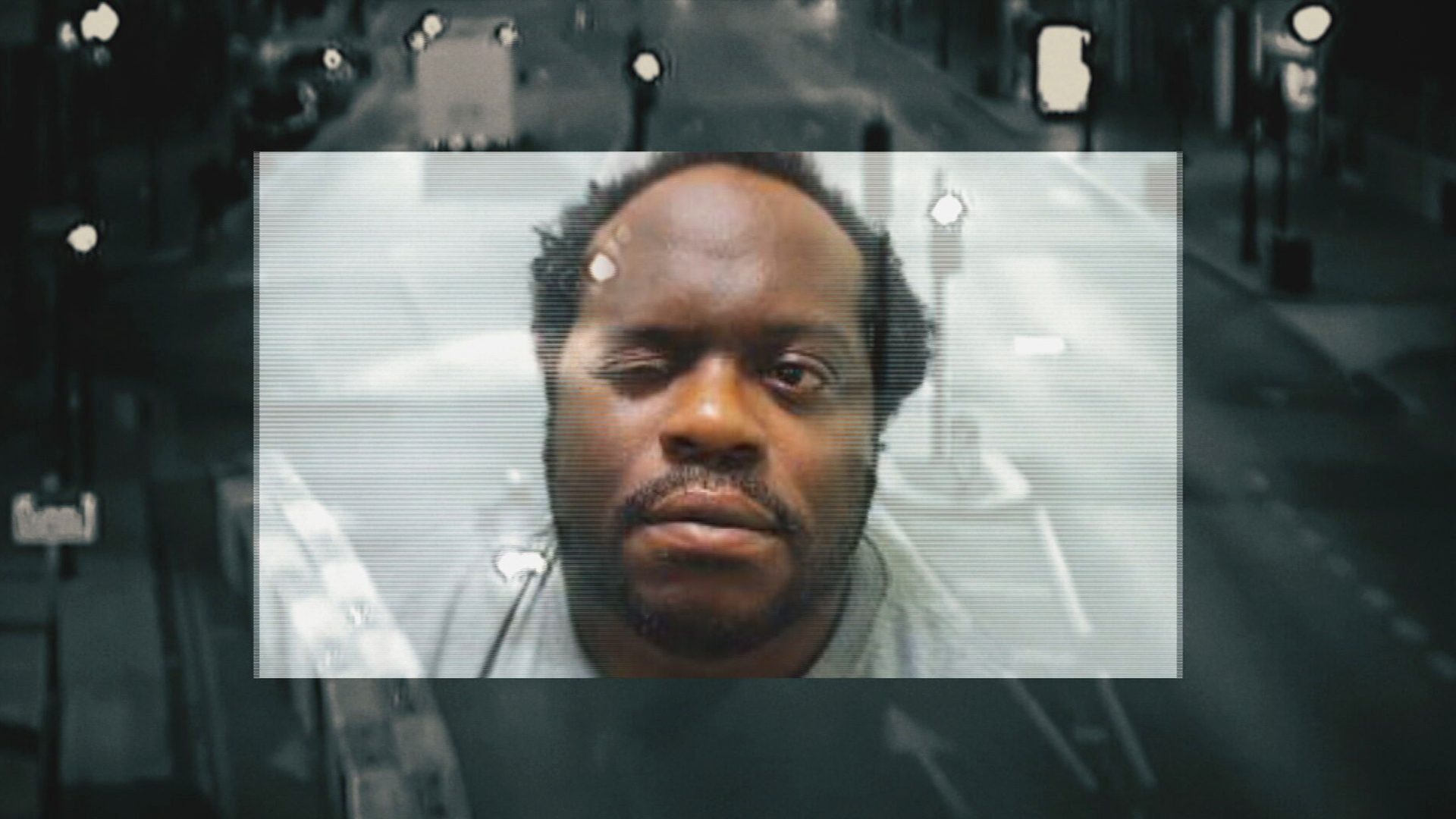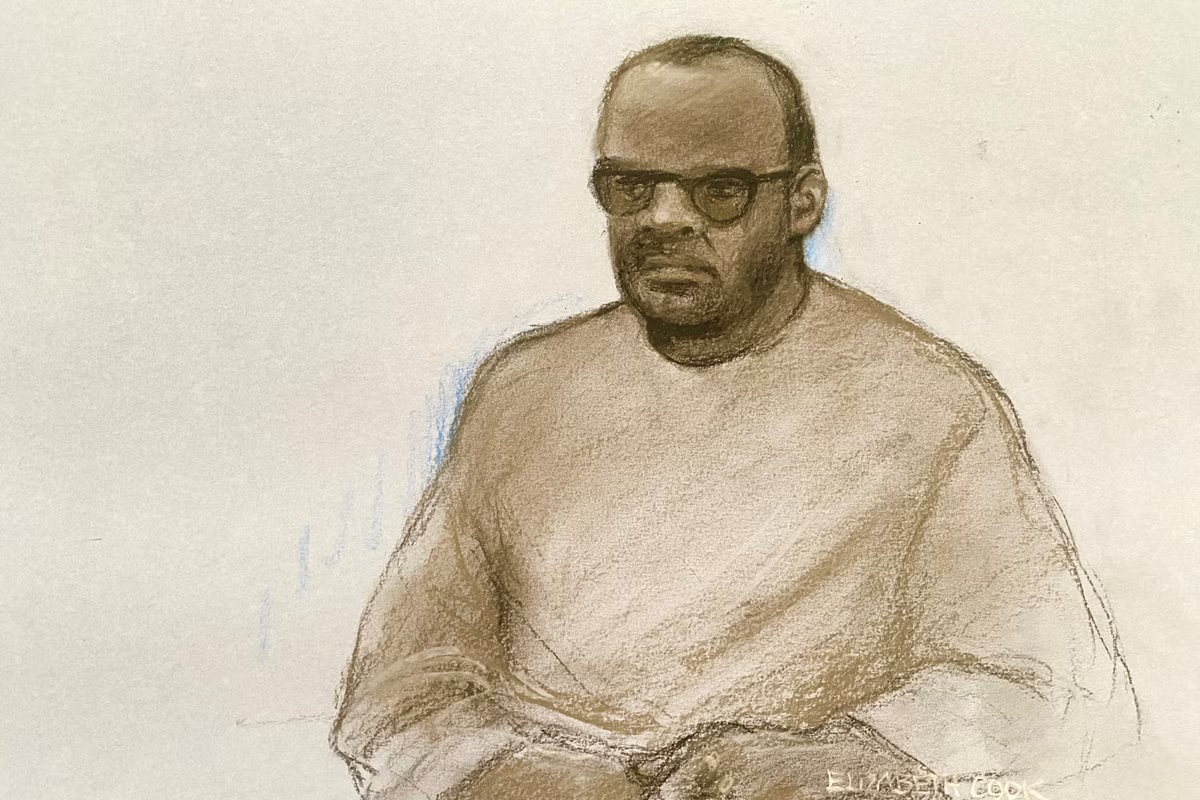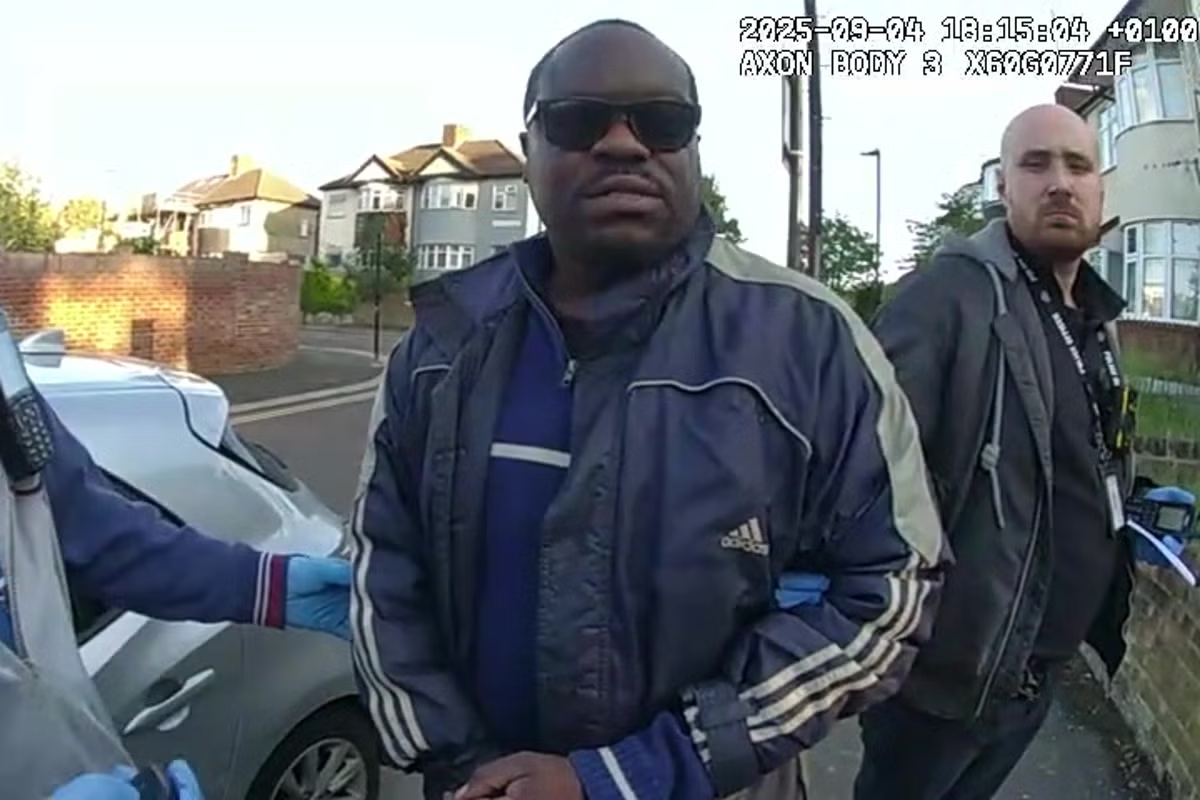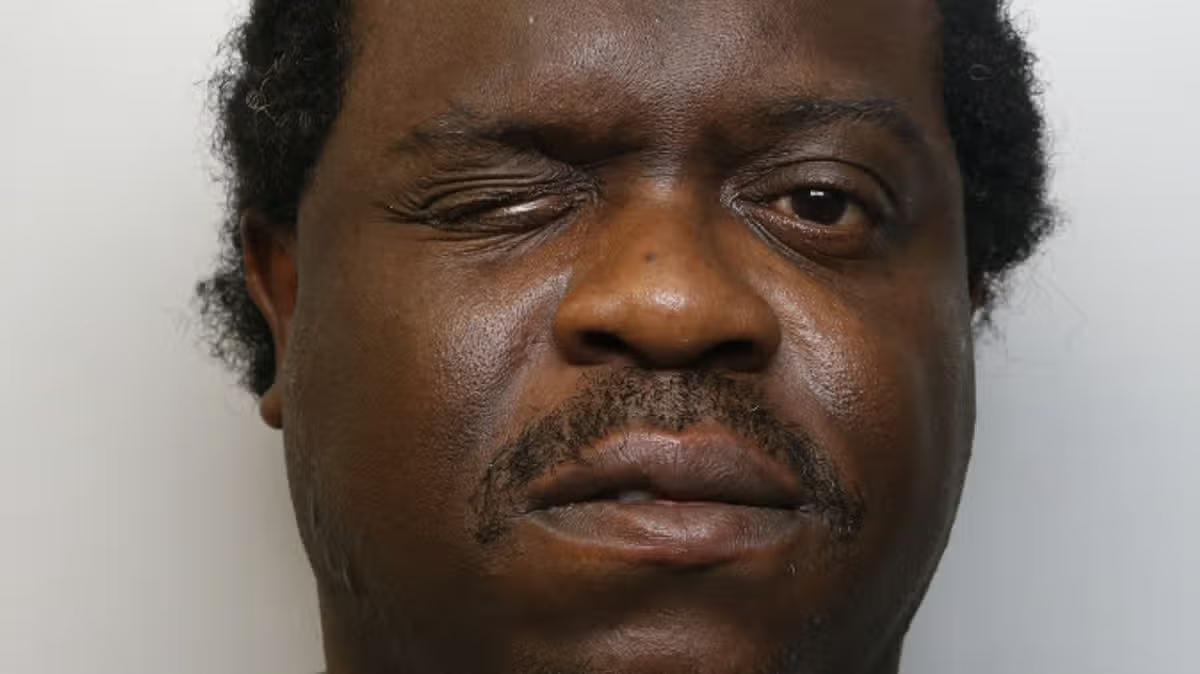
Simon Levy was a serial predator, rapist and murderer. A modern-day Jack the Ripper, who was arrested repeatedly, only to be released repeatedly and allowed to continue his campaign of terror against women.The details of his crimes are horrifying enough, but what is almost as shocking is the number of opportunities the authorities had to stop him.At the time he committed many of his sexual assaults on London’s Tube network, he was not only on bail for similar crimes but – almost unbelievably – suspected of murder.Despite the fact he repeatedly breached his bail conditions and failed to attend court at least twice, a broken system allowed him back on to the streets to continue offending.His case is symptomatic of the litany of failures at all levels that bedevil our criminal justice system.Prosecutions undermined by police blunders. Offenders escaping conviction because the Crown Prosecution Service prepared its cases so poorly. Judges hamstrung by sentencing guidelines that prevent them handing down the sort of jail terms that fit the crime. I could go on.Andy Burnham is letting serious criminals out of prison early. Meanwhile, Reform UK’s approach to justice would require a colossal expansion of the prison network to accommodate ten times as many inmates as we have today.These proposals do nothing to solve the problem. The details of Levy's crimes are horrifying enough, but what is almost as shocking is the number of opportunities the authorities had to stop him Despite the fact he repeatedly breached his bail conditions and failed to attend court at least twice, a broken system allowed him back on to the streets to continue offendingAll too often, I have seen politicians and officials making decisions without ever putting themselves in the shoes of those who will suffer the consequences.They will never be the woman trapped in a packed Tube carriage with a predator. They will never be the victim who discovers that the man who attacked her has been released. They have never had to explain to a family grieving the loss of a loved one why another chance was given to an offender who had already shown murderous tendencies.That is why we end up with male rapists identifying as women being placed in female prisons, and dangerous criminals released to reoffend.What we need are common-sense solutions. If people believe they can get away with crimes, or will escape with a slap on the wrist if they are convicted, they will continue to offend. Rigorous enforcement and tough punishment are not cruel, they are necessary.For years, too much criminal justice policy has been based on the comforting theory that prison is a vast rehabilitation machine. An offender goes in, takes part in an intervention programme, and comes out somehow cleansed.The reality is rather different. Rehabilitation matters, but the protection of the public matters more. And meaningful penalties matter more than both. For without punishment there is no deterrence.We have created an expensive merry-go-round. Police officers arrest the usual suspects. Prosecutors charge them. Victims relive their ordeal in the witness box. Members of the public give up their time to sit on juries. Then, after the machinery of justice has taken its course, the criminal receives a suspended sentence, an early release, or another chance to offend.I can’t say it enough: this is madness and it must stop. Carmenza Valencia-Trujillo, 53, was murdered by Levy. Her body was found in a stairwell of a derelict block of flats in Southwark, south-east London Sheryl Wilkins, 39, was also murdered by LevySir David Gauke, a former Conservative Justice Secretary, represents the kind of thinking the party has left behind.The Gauke approach began with the conclusion that fewer people should be in prison, and those who were behind bars should serve shorter sentences. But being nice to offenders does not produce better outcomes.The Conservative Party I lead doesn’t make policy like this. I take my cue from people like former Home Secretary Michael Howard. ‘Prison works,’ he said. He was right.This approach does mean we will have to build more prisons. We may well have to rent prison places abroad. And we must deport foreign criminals rather than house them here at the public’s expense.But if it is a choice between prisons being overcrowded and killers and rapists being let out onto the streets, then I’d rather the state manage the overcrowding problem.All of this will cost money. And building prisons will provoke objections. People often say they do not want a prison near their town. I understand that.But the trade-off is not between a jail and nothing. It is between having secure prison capacity and allowing killers and rapists to walk around freely.When people believe they will not be punished, more crime follows. Offenders notice when police bail is repeatedly extended, when court appearances can be missed without immediate action and when sentences bear little relation to the crimes committed.The public notice, too. They see a system that appears endlessly understanding of criminals and depressingly indifferent towards victims.If Andy Burnham wants to join me in adopting a common-sense approach, I will work with him. But I am wary of his backbenchers. Every opportunity they have had to vote for the right thing, they have chosen to do the wrong thing.This should not be a question of Left against Right. It is a question of right against wrong.The test is simple. Dangerous people must remain in prison until they are no longer a threat to society and have shown genuine remorse. The public must come before the offender. The country must pay what is necessary to make that happen.Simon Levy’s victims paid the price for a system that failed to impose consequences. No more women should have to pay that price.Law and order are the first duty of government. The Conservative Party is ready to enforce them again.
Failures left Simon Levy free to prey on women at will: KEMI BADENOCH
Simon Levy was a serial predator, rapist and murderer. A modern-day Jack the Ripper, who was arrested repeatedly, only to be released repeatedly and allowed to continue terrorising women.
969 words~4 min read