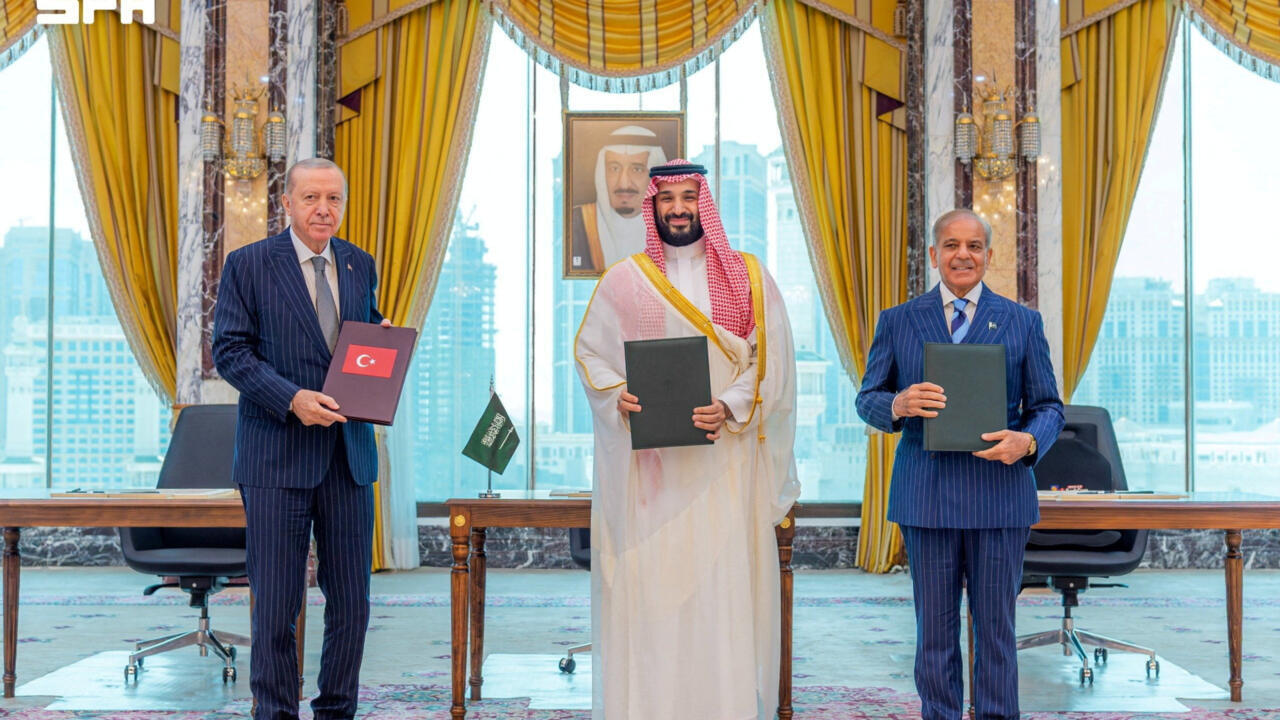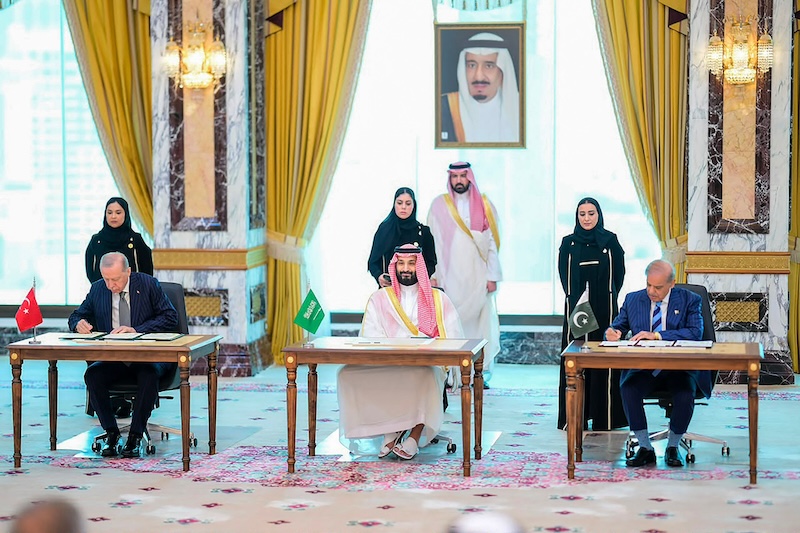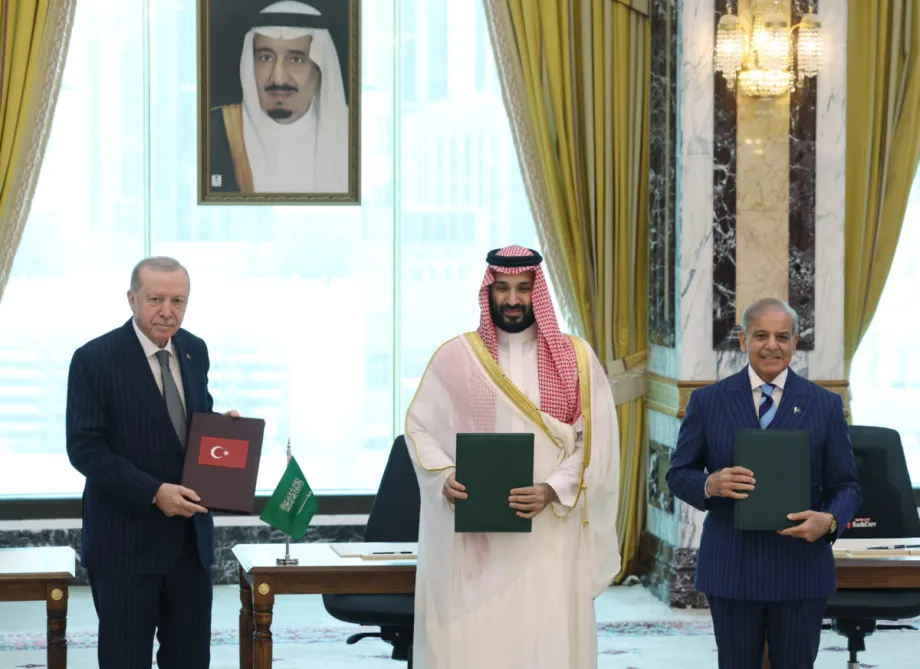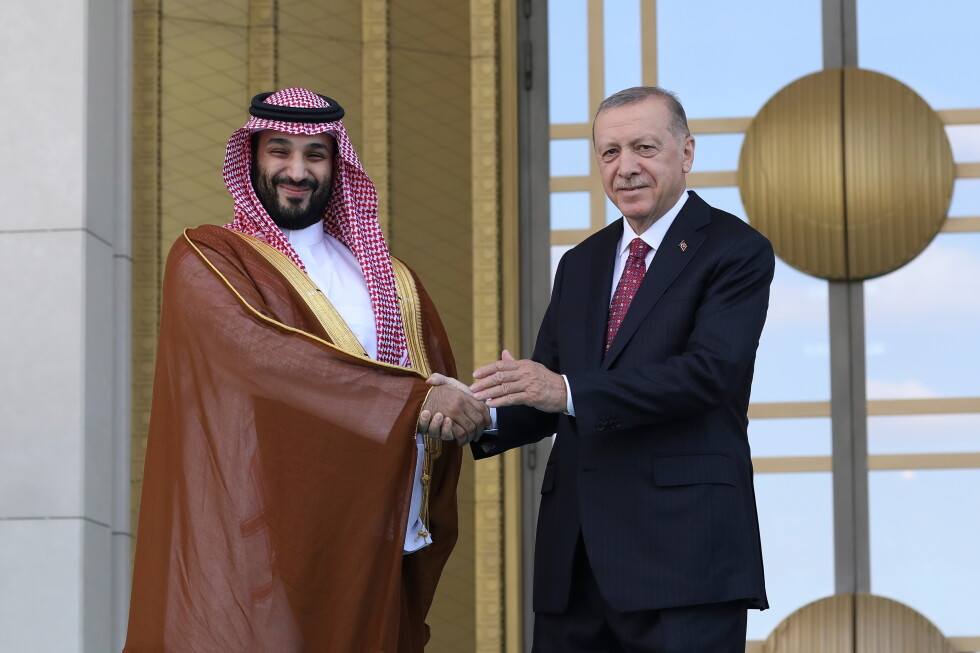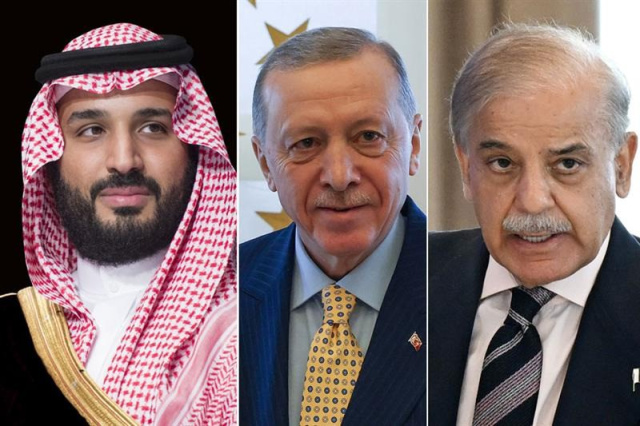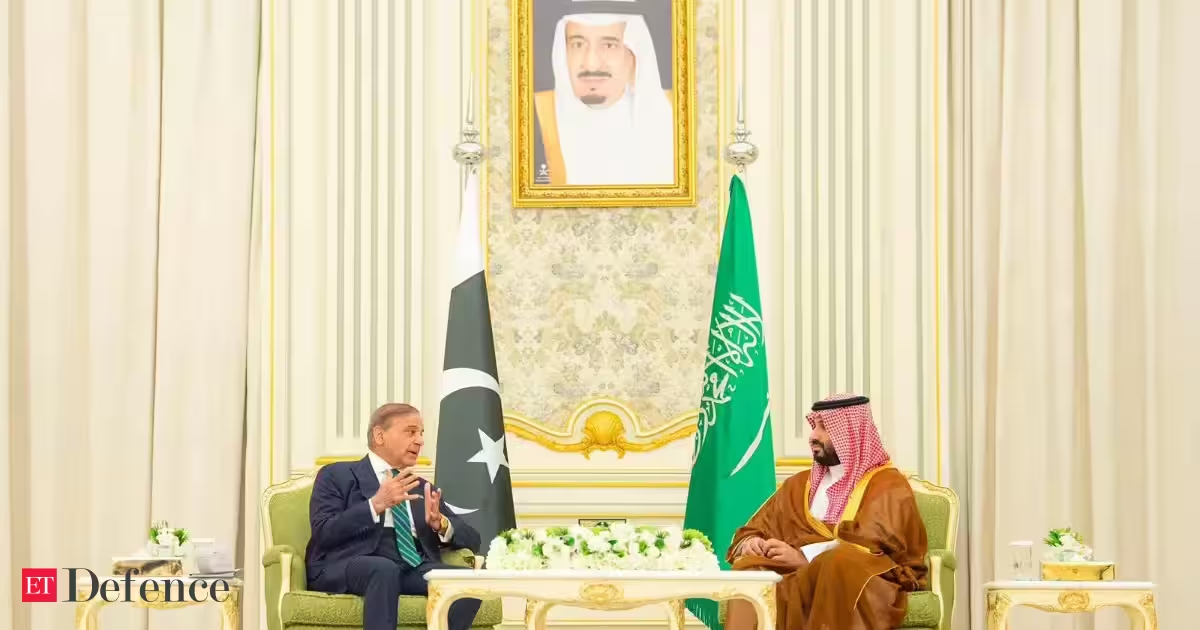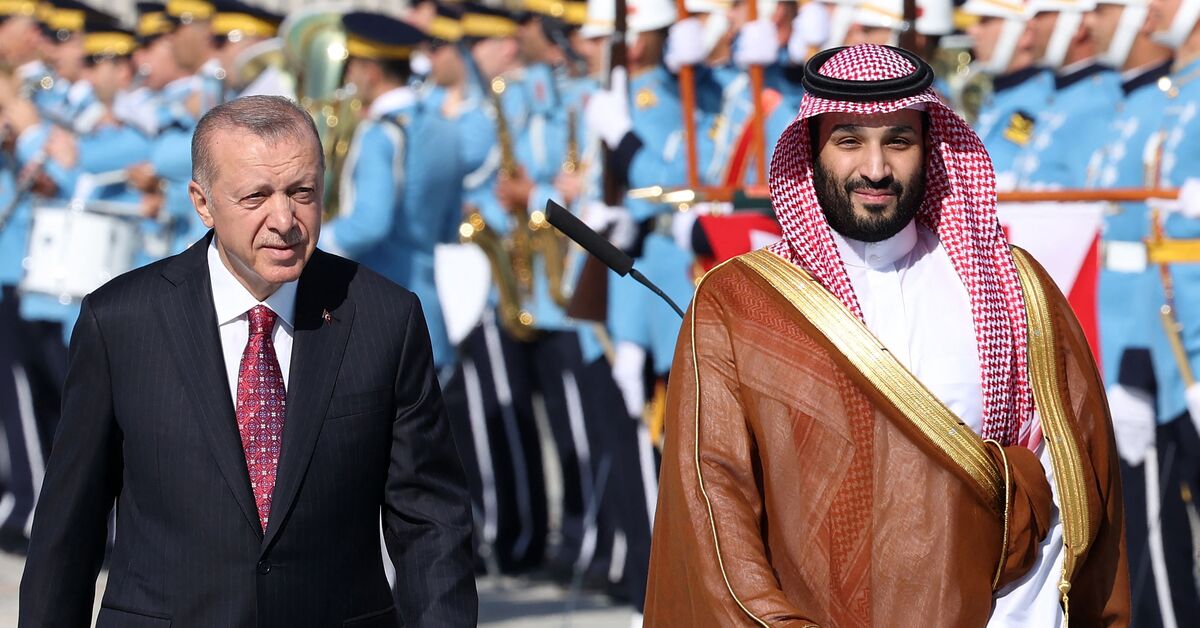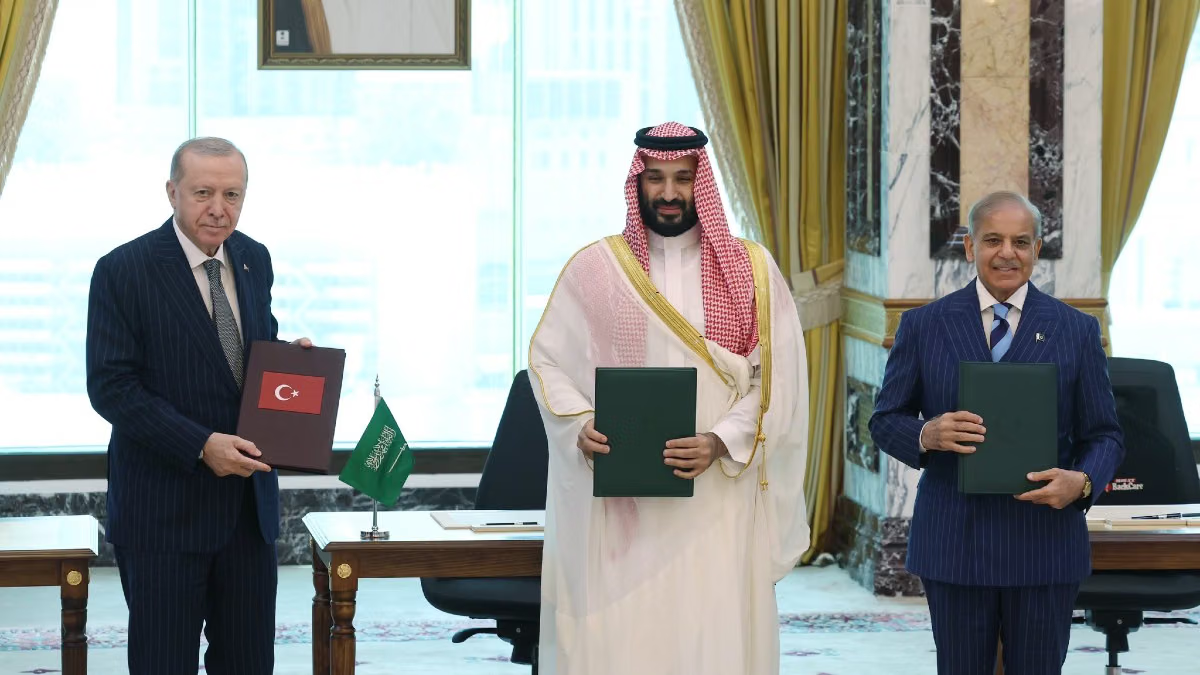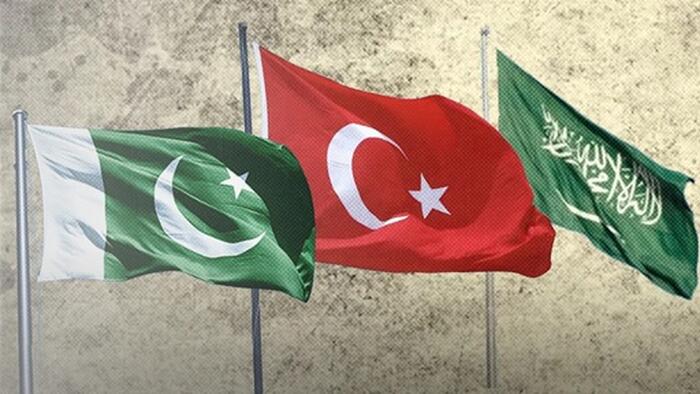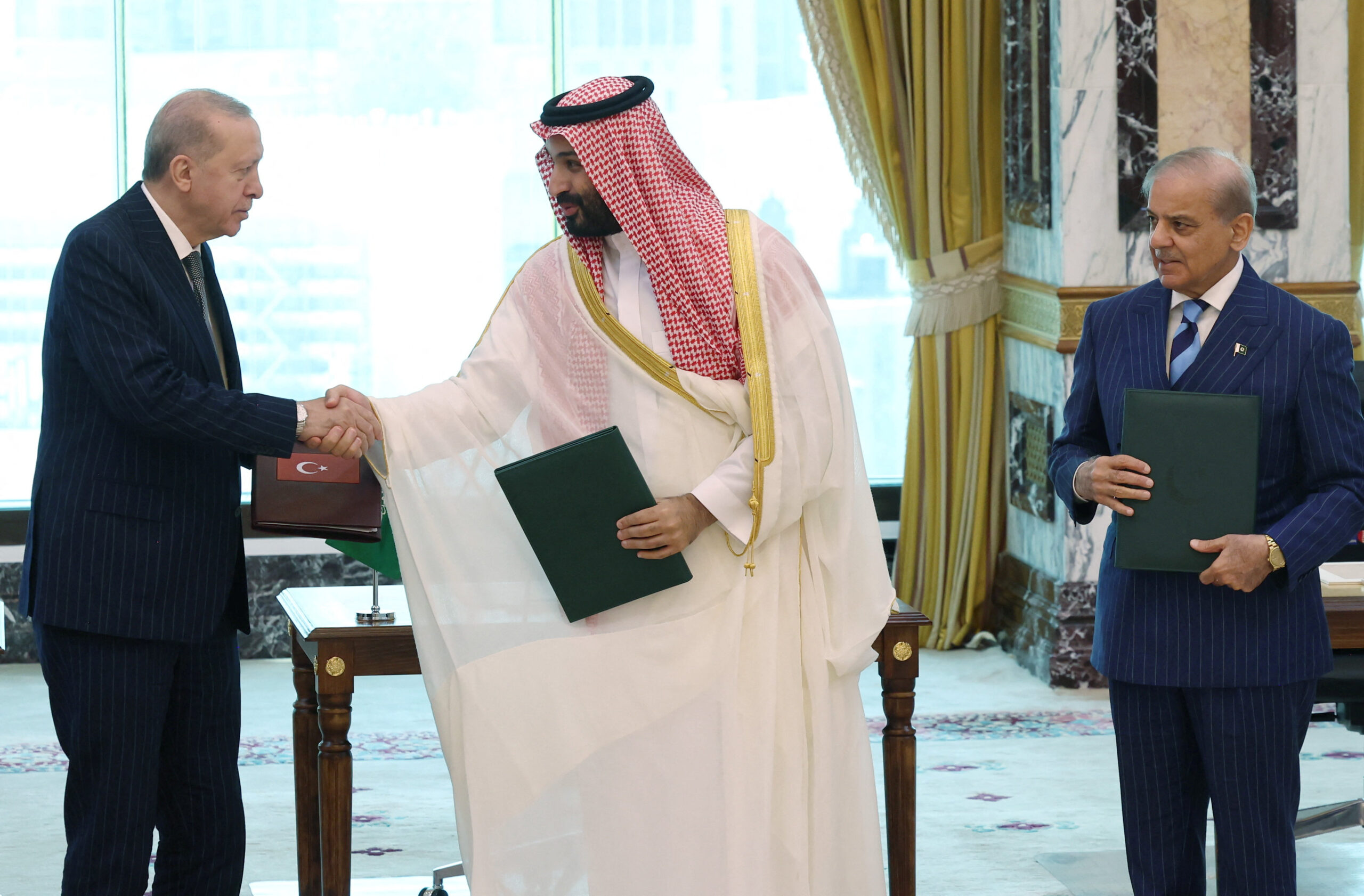
They’re in it together. On Friday, leaders from Saudi Arabia, Pakistan, and Turkey signed a new defense agreement, which “stipulates that any armed attack against any one of the three states shall be regarded as an attack against them all.” Named for the Saudi city where it was signed, the Mecca Joint Defense Agreement comes as the Iran war threatens to restart and Houthi attacks from Yemen already have, and as Gulf states question the United States’ role as a security provider after Iran’s many drone and missile attacks.
Below, Atlantic Council experts explain what the agreement means—and doesn’t mean—for the three countries.
Saudi Arabia
This agreement is not a NATO-like alliance, and it does not signal a discrete new regional bloc. But that does not mean it is not significant. For Riyadh, this agreement bolsters the country’s leverage as it both copes with an emboldened Iran and confronts the limits of US deterrence in the region. By stitching together a web of partnerships, Riyadh assesses it will be better able to anticipate shifting regional threats than relying on any single partner or bloc. But Riyadh is also leveraging a turbulent period to assert its regional leadership: by hosting the signing of a new security agreement with another regional power broker—Turkey—Saudi Arabia is asserting itself as the face of regional stability at a time when the other major regional powers, Iran and Israel, are seen as destabilizing forces.