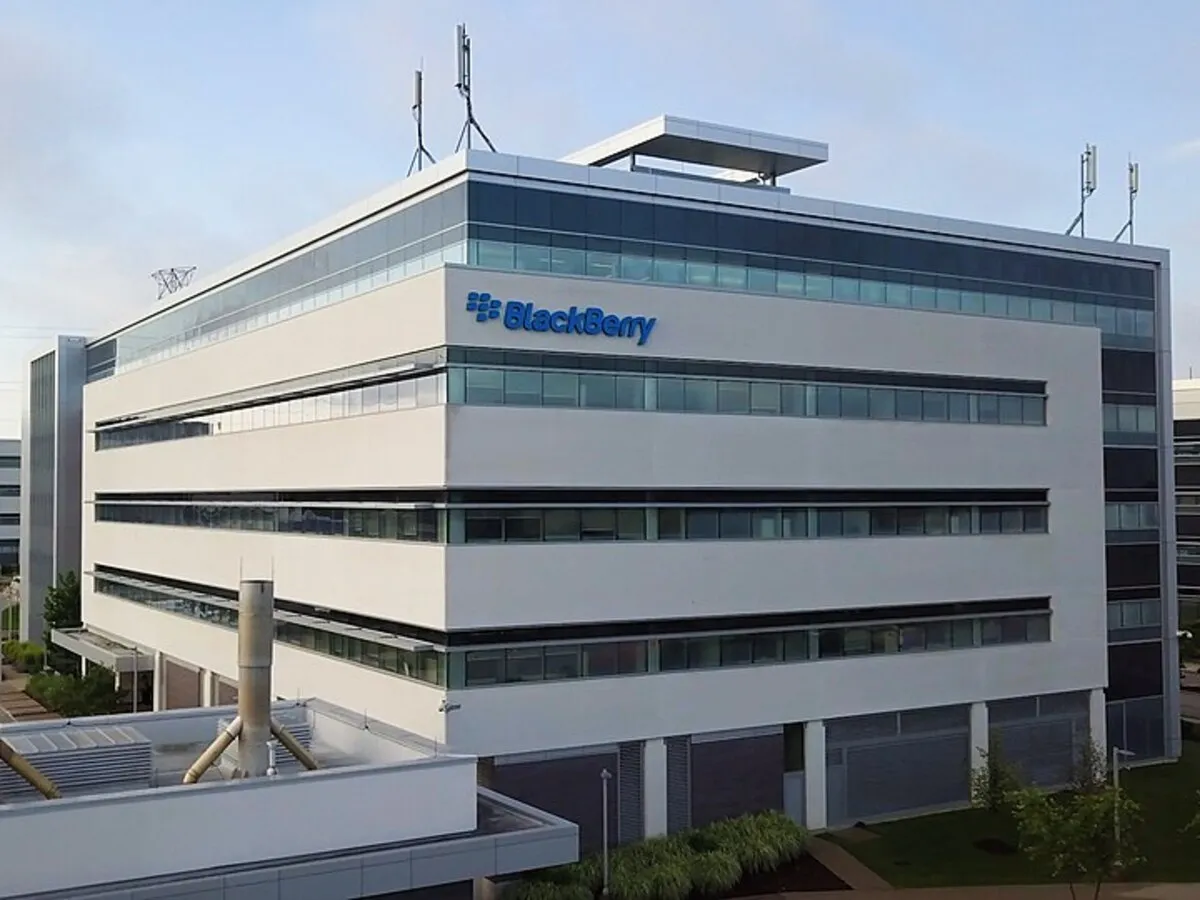
Skip to Content News Archives Economy Energy Oil & Gas Renewables Electric Vehicles Mining Commodities Agriculture Real Estate Mortgages Mortgage Rates Finance Banking Insurance Fintech Cryptocurrency Work Wealth Smart Money Wealth Management Investor Personal Finance Family Finance Retirement Taxes High Net Worth FP Comment Executive Women Puzzmo Newsletters Financial Times Business Essentials More Innovation Information Technology FP500 Podcasts Small Business Lives Told Tails Told Shopping Financial Post Store Obituaries Place a Notice Advertising Advertising With Us Advertising Solutions Postmedia Ad Manager Sponsorship Requests Classifieds Place a Classifieds ad Working Profile Settings My Subscriptions Saved Articles My Offers Newsletters Customer Service FAQ News Economy Energy Mining Real Estate Finance Work Wealth Investor FP Comment Executive Women Puzzmo Newsletters Financial Times Business Essentials HomeInvestorThe AI-adjacent portfolio: Six Canadians stocks that could benefit from the AI buildoutThe AI trade has been booming, but it isn't all chips and advanced technology You can save this article by registering for free here. Or sign-in if you have an account.The Canadian flag flying between two towers in the financial district in Toronto, Ontario on Tuesday, July 14, 2026. Photo by Peter Power/PostmediaAfter a shaky July that included a US$500-billion single-day selloff, the AI trade came roaring back this week and helped push the S&P 500 and S&P/TSX composite indexes to new highs.Subscribe now to read the latest news in your city and across Canada.Exclusive articles from Barbara Shecter, Joe O'Connor, Gabriel Friedman, and others.Daily content from Financial Times, the world's leading global business publication.Unlimited online access to read articles from Financial Post, National Post and 15 news sites across Canada with one account.National Post ePaper, an electronic replica of the print edition to view on any device, share and comment on.Daily puzzles, including the New York Times Crossword.Subscribe now to read the latest news in your city and across Canada.Exclusive articles from Barbara Shecter, Joe O'Connor, Gabriel Friedman and others.Daily content from Financial Times, the world's leading global business publication.Unlimited online access to read articles from Financial Post, National Post and 15 news sites across Canada with one account.National Post ePaper, an electronic replica of the print edition to view on any device, share and comment on.Daily puzzles, including the New York Times Crossword.Create an account or sign in to continue with your reading experience.Access articles from across Canada with one account.Share your thoughts and join the conversation in the comments.Enjoy additional articles per month.Get email updates from your favourite authors.Create an account or sign in to continue with your reading experience.Access articles from across Canada with one accountShare your thoughts and join the conversation in the commentsEnjoy additional articles per monthGet email updates from your favourite authorsSign In or Create an AccountorMeanwhile, potential IPOs from OpenAI and Anthropic, PBC are setting the stage for potential trillion-dollar valuations and will test the market’s confidence in frontier artificial intelligence.The artificial intelligence boom has largely focused on Big Tech and the Magnificent Seven, but there are opportunities for investors beyond pure-play AI. While most of the core pieces right now are in the United States, the Financial Post asked portfolio managers which Canadian stocks they’re watching that could indirectly ride the AI wave. Here’s what they said:Canada's best source for investing news, analysis and insight.By signing up you consent to receive the above newsletter from Postmedia Network Inc.A welcome email is on its way. If you don't see it, please check your junk folder.The next issue of Investor will soon be in your inbox.We encountered an issue signing you up. Please try againTo keep data centres humming, big tech companies are signing purchase power agreements (PPAs) to buy electricity from producers at a fixed price for a long-term set period.One of the first companies to meaningfully benefit from the surge in corporate PPAs has been Brookfield, said Rebecca Teltscher, portfolio manager at Newhaven Asset Management Inc.Brookfield Renewable Partners LP owns and operates a massive global portfolio of renewable power assets including hydroelectric, wind, solar, energy storage, carbon capture and renewable natural gas. It also owns a 51 per cent stake in nuclear services provider Westinghouse Electric Company.Brookfield’s renewable power business trades under two entities with the same economic interest but different tax and ownership structures: Brookfield Renewable Partners, a Bermuda-based limited partnership, and Brookfield Renewable Corp., a Canadian corporation. In July, Brookfield announced the two entities will merge to form a single publicly traded Canadian company called Brookfield Renewable Partners Inc.“As energy demand accelerates, AI hyperscalers are increasingly recognizing the scarcity of reliable, clean electricity and are seeking to secure long-term power supplies,” Teltscher said in an email. “This has led to some of the largest corporate PPAs ever signed.”To wit: In 2024, Brookfield Asset Management and Brookfield Renewable Partners signed the largest single PPA in history with Microsoft Corp. The five-year agreement, valued at more than US$10 billion, outlines plans to develop 10.5 gigawatts of new renewable energy capacity through projects across the U.S. and Europe.Brookfield also signed a PPA with Google last year to supply up to 3,000 megawatts of hydroelectric power for the tech giant’s U.S. operations, including an initial contract representing more than US$3 billion of power and 670 megawatts of capacity.“With AI adoption and cloud computing driving unprecedented growth in electricity demand, hyperscale data centres operated by companies such as Microsoft and Google are approaching the limits of existing power infrastructure,” said Teltscher.“As additional AI data centres are developed, we expect demand for long-term renewable power contracts to remain strong.”Brookfield Renewable Partners L.P.’s Toronto-listed shares were trading at $45.88 midday Friday and are up nearly 25 per cent year to date.The AI buildout is driving huge demand for supporting infrastructure such as data centres, which require specialized real estate, 24/7 electricity and continuous cooling. One company that is poised to benefit is telecommunications giant BCE Inc., which is strategically diversifying beyond its traditional wireless and broadband businesses by expanding into AI infrastructure, Teltscher said.Projects include a seven-megawatt computing centre in Merritt, B.C., which BCE plans to expand in early 2027. The facility operates as part of the Bell AI Fabric network, which is designed to provide Canadian enterprises and government organizations with sovereign AI computing capabilities. BCE also plans to build a $1.8-billion, 300-megawatt AI data centre campus in Sherwood, Sask. Teltscher said all planned capacity at the facility has already been pre-leased to anchor tenants Cerebras Systems Inc. and CoreWeave Inc., “significantly reducing commercialization risk while providing strong long-term revenue visibility.” Teltscher notes that BCE’s strategy is focused on providing critical infrastructure that supports AI workloads, rather than investing directly in AI hardware. “This approach allows the company to capitalize on the growing demand for AI computing capacity while avoiding many of the risks associated with semiconductor investment cycles, including rapid technological change, pricing volatility, and hardware obsolescence,” said Teltscher. BCE’s management set a target of generating approximately $2 billion in annual AI-powered solutions revenue by 2028. Despite these initiatives, Teltscher said the telecom sector remains “deeply out of favour with investors.” “We believe the market is assigning little value to BCE’s emerging AI infrastructure business,” said Teltscher. “In our view, BCE offers one of the most attractive risk-adjusted ways to gain exposure to the long-term AI infrastructure buildout without paying the elevated valuation multiples currently associated with many AI-focused companies.”BCE isn’t the only telecom trying to get in on the AI boom. Telus Corp. is also investing in AI infrastructure, sovereign data centres and enterprise AI platforms.BCE Inc.’s Toronto-listed shares were trading at $31.71 midday Friday and are down 1.8 per cent year to date. The Guelph, Ont.-based company is North America’s largest manufacturer of dry-type transformers, which convert and distribute electricity and use air instead of liquid for cooling and insulation. Dry-type transformers reduce fire risk, require less maintenance and can be installed indoors near sensitive computer equipment, making them well suited for data centres. Hammond is seeing surging demand for its transformers and data centres are the “big growth driver,” said Jamie Murray, president of The Murray Wealth Group. The broader transformer industry is also starting to see longer lead times with production slots pushed out years ahead.“When you get a big surge in demand and longer lead times, you start to get pricing, which is ultimately the biggest driver of profit growth,” he said. “And you have production going up and then pricing going up. That’s when you really get that big margin expansion. Hammond is right in the centre of that right now.”Hammond recently acquired Netherlands-based AEG Power Solutions, which specializes in power supply and conversion for industrial and renewable applications and has big exposure in Europe and Asia.“We’re going to see more built in those two continents in the next coming five years, so (Hammond) will benefit from that. And then it just diversifies their revenue into some other electrical systems and services,” Murray said. “They can also bring that over to North America, where they can expand their service offering and broaden out the products and solutions that they can offer.”Hammond Power Solutions Inc.’s share price was $270 midday Friday and is up 68 per cent year to date. A decade ago, Canada’s smartphone pioneer exited the hardware business entirely and pivoted to software and cybersecurity. A big part of BlackBerry’s turnaround story is QNX, a real-time operating system designed for safety-critical technologies such as automotive software, medical devices, industrial equipment and aerospace systems. The QNX division now accounts for about half of BlackBerry’s revenue. Since April, BlackBerry’s share price has jumped due to strong earnings that beat analysts’ expectations, positive cash flow and an expanded partnership with NVIDIA Corp. in edge AI applications. AI investing is currently at a stage where investors are looking to identify the next wave of companies that will benefit from the AI boom, said Jim Thorne, chief market strategist at Wellington-Altus Private Wealth Inc. QNX is currently used in 275 million vehicles worldwide and could become even more valuable as AI becomes more common in other connected devices. “What’s going to make the system work, and where is that security going to come from? And can BlackBerry’s QNX have a part in that? I think we’re in the early stages of that,” Thorne said. The market is identifying BlackBerry’s potential, but Thorne said it’s too early to tell if QNX will be “massive” for the company. The question is whether BlackBerry can sign more deals and position itself as the go-to supplier in robotics, autonomous machines and industrial systems. “Can Blackberry execute? Is QNX really going to be in robots and inference AI and autonomous vehicles when the whole world is run on AI? Is there a position in there? And if there is, then this is a wonderful stock to have,” Thorne said. Thorne said BlackBerry has potential, but “more work, more evidence, and more data” needs to come back. Blackberry Ltd.’s Toronto-listed shares were trading at $12.51 midday Friday and are up 141 per cent year to date. Powering AI requires enormous amounts of electricity, and analysts say independent power producer Capital Power and another Alberta-based competitor, TransAlta Ltd., are well positioned to cash in on the surge as both sell electricity to wholesale markets.A few recent developments have been “incrementally constructive” for both companies, CIBC Capital Markets analyst Mark Jarvi said in a note. First, the Alberta Electric System Operator (AESO) draft Phase 2A framework, a policy for integrating large electricity loads (including data centres) into the province’s power grid, “provides greater flexibility to bring data centres online faster,” Jarvi said. Jarvi said the Alberta government’s data centre regulation framework, released in June, is complementary to Phase 2A and provides a path for underutilized assets to serve data centres.“In our view, the new framework accelerates timelines and shifts part of the opportunity toward earlier, capital-light monetization,” Jarvi said. “This should be more impactful for TransAlta, given the scale of its underutilized (coal-to-gas) fleet.” Murray from The Murray Wealth Group said every new large data centre represents a potential long-term electricity customer for Capital Power. In July, the company announced a 10-year deal to supply 250 megawatts of capacity and energy to Meta Platforms Inc.’s planned $13-billion AI data centre in Sturgeon County, Alta. “They have a very good strategy around data centres and we’re hoping that they’re going to have a data centre announcement in the next year or two to sell this excess power to,” said Murray. Capital Power Corp.’s share price was $64.66 midday Friday and is up nearly 10 per cent year to date. TransAlta Corp.’s share price was $17.42 midday Friday is up 0.46 per cent year to date. The broader data centre buildout could be a boon for one of Canada’s largest publicly traded construction and infrastructure development companies. In July, the Aecon-led consortium TRA (which includes partner Técnicas Reunidas Alberta Inc.) was selected to build the Greenlight Electricity Centre (GLEC) in Sturgeon County, Alta. The 932-megwatt natural gas-fired combined-cycle power generation facility will power Meta’s Alberta data centre. TRA’s work will span all phases of the project, including engineering, procurement, construction execution and commissioning. In a release, Aercon said the construction scope includes civil works for existing and future power islands, as well as piping, mechanical, structural, electrical and instrumentation work for the plant, gas metering station, switchyard and substation. “The contract adds another growth vector to what we believe is already the most significant power infrastructure opportunity set for (Aecon) in our more than two decades covering the stock,” Raymond James Ltd. analyst Frederic Bastien said in a July 3 note. GLEC is a “significant award” for Aecon, TD Securities Inc. analyst Michael Tupholme said in a July 2 note, arguing the market hasn’t given the company “enough credit” for data centre-related opportunities. Assuming 80 per cent of Aecon’s $1.7-billion contract is recognized during the project’s peak construction years in 2027-29, Tupholme estimated the GLEC contract could add around $450 million in annual revenue to the company’s bottom line. “Factors we see supporting strong margins on this award include the in-demand nature of the work, the project’s timeline, the relative scarcity of qualified delivery partners, (Aecon’s) self-perform capabilities, and the fixed price nature of the award,” Tupholme said. Aecon Group Inc.’s share price was $46.92 midday Friday and is up 50 per cent year to date. Join the Conversation This website uses cookies to personalize your content (including ads), and allows us to analyze our traffic. Read more about cookies here. By continuing to use our site, you agree to our Terms of Use and Privacy Policy.
The AI-adjacent portfolio: Six Canadians stocks that could benefit from the AI buildout
The Financial Post asked portfolio managers for the Canadian stocks they thought could catch a ride on the AI wave. Find out more here
2,418 words~11 min read