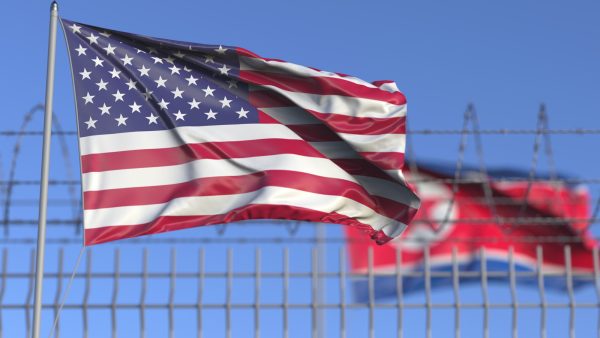
Since the COVID-19 border closures sealed North Korea off from the world, and as the China-Russia-North Korea axis has deepened, the North Korean people have become more isolated and vulnerable than at any point in recent memory. In this grim period, one piece of encouraging news stands out: last month, U.S. Senators Tim Kaine (D-VA) and Dan Sullivan (R-AK) introduced the bipartisan North Korean Human Rights Reauthorization Act (NKHRA).
Growing up in North Korea, America was my enemy – alongside South Korea, the U.S. is one of the two principal adversaries the state taught us to despise. I was taught that American missionaries had pressed the word “thief” into an innocent boy’s forehead with caustic acid. We called Americans “wolf-like Yankee imperialists” and were told they sought to swallow the Korean peninsula whole.
When I escaped in 2013, I carried that conditioning with me – until American volunteers with no family ties to North Korea, no personal stake, no obligation, wept and prayed alongside me for the family I had left behind. And as I slowly learned the truth about the outside world, I discovered something that humbled me entirely: the very government I had been raised to fear had passed the North Korean Human Rights Act in 2004, becoming the first country in the world to formally recognize that what was happening inside North Korea was not merely a political problem, but ongoing crimes against humanity. The Americans had been fighting for people they would never meet, in a country they were prohibited from entering, for decades.