Show Caption
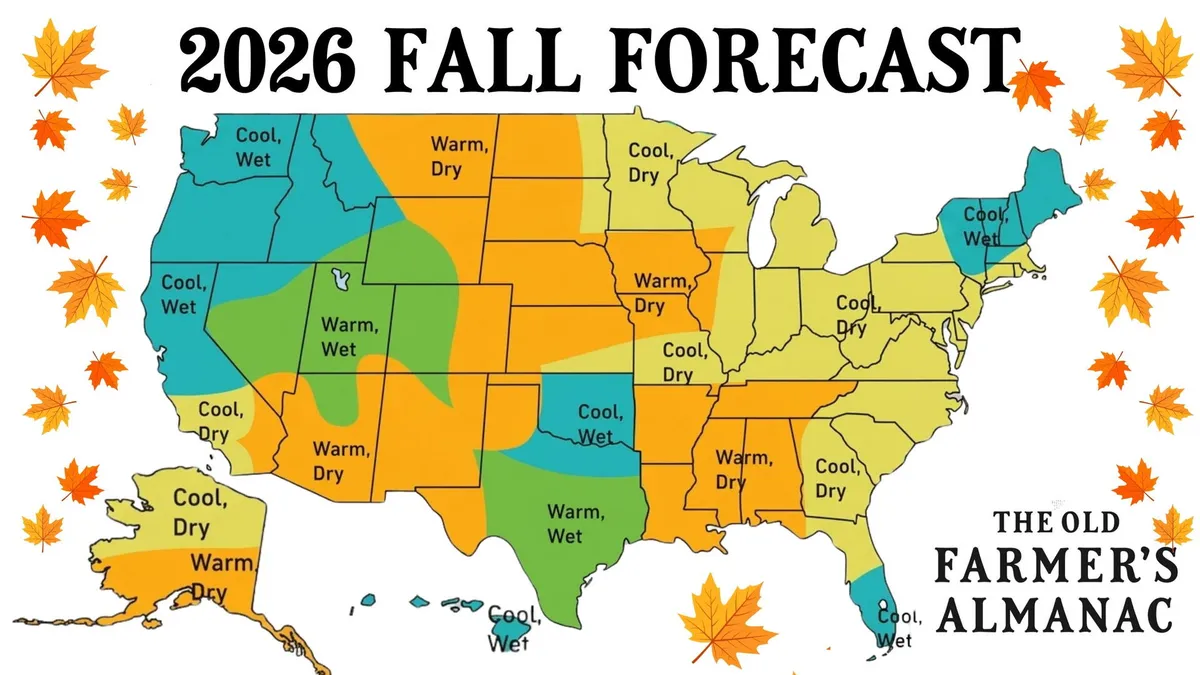
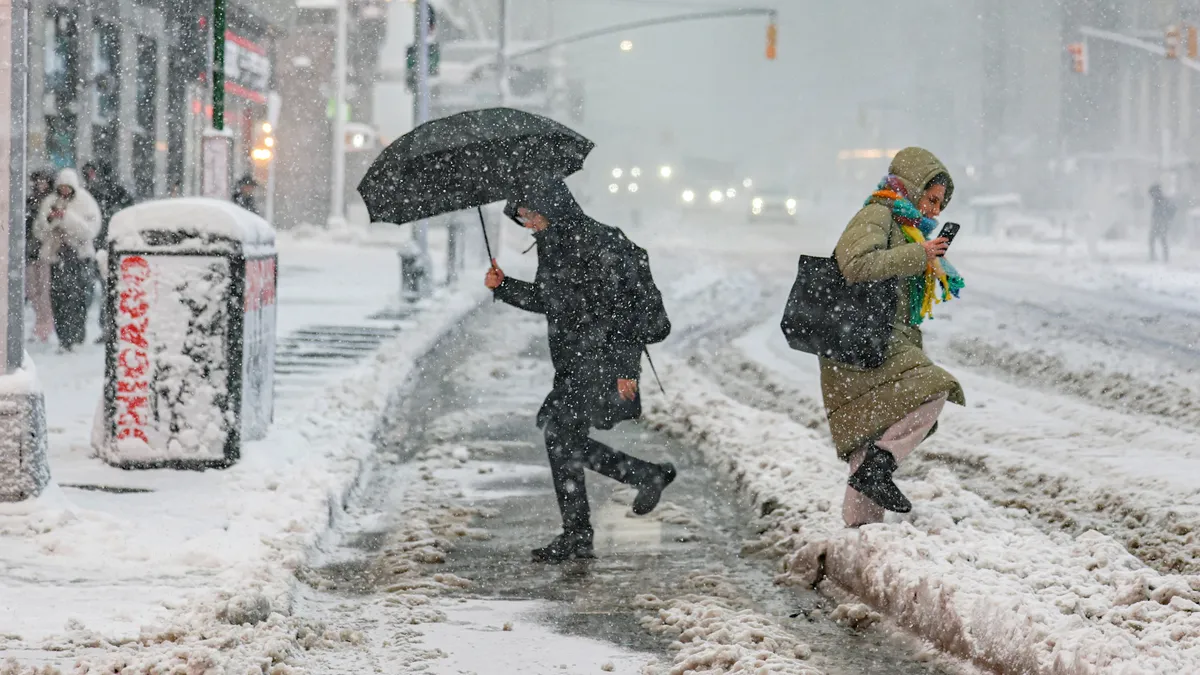
The Farmers' Almanac predicts a winter of sharp contrasts for 2026-2027, with varied conditions across the country.An active southern storm track is expected to bring wetter-than-normal conditions to the southern U.S.The Northeast could see a complex mix of rain, sleet, and heavy wet snow, especially in January and February.El Niño is anticipated to influence the winter, often favoring wetter conditions across the southern U.S.As summer heat continues across much of the country, many people are already wondering what kind of winter is ahead. Will snow arrive early? Could icy storms disrupt travel? Or will some areas see milder stretches mixed with quick bursts of cold?The Farmers’ Almanac has released its 2026-2027 winter weather forecast, offering a look at what temperatures, storms and precipitation could look like across the United States.The Almanac predicts a winter of sharp contrasts, with an active southern storm track bringing wetter conditions across parts of the South, quick bursts of snow and cold across the North, and a tricky mix of rain, sleet, ice and heavy wet snow in the Northeast.Shop Amazon early for winter weather needsFrom California to the Northeast, here’s what the Farmers’ Almanac predicts for winter 2026-27.What does the Farmers' Almanac predict for winter 2026-27?"Snow, sleet, and surprises" could define the winter season, according to the Farmers’ Almanac.The forecast calls for a mix of conditions across the country, with some areas seeing frequent storms and increased precipitation while others experience near-normal temperatures interrupted by sudden cold snaps.An active southern storm track is expected to bring wetter-than-normal conditions from Southern California and the Southwest through Texas, the Gulf Coast and the Southeast. Meanwhile, parts of the northern U.S. could see quick-moving storms, snow squalls and periods of bitter cold.Farmers' Almanac winter forecast by regionSouthern Tier: Wetter than normal, with frequent storms possible from California through Texas, the Gulf Coast and the Southeast. Some storms could bring sleet, freezing rain or heavy, wet snow when cold air moves in.West: Changeable conditions are expected, with the Pacific Northwest seeing a less predictable snow season. The southern Rockies could see above-average mountain snowfall.Northern Plains, Upper Midwest and Great Lakes: Temperatures are expected to average near normal, but quick cold snaps, snow squalls, blustery winds and brief snowy periods are possible.Middle of the country: Expect frequent swings between thawing and freezing conditions, creating rapidly changing road and field conditions.Northeast: One of the most complicated winter patterns is expected, with coastal areas more likely to see rain or mixed precipitation while inland locations could see rounds of heavy, wet snow, especially in January and February.Mid-Atlantic: A secondary storm track could bring opportunities for rain, wintry mixes and snow as storms move along the Eastern Seaboard.Where will the most precipitation fall?The Farmers’ Almanac expects an active storm pattern across the southern United States, with above-normal precipitation possible from California and the Southwest eastward through Texas, the Gulf Coast and the Southeast.Another storm path could bring additional precipitation opportunities along the East Coast, including rain, sleet and snow from the mid-Atlantic into New England.Because temperatures may frequently hover near freezing, the type of precipitation could change quickly. A small shift in temperatures or storm tracks could mean the difference between rain, ice or accumulating snow.How accurate is the Farmers' Almanac?The Farmers’ Almanac has published long-range weather predictions since 1818, using a proprietary forecasting method it says combines natural cycles, solar activity, lunar influences and historical weather patterns.The publication says its regional forecasts are 80-85% accurate, though independent reviews have found long-range forecasts can be much less reliable than short-term weather predictions.Meteorologists generally caution that seasonal forecasts months in advance carry significant uncertainty, especially when predicting conditions for specific locations.How could El Niño affect winter 2026-27?El Niño is expected to remain an important influence during the winter season, according to the Farmers’ Almanac.During El Niño winters, changes in the Pacific Ocean and atmosphere can shift storm tracks across the United States. The pattern often favors wetter conditions across parts of the southern U.S. and can influence where storms develop and travel.However, every El Niño event is different, and other weather patterns will also determine how winter unfolds.When does fall 2026 begin?The first official day of fall 2026 is Tuesday, Sept. 22, marking the autumnal equinox in the Northern Hemisphere.The equinox occurs when the sun crosses the celestial equator, bringing nearly equal amounts of daylight and darkness around the world. After the equinox, days will continue to grow shorter and nights longer across Texas and the rest of the Northern Hemisphere until the winter solstice in December.For meteorologists, however, fall begins earlier. The meteorological fall season starts Sept. 1 and runs through Nov. 30, aligning with the calendar months used to track seasonal weather patterns.When does winter 2026-27 begin?The first official day of winter 2026 is Monday, Dec. 21, marking the winter solstice in the Northern Hemisphere.The solstice occurs when the sun reaches its southernmost point relative to the equator, bringing the shortest day and longest night of the year for much of the Northern Hemisphere.For meteorologists, winter begins earlier. Meteorological winter starts Dec. 1 and runs through Feb. 28, aligning with the calendar months used for seasonal weather tracking.Farmers' Almanac vs. Old Farmer's Almanac: What's the difference?The Farmers' Almanac and the Old Farmer's Almanac are two separate publications with similar names, but they are not the same.The Farmers' Almanac was founded in 1818, while the Old Farmer's Almanac was founded in 1792. Both publish long-range weather forecasts using their own proprietary methods, but meteorologists caution that forecasts made months in advance have significant uncertainty.What happened to the Farmers' Almanac?The Farmers' Almanac announced it would end publication after its 2026 edition due to financial pressures, but the historic publication was later acquired by new ownership in January 2026, preventing its permanent closure, according to its website.The Farmers' Almanac will continue online, with plans underway to revive and expand its annual print edition in future years.U.S. weather watches and warnings mapStay informed. Get weather alerts via textBrandi D. Addison covers weather across the nation as the Weather Connect reporter for the USA TODAY Network and contributes to Texas Connect coverage across the state. She can be reached at baddison@usatodayco.com. Follow her on Facebook here.