MSMEs: Payments relief
| Photo Credit:
th-online Administrator
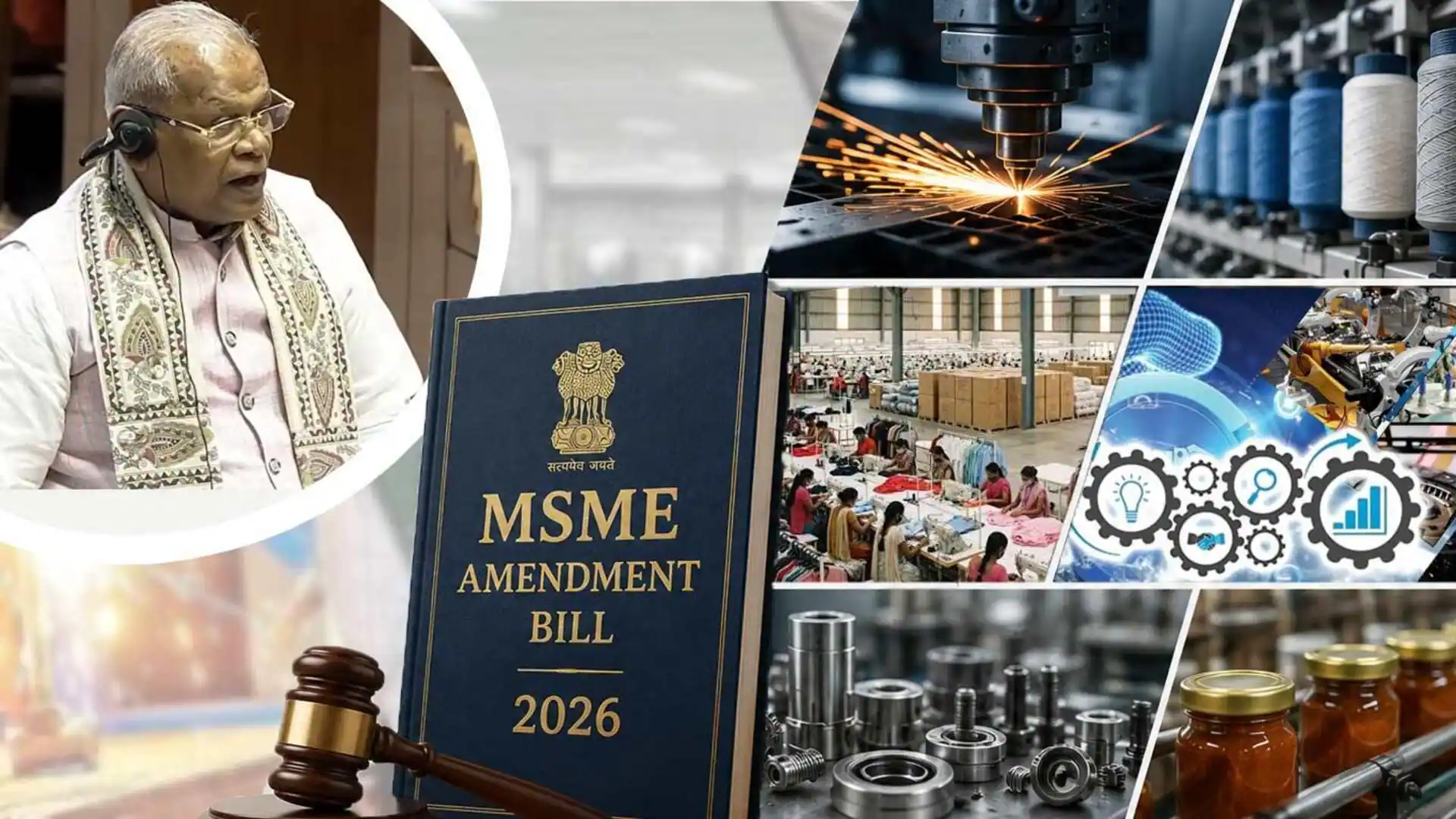
The recently tabled Micro, Small and Medium Enterprises (Amendment) Bill, 2026, can enhance the flow of timely payments to MSMEs. The proposed amendments should be seen as part of a slew of recent steps to ensure that Section 15 of the MSME Act, 2006 — which says that MSME suppliers’ dues should be settled in 45 days — is implemented.It has not been easy to make this provision work. MSMEs do not proceed against large buyers — by moving the Micro and Small Enterprise Facilitation Councils (MSEFCs) set up in States or other debt recovery forums — for fear of losing business. Their working capital flows are hurt in the process. However, the Trade Receivables Discounting System (TReDS), ushered in by the Reserve Bank of India in 2014, has led to an improvement in the delayed payments scenario. The recent amendments are aimed at improving the effectiveness of TReDS and MSEFCs. Under TReDS, a digital marketplace for bills discounting, MSMEs raise their respective invoices on registered buyers, which approve the same; thereafter, these invoices are placed in the public domain for financiers to pay the seller (after offering competitive discounts) in one or two days. The seller benefits hugely from easy recovery at reasonable cost, with the crucial benefit of not being asked upon to pay if the buyer defaults.Yet, TReDS’ growth remains hamstrung by buyers’ reluctance to onboard the platform — fearing financial scrutiny and loss of confidentiality. Industry data and research show that while number of sellers registered on TReDS is in the region of 1.5 lakh, buyers (with a turnover of over ₹250 crore) are barely about 10,000. It is another matter that the proportion of MSMEs on TReDS is under 0.5 per cent of about seven crore MSMEs. MSMEs on the platform have reported a 23-40 per cent fall in payment timelines, and a rise in their profitability — yet their membership has not risen exponentially. Indeed, TReDS’ effectiveness depends on the number of participants.The amendment now mandates that central PSUs use TReDS alone to pay MSMEs. This can have a demonstration effect. For other buyers, it is crucial that the benefits of staying outside TReDS should recede. Tax breaks for onboarding, and lowering the turnover threshold can help here. The difficulties faced by MSMEs, specially the smaller ones, in onboarding TReDS need to be addressed. They are left to deal with cumbersome recovery systems — such as MSEFCs, which are mediation bodies, and debt recovery systems such as IBC for claims above ₹1 crore. Under the amendment, MSEFCs must adhere to timelines. If mediation does not work within 90 days, the Councils get another 120 days to conclude arbitration. What is important is that the cost of challenging the Councils’ award in court has been raised. Buyers may have to cough up a large proportion of the disputed sum upfront. Large buyers should be persuaded (through steps such as Section 43 b(h) of the Income Tax Act) not to regard delayed payments as a source of finance.Published on August 7, 2026