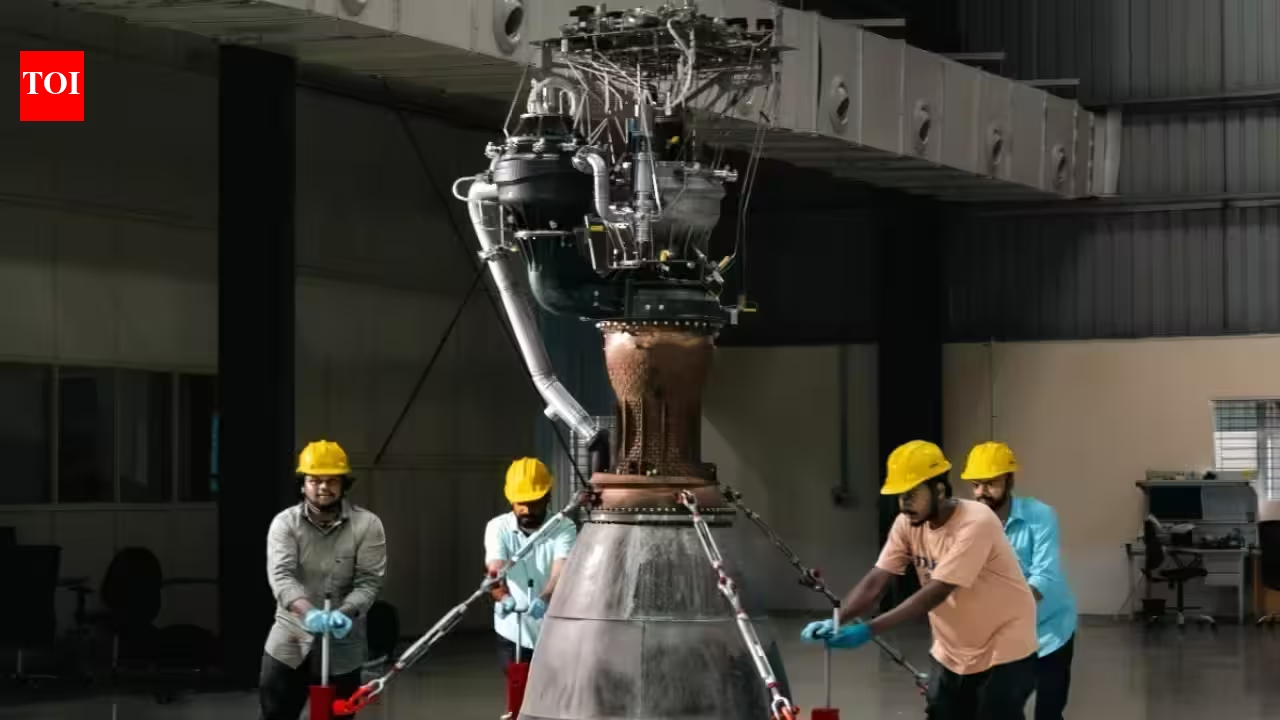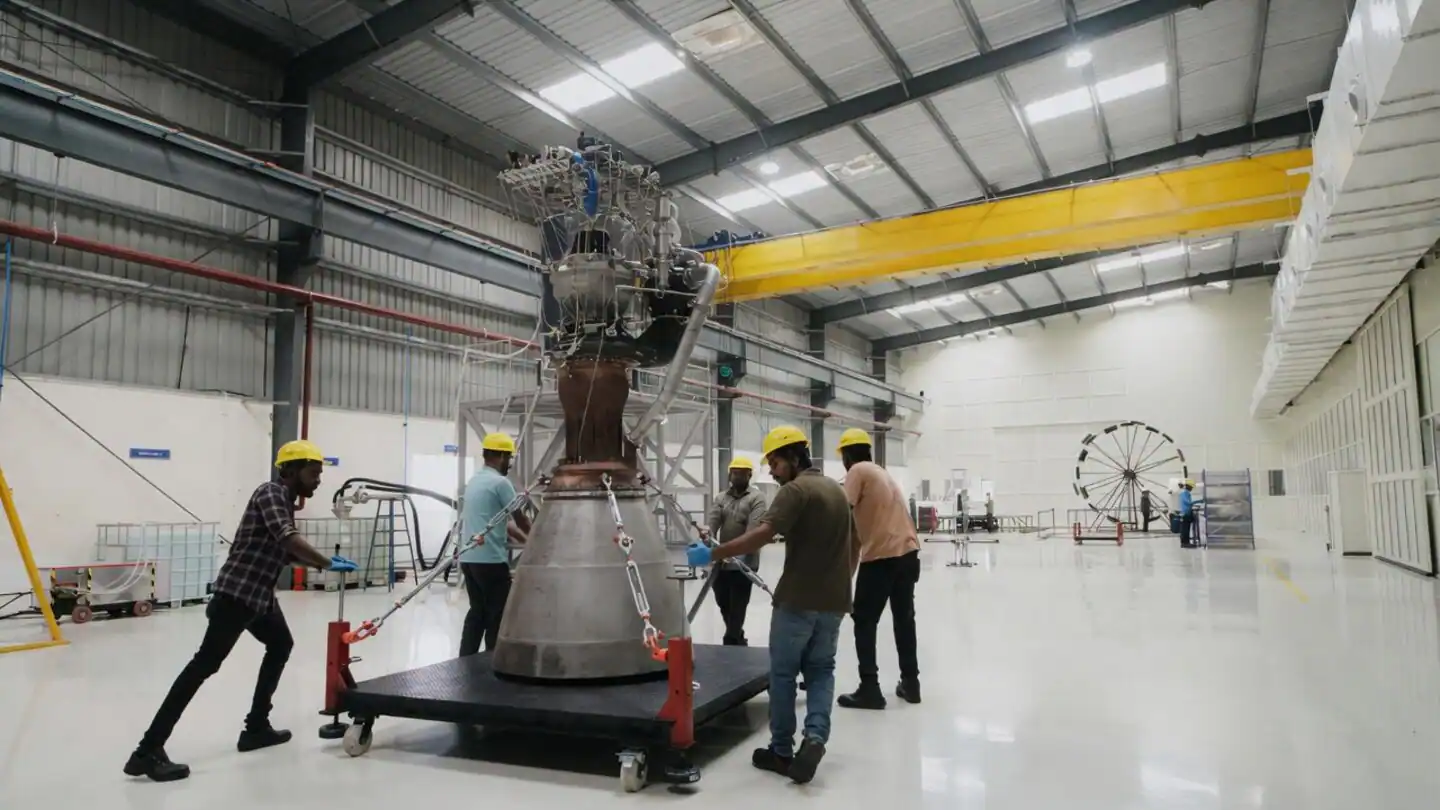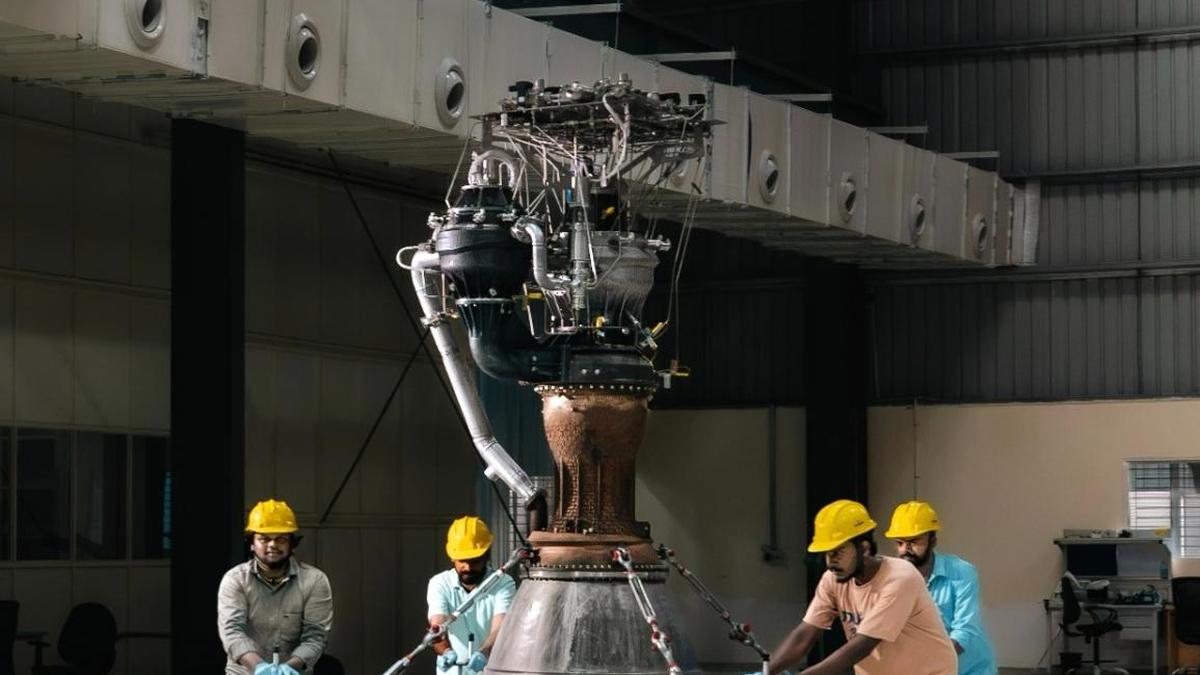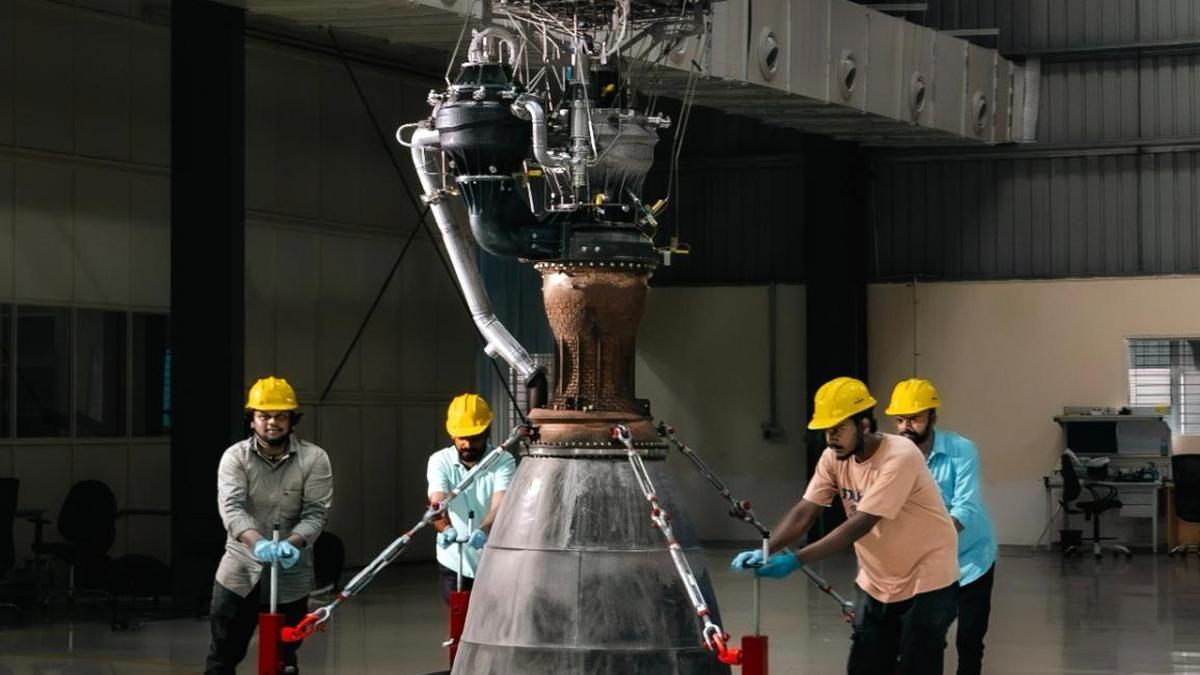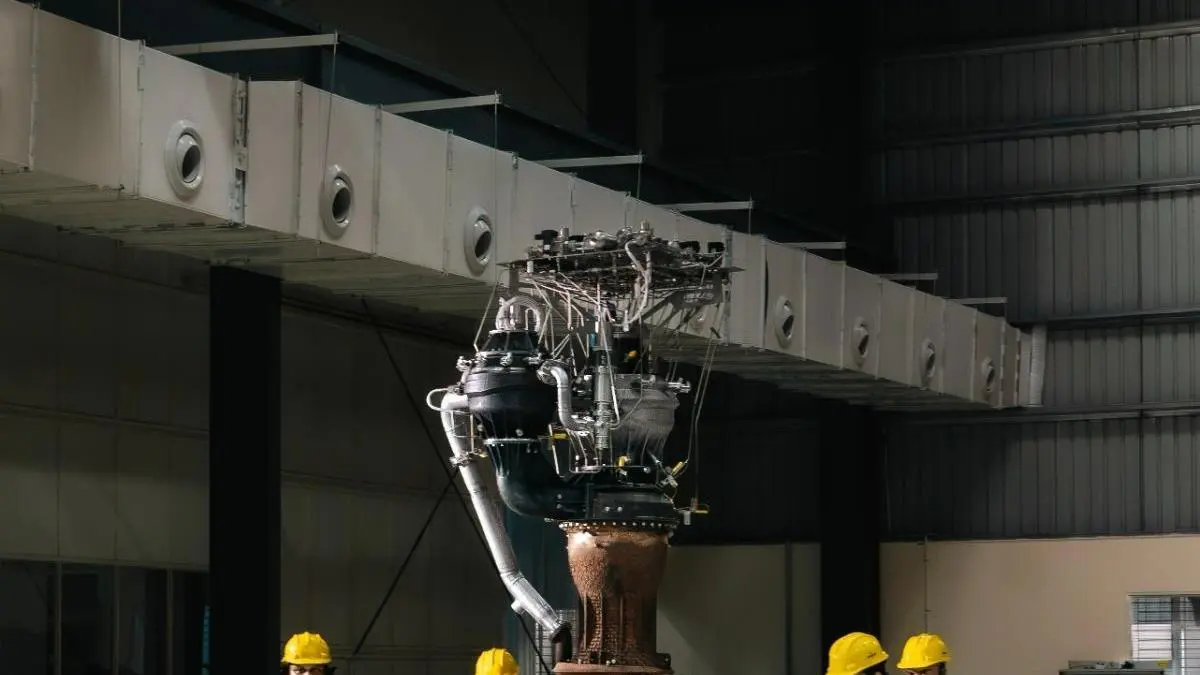
EVEREST, India’s first privately built 800 kN Full-Flow Staged Combustion (FFSC) LOX-Methane rocket engine
Space-tech company Astrobase Space Technologies has unveiled what it describes as India’s first privately developed 800 kN Full-Flow Staged Combustion (FFSC) rocket engine, entering one of the most demanding and often described in the industry as the “holy grail” of rocket propulsion.The company is targeting the first flight of its reusable launch vehicle for December 2028, with the engine’s hot-fire campaign scheduled to begin in the coming months.The unveiling puts Astrobase among a group of companies pursuing one of the most complex rocket-engine architectures in the world, with SpaceX’s Raptor currently the only FFSC engine to have successfully flown to space.The techFFSC is considered particularly challenging because both the fuel and oxidiser are fully gasified before entering the combustion chamber. This allows the engine to operate at higher chamber pressures and extract greater efficiency from the propellant while reducing some of the thermal stresses associated with conventional engine architectures.EVEREST is an 800 kN-class LOX-methane engine, and Astrobase plans to use it as the propulsion system for its planned reusable launch vehicle.The company is also looking beyond the engine itself, with plans to build an industrial-scale propulsion manufacturing capability. Its facilities are being designed to produce up to 50 EVEREST engines a year. In its first phase, Astrobase aims to enable around 100 tonnes of annual launch capacity, with plans to scale this to more than 1,000 tonnes in Phase 2 through a higher launch cadence.At full capacity, the company expects its facilities to be capable of manufacturing and hot-firing roughly one high-thrust engine a week.Building an ecosystem“EVEREST is not a standalone technology demonstration; it represents the foundation of an industrial capability that India will increasingly need in the years ahead,” said Neeraj Khandelwal, co-founder and CEO, Astrobase Space Technologies.Khandelwal said the company’s next phase would focus on building the industrial readiness and launch cadence required to serve both national priorities and the expanding global commercial space market.Astrobase was founded in 2024 by Khandelwal, a tech entrepreneur and IIT Bombay alumnus who co-founded CoinDCX, and Devakumar Thammisetty, a former ISRO propulsion scientist with more than 13 years of experience in cryogenic systems. The company has raised $10.6 million so far.The significance of EVEREST extends beyond the engine itself. India currently accounts for less than 2% of the global space economy, and Astrobase sees indigenous propulsion and scalable launch infrastructure as critical to increasing the country’s share of the rapidly expanding satellite-launch market.Astronaut Shubhanshu Shukla congratulated the team on X, describing FFSC as one of rocketry’s most demanding engineering challenges.For Astrobase, however, the harder chapter begins now. The company must take EVEREST from the unveiling stage to a successful hot-fire test and eventually prove that its high-thrust propulsion technology can survive the demands of a reusable launch vehicle.Published on August 7, 2026