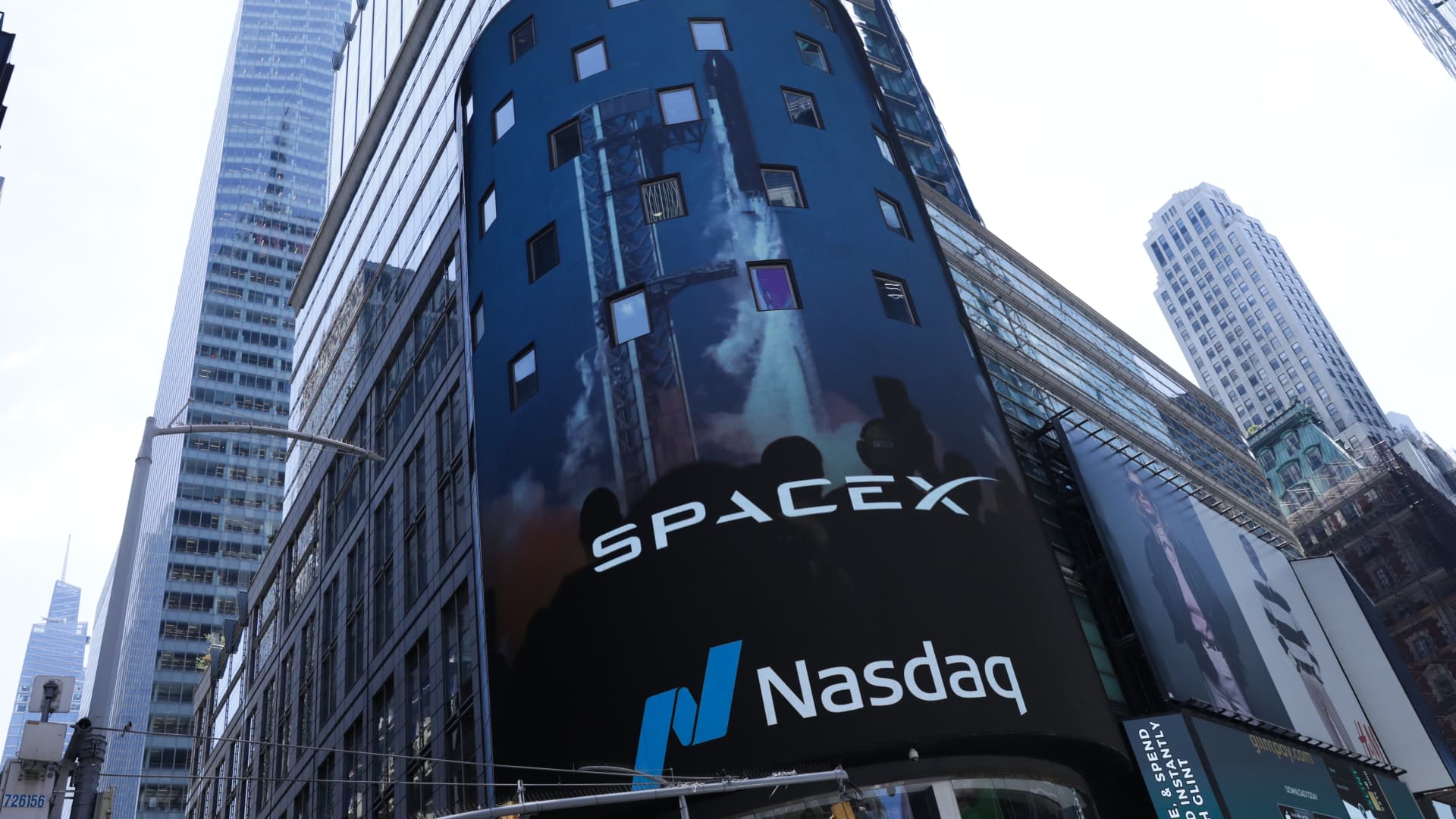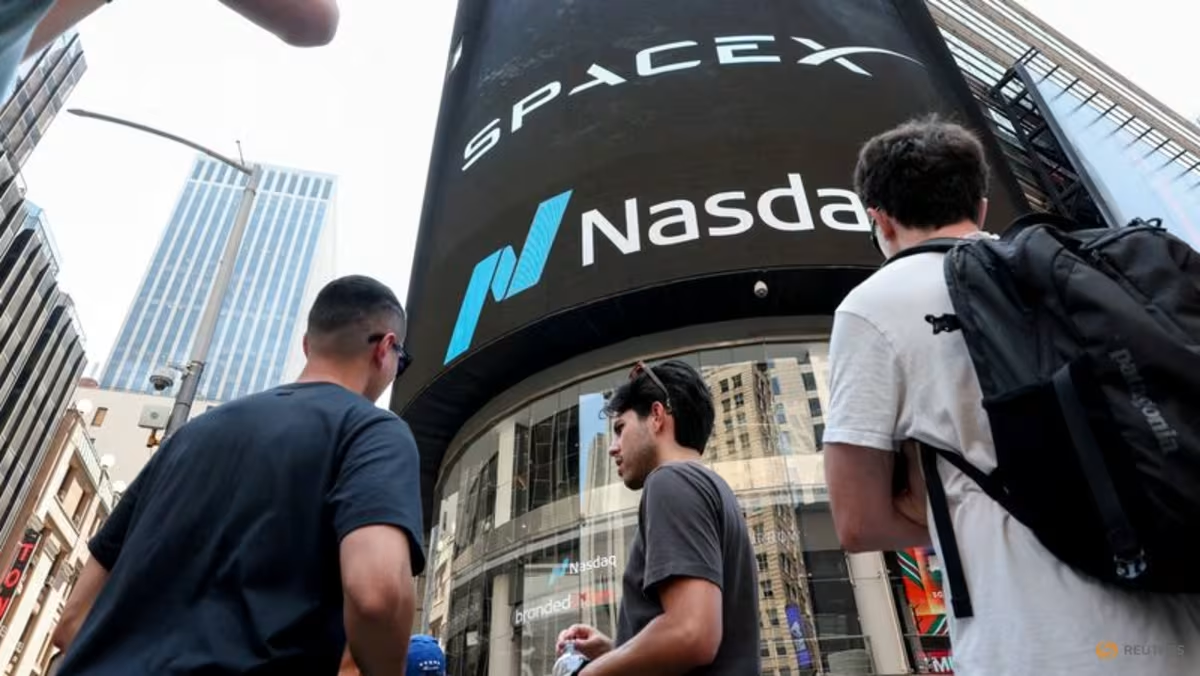
At exactly 9:30 on Thursday, as the opening bell rang at the NASDAQ, roughly seven million shares of SpaceX changed hands. The trade was cleared overnight at about $107 a piece, worth some three-quarters of a billion dollars, ones that would never really touch the open market.
That singular crossing is, in a microcosm, the story of how SpaceX’s most telegraphed selling event turned out to be far less dramatic—even positive—than the buildup suggested.
For weeks, investors had been told to brace themselves for Thursday. The setup looked pretty ugly. Nearly a billion insider and employee shares, about 20% of the company, became eligible to sell at once, more than doubling the freely traded float overnight. The stock had already halved from that brief post-IPO high and had now slipped below its initial asking price, despite additional forced buying from index funds like the Nasdaq-100. So it seemed like adding extra supply would just be a clear downside bias, or at least create volatility.
Instead, after some slight weakness, the stock steadied, and then bounded up 6% higher. So, what gives?
Inside the company, no coordinated dash for the exits