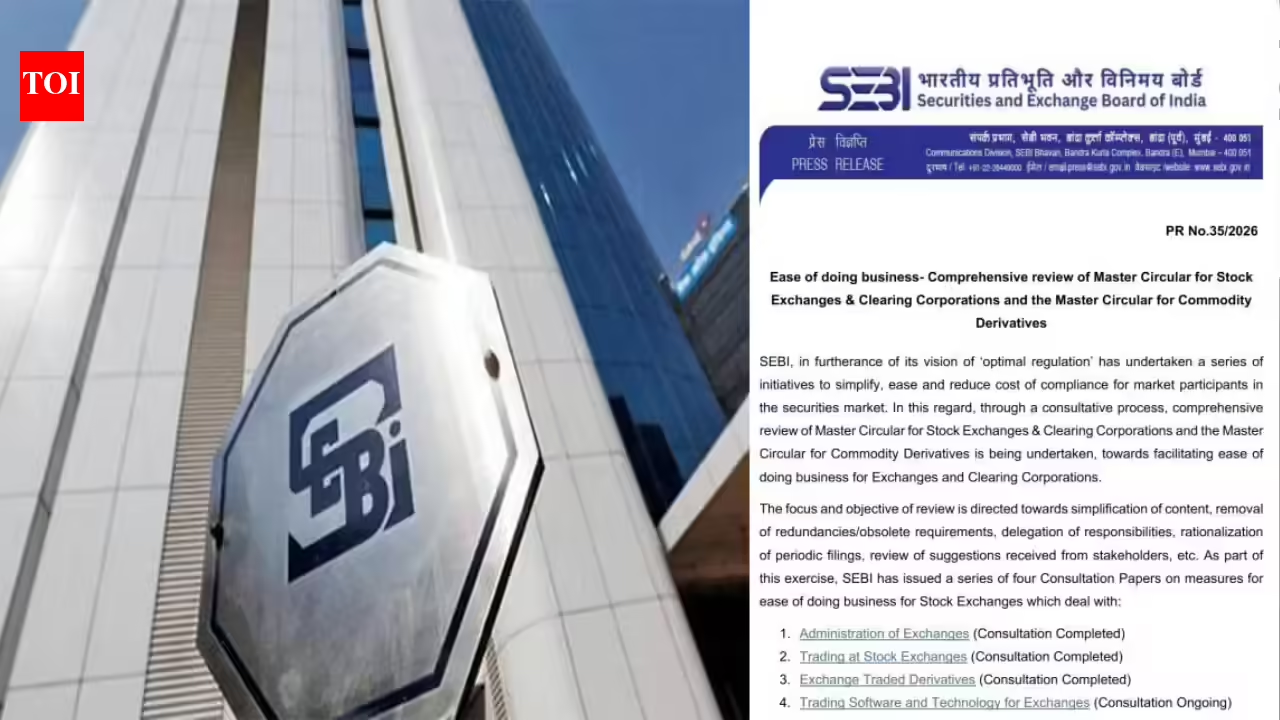
The changes are aimed at strengthening regulatory oversight while reducing compliance burdens and improving the ease of doing business for market participants.
The Securities and Exchange Board of India (SEBI) has revamped its inspection framework for market intermediaries, reducing the number of routine inspections while shifting to a more risk-based and coordinated supervisory approach from FY27. The changes are aimed at strengthening regulatory oversight while improving ease of doing business for intermediaries.“The regulatory oversight of market intermediaries has been strengthened by employing a dynamic approach to encompass new risk parameters for identifying and shortlisting of entities for inspections,” SEBI said. The measures are intended to “collectively enhance Ease of Doing Business of the intermediaries, as a result of the rationalisation in the frequency of inspection visits.”Further, it has adopted the enhanced inspection framework after discussions with Market Infrastructure Institutions (MIIs) and the Supervisory Body for Investment Advisers (IAs) and Research Analysts (RAs). Under the revised approach, inspections of stock brokers and depository participants will be conducted jointly by stock exchanges and depositories.Fewer routine inspections, greater focus on high-risk entitiesAmong the key changes, SEBI has reduced the targeted number of inspections for FY27 to about one-third of those undertaken in the previous financial year, noting that stock exchanges and depositories already conduct regular inspections of stock brokers, depository participants, investment advisers and research analysts.The regulator will also discontinue repetitive annual comprehensive inspections of compliant entities, particularly Qualified Stock Brokers (QSBs). Instead, it will focus on entities that consistently appear in risk-based shortlisting, have high risk scores, or trigger multiple alerts from exchanges.To reduce duplication, SEBI said inspections of entities holding multiple intermediary registrations will, wherever feasible, be conducted jointly by different departments.Quarterly shortlisting and enhanced surveillanceThe regulator has also increased the weight assigned to exchange-generated alerts, investor complaints and social media inputs while selecting entities for inspection. Shortlisting will now be undertaken every quarter. In addition, inspections may be initiated based on market intelligence and references received from SEBI’s regional and local offices, covering issues such as technical glitches, cyber incidents, and authorised persons of stockbrokers.Published on August 7, 2026