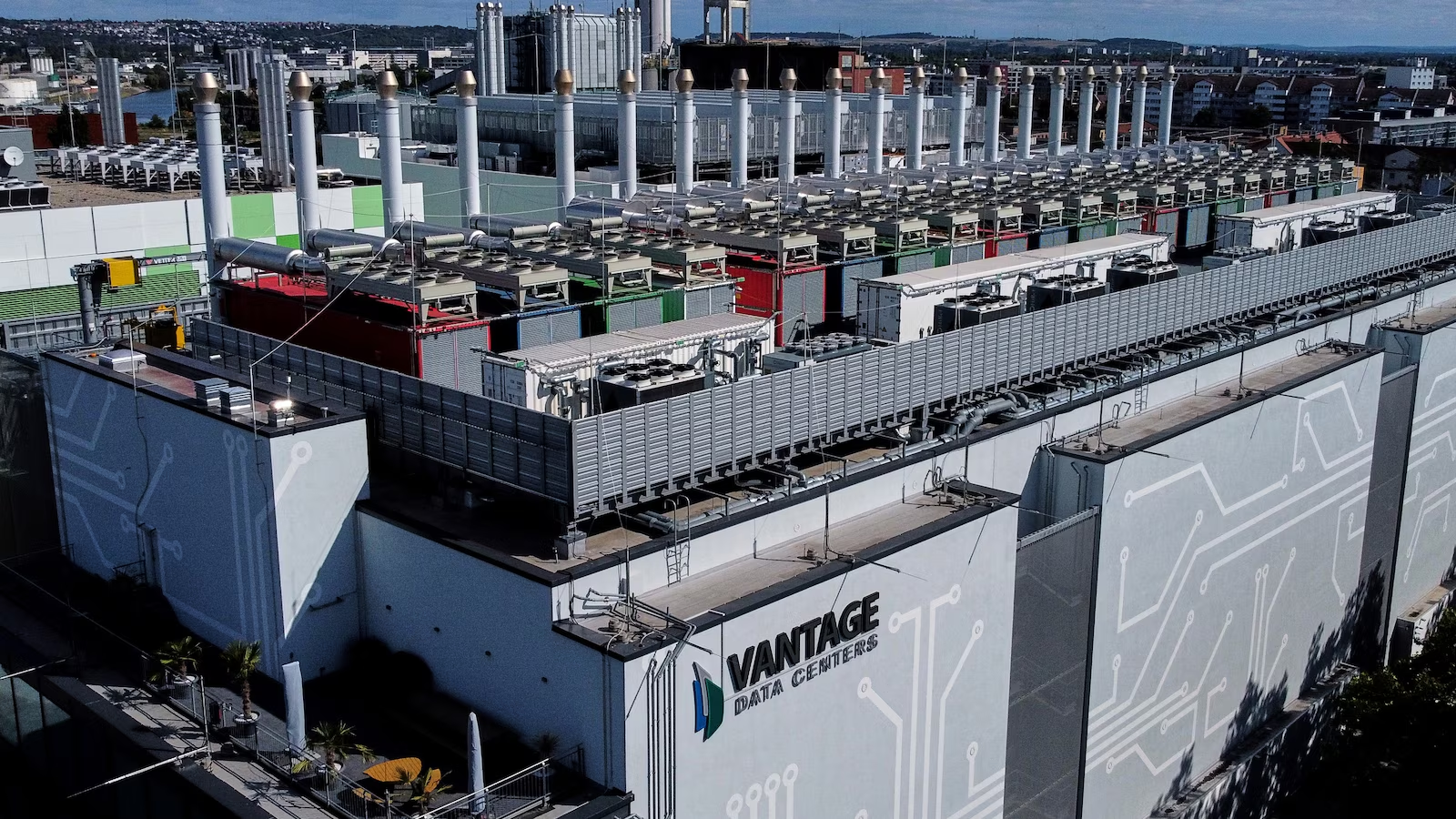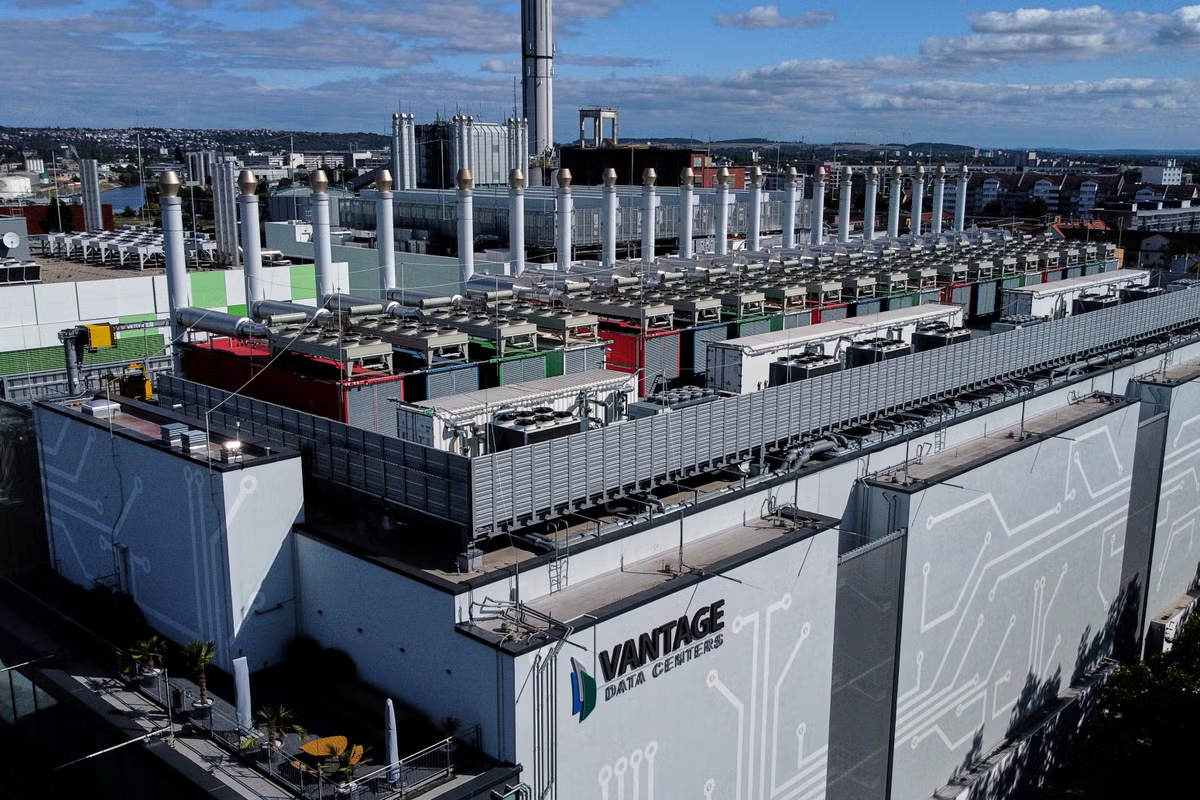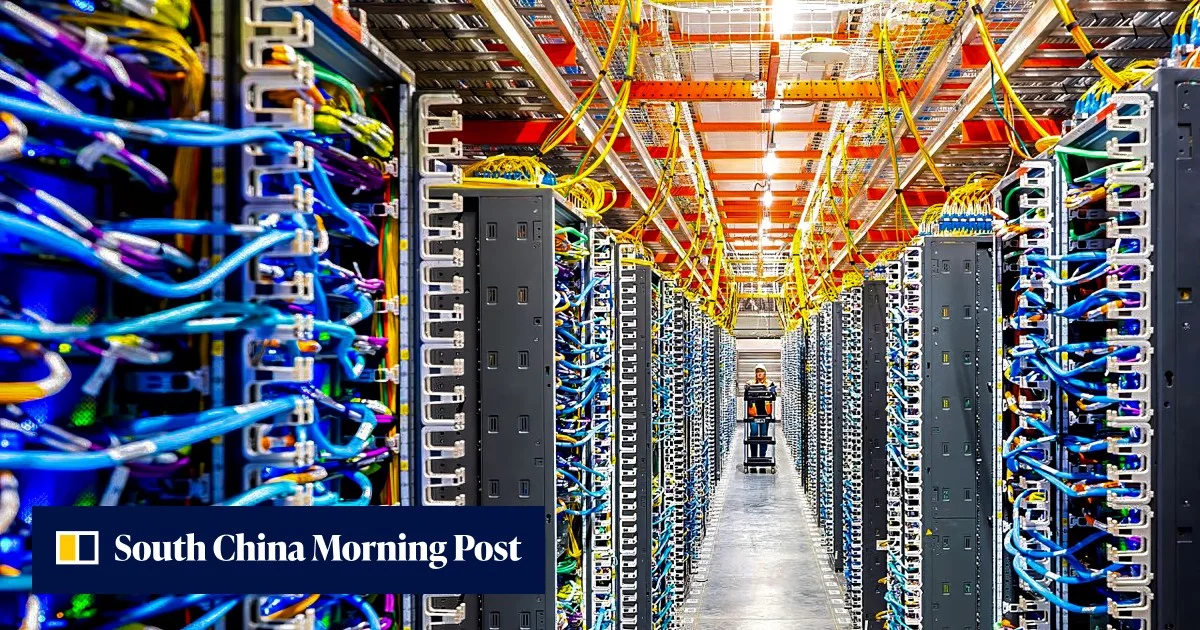
Aiming to catch up with the United States and China, the European Union has opened bidding for up to seven AI gigafactories, putting up €10 billion (US$11.52 billion) in public money and counting on private investors for €20 billion more.Industry insiders welcomed the tender – modest by AI industry standards and more than a year in the making – as a necessary first step, but warned that the plan as drafted risked benefiting the very American tech giants Europe wanted to rival and that Brussels should move far faster.Brussels’ current plan proposes restrictions on who can own the gigafactories, but less so on who the computing output can be sold to. Since the EU lacks its own tech champion as start-ups have difficulty scaling up facing a fragmented financial landscape, US tech giants enjoy a natural advantage in the market, according to Piotr Mieczkowski, chairman of AI Poland, the country’s AI industry association.“The owners of the gigafactories, I’m pretty sure they will not have a problem selling this [computing capacity] to hyperscalers,” Mieczkowski said. “This is what I’m afraid of … we are preparing [the ground] for somebody else.”Even if the factories themselves were owned by European capital, he argued, they would have a strong incentive to sell their capacity to US tech giants such as Google rather than to a consortium of European start-ups, because the big American firms would be able to offer better prices and a simpler deal.“They will be approached by Google, and Google will say, ‘We will pay you for this one’s gigawatt capacity – let’s say, €2 billion,’ and now you do not have to find start-ups … You do not have to spend money on marketing,” he said.
Europe hails AI gigafactory plan, but industry fears deeper US tech reliance
Brussels’ €30b tender for up to 7 AI hubs already benefits US chipmakers and could result in EU-funded computing capacity being sold to US tech giants.
285 words~1 min read