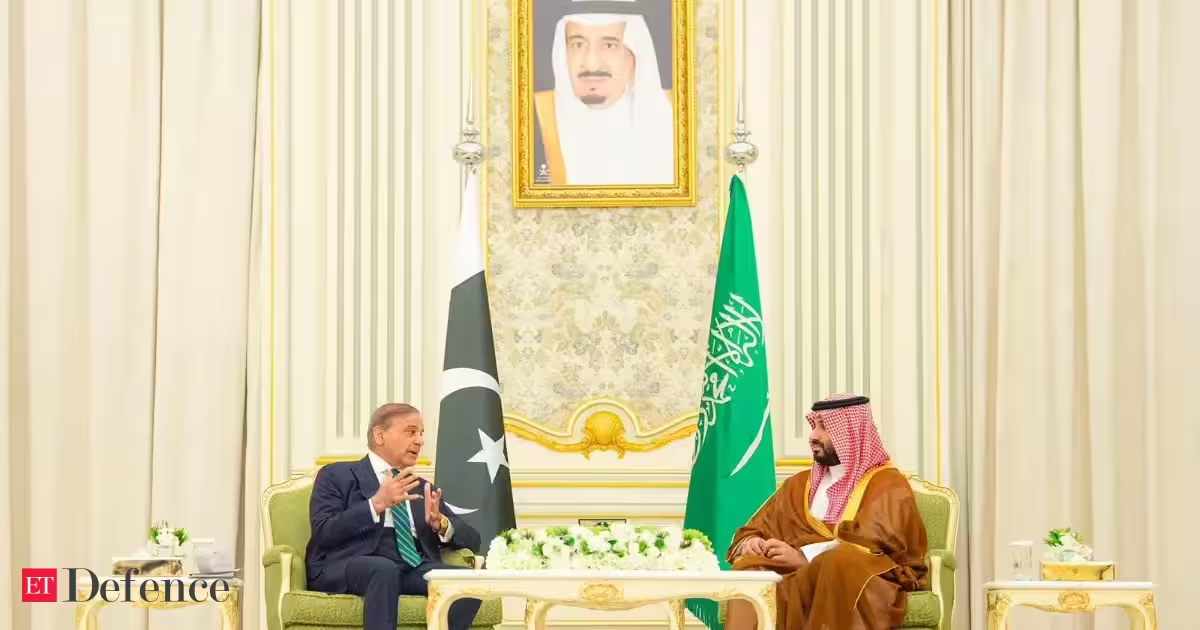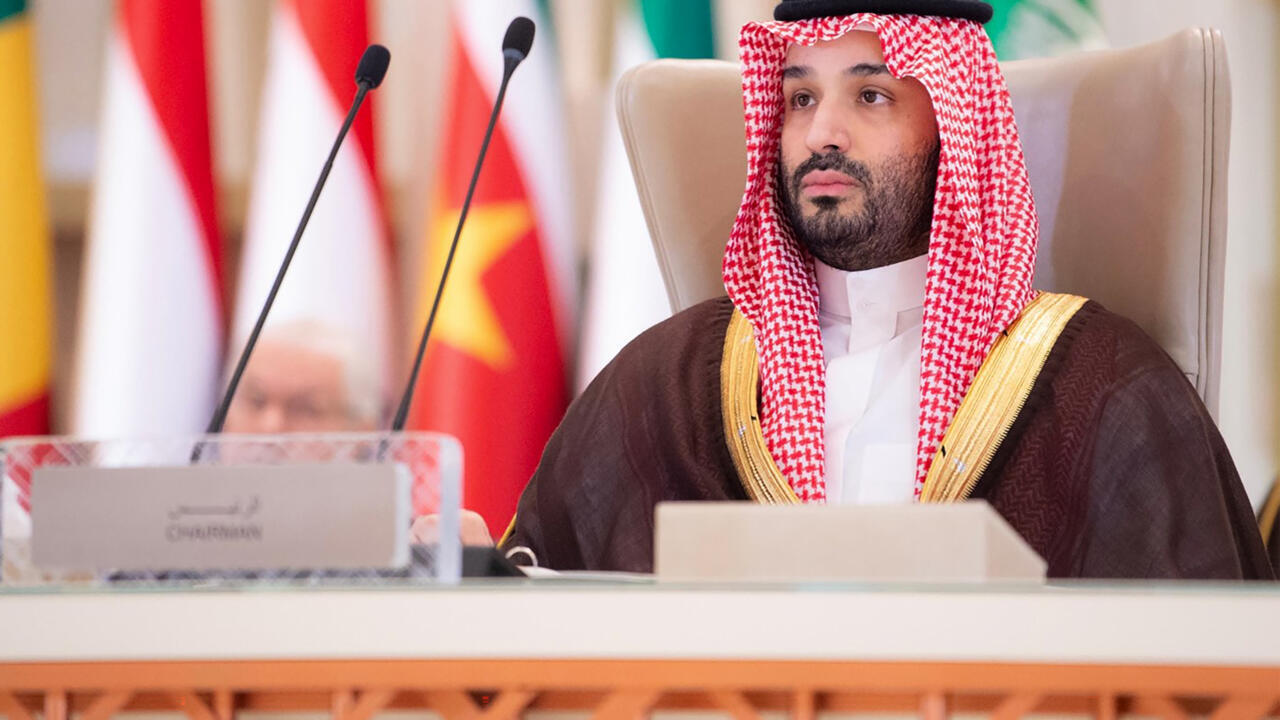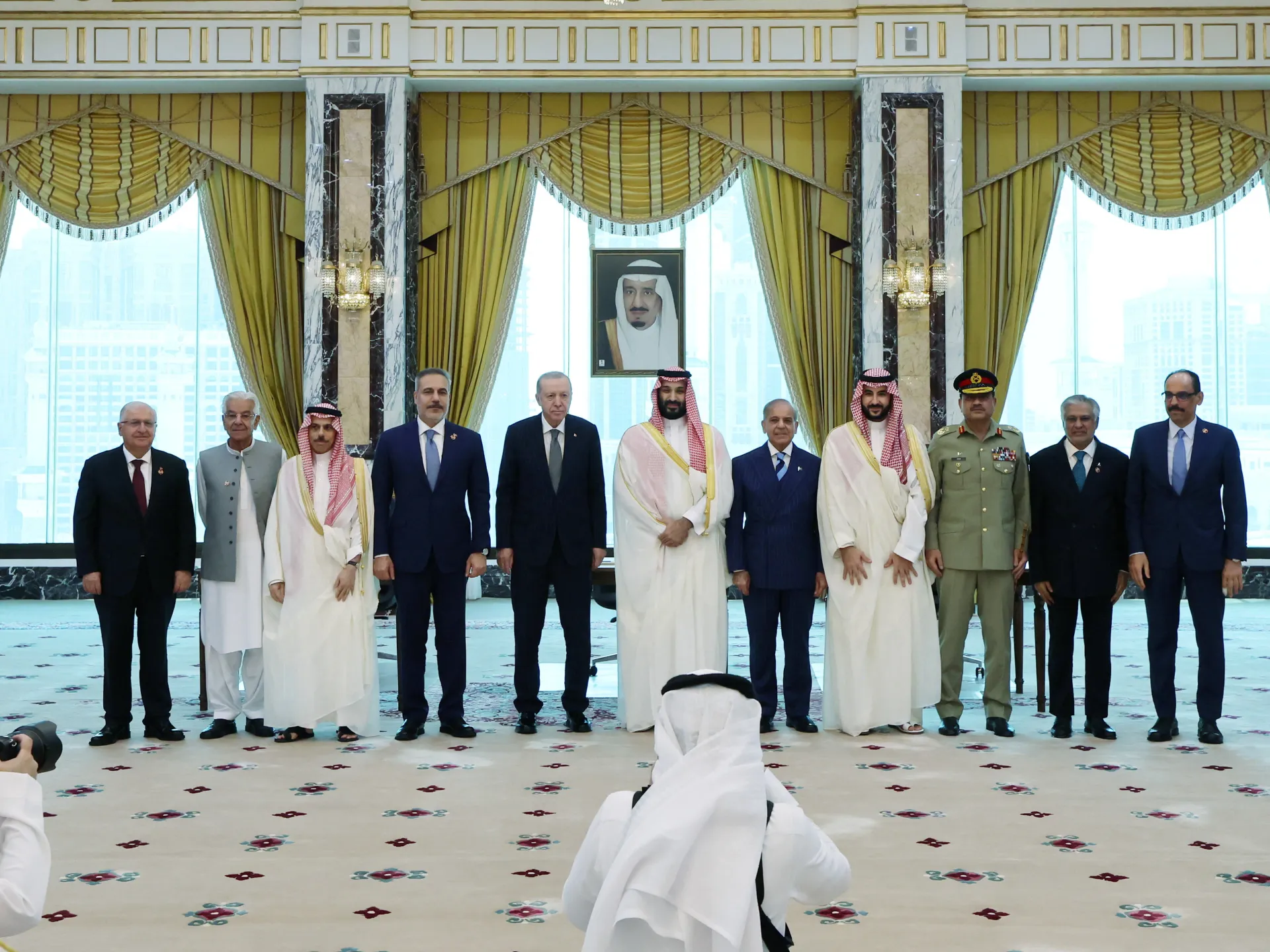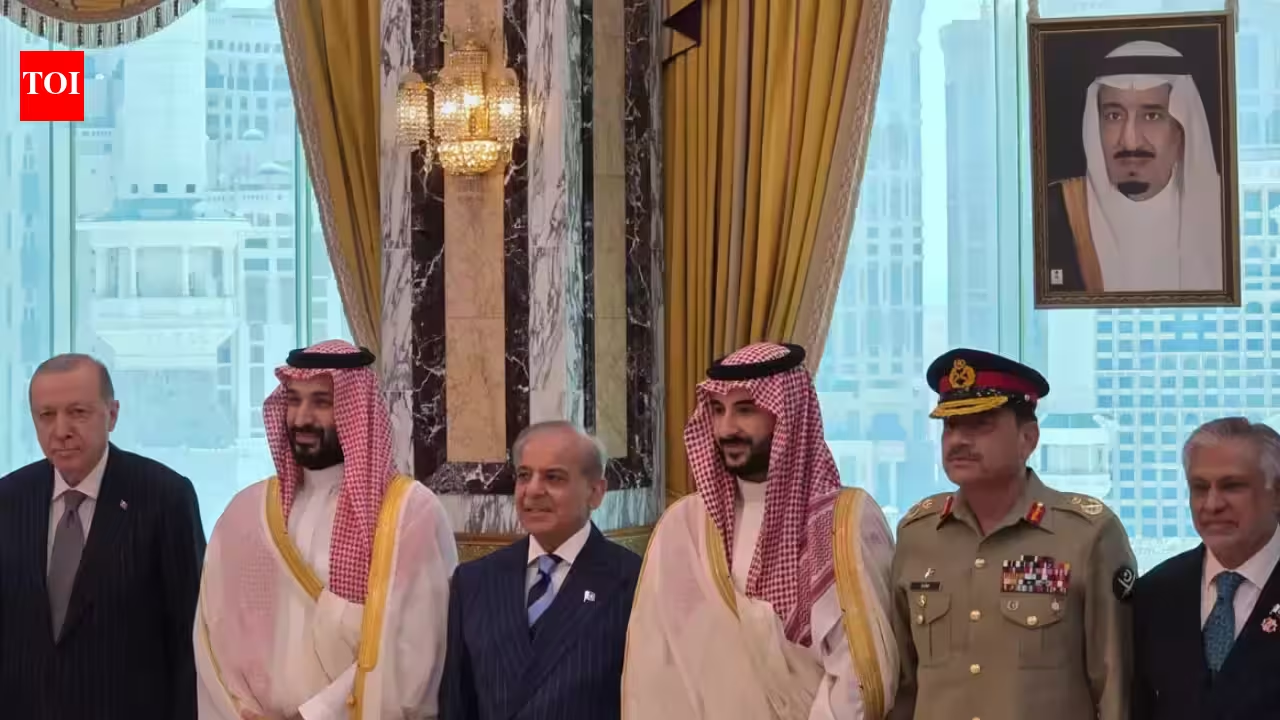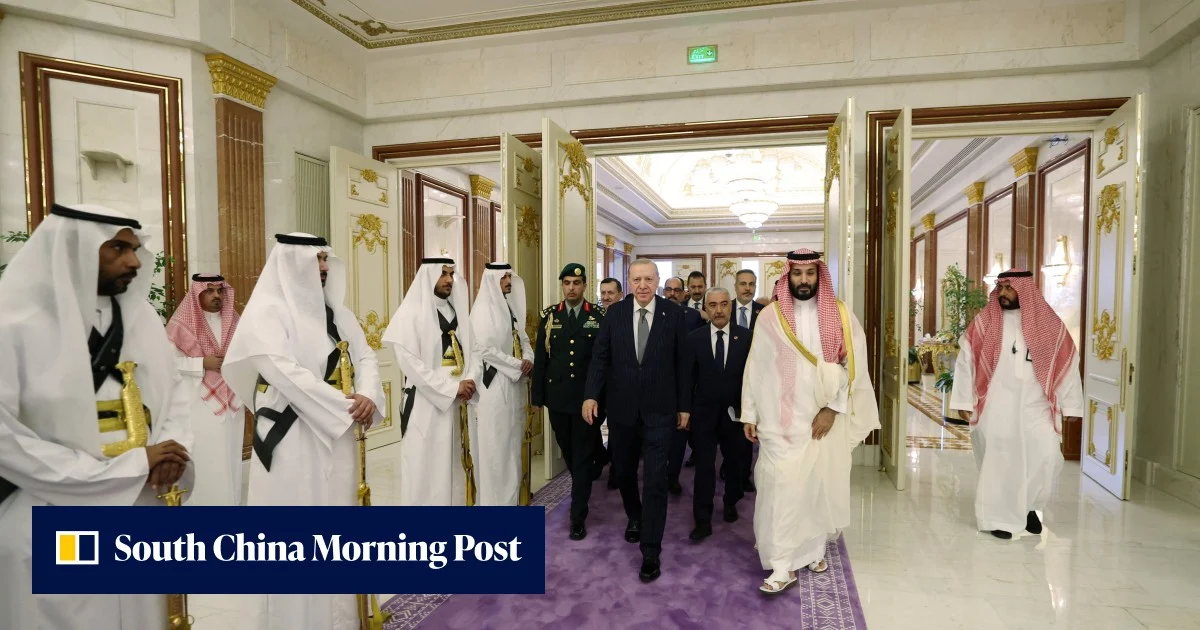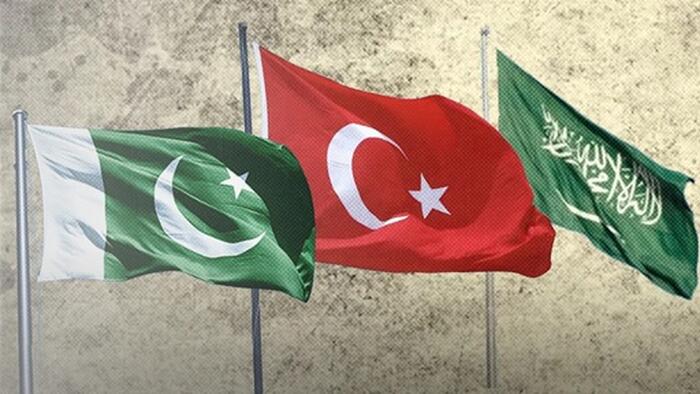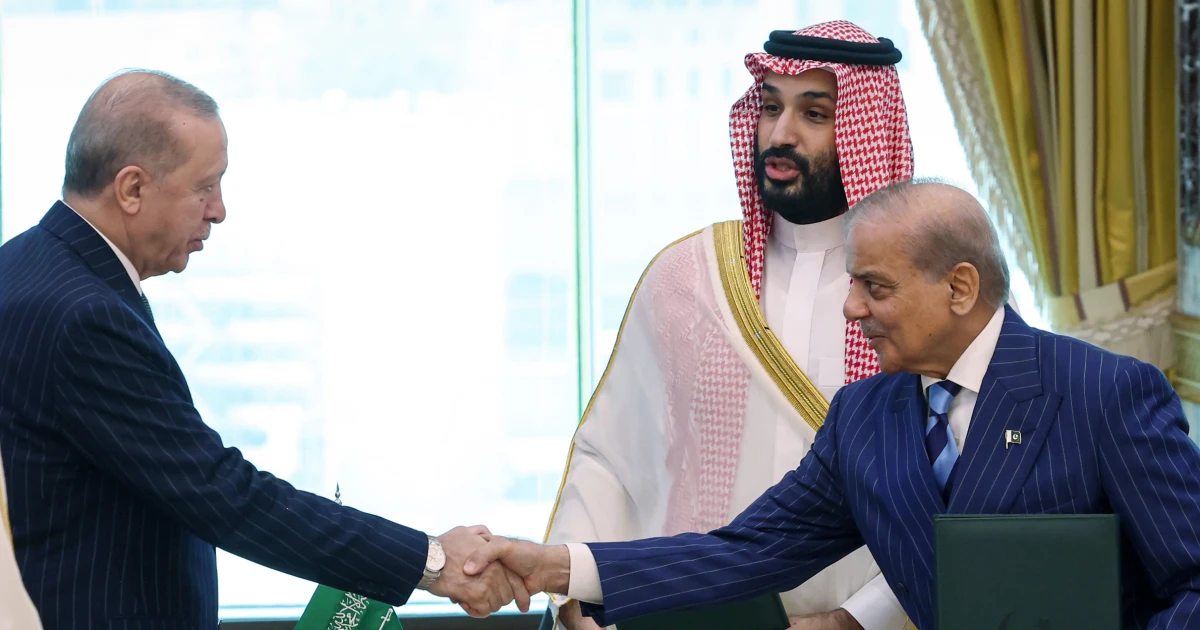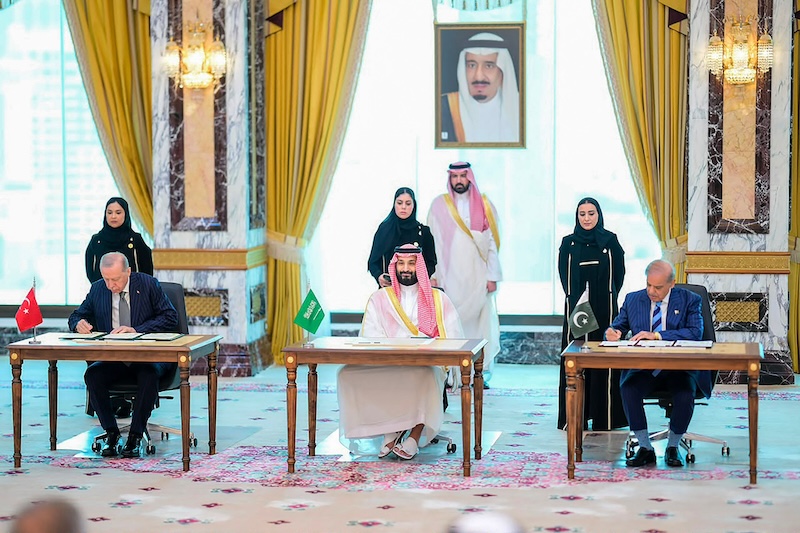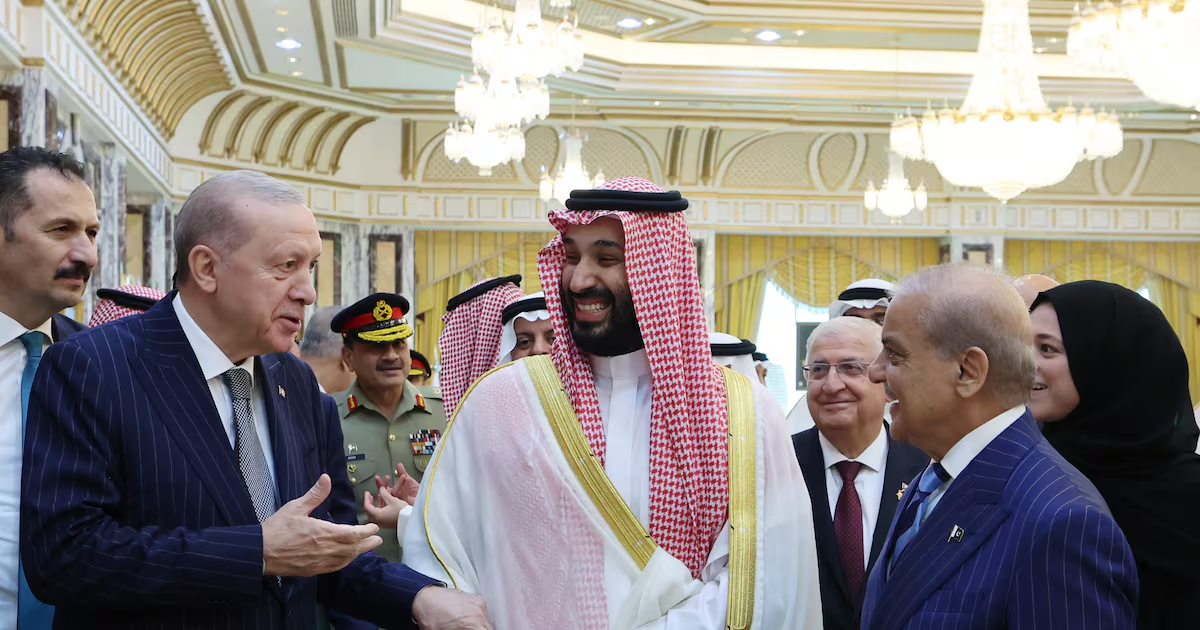
Saudi Arabia, Pakistan and Turkey signed a defence pact in Mecca on Friday as the allies seek to deepen regional security co-operation after the turmoil triggered by the US-Israeli war against Iran.The military alliance “reflects a recognition that American deterrence has been significantly weakened and that the Iranian threat will increasingly need to be managed by regional powers”, said Ali Shihabi, a Saudi commentator close to the royal court.The agreement between the three Muslim-majority countries comes as Riyadh faces a growing threat from Iranian-backed Houthi rebels in Yemen, who have reignited a decade-long conflict with Saudi Arabia, attacking oil tankers in the Red Sea and targeting the kingdom’s energy infrastructure with missiles and drones.Pakistan’s foreign ministry said the agreement reflected the three states’ “commitment to further strengthening their collective security and to promoting peace, security and stability in the region and beyond”.Paul Scott / Hormuz “The agreement is intended to strengthen collective deterrence against any act of aggression, and stipulates that any armed attack against any one of the three states shall be regarded as an attack against them all,” the ministry said in a statement.Saudi Arabia said the pact was not “an effort to establish a military axis or a sectarian bloc. Nor is it linked to any nuclear ambitions or arms race.” A Turkish official said the pact was “purely defensive in nature” and not focused on any “specific actor”. He said it would be open for other regional states to join in the future.The deal was signed by Saudi Crown Prince Mohammed bin Salman, Turkish President Recep Tayyip Erdogan and Pakistani Prime Minister Shehbaz Sharif. Pakistan’s powerful military chief Field Marshal Asim Munir was also at the meeting.Two people briefed on the agreement said it was similar to a mutual defence pact Saudi Arabia and nuclear-armed Pakistan agreed last September. In April, Pakistan deployed a squadron of fighter jets and crew, as well as a Chinese-made HQ-9 air-defence system, to a Saudi airbase to help the kingdom defend against Iranian attacks as part of that deal.Yemen's Houthis have claimed responsibility for missile and drone attacks on the Saudi-backed government forces' positions in the eastern provinces of Hadhramout and Marib. Photograph: EPA Riyadh and Islamabad have for months been holding talks with Nato-member Turkey on the possible expansion of their agreement, which appears to have been accelerated by the escalating conflict between the Houthis and Saudi Arabia.“It’s a prelude to more Saudi military action against the Houthis. Turkey has naval assets and I think they will be expected to participate, as will the Pakistanis,” one of those briefed on the deal said. “It reflects Turkish willingness to get involved, which is a very interesting development.”A Pakistani official said Munir and Erdogan discussed forming a “new regional security architecture” and collaborating to respond to Houthi strikes on Saudi Arabia and Red Sea shipping during talks in Ankara last month.Ankara is seeking to increase defence exports to the Gulf, and the tripartite alliance could marry Riyadh’s petrodollars with Ankara and Islamabad’s battle-hardened armies and defence production capabilities. Turkey and Pakistan are already co-operating on drone development, while Saudi Arabia has signed large drone procurement and training deals with Turkish defence company Baykar.Turkish president Recep Tayyip Erdogan, Saudi crown prince Mohammed bin Salman and Pakistani prime minister Shehbaz Sharif sign a trilateral defense agreement in Mecca, Saudi Arabia. Photograph: Turkish Presidency/Getty Images The defence deal also “fits the broader US preference for greater regional burden-sharing”, Burcu Ozcelik, a senior fellow at the Royal United Services Institute think-tank in London, said. “At the same time, it aligns with the ‘regional solutions to regional problems’ approach long advocated by Ankara.”Saudi Arabia, Turkey, Pakistan and Egypt have been deepening their ties over the past year as regional states seek to manage the fallout from almost three years of conflict in the Middle East between Iran and its proxies and Israel. As well as the threat posed by Iran, the allies are also increasingly concerned about Israel’s military operations across the region.All four have sought to de-escalate the US’s war with Iran, during which Tehran has launched barrages of missiles and drones at Gulf states and closed the Strait of Hormuz.The conflict has injected a mood of urgency among regional states about their need to diversify defence partnerships as the months-long war has reinforced the view that they cannot rely solely on the US as a security partner.“The US can’t do the job, so it helps to fill the gap and there is a need for a new security architecture in the region,” one of the people briefed on the talks said.That has become more pressing for Riyadh as the Houthis last month resumed their war against the kingdom, shattering a four-year truce by launching missiles and drones at Saudi Arabia and announcing a blockade of Saudi ports.They have also threatened to close the Bab al-Mandab Strait, which connects the Red Sea to the Gulf of Aden. The waterway has become a vital route for Saudi Arabia to export its oil to Asia since Iran closed the Strait of Hormuz.In a sign that the conflict was escalating, the Saudi military said Houthi attacks on the kingdom’s southern province of Najran wounded 11 civilians, including a four-year-old child, on Thursday. Separately, the Houthis claimed responsibility for attacks that killed dozens of forces aligned to the Saudi-backed Yemeni government.Saudi Arabia has responded to Houthi attacks in recent weeks by launching air strikes against the rebels in Yemen.The kingdom intervened in Yemen’s civil war in 2015 to lead an Arab coalition against the Houthis after the rebels seized Sana’a and ousted the internationally recognised government. The parties reached a ceasefire in April 2022, but the October 7 Hamas attack on Israel and the Houthis’ assaults on shipping upended a diplomatic push to end the war.The truce, however, had largely held before last month’s flare-up.Saudi Arabia has also faced missile and drone attacks from Iranian-backed militias in Iraq, and last month joined the US in launching strikes against those militants.The Saudi-owned Al Arabiya media outlet quoted an official on Thursday saying there was “credible intelligence” that suggested Iranian-backed proxies and Iran’s Revolutionary Guards were preparing to attack the kingdom.Yasmine Farouk, at Crisis Group think-tank, said in a recent note that the deepening alliance between Saudi Arabia and its allies has “the potential to reshape the regional order, if incrementally, with the first test being whether it can help bring about a stable outcome to the US-Israeli war with Iran”.– Copyright The Financial Times Limited 2026
Saudi Arabia, Pakistan and Turkey sign Nato-style defence pact
Regional alliance emerges as Saudi confronts attacks from Iran-aligned Houthis in Yemen
1,086 words~5 min read