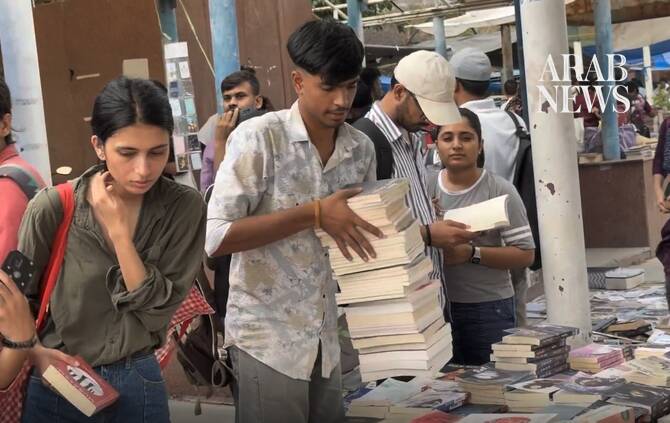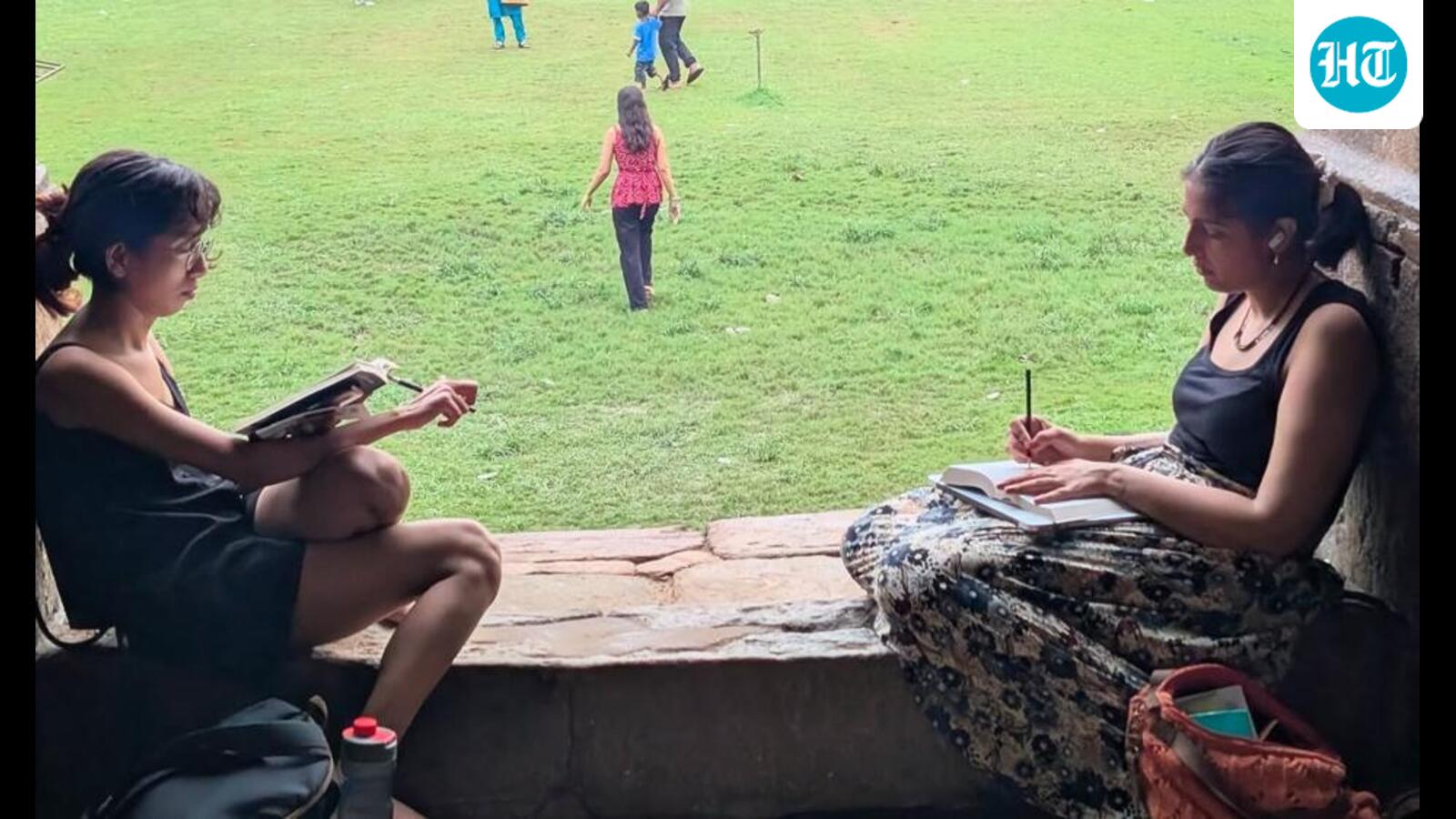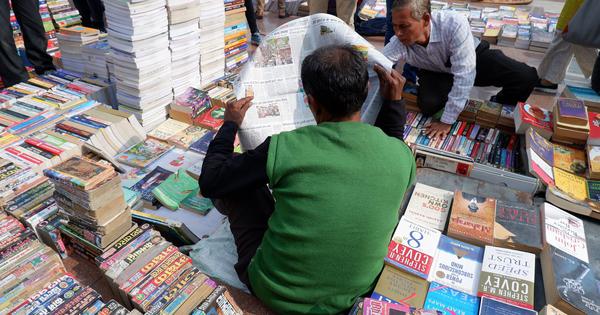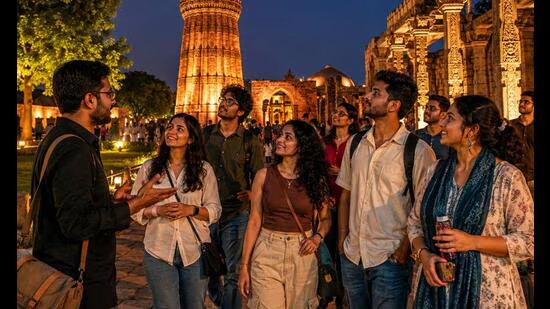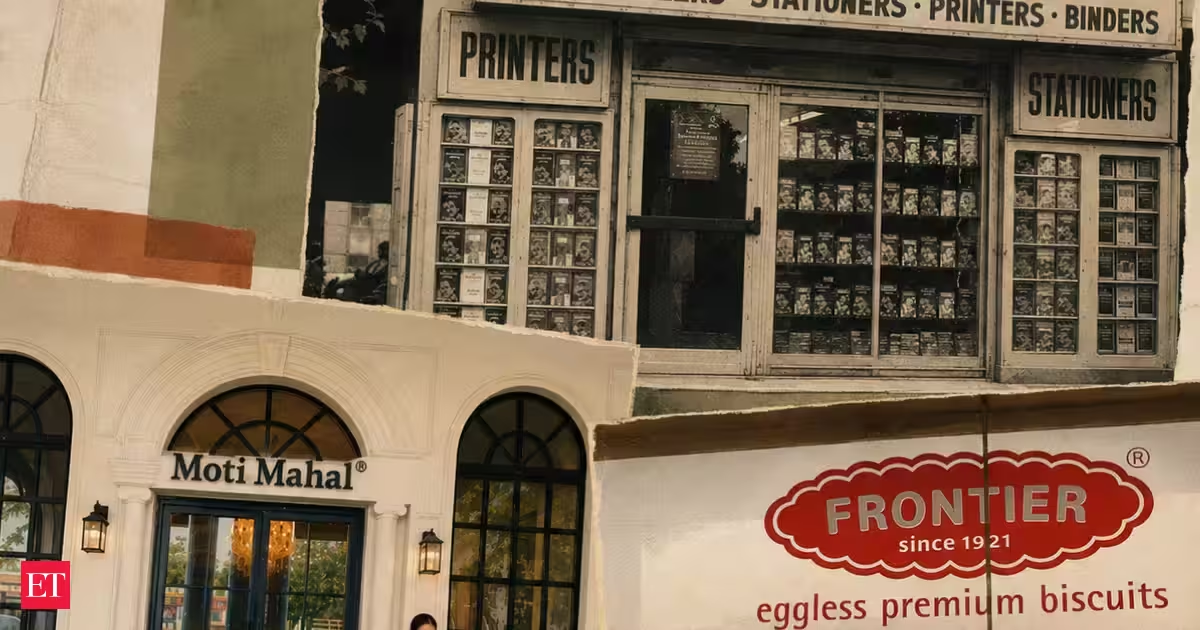
Delhi is being rediscovered. There is a renewed fascination with the city’s history and culture, reflected in the growing popularity of heritage walks, cultural festivals, the restoration of monuments and havelis, and a fresh appreciation of its culinary traditions and legacy eateries. Books are a natural corollary but crafting a piece on a pavement bazaar in Old Delhi that offers second-hand books is both uncommon and intriguing. The Sunday Book Bazaar narrates the experiences and dedication of booksellers who, for decades, have displayed their collections of old books, magazines, and journals every Sunday, week after week. Put together laboriously by Kanupriya Dhingra, a scholar of book history and print cultures, The Sunday Book Bazaar is an expanded and more accessible version of her earlier academic work, Old Delhi’s Parallel Book Bazaar.For someone who has lived in Delhi for long, visiting the book bazaar on Sundays was like a ritual. One remembers it to be a part of a larger bazaar – a scrap market that extended right up to the Ring Road behind Red Fort. The books market outlived the scrap market and survived as a specialised second-hand books bazaar. One would go there searching for novels, help-books – particularly foreign publications – and old editions of National Geographic and Life Magazines. Dhingra’s book brings back all those memories and more.Spirit of DelhiIn some sense The Sunday Bazaar is more about the spirit of Delhi and Dilliwalahs. For a market that lacked official legitimacy to have survived for decades reflects the indelible spirit, resilience and entrepreneurial spirit of Delhi. The individuals profiled in the book – people such as KC Nanda, Prem Kumar, Rajesh Ojha, Kumar and Ashok among others – are not celebrated authors, influential publishers or owners of grand book stores. They are ordinary yet extraordinary booksellers who faithfully assembled their stalls every Sunday morning and packed them away at dusk. Their stories are compelling because they regarded their vocation with immense pride and dignity.The Sunday Book Bazaar takes the reader through the journey of the booksellers and how, over the years, they cultivated a loyal community of patrons, not through marketing budgets or glossy store-fronts, but through an intimate knowledge of books, an infectious passion for books and relationships built on trust. Their understanding of the books they sell is astonishing. Each bookseller develops a system of organising titles that is entirely his own – there are no planograms, no computerised inventories, no searchable databases. Yet, when a discerning customer asks for a particular title or author, they instinctively reach for the right pile, guided by training they received from an ustad who taught them among other things how to memorise and prepare a mental map of their carefully curated stacks.Customers, as Dhingra points out, return not merely because the books are affordable, but because they cherish the relationships forged over years of shared conversations and a mutual love for books. The Sunday Bazaar is as much a community as it is a marketplace, where regulars are recognised, and recommendations are offered with the familiarity of old friends rather than salesmen. She affectionately refers to these loyal patrons as the ‘Daryaganj Shaqueens’ – a fraternity of bibliophiles who have become as integral to the bazaar’s identity as the booksellers themselves. Among the most prominent are Abdul Sattar and Sohail Hashmi, whose personalities and enduring association with the market are brought vividly to life in the book. In an age increasingly dominated by algorithms and online marketplaces, these booksellers remind us that there is still no substitute for knowledge acquired through experience or relationships nurtured over time.The author is a scholar and researcher who teaches literature and cultural studies at BML Munjal University, Gurugram. The Sunday Book Bazaar grew out of her doctoral research at SOAS, University of London. She approaches the market through the lens of an urban ethnographer and there are portions in the book where the academic in her takes over. The extensive contextualisation and repeated marshalling of evidence, perhaps in pursuit of scholarly rigour, occasionally weakens the narrative momentum. Yet it is this very ethnographic gaze that becomes The Sunday Book Bazaar’s greatest strength. By immersing herself in the lives, memories and emotions of the people who inhabit the bazaar, Dhingra creates a richly textured portrait that is as much about human lives as it is about books, making the narrative intimate and interesting.The reviewer runs Behind The Moon, a boutique consultancy in the sales and marketing domain and also writes a blog on the capital called State of DelhiTitle: The Sunday Book Bazaar – Daryaganj and the Making of a Reading Public in DelhiAuthor: Kanupriya DhingraPublisher: Speaking TigerPrice: ₹599Published on August 7, 2026
A city’s literary heritage
Meeting a fraternity of bibliophiles at a weekly book market
780 words~4 min read