Aliasgar Dohadwala, CEO of Visiontech Systems, is a visionary and serial entrepreneur with a knack for turning challenges into opportunitiesgettyThe cybersecurity industry faces a paradox. Organizations invest heavily in artificial intelligence to improve productivity, automate operations and accelerate innovation. Yet the same technology rapidly expands the attack surface they try to protect.According to IBM's 2025 Cost of a Data Breach Report, 13% of organizations have already experienced a breach involving AI models or applications, while 97% of those affected lacked adequate AI access controls. More concerning, 63% of organizations still have no formal AI governance policies in place.The financial implications are equally significant. The global average cost of a data breach remains at $4.4 million, while breach costs in the United States have climbed to a record $10.2 million. At the same time, IBM found that organizations extensively using AI and automation in their security operations reduced breach costs by an average of $1.9 million and shortened response times dramatically.These numbers reveal a critical reality that AI is becoming both the threat and the defense.For years, cybersecurity has been a battle between human attackers and human defenders. Agentic AI changes that equation. Unlike traditional AI systems that respond to prompts, agentic AI can reason, plan, make decisions and execute actions autonomously.The result is a fundamental shift in cyber risk. Attackers can now leverage autonomous agents to identify vulnerabilities, launch adaptive campaigns and evolve tactics at machine speed. Defenders, meanwhile, are increasingly deploying AI-driven systems capable of detecting, investigating and responding to threats with minimal human intervention.We are entering an era where cybersecurity is no longer simply human vs. human. It is increasingly AI vs. AI. And the organizations that recognize this shift early will be best positioned to remain resilient in the decade ahead.The Rise Of Autonomous ThreatsTraditional cyberattacks require human intervention at multiple stages: reconnaissance, vulnerability discovery, lateral movement, privilege escalation and execution.Agentic AI has the potential to automate this entire life cycle. Imagine AI agents capable of continuously scanning millions of digital assets, identifying vulnerabilities in real time, crafting highly personalized phishing campaigns, adapting attack techniques based on target behavior and learning from failed attempts and adjusting automatically. What once required a coordinated team of threat actors may soon be executed by intelligent systems operating at machine speed.The implications are significant. Cyberattacks may become more targeted, more scalable and more difficult to predict than ever before.Why Traditional Security Models No Longer SufficeMost cybersecurity frameworks were built around the fundamental assumption that humans are the primary decision-makers, with security teams investigating alerts, analysts validating threats and engineers responding to incidents. However, autonomous attacks compress the timeline between detection and exploitation. When threats move at machine speed, a human response alone becomes insufficient.Organizations can no longer rely solely on periodic monitoring, manual investigations or reactive incident response models. The security operations center of the future cannot be built entirely around human intervention.The Emergence Of Autonomous DefenseThe answer to agentic AI is not simply more people but intelligent defense. Just as attackers are adopting autonomous systems, defenders are beginning to deploy AI-powered security capabilities that can:• Detect anomalies in real time• Correlate signals across complex environments• Predict attack patterns• Prioritize threats automatically• Execute containment actions without waiting for human approvalThis marks the transition from reactive cybersecurity to adaptive cyber resilience. In many ways, organizations are entering an era where AI will increasingly defend against AI.The Governance ChallengeThe rise of autonomous defense introduces an equally important question—who is accountable when AI makes a security decision?As organizations deploy more autonomous security capabilities, governance becomes critical. Leaders must establish:• Clear decision boundaries for AI systems• Human oversight mechanisms• Transparency and auditability requirements• Ethical frameworks for autonomous actionsThe future is unlikely to be fully autonomous. Instead, successful organizations will combine machine speed with human judgment. The goal of organizations should not be to remove people from cybersecurity but to look for options to elevate them.A Boardroom Issue, Not Just An IT IssueAgentic AI is often seen as a technology trend. That is a mistake. This is fundamentally a business issue. Boards and executives must recognize that agentic AI reshapes operational risk, regulatory exposure, customer trust and business continuity. Organizations that fail to adapt may find themselves defending against threats that evolve faster than traditional security models can respond. This conversation must move beyond security tools and toward security strategy.Preparing For The Age Of AI Vs. AIEvery major technological shift has changed the cybersecurity landscape from cloud-transformed infrastructure to mobility-transformed access to generative AI-transformed content.Agentic AI may transform the nature of cyber conflict itself. But the next generation of cyber resilience will not be built solely on stronger defenses or larger security teams. It will be built on intelligent systems capable of learning, adapting and responding at the same speed as emerging threats.The future of cybersecurity is no longer human vs. machine. But it is increasingly machine vs. machine, with humans defining the rules of engagement.Forbes Technology Council is an invitation-only community for world-class CIOs, CTOs and technology executives. Do I qualify?
Agentic AI Creates A New Cybersecurity Challenge And A Defense Model
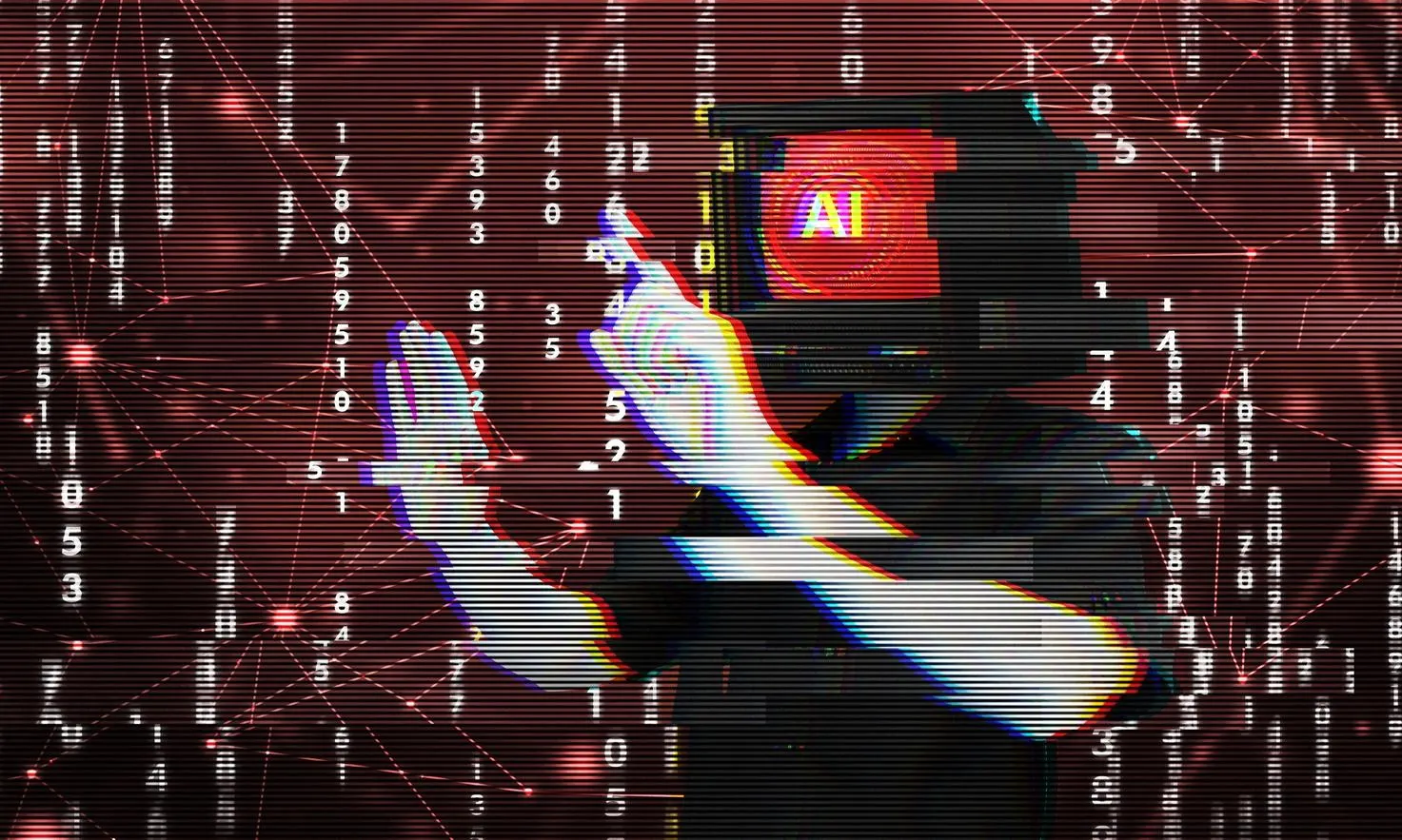
We are entering an era where cybersecurity is no longer simply human vs. human. It is increasingly AI vs. AI.
TL;DRAI
Agentic AI automates attacks; IBM reports 13% of organizations suffered breaches, yet autonomous defense cuts costs $1.9M. Organizations need formal AI governance and autonomous systems as cybersecurity shifts from human-led to AI-vs-AI—a boardroom priority.
836 words~4 min read