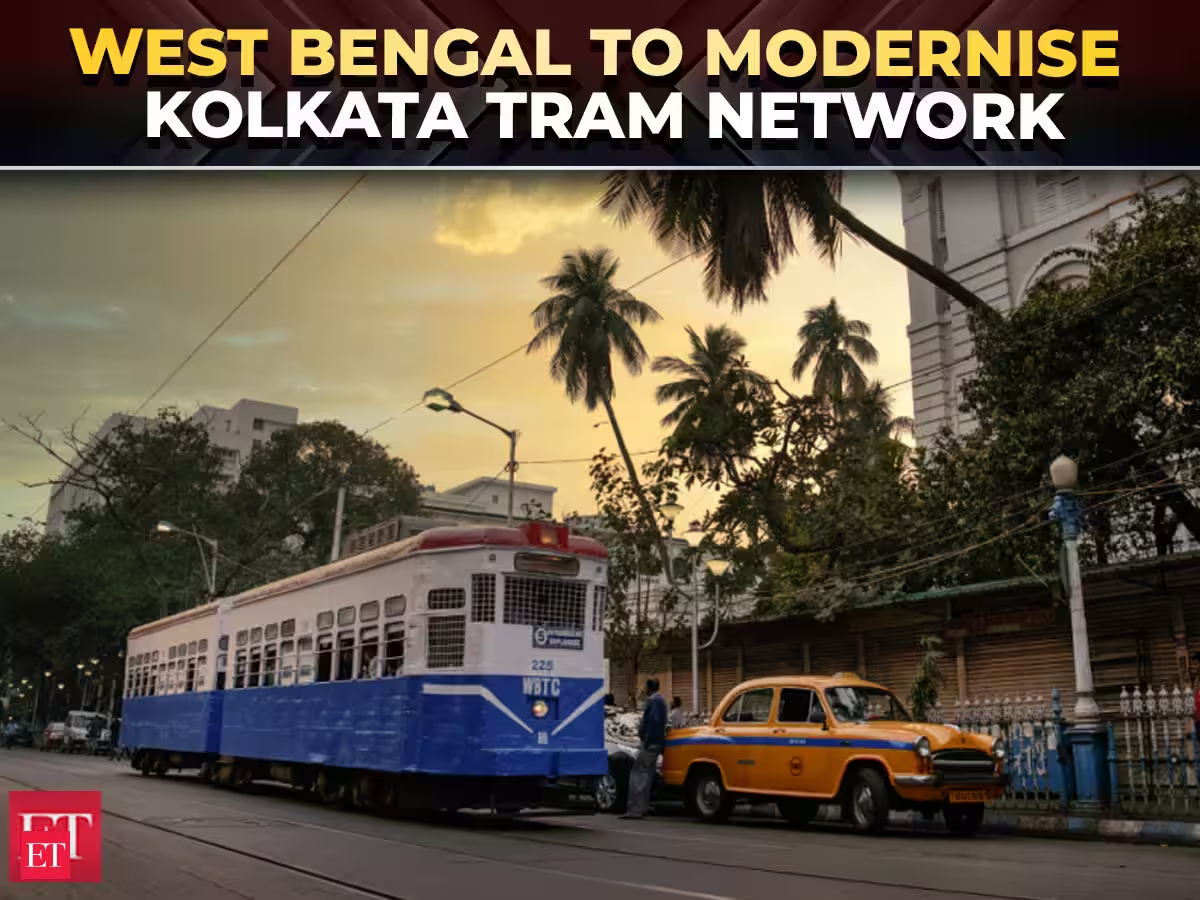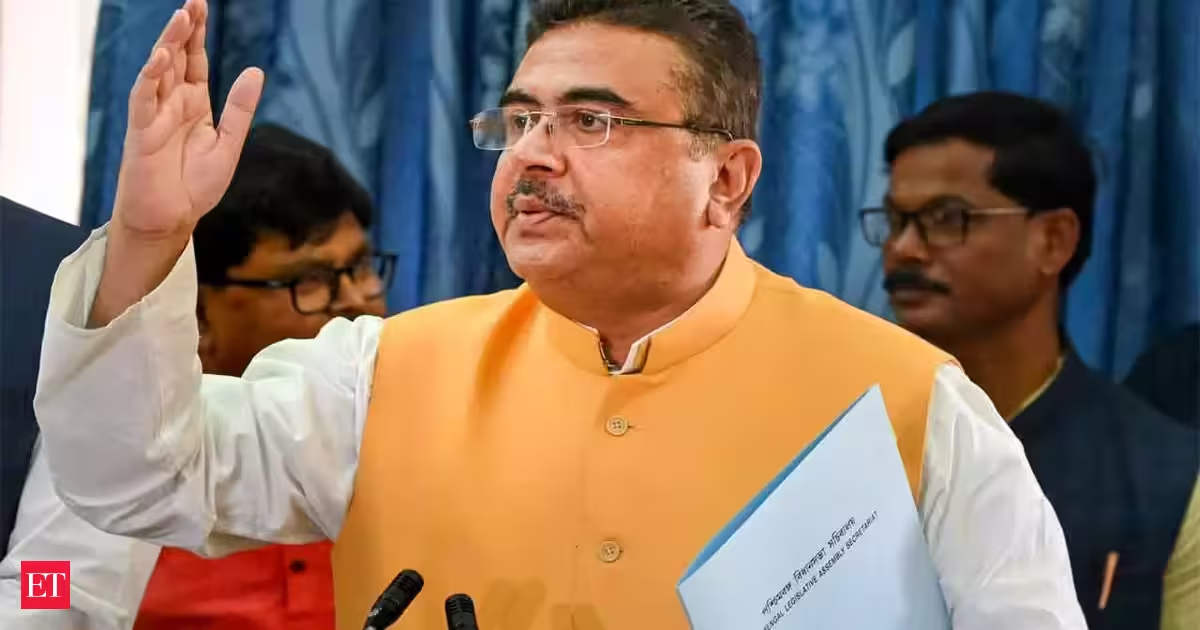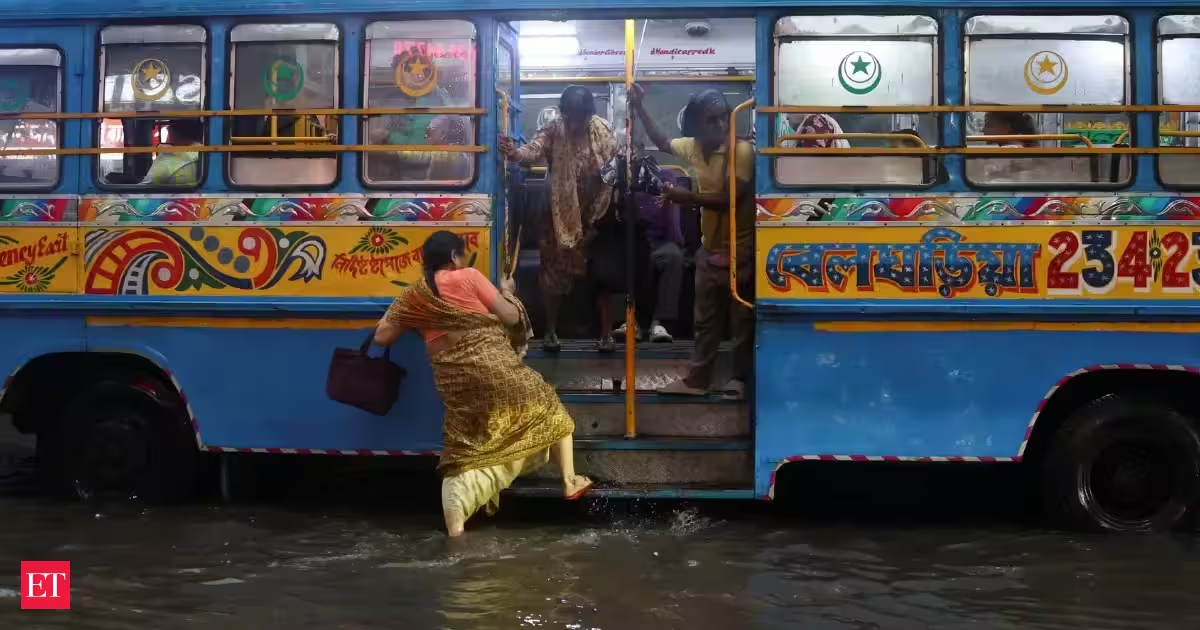
SynopsisThe West Bengal government plans a ring road and a new flyover for Kolkata. These infrastructure projects aim to ease traffic congestion and boost business growth. The state is also upgrading urban services like drainage and water supply systems. Renewable energy use will expand significantly by 2030. New mortuary facilities and electric crematoria will be established across districts.ReutersThe West Bengal government plans a ring road and a new flyover for Kolkata. These infrastructure projects aim to ease traffic congestion and boost business growth. The state is also upgrading urban services like drainage and water supply systemsThe West Bengal government is planning a ring road around Kolkata and a new flyover connecting the Eastern Metropolitan (EM) Bypass with Rajarhat-New Town as part of a broader push to strengthen urban infrastructure and improve the state's investment climate, Urban Development and Municipal Affairs Minister Agnimitra Paul said on Friday.Speaking at the Uttaran 2026 Bangla business conclave, Paul said the proposed projects are aimed at easing traffic congestion, improving connectivity and supporting business growth, although she did not specify timelines or investment outlays.Also Read: 60% of nearly 600 realty projects under scrutiny in Kolkata likely to get clearance soon: CREDAI"We are planning new flyovers like one that will link EM Bypass to Rajarhat-New Town and a ring road. These are part of improving infrastructure which will ease movement and will boost investment," she said.The proposed flyover will connect the EM Bypass with the satellite township of Rajarhat-New Town, one of the state's fastest-growing commercial and residential hubs.The 32-km EM Bypass serves as Kolkata's eastern arterial corridor, linking Ultadanga in the north with Baruipur in the south while providing connectivity to Salt Lake, New Town and the IT hub in Sector V.Paul said the government was focused on upgrading urban infrastructure through better roads, drainage systems, drinking water supply and civic services, which she described as essential for promoting trade and attracting investment.Also Read: High-level six member French delegation reaches Kolkata to explore business opportunitiesShe said the government's governance model was based on "minimum intervention, maximum service," with efforts underway to simplify administrative procedures for businesses, particularly micro, small and medium enterprises.Highlighting citizen-centric initiatives, Paul said the state had launched the Swachh mobile application, allowing residents to report civic issues such as waterlogging, illegal parking and road encroachments caused by construction materials. She said civic authorities would address complaints within a stipulated timeframe.The minister also announced plans to establish mortuary facilities and modern electric crematoria in every district to improve public services.On the sustainability front, Paul said the state plans to significantly expand the use of renewable energy by 2030 by installing solar power systems in municipal and government buildings.She also outlined initiatives to restore ponds, recycle water hyacinth into commercial products and convert temple flowers into incense sticks and coloured powder.According to officials familiar with the proposal, the state recently held a high-level meeting to revive an earlier plan for an approximately 7-km flyover from the Metropolitan area on the EM Bypass. The project is estimated to cost around Rs 900 crore but is yet to receive final government approval.Officials also said discussions are underway on building skywalks at the busy Ruby crossing on the EM Bypass and in Kolkata's central business district of Dalhousie to improve pedestrian safety and reduce congestion.Read More News on...moreless
West Bengal plans Kolkata ring road, EM Bypass-New Town flyover to ease congestion
The West Bengal government plans a ring road and a new flyover for Kolkata. These infrastructure projects aim to ease traffic congestion and boost business growth. The state is also upgrading urban services like drainage and water supply systems. Renewable energy use will expand significantly by 2030. New mortuary facilities and electric crematoria will be established across districts.
551 words~3 min read