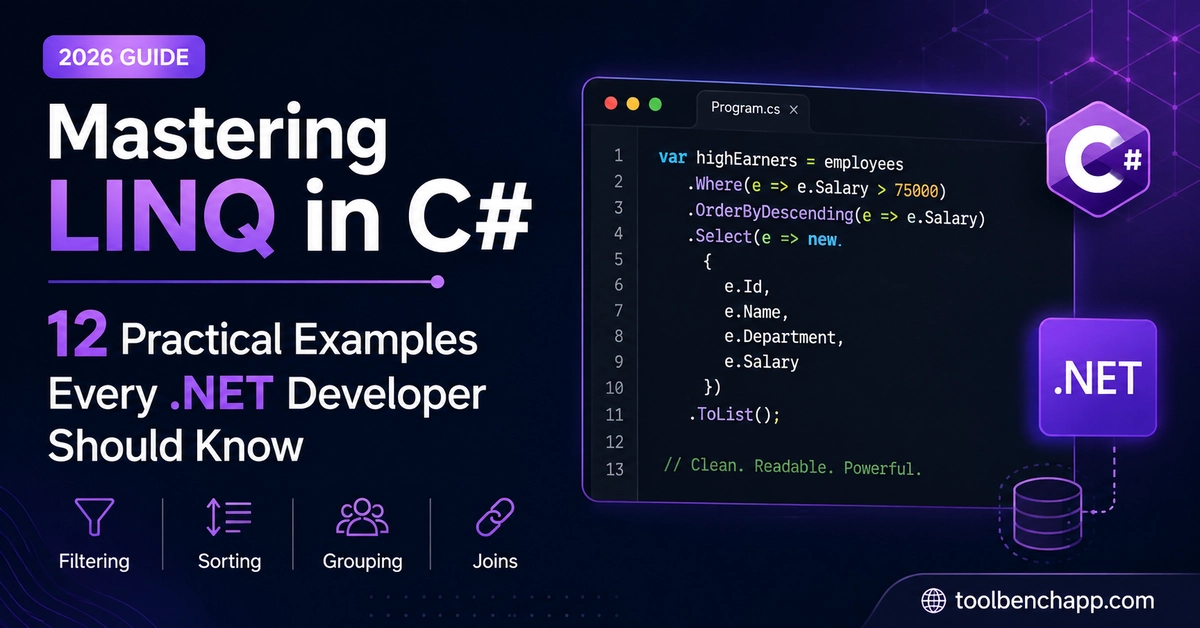
If you're a .NET developer, you've probably written countless for and foreach loops to filter, search, sort, and transform collections.
Before LINQ (Language Integrated Query) was introduced in .NET 3.5, developers had to write repetitive looping logic for almost every data operation. While those approaches still work, they often make the code longer, harder to read, and more difficult to maintain.
LINQ changed that by introducing a clean, expressive, and powerful way to query data directly within C#.
Whether you're working with:
Lists