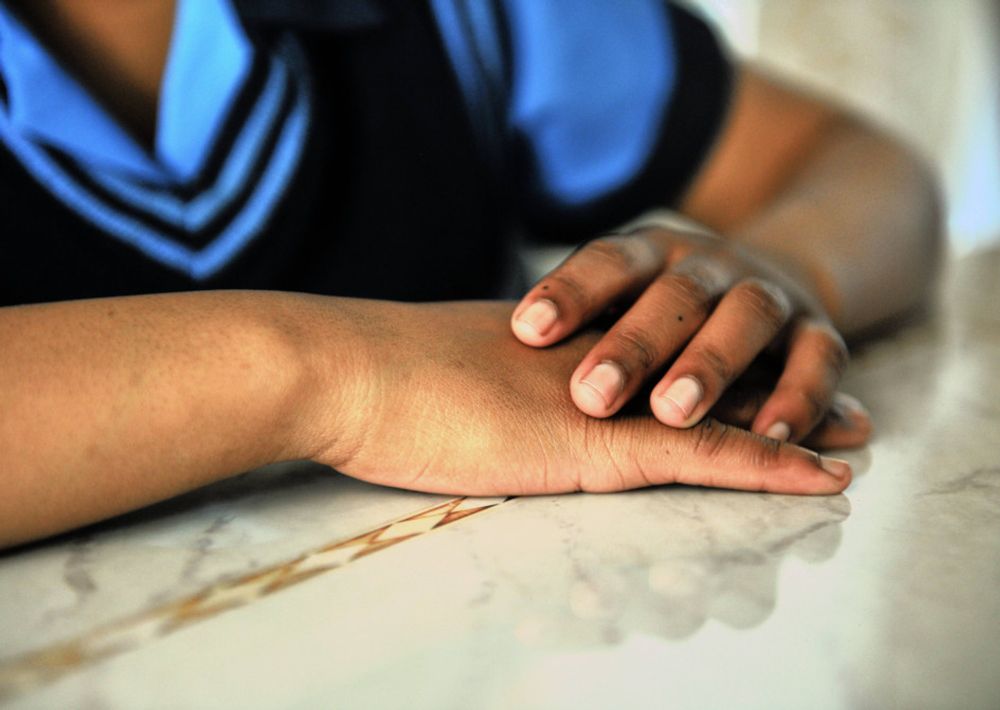
The hands of a child in a classroom. Experts say strengthening education outcomes is critical to improving children's wellbeing.
The publication of South Africa's National Strategy to Accelerate Action for Children (NSAAC) has been welcomed by child rights organisations, health experts and early childhood development advocates, who say the framework provides an important roadmap for improving the wellbeing of children and adolescents.
However, they have also warned that its success will depend on effective implementation, sustained funding and stronger integration of children's mental health and climate resilience across government programmes.
Published by the Department of Social Development following Cabinet approval, the NSAAC sets out a national framework to accelerate progress for children through ten strategic priorities aimed at reducing child poverty and malnutrition, improving maternal and child health, strengthening early childhood development, preventing violence against children and supporting adolescent wellbeing.
The strategy argues that while South Africa has made significant progress in improving children's lives since 1994, many of those gains are under pressure following the Covid-19 pandemic and a constrained fiscal environment. It states that government alone cannot address the challenges facing children and calls for a "whole-of-government and whole-of-society" approach, bringing together government, civil society, labour, business and communities to improve outcomes for children and adolescents.