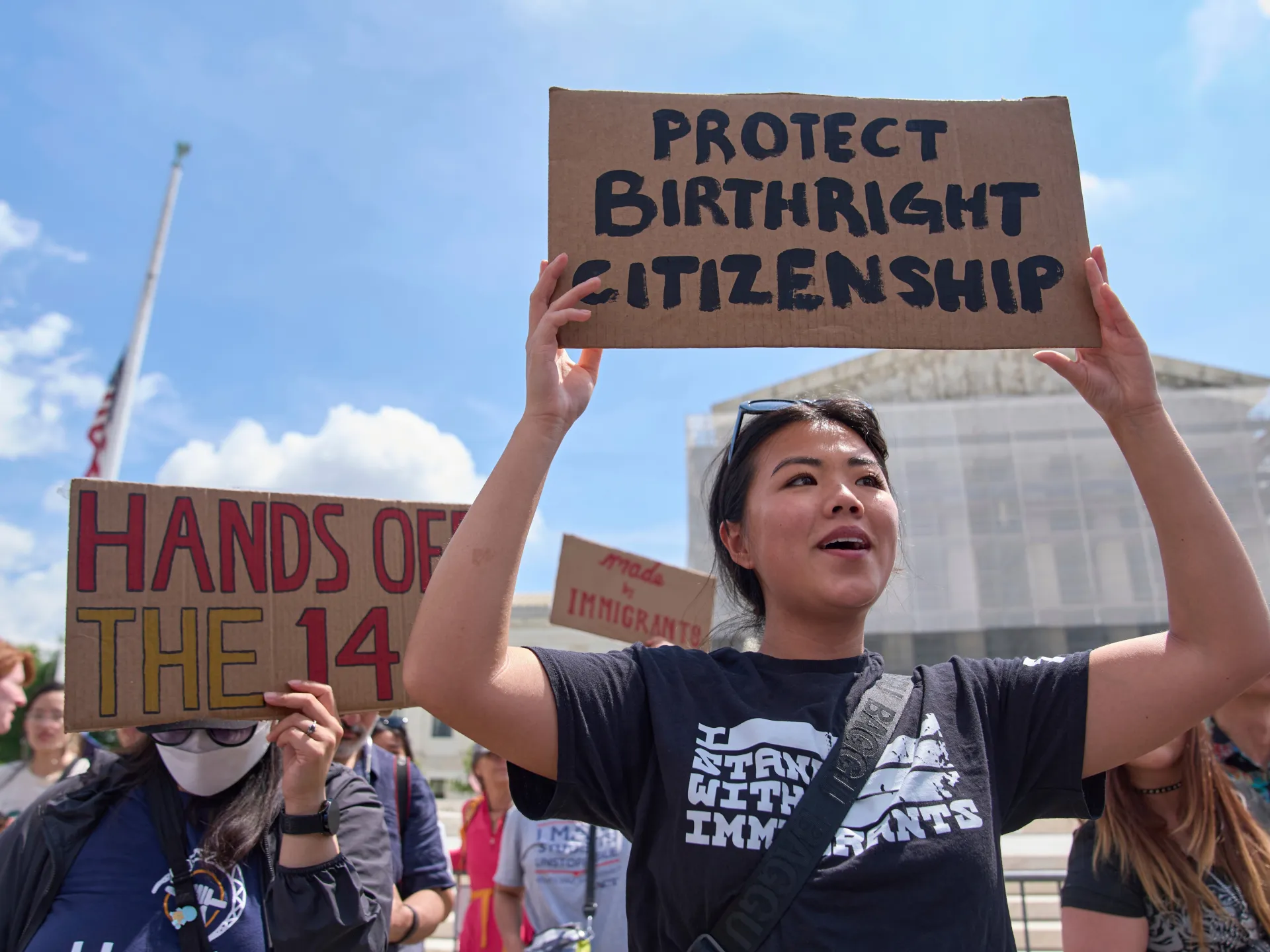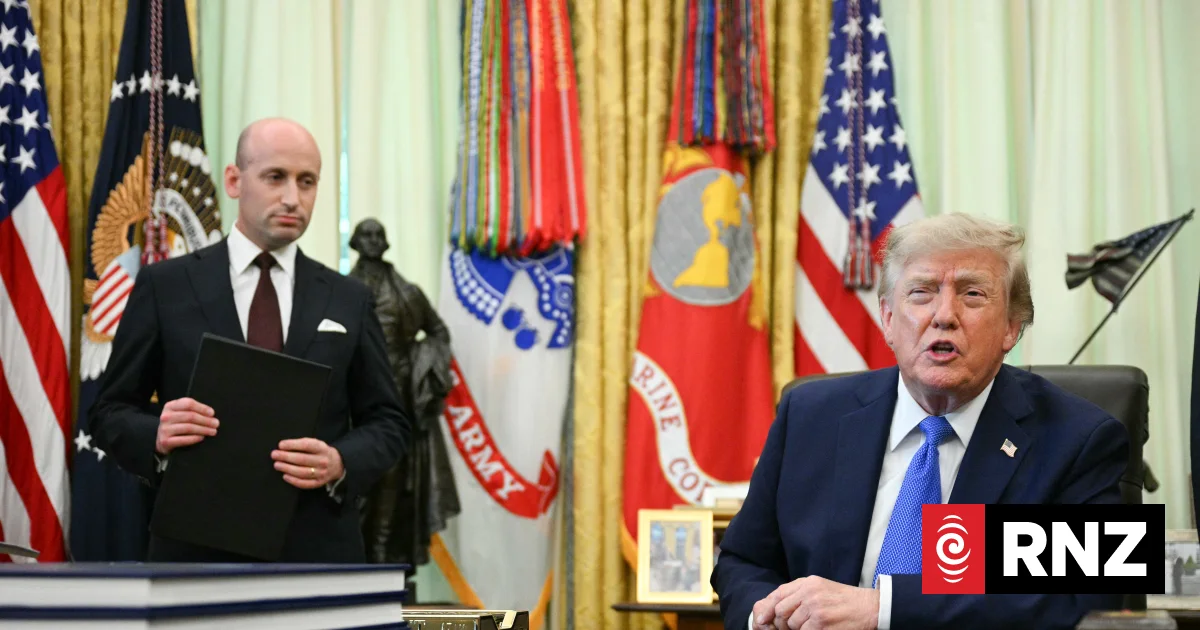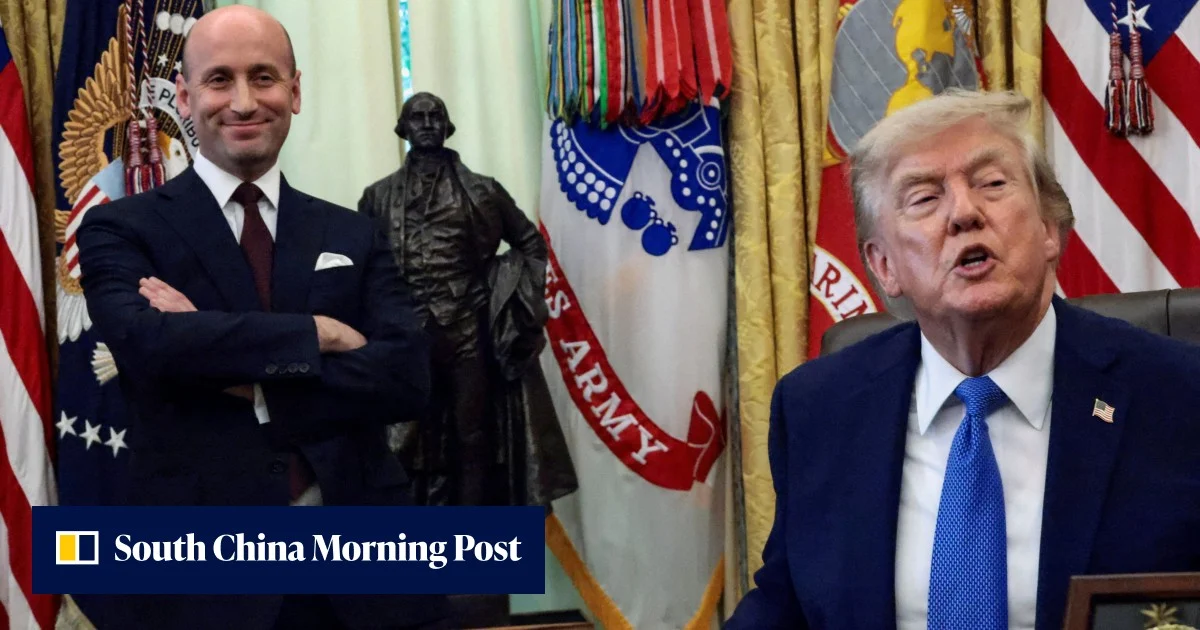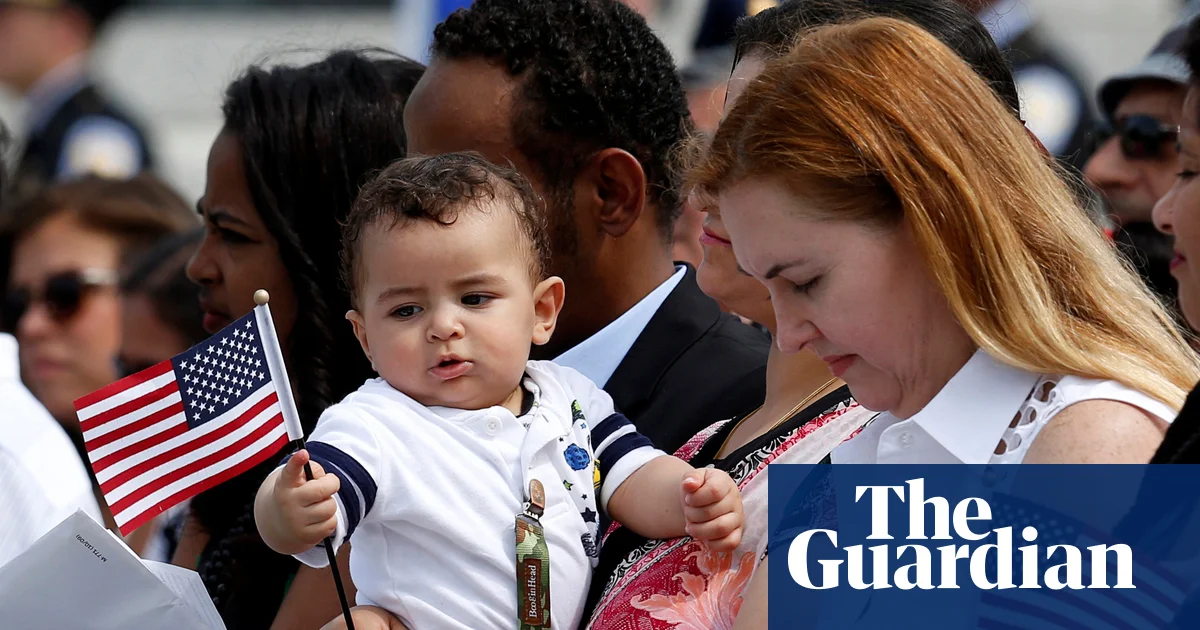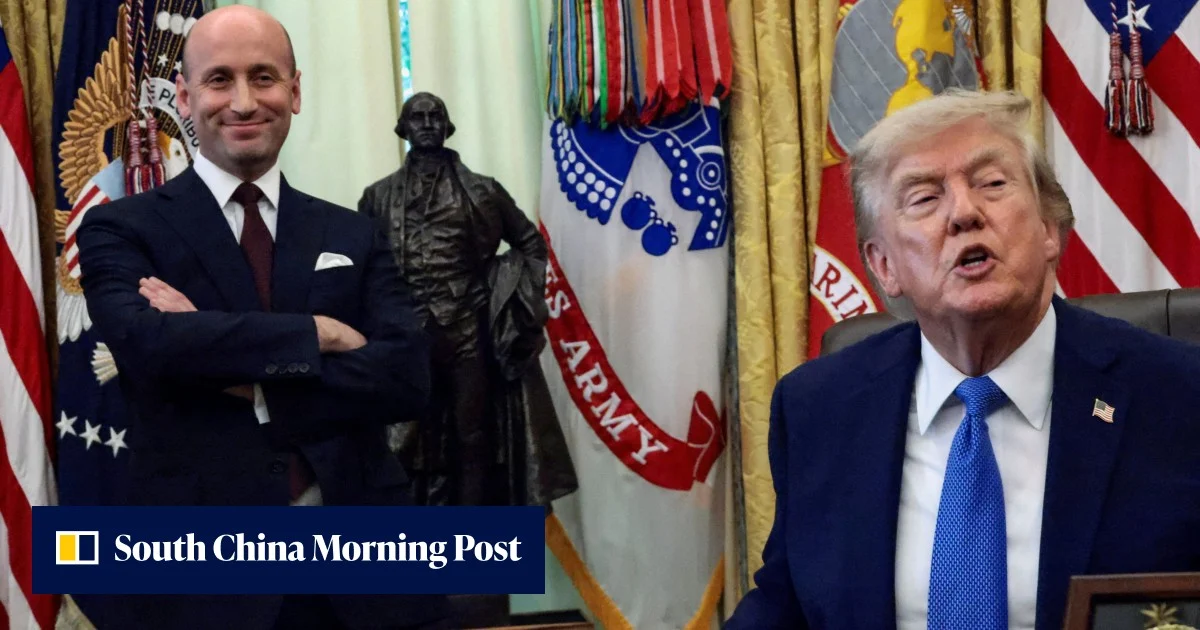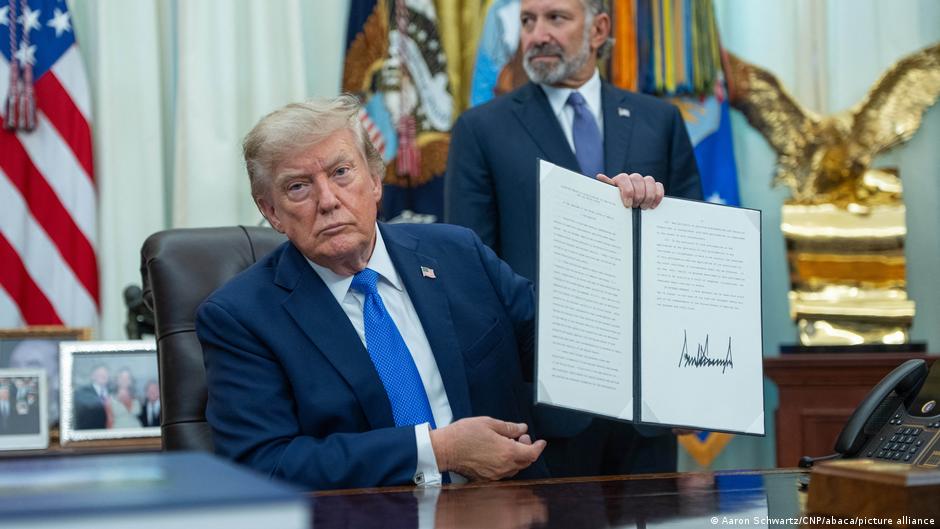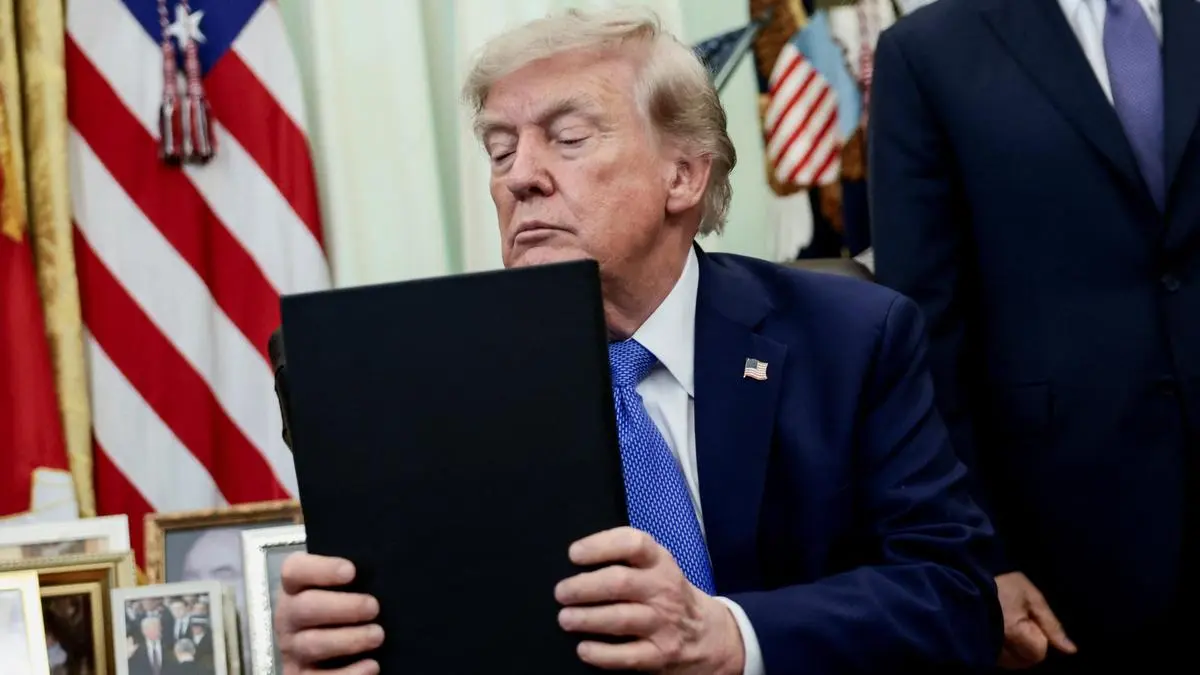
Trump revives birthright citizenship fight with narrower executive ordersUS President Donald Trump has signed two new executive orders aimed at restricting birthright citizenship, reviving one of his signature immigration policies just six weeks after the US Supreme Court dealt his administration a major setback by reaffirming that the 14th Amendment guarantees citizenship to almost everyone born on American soil.Unlike the sweeping executive order Trump signed earlier this year, which sought to deny citizenship to children born to undocumented immigrants and temporary visa holders, the new directives take a narrower approach by targeting specific categories that the White House argues fall outside the Constitution's protection."We had a bad decision, very unfair decision. Our country suffers because of it, and we're ending it a different way," Trump said after signing the executive orders at the White House.The move is expected to trigger another round of legal challenges and renew a constitutional battle over one of America's oldest and most contentious immigration policies.Why Trump changed strategy after Supreme Court rulingThe new orders come after the Supreme Court in June rejected the administration's broader attempt to reinterpret the Citizenship Clause of the 14th Amendment.The court, by a 6-3 majority, reaffirmed the long-standing interpretation that nearly everyone born in the United States automatically becomes an American citizen, except in very limited circumstances such as children of accredited foreign diplomats.Chief Justice John Roberts wrote that the framers intended citizenship to belong to "every free-born person in this land," rejecting the administration's argument that birthright citizenship should apply only to those who owe complete political allegiance to the United States.Instead of directly challenging that constitutional interpretation again, the Trump administration has attempted to carve out narrower exceptions that it believes can withstand judicial scrutiny.What do Trump's new executive orders say?The first executive order narrows automatic birthright citizenship for specific categories of children.According to the White House, it applies to:Children born to foreign government or diplomatic personnel not already covered under existing diplomatic immunity rules.Children born to individuals designated as "alien enemies".Children born to members of designated foreign terrorist organisations.Certain cases where the administration argues a parent's immigration status was obtained through fraud.The administration argues these categories fall outside the traditional understanding of constitutional birthright citizenship.Crackdown on 'birth tourism'The second executive order directly targets what the White House describes as "birth tourism", a practice in which foreign nationals allegedly travel to the United States primarily to give birth so that their child automatically acquires US citizenship.White House Deputy Chief of Staff Stephen Miller said applicants who conceal this purpose while obtaining tourist visas commit immigration fraud under the Immigration and Nationality Act.According to Miller, such applicants should no longer qualify for immigration benefits linked to birthright citizenship.The administration has announced tighter scrutiny during visa interviews to identify applicants suspected of travelling primarily for childbirth.Trump defended the move, arguing that the country is being exploited by people seeking citizenship through birth rather than immigration.Will the new orders affect Indians?For Indian nationals, the immediate impact is expected to be limited but significant for specific categories of travellers.The executive orders do not revoke citizenship already granted to children born in the United States.Instead, they are expected to affect future visa applicants and families planning travel to the US for childbirth.Potential implications include:Increased scrutiny during visa interviews: Pregnant applicants, or those suspected of planning childbirth in the United States, may face additional questioning regarding the purpose of their visit.Higher risk of visa denial: US consular officers may exercise greater discretion if they suspect an applicant intends to travel primarily for childbirth.No change for children already born: Children who have already acquired US citizenship through birth remain unaffected by the latest executive orders.Continued legal uncertainty: Immigration lawyers expect courts to quickly challenge the new rules, meaning their implementation could be delayed or blocked.How many Indians could be affected?India has frequently been cited among countries whose citizens travel to the United States for childbirth, although official figures remain unavailable.However, federal investigations over the past decade suggest organised birth tourism businesses have primarily catered to wealthy clients from China, Russia, Nigeria, South Korea, Taiwan and parts of the Middle East, with India accounting for a smaller share.Also read: Amicus brief - US birthright citizenship case raises concerns for Indian-origin familiesThe US government does not maintain an official database on birth tourism.According to the non-partisan Migration Policy Institute, fewer than 10,000 babies in 2024 were born to mothers listing foreign addresses out of approximately 3.6 million births in the United States.Other estimates place the annual number between 20,000 and 26,000 births, representing well below one per cent of all births.Why the issue matters for Indian-origin familiesWhile the latest executive orders focus on narrower categories, the broader debate over birthright citizenship carries significant implications for the Indian diaspora.Earlier this year, South Asian advocacy groups warned the Supreme Court that weakening birthright citizenship could disproportionately affect Indian-origin families because of America's decades-long employment-based green card backlog.According to an amicus brief filed before the Supreme Court, more than 1.2 million Indians remain stuck in employment-based green card queues due to country-specific caps.Many Indian professionals working in the US on temporary visas, particularly H-1B visas, spend years or even decades waiting for permanent residency.Advocacy groups argued that if birthright citizenship were curtailed for temporary visa holders, thousands of children born during that waiting period could face prolonged legal uncertainty or even statelessness depending on the citizenship laws of their parents' home country.The brief also warned that such a policy could discourage skilled migration and affect sectors such as technology, healthcare and engineering where Indian-origin professionals form a significant part of the workforce.Immigration experts believe the administration's revised legal strategy may be narrower than its previous attempt, but courts will ultimately decide whether the new categories are consistent with the 14th Amendment and existing Supreme Court precedent.The executive orders are unlikely to end the legal battle over birthright citizenship.Civil rights organisations are expected to file fresh lawsuits within days, arguing that the administration is attempting to achieve through executive action what the Supreme Court has already rejected.Until the courts decide, birthright citizenship remains guaranteed under the Constitution for almost everyone born on US soil. For Indian families considering travel to the United States, however, the latest measures could mean stricter visa scrutiny and continued uncertainty as the legal fight enters another chapter.
Trump signs new birthright citizenship rules: What it means for Indians
US President Donald Trump has signed two new executive orders aimed at restricting birthright citizenship, reviving one of his signature immigration policies just six weeks after the US Supreme Court dealt his administration a major setback by reaffirming that the 14th Amendment guarantees citizenship to almost everyone born on American soil.
1,051 words~5 min read