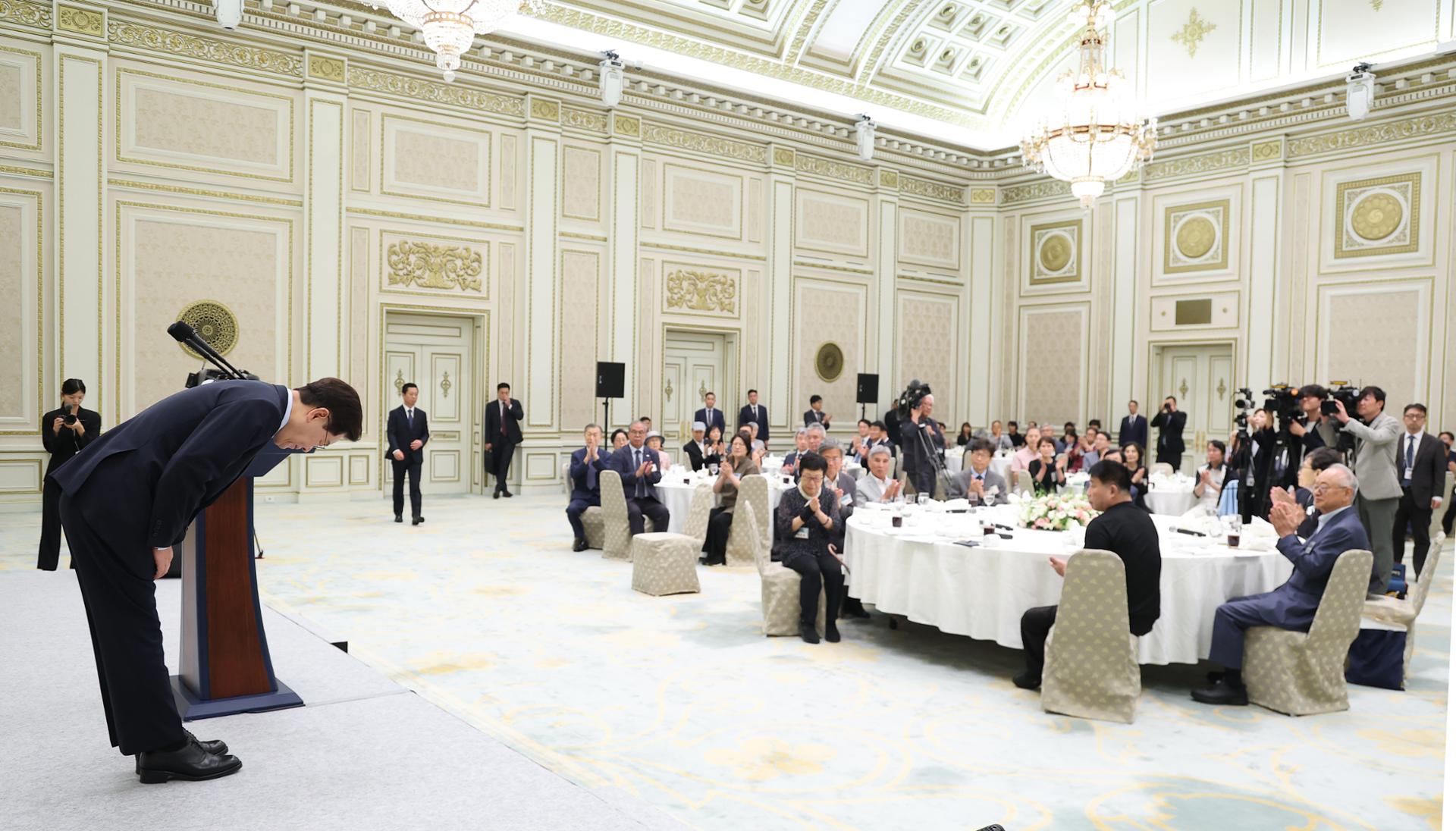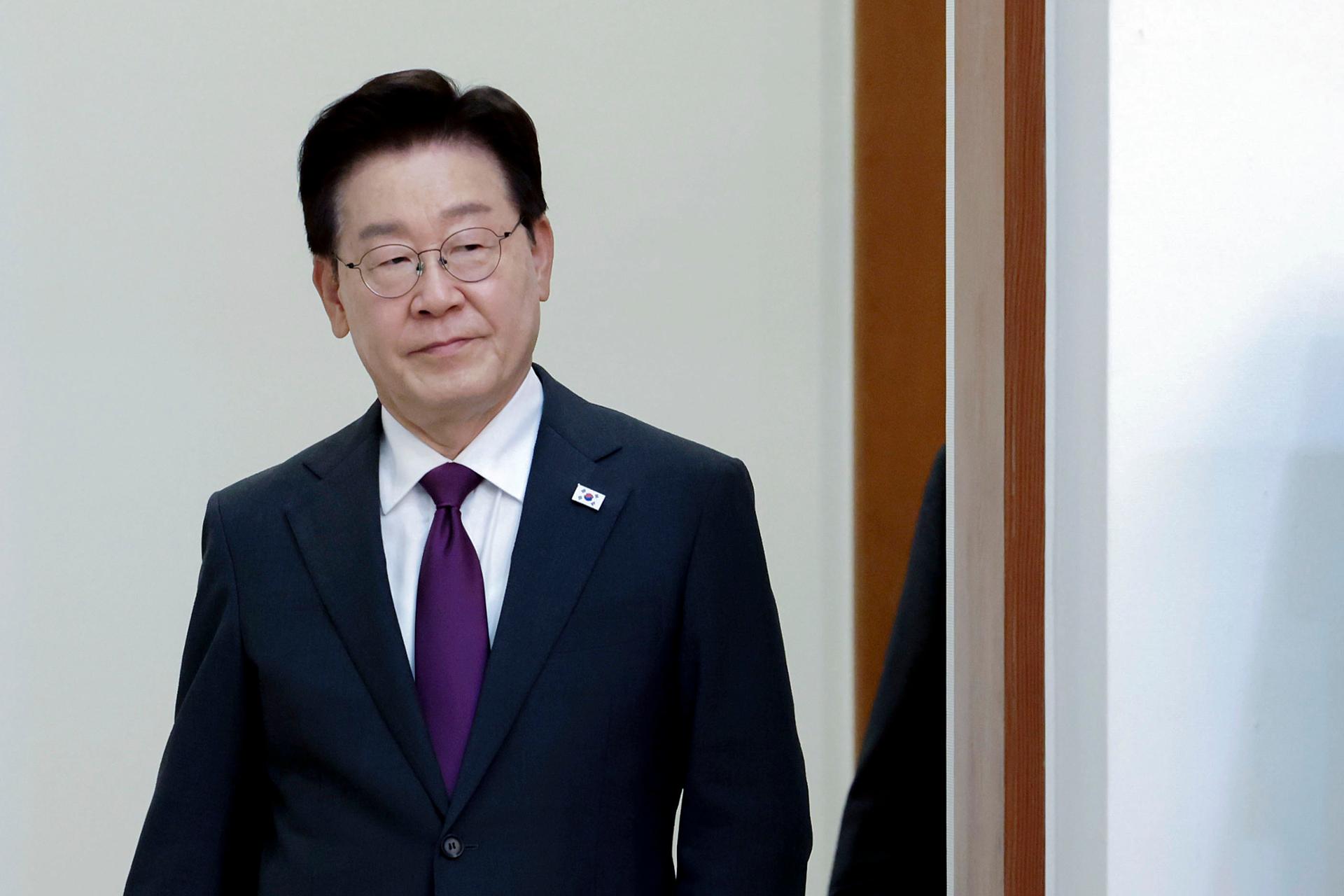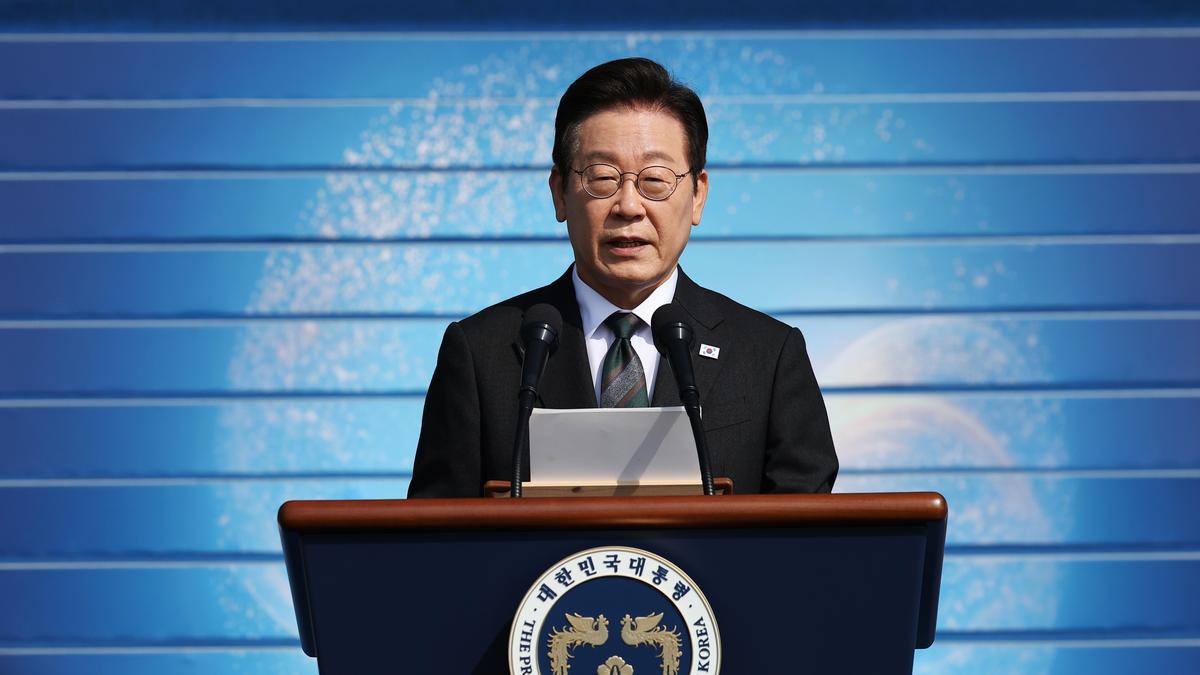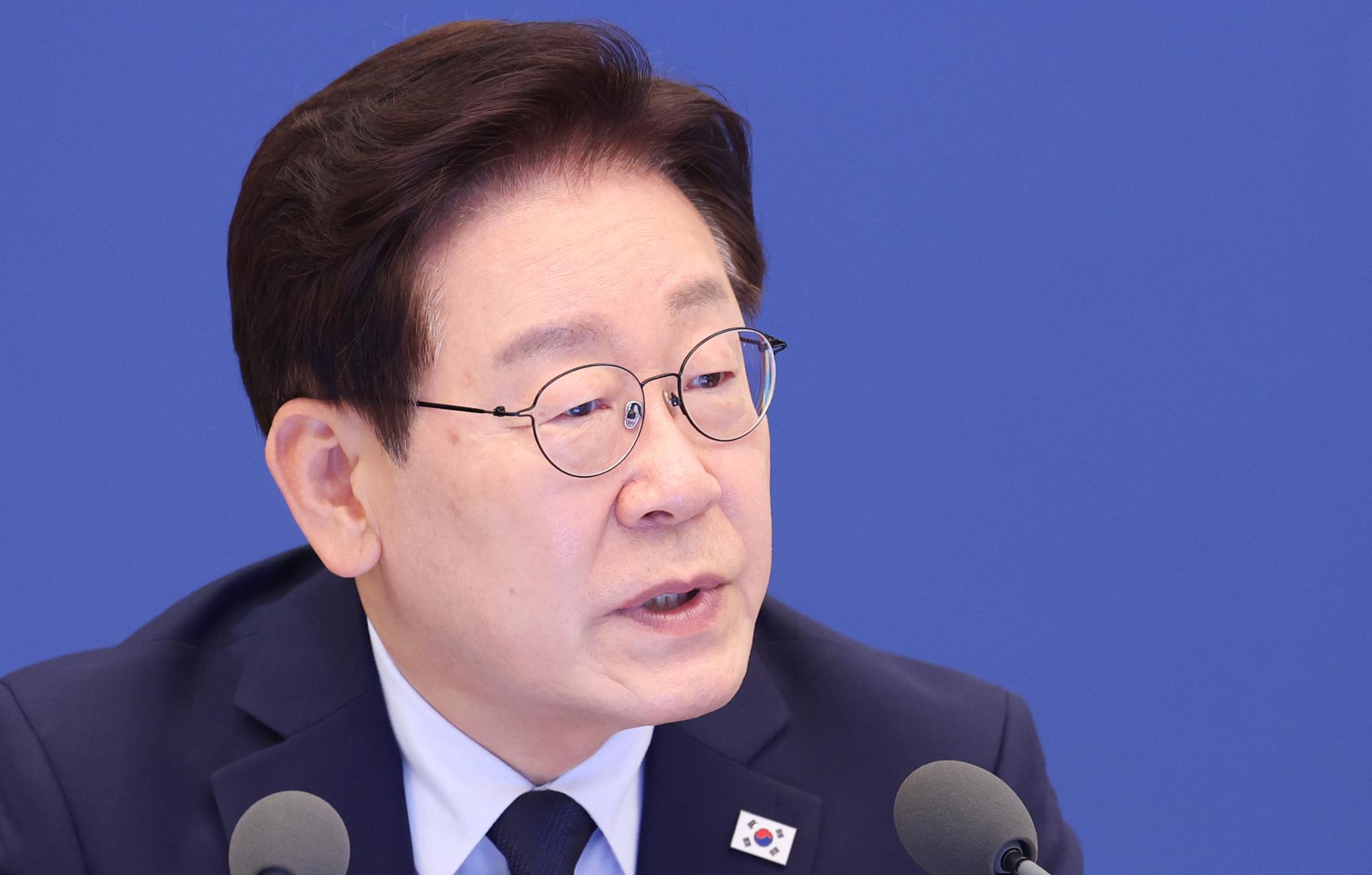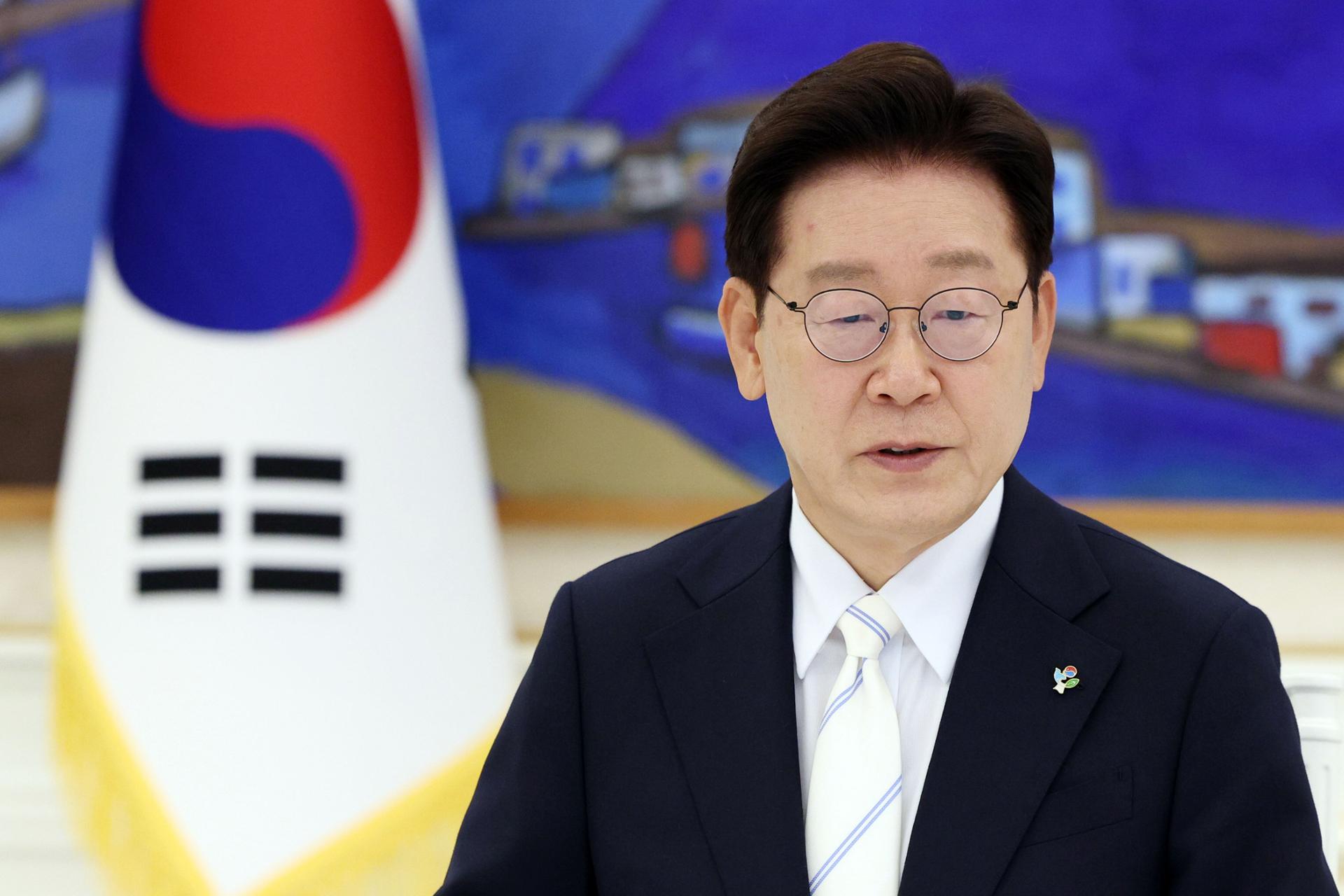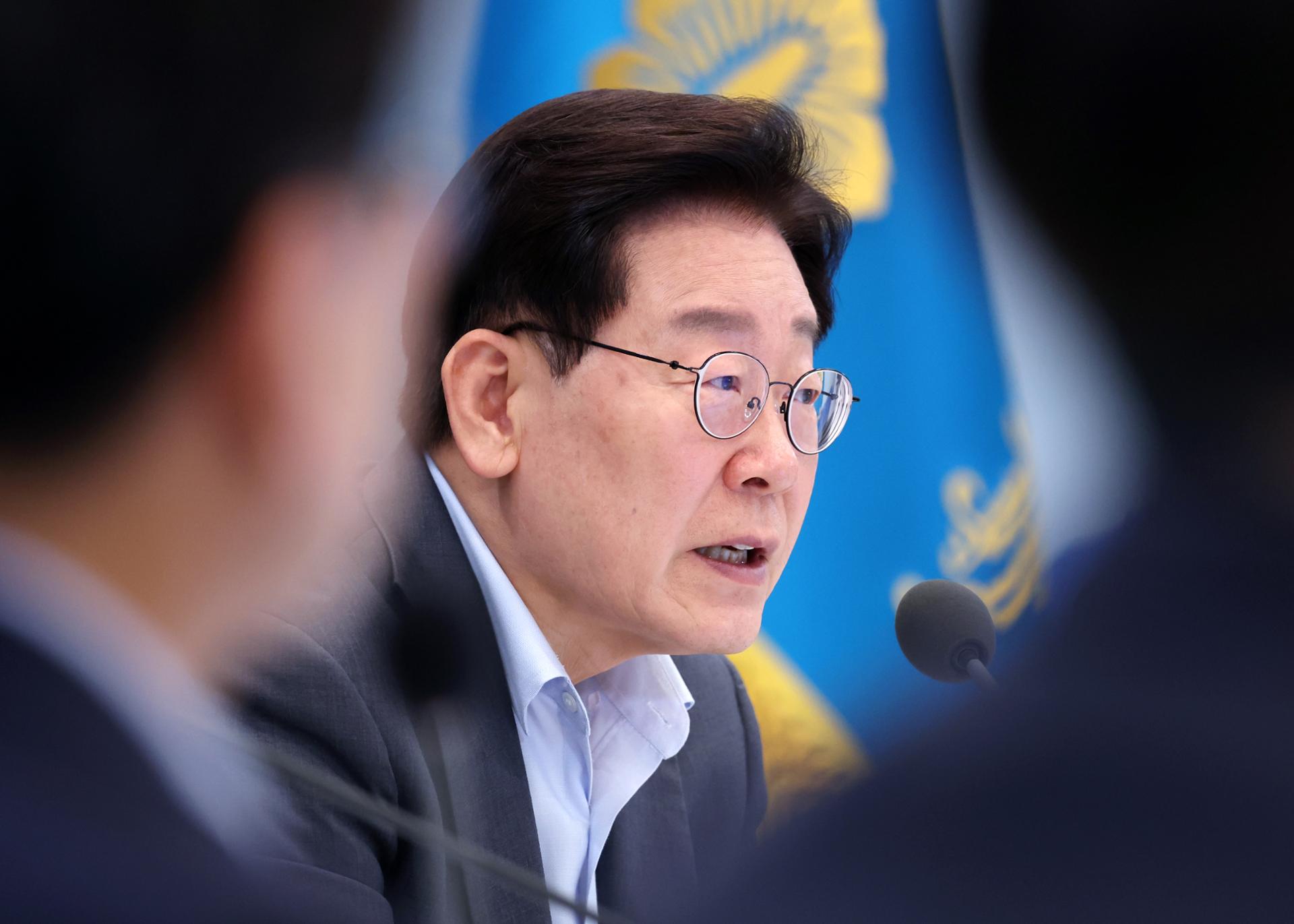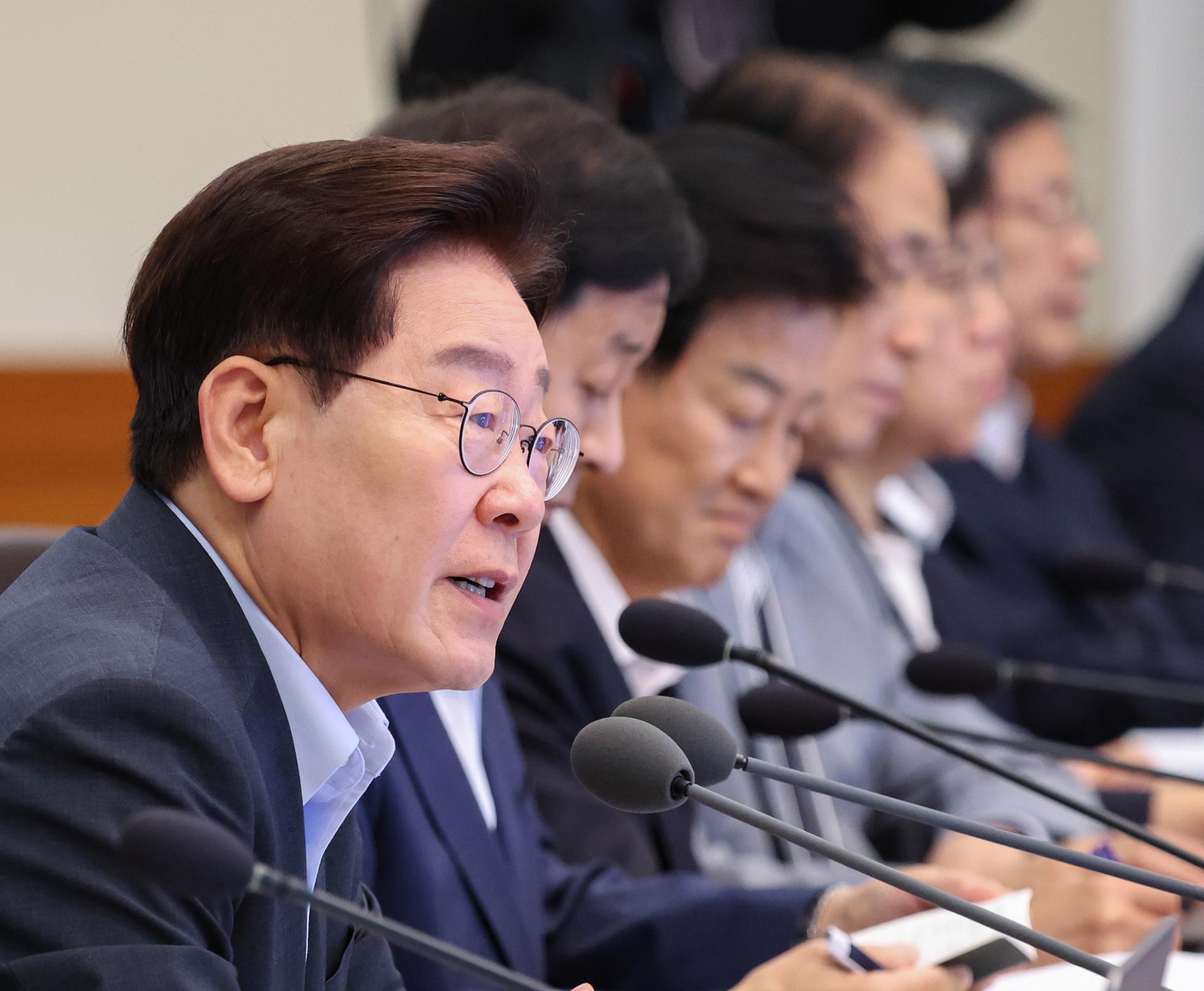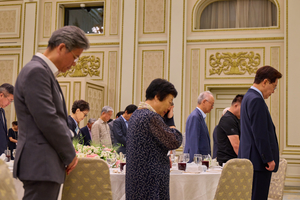
Lee becomes first president to personally apologize to victims of individual cases President Lee Jae Myung observes a moment of silence with attendees during a luncheon at Cheong Wa Dae in Seoul on Friday, held to comfort victims of state violence and mark the launch of the third Truth and Reconciliation Commission. (Cheong Wa Dae via Yonhap) President Lee Jae Myung met with dozens of long-overlooked victims of state violence Friday and formally apologized to them, pledging to restore their dignity and ensure meaningful healing and redress.“The state must now take responsibility for healing the wounds it inflicted on its own people,” Lee told the victims. “The passage of time does not absolve the state of its responsibility.”The apology came during a luncheon at the presidential office in Seoul marking the launch of the third iteration of South Korea’s Truth and Reconciliation Commission, an independent state body tasked with investigating abuses including civilian killings during the Korean War and human rights violations under authoritarian rule.Around 70 victims attended, representing cases that earlier commissions had investigated and substantiated but for which follow-up measures remained incomplete.Cheong Wa Dae underlined that Friday’s event marked the first time a Korean president had personally offered comfort and an apology to victims of individual cases of state violence.Previous governments had issued apologies at national commemorations for major historical tragedies, including the Jeju April 3 Incident and the crackdown on the May 18 Gwangju Democratic Uprising.In his opening remarks, Lee noted “the Republic of Korea’s modern history is one of remarkable growth and development, but also a turbulent one in which its people suffered deep wounds from state violence and human rights abuses.” “Countless people were brutally killed during the Korean War, while under authoritarian rule, the state suppressed and violated the freedoms and human rights of its own people,” Lee added. President Lee Jae Myung delivers opening remarks during a luncheon for victims of state violence at Cheong Wa Dae in Seoul on Friday, held to mark the launch of the third iteration of the Truth and Reconciliation Commission. (Yonhap) Lee listed cases of state violence that occurred primarily from the early 1960s to the late 1980s under South Korea’s military dictatorships and authoritarian governments.Among them were the brutal suppression of citizens and students demanding democracy, the forced conscription and ideological reeducation of dissident students, and the mass dismissal of unionized teachers.Lee also pointed to rampant human rights abuses at the Samcheong Reeducation Camp and the Seosan Pioneer Corps, as well as illegal detention, torture and other abuses during the crackdown on the 1980 Sabuk miners’ labor uprising and in fabricated espionage cases involving fishermen who returned after being abducted by North Korea.“As president, I feel a profound sense of responsibility for the state’s failure to adequately respond to the victims’ desperate pleas,” Lee said. “We can no longer pass the long-overdue task of reckoning with the past on to the next generation.” President Lee Jae Myung bows to attendees after delivering opening remarks at a luncheon for victims of state violence at Cheong Wa Dae in Seoul on Friday, held to mark the launch of the third iteration of the Truth and Reconciliation Commission. (Yonhap) Lee cited a revision to the Framework Act on Settling Past Affairs for Truth and Reconciliation in February this year, which removed the statute of limitations on damages claims arising from state violence and placed the prime minister in charge of overseeing the implementation of the commission’s recommendations.“Under the new system, we will steadfastly continue efforts to uncover the truth while doing our utmost to restore victims’ dignity and ensure meaningful healing and the restoration of their honor,” Lee said.“The third Truth and Reconciliation Commission, launched in February, will play an important role in uncovering the truth, restoring victims’ honor and rebuilding public trust,” he added.Lee said the commission would investigate abuses at mass detention facilities, including Brothers’ Home and Deokseongwon, two notorious state-backed internment camps, as well as cases involving forced overseas adoptions.The commission will also proactively identify and investigate unreported cases rather than relying solely on victims to come forward, according to Lee.“I will make efforts with a profound sense of responsibility as president to ensure that state violence never happens again in the Republic of Korea and that not a single innocent person is victimized,” Lee said.“Once again, I offer my deepest sympathy and apologies to all those who have suffered state violence in this country since its liberation.” Song Sang-kyo, chair of the Truth and Reconciliation Commission, delivers remarks at a luncheon hosted by President Lee Jae Myung for victims of state violence at Cheong Wa Dae in Seoul on Friday. The event marked the launch of the commission’s third iteration. (Yonhap) Song Sang-kyo, chair of the Truth and Reconciliation Commission, described the event as historically significant.“For the first time, the president, representing the state, brought together long-overlooked victims of state violence and human rights abuses and offered them comfort and an apology,” Song said.“The president’s remarks today will offer great comfort to victims and bereaved families who have long suffered as a result of countless acts of state violence that destroyed the very foundations of their lives, and will mark a historic milestone in restoring their honor.”The first two iterations of the commission handled about 29,000 cases, but many investigations were suspended or left unresolved because of difficulties obtaining government records.The third commission formally began its work July 21 by launching investigations into around 2,100 cases. It plans to expand investigations initiated on its own authority while pursuing compensation legislation for victims.“We will do our utmost, with a sense of urgency that the third commission represents our last chance to fully reckon with the past,” Song said.
Lee apologizes to long-overlooked victims of state violence
President Lee Jae Myung met with dozens of long-overlooked victims of state violence Friday and formally apologized to them, pledging to restore their dignity a
953 words~4 min read