Let's be honest: linkedSignal() always had a bit of a split personality. It read beautifully from another signal, deriving a value that stayed in sync automatically. But the moment you needed to write back to that source, you were on your own, writing a separate method, converting the value by hand, and hoping you didn't forget to call it from every place that touched the field.
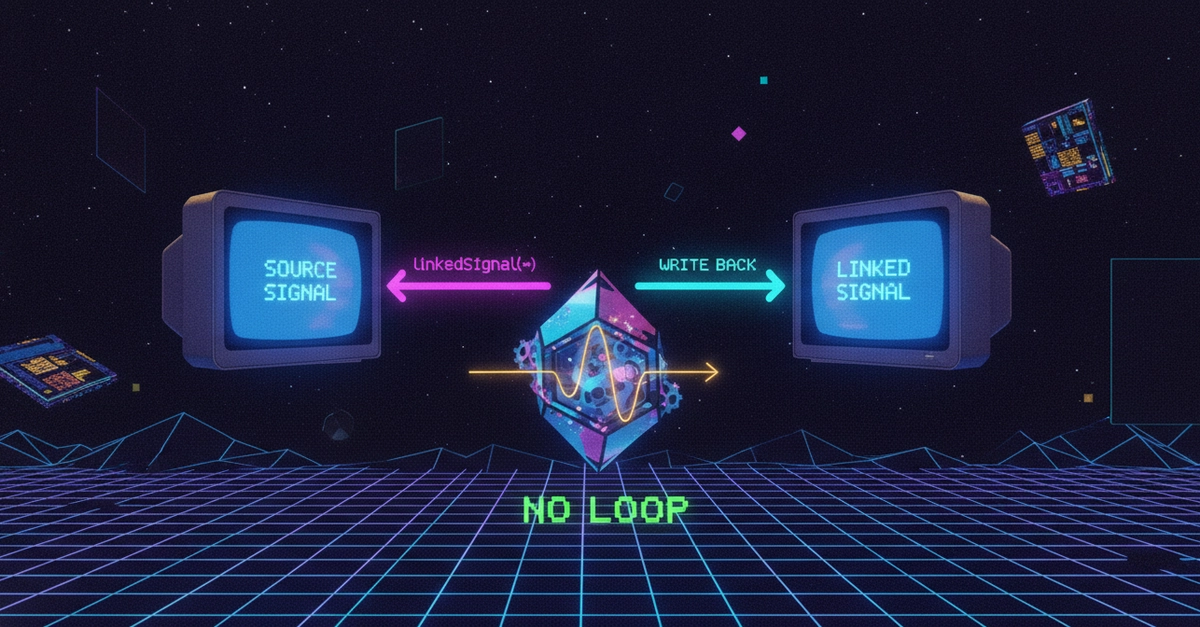
Angular 22.1 closes that gap. linkedSignal() can now take a custom set() option, and the linkedSignal becomes a genuine two-way field: read from a larger piece of state, write back to it, no disconnected duplicate copy of the data anywhere.
My first reaction when I saw this: if the linkedSignal reads a source signal, and writing to the linkedSignal updates that same source, doesn't that loop forever? It didn't feel obvious to me, so I went and traced through the actual reactive graph source to settle it, and that turned into a nice little tour of how Angular's signals actually work.
Here's the classic shape. A profile signal holds the real state, and a linkedSignal exposes one field of it:
protected readonly profile = signal<UserProfile>({