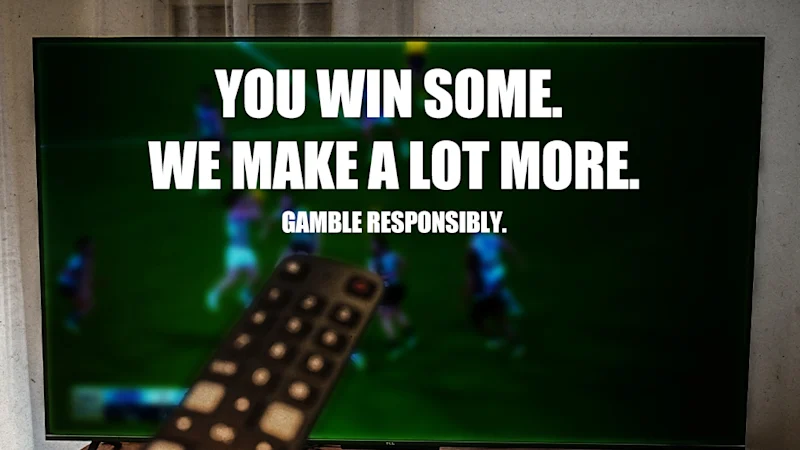
Karen Middleton writes about Labor’s proposed gambling-ad legislation (“If PM’s gamble loses, can he still win?” , August 7), which many voters vehemently criticise, noting that “Albanese has said if the Senate won’t compromise he’ll walk away and let the Coalition, Greens and Pocock wear the blame”. Making David Pocock, perhaps one of the most admirable politicians, a patsy is shameful. So, this is leadership? And not caring enough about gambling’s many victims, and enabling kids to believe gambling on sport is natural and fun, is simply outrageous. Prime Minister, show leadership by putting people first, and you’ll gain more respect – a vote winner. Jennifer Fergus, CroydonSenator David Pocock at parliament in Canberra this week.Alex EllinghausenThe Labor Party always boasted about being the party of grassroots, and the recent party conference in Adelaide strongly endorsed anti-gambling policies. Anthony Albanese was the master from the Left faction to fight on many issues in Labor conferences over decades, and now he is abandoning gambling reforms, ignoring the party’s wishes. It is a sad reflection of how powerful these gambling and sports lobbies are. The gambling industry says that some $3 billion and more went to online gambling with overseas companies. The poorest people are carrying the brunt of gambling, and they are losing families and homes, leading to violence and hospitalisation. You have to be heartless to promote gambling. Mukul Desai, Hunters HillI am having a small punt that the PM will have changed gambling legislation before the next election. Zuzu Burford, HeathcoteGambling reform is a major litmus test for the Albanese government. Is it prepared to act for the people by reducing the immense harm that ineffective gambling-related laws allow? Or is it content to head sideways in a pretence at reform? Jettisoning the bill that is now in the Australian parliament to prolong the status quo would expose an exceedingly cosy relationship with industry. The impact on the wider populace’s perceptions about who exactly Albanese’s government stands for may well determine the ALP’s electoral fortunes. Jim Allen, Panorama (SA)There is another dark side to gambling that few are aware of. While tens of thousands of Australians are affected by a gambling habit, there are other victims that go unseen. In 2026 alone, 43 greyhounds have been killed and 6028 have been severely injured as a result of racing. In 2025, there were 119 racing greyhound deaths and 10,785 racing injuries. On average, racing kills five greyhounds a week and injures 30 hounds every day. Gambling advertising encourages remote, often impulsive, betting, so the chances are that if you bet on a greyhound race, you will be responsible for a dog’s death or severe injury. Horse betting is little better. These animals are mere pawns in a massive money-making industry. Gambling ads have deadly results. At the least, and in the absence of a complete ban, all gambling advertising must be opt-in. And gambling ads that spruik betting on live animals should be banned outright. Judy Hungerford, NarraweenaThere is a body called Responsible Wagering Australia, representing the gambling “industry”. Hardly an industry, as it manufactures nothing but broken dreams. Donald Hawes, PeelSharp rejoinderWhile questionable advertising by big pharma is always of concern, especially when it is around sensitive and still evolving trends such as “blockbuster weight-loss drugs”, and any evasion of local norms and laws around public product promotions, there are other issues around these products that warrant consideration (“Pharma giants’ weight-loss adverts skirt Australian law, say experts”, August 7). Regulations are rightly very strict around infection control and public safety, including appropriate receptacle disposal and the collection of all used sharps. However, it might be asked what the burgeoning numbers of regular GLP-1 users in the community are doing with their sharps. It’s doubtful that all the weight-loss drug consumers are in alignment with regulated clinicians regarding sharps disposal, which arguably presents a public health safety risk if these are just thrown in among normal household waste. Not to mention the extra single-use waste issue. The bigger question is how this would ever be regulated and overseen, and why this seems to have been overlooked in this rapidly escalating trend. It’s past time to bring on the pill versions of these drugs. Robyn Dalziell, KellyvilleSMS or SOS?I have often been dismayed to see parliamentarians playing with their phones during a parliamentary session (“Liberal leader says profane text was private”, August 7). If children are not allowed to use their phones during class, why should the same principle not apply to parliamentarians? No matter who ACT Liberal Mark Parton was texting, it shows scant regard for the proceedings to be exchanging text messages during a session, and few people outside the rarefied atmosphere of parliament would complain about being bored while taking home a salary of more than $300,000. What pampered prima donnas our pollies have become. Bernard Moylan, BrontePlanning upstartsAt last. Someone making sense (“Libs’ bid to let councils axe housing plan”, August 7). The government’s housing plan isn’t creating more affordable housing. Rather, it’s pushing people out for multimillion-dollar apartments with water views. Giving councils control and opportunity to reach housing targets with their own plan, tailored for their own electorate, makes sense. After all, the current one-size-fits-all, cookie-cutter approach isn’t working. Let’s try something that gives our kids and essential workers a chance. Jodie McGregor, DrummoyneI’d like my grandchildren and great-grandchildren to be able to afford a home in Sydney. Good on you, Kellie Sloane, for having a plan to make this happen. Maxine White, CarlingfordParty fundingPauline Hanson depicts herself as champion for struggling Australians (“Hanson used One Nation funds for five-star hotel”, August 7). Her recent lavish trip to England and Europe is well beyond the means of ordinary Australians. If she is using One Nation’s funds to finance her lavish spending, including maintaining a private jet, Australians who plan to vote for her and One Nation are put on notice about her lifestyle, which is now no different to Gina Rinehart’s. Peng Ee, Castle CoveMany of the “everyday” rural Australians who contributed to Pauline Hanson’s “Fire the Liar” fund would have enjoyed the experience of sleeping under the stars in their swags. It looks like Pauline, too, likes sleeping under the stars – five-stars. John Payne, KelsoI see! I guess “the One Nation’s consolidated party revenue” is for “parties”. Kerrie Adams, Double BayMigrant nationMiles Franklin: Great oaks from little acorns growAlamyAs I skimmed through yesterday’s paper, I was most impressed by Pauline Hanson’s contribution to the migration debate (“PM’s tougher migration stance will define legacy”, August 7). I was about to apologise on behalf of my First Fleet ancestor, Edward Miles, a petty thief, when I realised, thankfully, that Pauline was more concerned about “dog walkers, nail technicians and Uber drivers”. Whew! That’s OK, then. Is it OK that one of Miles’ descendants was Miles Franklin, one of those troublesome writers, as are the wretched journalists who do not pay her One Nation mob sufficient respect? Nola Tucker, KiamaStrings attached to data centresSo, data centres are popping up like the mushrooms found under cowpats in spring (″Mega data centre sparks battle over community and grid impact″, August 7). The big worry is the humungous energy consumption. Data centres run 24/7 and their energy consumption is constant. Why, then, are households contributing electricity to the grid from their home solar systems only being paid 3¢ to 10¢ per kW when demand is at an all-time high? We are told this is because daytime demand is low. Surely we are being fed some of that cowpat fertiliser. Once again, consumers are being ripped off.Maureen Donlon, Wagga WaggaSydney Water has warned that existing wastewater networks were “not designed to handle the significant discharge anticipated from data centres”. If water disposal is a problem, what of supply? I have lived long enough to see many droughts throughout Australia, many severe. Sydney Water has done a great job in keeping ahead of our ever-increasing population and water demands but these centres could create a new conundrum. If it is proposed that these centres offset their power usage by investment in renewable energy, then their water usage should also be regulated. The “significant discharge” would be the result of significant demand for water, an ever-increasing problem in Australia. Therefore, the wastewater should be retained, cooled onsite and reused. If the development of these centres are indeed “vital for Australia’s digital sovereignty”, our competition will have the same problems. Let’s get a step ahead of the competition, get this sorted and set the example for the world to follow. Pamela Zopf, Guildford WestThe reason for the proliferation of data centres outside the US is resistance to new data centres within the US. New York has banned them for 12 months, and other states are following suit. According to the National Conference of State Legislatures, many states have introduced legislation to ban or restrict data centres. Australia is seen as an easy target. Maybe we should look the gift horse in the mouth. Neville Turbit, Russell LeaIt is time we all had a more nuanced debate about the facilities, rather than a reactionary approach to this new technology. When you look at water use in Australia you see that agriculture consumes 50 to 70 per cent of our water, with more than 50 per cent used for the growing of just rice, cotton and almonds. Ten per cent of our total electrical supply is consumed by our four aluminium smelters. Limited resources and multiple users mean we have to decide what are the most profitable and practical uses of these assets. If it means having to buy aluminium, almonds or cotton elsewhere then that may well be the price we have to pay if we want to continue to be the clever country. John Mizon, CollaroyTwo important things that your correspondent (Letters, August 7) needs to reference before deciding that data centres are benign developments. Firstly, the noise a data centre throws from beside a busy highway will be far less noticeable than the noise from one beside bushland. Secondly, data centres operate in stages, and so it is doubtful the centres your correspondent references are at full capacity. As for the “not far from me”, well, how far is “not far enough”? Surely, anywhere near schools, residential or conservation zoned land should have minimum distances. With their huge power intake, super-tall bright lights, constant hum and mission-critical status – I’m sorry but they are heavy industry and should be zoned accordingly. Elizabeth Darton, Lane Cove WestUS politics on course Megan HerbertIn analysing the startling outcome of Abdul El-Sayed, a Muslim progressive, defeating the moderate incumbent Haley Stevens in the Michigan Democrat primary (“Despairing Democrats risk it all”, August 7), Waleed Aly’s statement that “It’s unlikely politics on either side is going back to normal” is perhaps the ultimate oxymoron. Politics in the US has never been calm, polite or unified. Deep division has been a core feature of their system from the beginning, constantly heading on a ruination trajectory that has become Trumpism today: democratic corrosion through the dismantling of checks and balances, the weaponisation of the legal system, and the expansion and fortification of presidential power. Mary Carde, Parrearra (Qld)The approaching American midterm elections are shaping to be the most significant for some time. One would think that the chaos of the Republican Trump administration on both international and domestic fronts would ensure that Democrats would be favoured to take at least one house. However, as Waleed Aly opines, the Democrats have their own problems, with a vast difference of opinion within their ranks. Younger progressives have been labelled “Communist” and in America that is electoral poison, set to be exploited exponentially by the Republicans. Thus the presumption by many that the midterms would result in a brake on the Trump excesses would seem to be forlorn. Whatever you think of Trump, he is a master of exploitation and scare campaigns and will take full advantage of the polarisation of the Democrats. Max Redmayne, DrummoyneWaleed Aly’s column is the first time I’ve seen “Michigander” used to describe residents of Michigan. I’m now curious. Is the term gender-neutral or are female residents “Michigeese”? Mandy Burns, LugarnoCensus and sensibilityReligious leaders have rightly criticised the advice of the National Secular Lobby that only those practising a religion in some narrowly formal way identify with a religion in the census. In truth, those who put, say, Church of England or Anglican can be very diverse in their views and practice. Some attend church, some do not; some have no association with an institution, some are very “active”; some are deeply “conservative” or “orthodox”, many are not. Some are agnostic or even atheist “cultural” Anglicans (such as scientist Richard Dawkins and theologian Don Cupitt, devout in their own way). Over the years, as a chaplain encountering in hospital many, many thousands of patients identifying mostly as Church of England (as I do) or as Anglican, I have met all sorts. But those religious leaders, especially of my church and the Roman Catholic, should be consistent and in practice be far more welcoming, tolerant and accepting of this diversity. Frederick Faber, ex-Anglican Roman Catholic, wrote that we make God’s “love too narrow by false limits of our own”. Also important, despite the comparatively small number of adherents, it is surely time that Judaism, mother of both Christianity and Islam, be listed alongside the other religions. John Bunyan, CampbelltownCaves’ better optionJenolan Caves House: back again, but how to get there?Wolter PeetersWhile the suggested gondola down to the Jenolan Caves is a cheap option (“Jenolan Caves set to finally reopen”, August 7), it doesn’t solve the long-term access problems for the Jenolan Caves. For many years our organisation, the Jenolan Environment Protection Committee, has been briefing NSW government ministers on our proposal for an above-ground, cable-driven funicular railway. This would provide an all-weather comfortable trip down into the valley. It would still require the same visitor centre and car park at the top of the hill but would be properly weatherproof and more secure than a flimsy gondola. Jenolan is World Heritage and deserves the best. Bruce Welch, MarrickvilleEverlasting artArt for the ages Cathy WilcoxEvery now and then a newspaper cartoon (Letters, August 7) in the form of satirical comment so encapsulates the zeitgeist that it is surely destined to become an artefact that defines the times. Cathy Wilcox’s spin on an Orwellian dystopia based on Australia’s grappling with social cohesion is one such cartoon. Bradley Wynne, CroydonWalk onI was so pleased to read of the all-women hiking group (“All-women hike groups hit new heights”, August 7). I have been a walker from an early age and still enjoy it. Just one suggestion: wear a hat. Josephine Piper, MirandaHeroes all aroundRuby Atkinson’s raw and honest account of her struggles after receiving a life-changing diagnosis of leukaemia speaks to all of us and not only those unfortunately stricken with cancer (“I’m alive, thanks to strangers who don’t even know my name”, August 7). The question that Ruby raises in the depths of her despair was never “Why me?” but “Why them?” Her thoughts turned to all the research scientists and medical practitioners in Australia and throughout the world who selflessly devote their lives to finding answers to her own particular malady. She had discovered her connection to something far more infinite and universal that extends way beyond herself. Thank you, Ruby, for sharing your story and giving us hope as we journey together on this sacred and most mysterious of all paths called life. Vincent Zankin, Rivett (ACT)Ruby Atkinson asks why strangers would want to help her on her cancer journey. Surely the answer is in her beautifully written story and her gratitude to those who cared for her. May she see many more sunsets. Vicky Marquis, North SydneyTo submit a letter to the Sydney Morning Herald, email letters@smh.com.au. Click here for tips on how to submit letters.The Opinion newsletter is a weekly wrap of views that will challenge, champion and inform. Sign up here.
The Prime Minister can’t have a bob each way on overdue reform
Prime Minister, show leadership by putting people first regarding gambling-ad legislation and you’ll gain more respect – it’s a vote winner.
2,675 words~12 min read