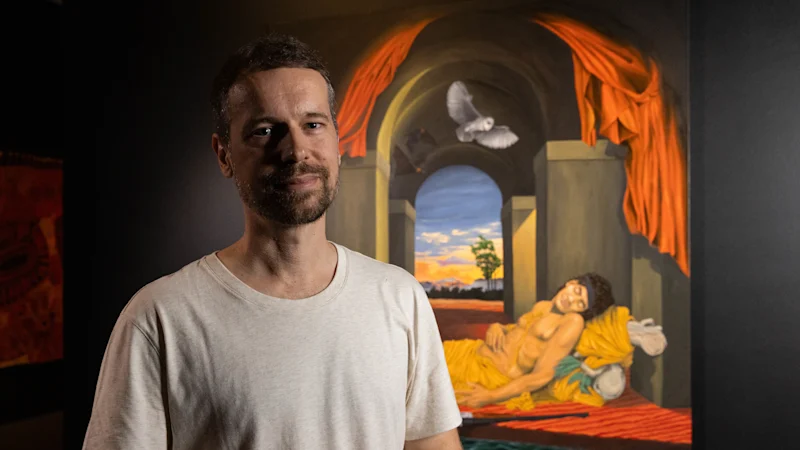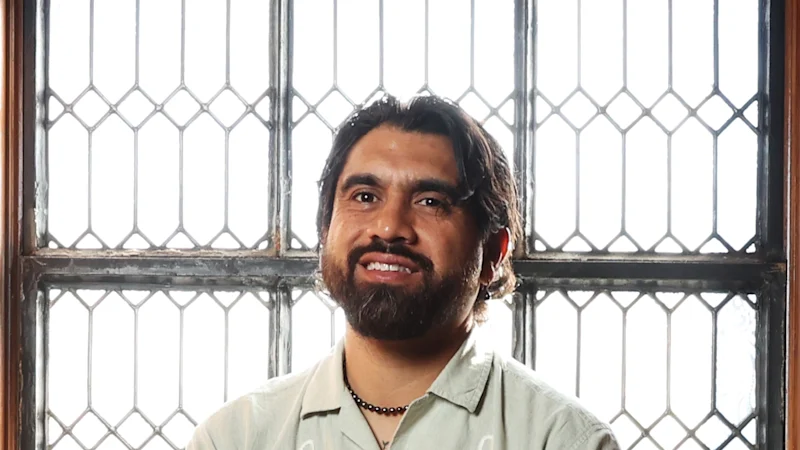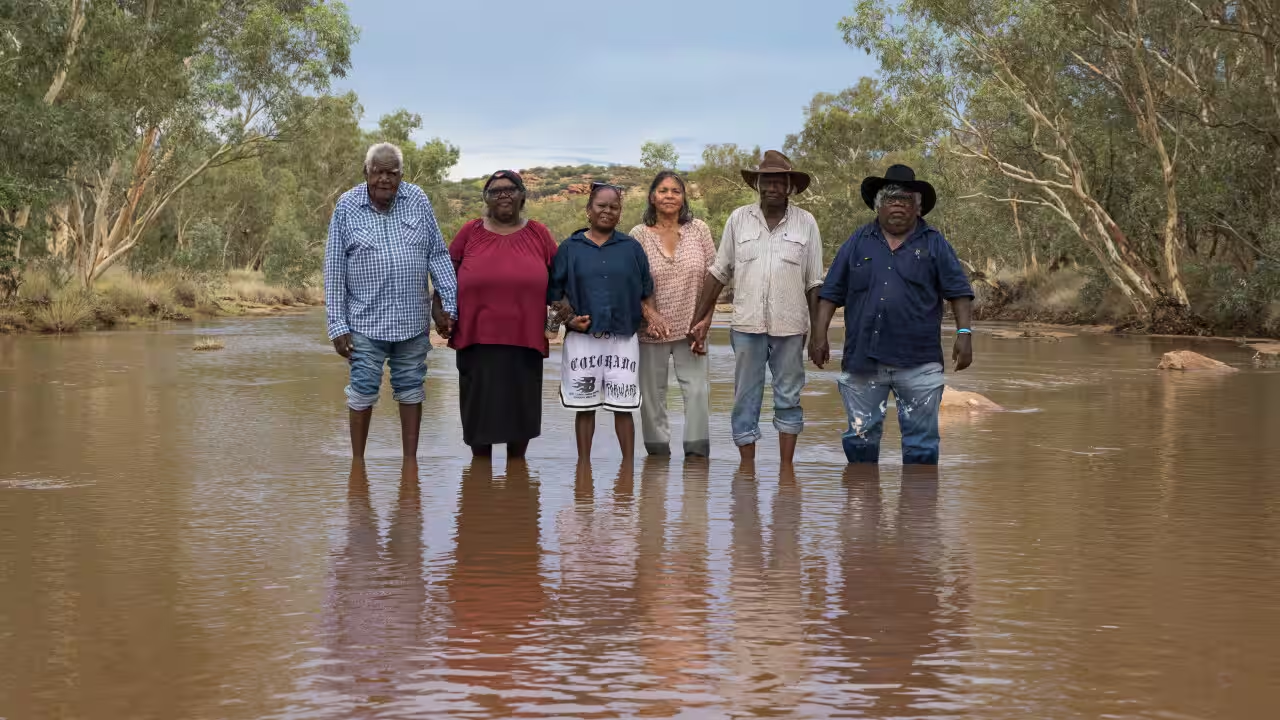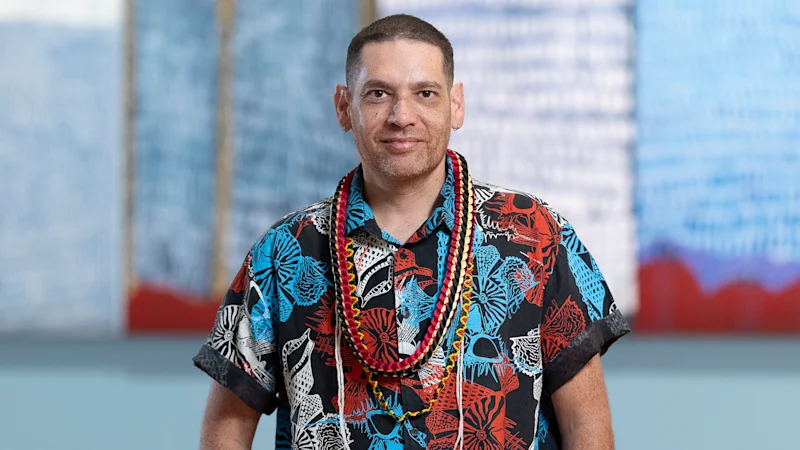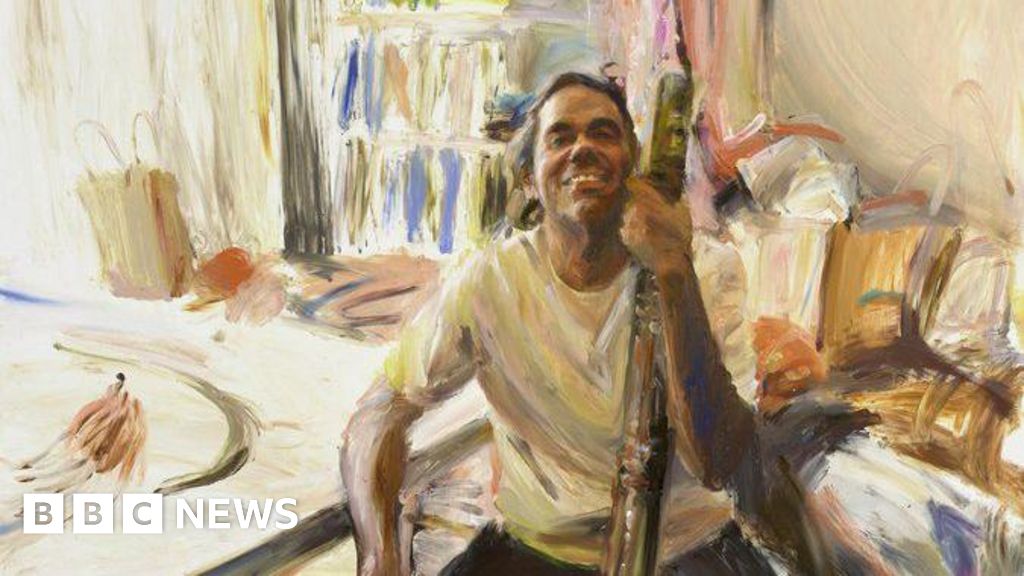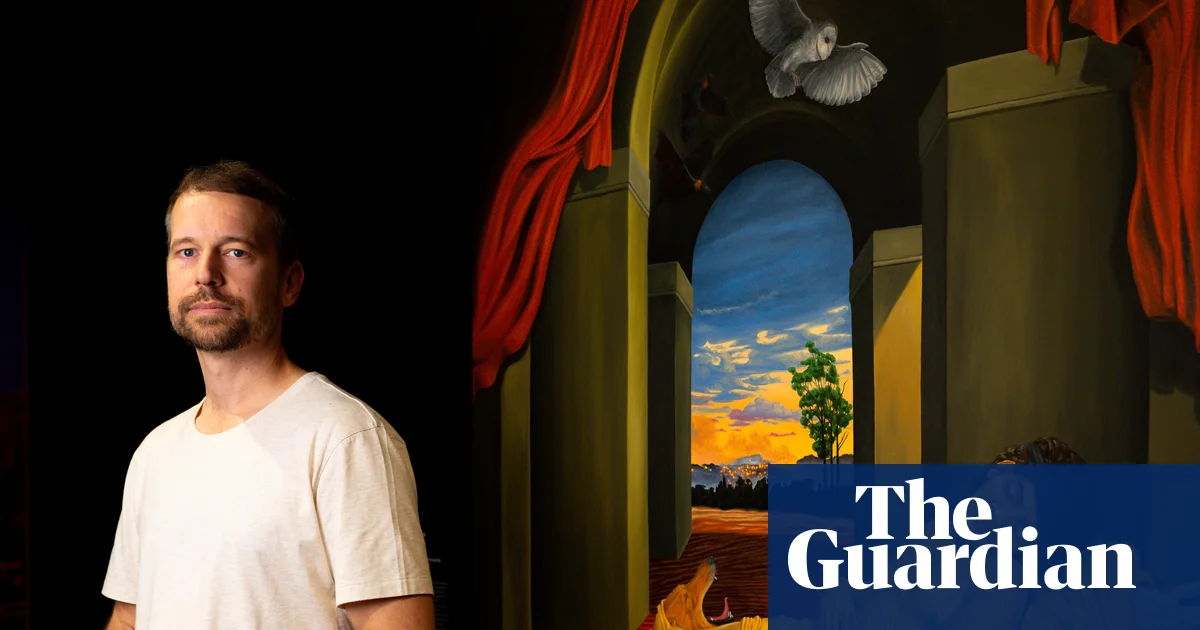
An Indigenous artist’s painting that “presents a recomposed view of the past” and challenges the western canon, especially Renaissance art, has won the $100,000 top prize at the 43rd National Aboriginal and Torres Strait Islander awards (Natsiaa).The Marri Ngarr artist Dr Ryan Presley received the award on Friday evening for his 2.8 square metre oil on polyester painting, titled Our lifestyle of tranquillity undisturbed.The painting depicts a male protagonist lying down on a ledge, draped in yellow sheets. A rifle rests in front of him, a dog yawns by his side, and an owl flies overhead. Dark waters ripple off the edge in front of him, while a bushfire sparks on the orange horizon, signifying past, present and future existing simultaneously.Born in Mparntwe/Alice Springs and now based on Yugambeh Country in Logan, Queensland, Presley said he referenced Renaissance works including Domenico Beccafumi’s The Annunciation (1546) in his painting to examine western archetypes.“I wanted to put in the anachronism, this mixing of timelines … a past, present and future overlay,” Presley told Guardian Australia. “We see in western artworks how they set out archetypes … I really like that idea of translating that … and sort of redirecting and changing.”‘A dreamscape that mediates the Orwellian slogan’ … Ryan Presley’s Our lifestyle of tranquillity undisturbed. Photograph: Ryan PresleyIn a statement before the awards, Presley said the painting “appears as a dreamscape that mediates the Orwellian slogan: ‘Who controls the past controls the future; who controls the present controls the past’.”The judging panel – Kamilaroi artist Warraba Weatherall, Kokatha and Nukunu artist Yhonnie Scarce, and Trawlwoolway artist Julie Gough – described Presley’s work as “a standout”, praising his incorporation of “diverse cultural, cross cultural and art history references”.Adam Worrall, director of the Museum and Art Gallery of the Northern Territory (MAGNT), where the artwork is now on display along with the work of 64 other finalists, said he was “captivated by Ryan’s monumental painting that presents a recomposed view of the past”.“Across all career stages, First Nations artists are sharing stories through their creative practice, with language, culture and truth at the forefront,” said Dr Shannon Brett, a Wakka Wakka, Butchulla and Gurang Gurang artist and curator who worked with Meriam artist Gail Mabo and Pakana artist Dean Greeno to select this year’s finalists from more than 200 entries.‘Genuine affirmation’Jenna Mayilema Lee, a Gulumerridjin (Larrakia), Wardaman and KarraJarri woman based in Naarm/Melbourne, won the work on paper category for her six danala (dillybags), called Taking back taken, crafted from British Museum paper maps collected over five years.Jenna Mayilema Lee’s Taking back taken (2026) has won the Telstra Work on Paper award. Photograph: MAGNT“This is not theft for theft’s sake, but conceptual restitution, an act that asks: what does it mean to take from an institution built on taking?” Lee said in a statement before the award ceremony. “The danala stand as quiet refusals. Taking what was taken.”Lee told Guardian Australia the win was “a genuine affirmation” from her community.The Miwatj/Djapu artist Barayuwa Munuŋgurr won the bark painting award for The hidden reef at Yarrinya, an earth pigment piece on stringybark.Barayuwa Munuŋgurr standing with his artwork The hidden reef at Yarrinya (2025), which won the bark painting award. Photograph: Charlie BlissSpeaking with a translator, Munuŋgurr said the work depicts his mother’s Munyuku clan ancestors breaking kinship rules by killing their brother whale, Mirinyuŋu. Blinded by greed for fatty meat, a rarity among traditionally lean foods, they threw their stone knives into the sea out of shame, forming the reef Garapana.Applied oxide designs disguise the whale’s limbs and bones alongside the knives, simultaneously concealing and revealing the narrative.“What you see in those round bits is the tail of a whale skeleton left unpainted, that’s the actual natural bark that’s coming through,” he said. “What you can’t see is that that’s connected, each one of those is connected to an entire skeleton.”Munuŋgurr said creating art is part of his duty as a traditional lore-holder to preserve cultural knowledge.‘Remember, the Country is listening to you’The Western Aranda artist Vanessa Inkamala won the general painting award for Arrkurla Nukala/Lyaarta Ntema (“before” and “after/today”). Painted in gouache and house paint on two recycled metal road signs, the artwork explores how her Tjoritja (West MacDonnell Ranges) homeland has changed in her lifetime.Vanessa Inkamala’s artwork Arrkurla Nukala/Lyaarta Ntema. Photograph: MAGNTInkamala said bitumen roads and mobile phones have helped her stay connected with long-distance family and allow her to capture reference photos that she takes back to her art centre. But she said it was important to teach the next generation that “before phones we would just see the living Country, or we would see it in our memory”.“We take [the kids] out bush and show this is the Country … remember, the Country is listening to you and you are listening to it, too, where you’re standing here.”
Natsiaa 2026: Ryan Presley wins $100,000 award for ‘monumental’ Renaissance-style painting
Marri Ngarr artist takes home Australia’s most prestigious First Nations art prize for Our lifestyle of tranquillity undisturbed – a ‘dreamscape’ that challenges colonial modes of representation
959 words~4 min read