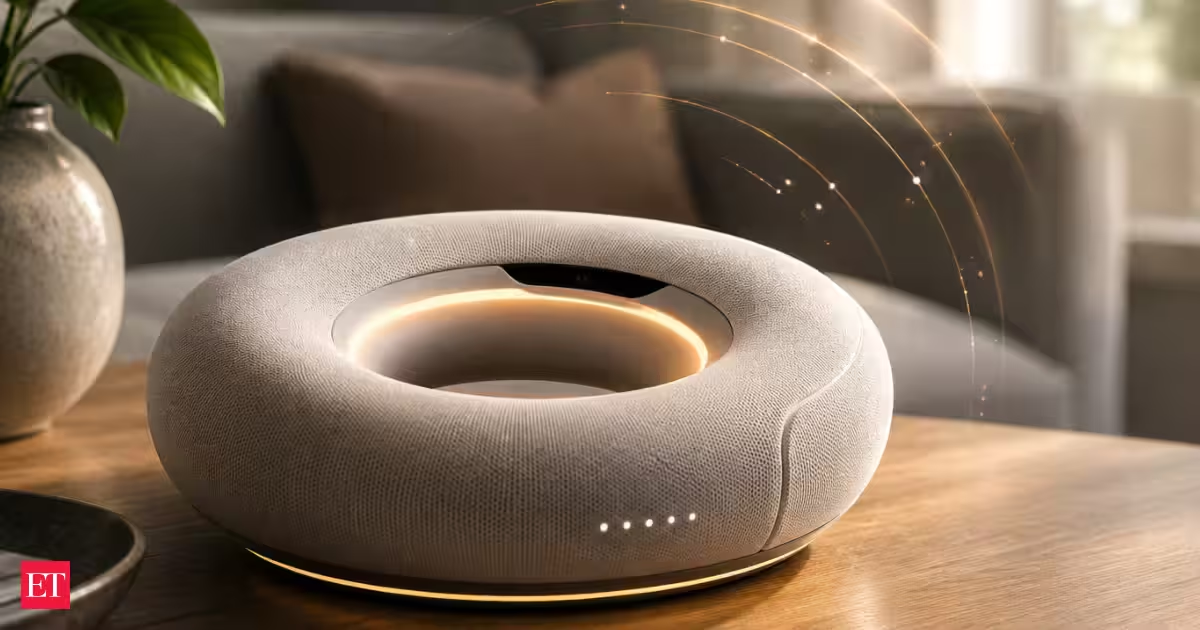
OpenAI is taking the AI hardware race a step further with a doughnut-shaped smart speaker that can move, interact and develop a lifelike personality, setting up a showdown with Amazon and Google, Bloomberg reported.The screenless device, expected to launch in 2027, will be roughly the size of a hockey puck and designed to be carried around the home with one hand. OpenAI is positioning it as an AI-first computer that can help users complete tasks through voice commands.Designed to be an AI companionThe smart speaker is expected to become the first in a broader family of AI devices that OpenAI plans to introduce. Unlike smart glasses, which have raised privacy concerns, the speaker is intended to serve as an always-on AI companion that users can interact with throughout the day.It will build on ChatGPT's voice mode with more advanced AI models to enable human-like conversations. Over time, the device is designed to learn about its users, allowing it to personalise interactions and respond more naturally, reported Bloomberg.The circular gadget will feature moving components that indicate when it is listening or responding, making interactions feel more lifelike than today's stationary smart speakers. It will also include speakers, microphones, lights that signal when it is listening, a camera system and other sensors to understand its surroundings and feed visual information into the AI.The battery-powered device is designed to work in multiple settings, whether held in a user's hand or placed on a bedside table or kitchen counter.What is the price?OpenAI is collaborating with former Apple design chief Jony Ive's LoveFrom studio on the hardware. Ive, whose startup was acquired by OpenAI last year, previously led the design of products including the iPhone, iPad, iPod and Apple Watch.The company is said to be targeting a premium design with high-quality metal construction and a price tag of $300-$400, making it more expensive than most smart speakers but cheaper than a standard iPhone, reported Bloomberg.The product comes as OpenAI and Apple remain locked in a legal dispute over alleged trade secret theft. Apple has claimed that OpenAI sought to use a confidential metal-finishing technique developed by one of its long-time suppliers.Bloomberg sources said that OpenAI believes the device does not use or violate any Apple trade secrets. However, Apple's request for an injunction against the company, if granted, could complicate the product's planned launch. OpenAI has been aiming to unveil the device this year before releasing it commercially in 2027.
ChatGPT owner OpenAI is launching a doughnut-shaped speaker, similar to Amazon's Alexa and Google's Nest, that will work on your command: What is it?
OpenAI plans a unique doughnut-shaped smart speaker for a 2027 release. This AI-first device will feature moving parts and advanced humanlike interactivity. It aims to offer a premium look and feel, costing over $300. The company is collaborating with Jony Ive's LoveFrom studio on the design. OpenAI believes its new product does not violate any Apple trade secrets.
TL;DRAI
OpenAI launches $300–$400 smart speaker (2027, Jony Ive) with moving parts and camera; positions it as AI-first learning companion for personalized, natural conversation. Hardware entry signals industry shift toward conversational AI over voice-only; direct challenge to Amazon/Google dominance with AI-first personalization focus.
405 words~2 min read