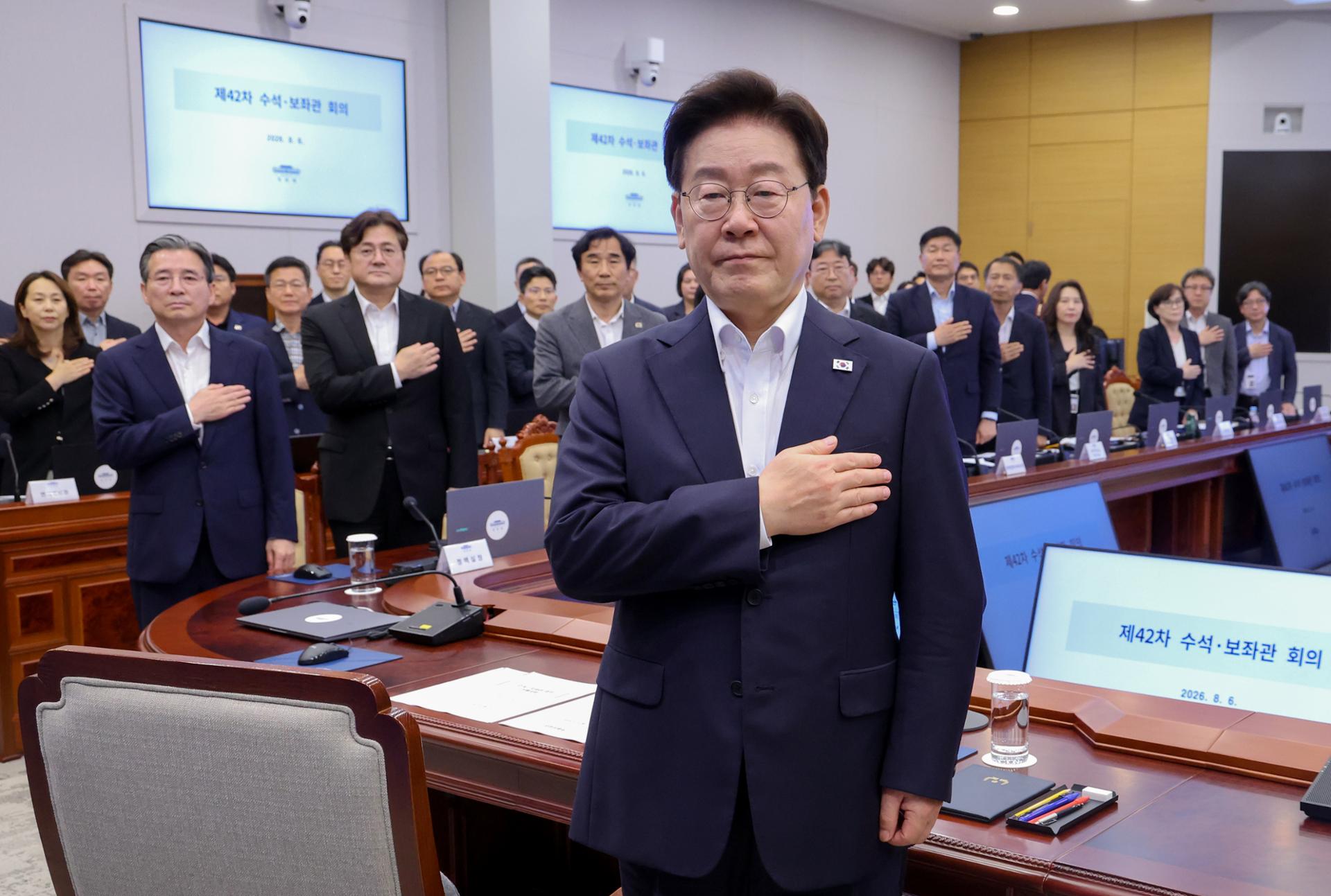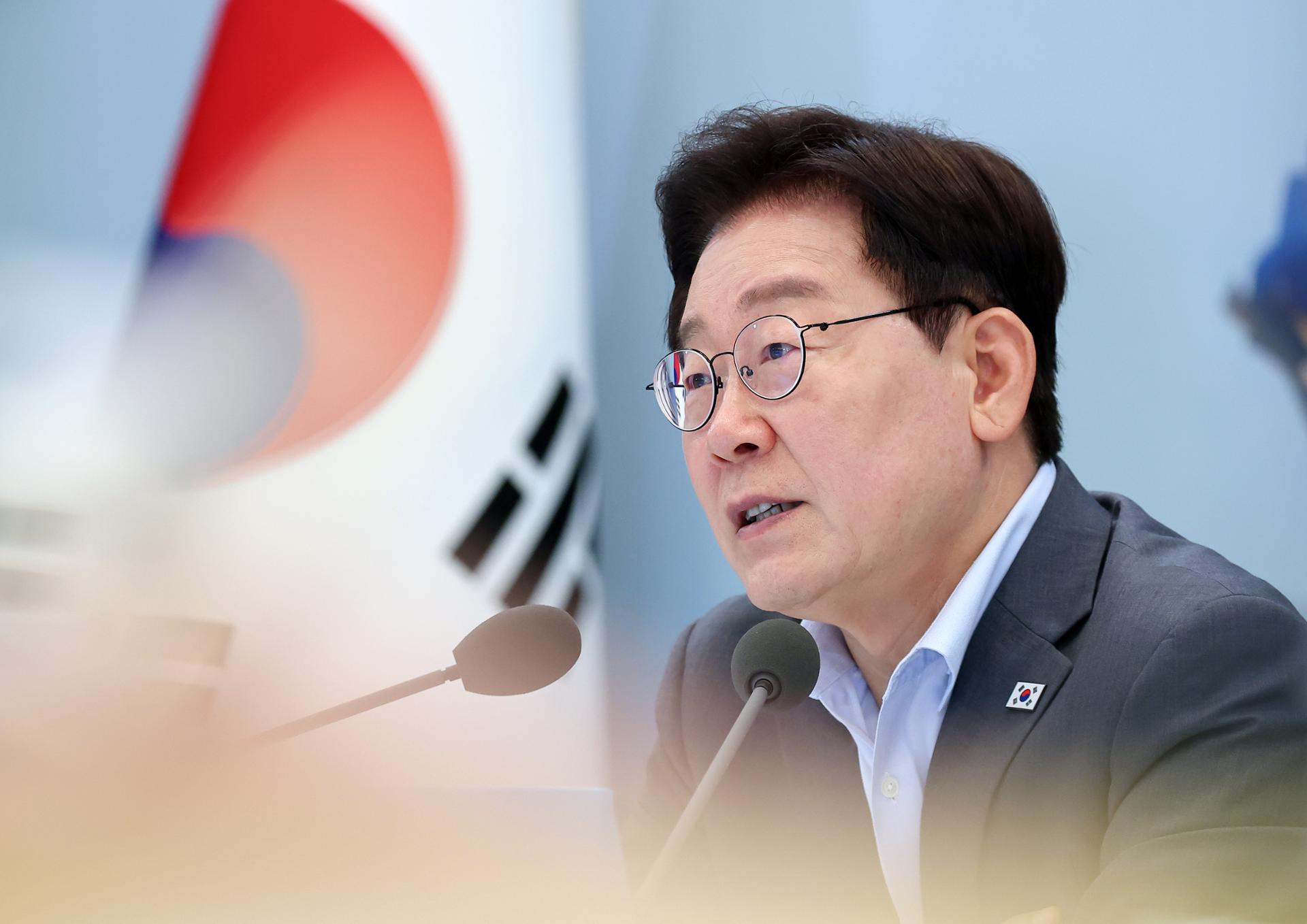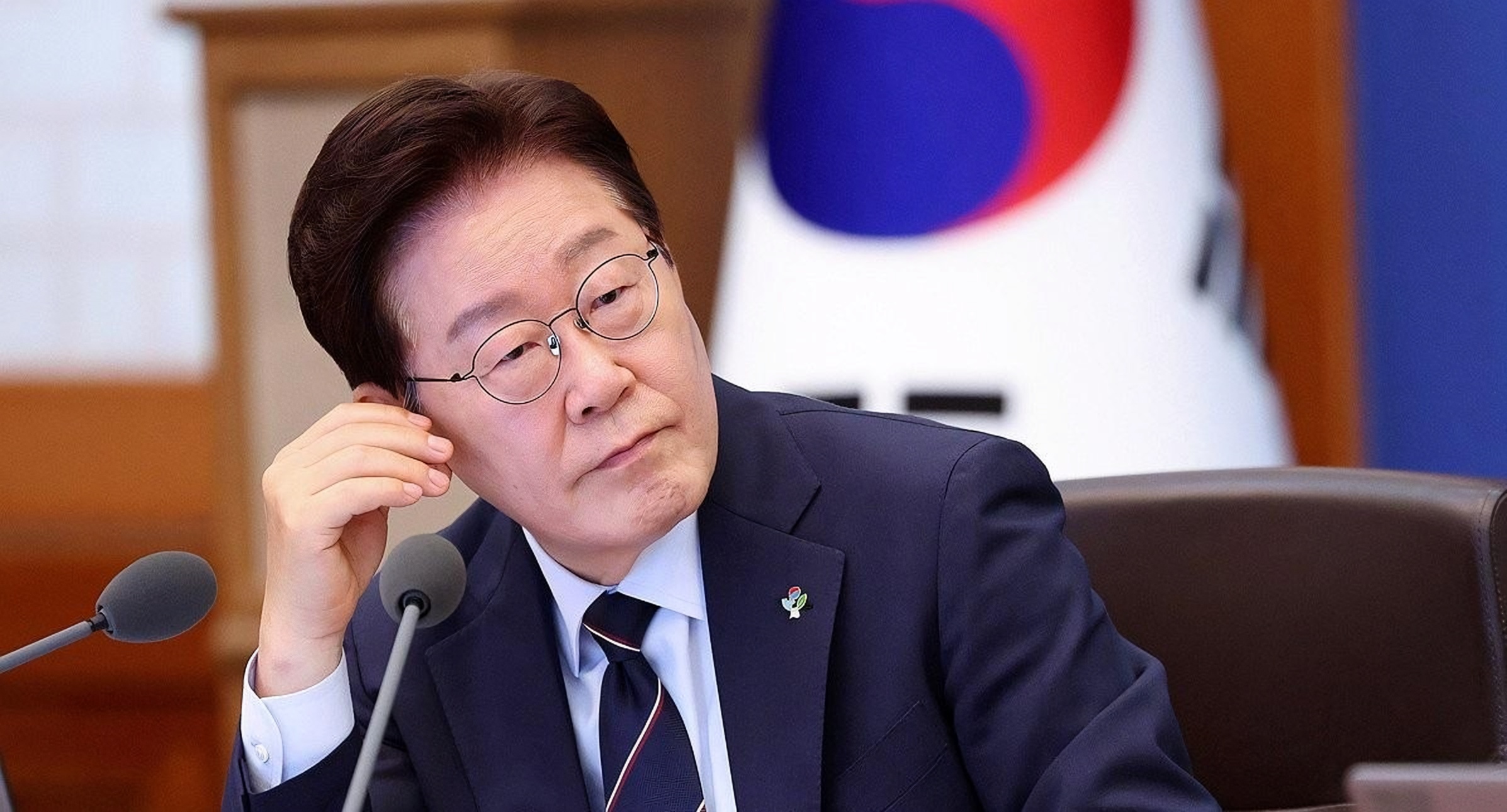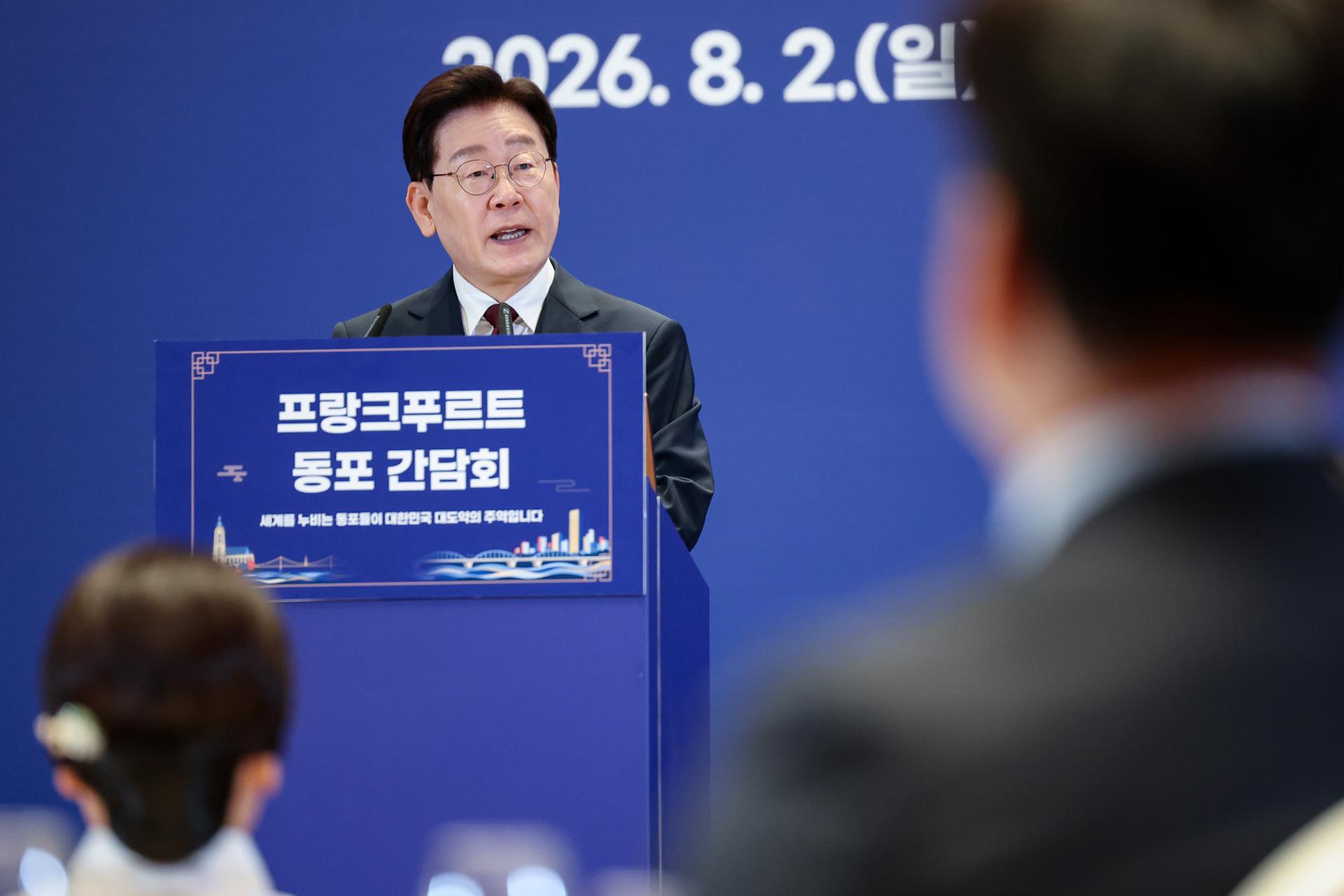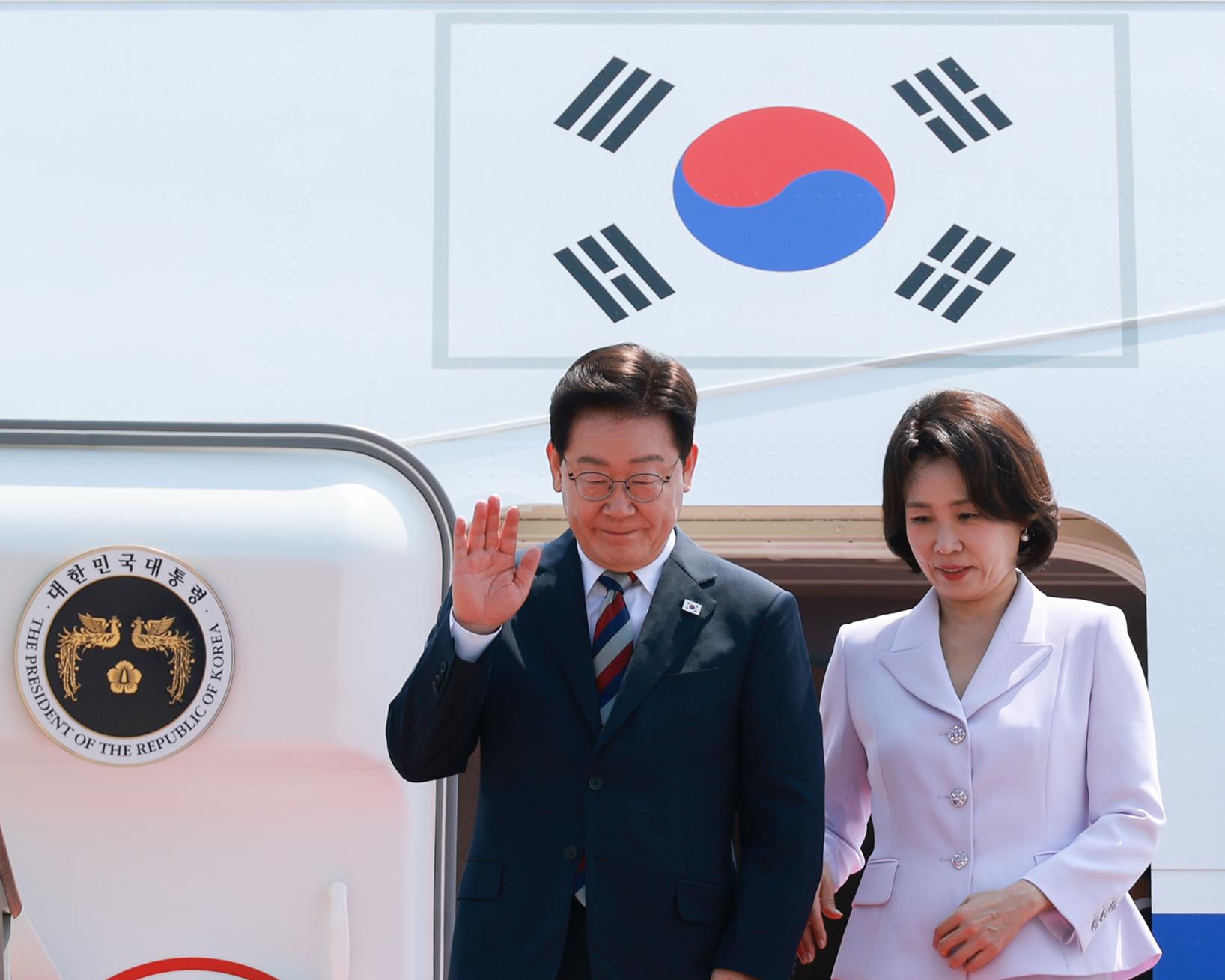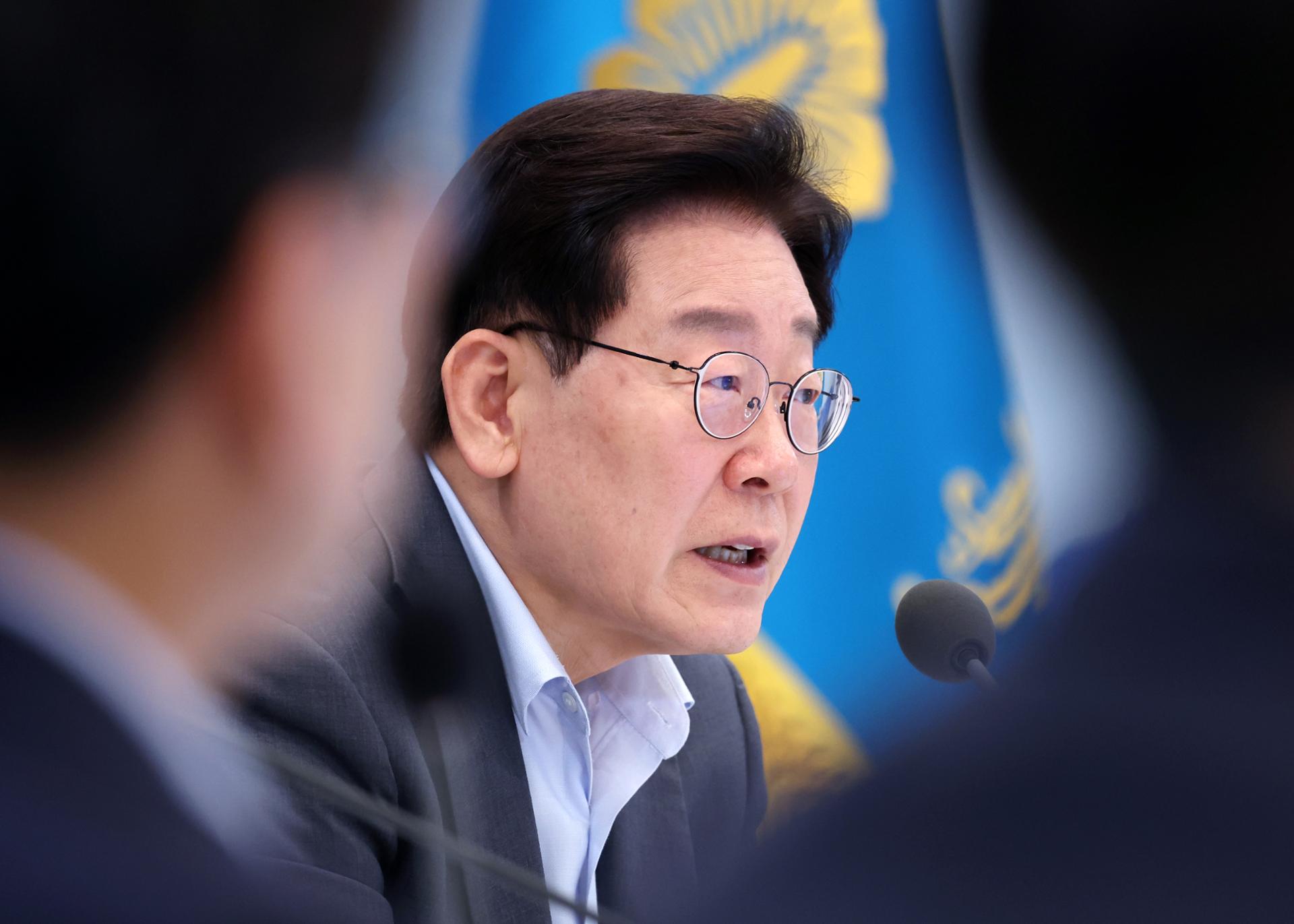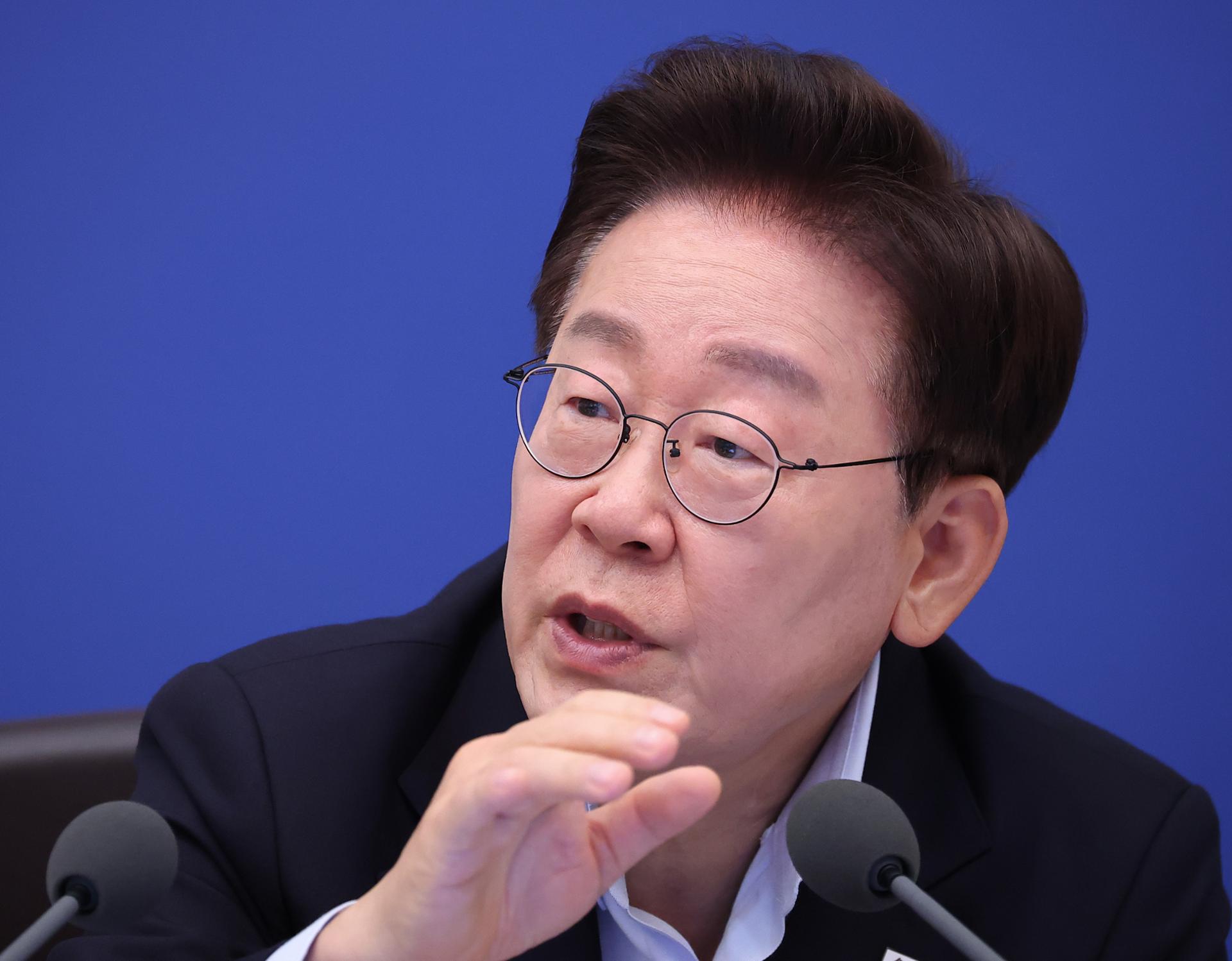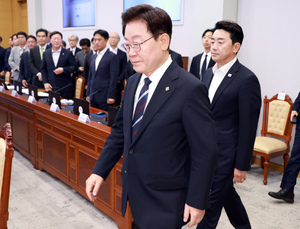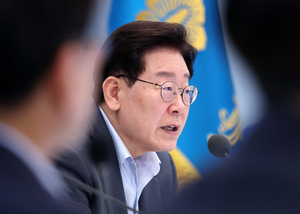
President Lee Jae Myung speaks during a joint policy briefing by the Ministry of the Interior and Safety, the National Police Agency, the Ministry of Justice and the Supreme Prosecutors’ Office at Cheong Wa Dae in Seoul on Wednesday. (Pool photo via Yonhap) President Lee Jae Myung convened his second government-wide housing policy meeting in four days Friday, seeking to break a housing supply logjam and accelerate construction following this week’s property tax overhaul.The closed-door session, which began at 2 p.m. at Cheong Wa Dae, is expected to center on three questions: where to build new housing, how many homes to provide and how quickly they can reach the market.Officials are also expected to consider targeted financing relief for housing construction and redevelopment while maintaining tight control of household debt.The follow-up comes after a 7 1/2-hour review of housing and financial markets that Lee held Monday immediately after returning from an 11-day tour of the Americas.According to Cheong Wa Dae, Lee said during the meeting that a prolonged construction slowdown had created a “housing supply cliff” and stressed that “both supply and speed are critical.”Lee ordered officials to secure “as much available supply as possible” and use “every available administrative measure,” including financial and fiscal support and regulatory easing.Lee also instructed Prime Minister Han Seong-sook and relevant ministers to review existing plans from the ground up and return within days with practical proposals.At the heart of Friday’s meeting is the yearslong bottleneck between announcing new housing and breaking ground.Lee has argued that even an ambitious supply package would do little to stabilize prices unless that timetable was sharply compressed.At a nationally televised real estate policy forum in July, Lee called delays at previously announced sites, including third-generation new towns, a serious problem.“We are reviewing ways to cut the timeline to less than half its current length,” Lee said during the policy forum. “If necessary, we will change the rules or concurrently carry out procedures that are normally conducted sequentially.”Officials are expected to examine how that approach could accelerate the Jan. 29 metropolitan housing plan, which calls for about 60,000 homes to be built starting next year.The proposed sites include the former Camp Kim compound in Yongsan, the Taereung golf course, the Defense Counterintelligence Command compound, and land near the Gwacheon racetrack, where progress has remained slow.“It is difficult at this point to discuss the specific supply measures or when they will be announced,” senior presidential spokesperson Kang Yu-jung said Thursday. “But we may be able to provide further answers after the second meeting.” People Power Party leader Rep. Jang Dong-hyeok speaks during a plenary meeting of the party’s Special Committee on the Normalization of Real Estate Policy at the National Assembly in Seoul on Friday. (Yonhap) Housing emerges as political flashpointThe back-to-back meetings reflect the urgency behind Lee’s drive to “normalize” the housing market through coordinated tax, supply and financing measures. The Lee administration says the strategy aims to curb speculative gains, protect housing rights and reinforce the principle that homes should be places to live rather than vehicles for speculation.Monday’s tax overhaul would protect owner-occupiers while increasing the burden on ultrahigh-priced homes, properties their owners don’t occupy, and multiple-home owners. It would shift the system’s emphasis from the number of homes owned to their value and whether the owner lives in them.Housing supply is the administration’s next major policy push.But how quickly the government can deliver new homes has become the latest political battleground between the ruling Democratic Party of Korea and the main opposition People Power Party.The People Power Party held a plenary meeting of its “special committee on the normalization of real estate policy” on Friday, stepping up its offensive against the tax overhaul ahead of parliamentary deliberations.PPP leader Rep. Jang Dong-hyeok, who chairs the committee, accused the Lee administration of fueling the housing crisis and then penalizing homeowners in the name of fixing it.“What people need now is not more regulation and higher taxes,” Jang said. “Real estate normalization means easing regulations, loosening lending restrictions and reviving stalled redevelopment and reconstruction projects.”Seoul Mayor Oh Se-hoon, a prominent PPP figure, added to the pressure Thursday by hosting a public forum on the government’s tax plan.“Could this end up doing nothing to curb home prices while only pushing up jeonse and monthly rents?” Oh asked.Jeonse is a system by which tenants pay a large upfront deposit instead of monthly rent, usually recovering the full amount at the end of the lease.Oh called for a greater emphasis on private sector redevelopment and reconstruction to expand supply in Seoul.The Democratic Party countered that the supply shortage led to a sharp fall in housing starts and delays in third-generation new towns under the former Yoon Suk Yeol administration.The ruling party further pointed out that the opposition had obstructed legislation intended to support new housing construction.“The People Power Party should stop merely shouting about supply and cooperate in passing the housing supply bills being pursued by the government and the Democratic Party,” acting party leader and floor leader Rep. Han Byung-do said Friday.“If the People Power Party is sincere about housing supply, it should cooperate in convening a plenary session on Aug. 13 and passing the relevant bills,” Han said.
Lee targets housing supply cliff, convening top officials twice in four days
President Lee Jae Myung convened his second government-wide housing policy meeting in four days Friday, seeking to break a housing supply logjam and accelerate
869 words~4 min read