I grew up in Drimnagh in Dublin in a single-parent household with my mam after my parents separated, and I went to school in Walkinstown. I didn’t realise that I grew up in a working class household because I didn’t know any different. I never felt like we were poor or that we wanted for anything. It wasn’t until I went to Trinity College that I was “diagnosed” as being working class. It wasn’t until Leaving Cert year came around that I became acutely aware of the socioeconomic status of the school I attended. The career guidance counsellor mentioned the Trinity Access Programme, which created a bridge to education for people who attended Deis schools. I had never heard the term Deis school. I didn’t know what it meant, but I had wanted to go to Trinity my whole life. When I was in school, they did a treasure hunt around the Trinity campus for kids. I remember becoming so fascinated with the campus and the history, and how it ranked as the best university in the country. Something in me was like, “I’m gonna go there.” I’ve always wanted big things for myself. Irish people are full of shame. When people have these big ideas about themselves or what they want to do, you’re told “Oh, you’ve got notions”. We need to remove that, because it doesn’t help anybody. I did a taster course in law for a few weeks. I loved the idea of a rule or an event that happened 150 years ago being the reason why we have a law now. I loved the formation of the law and the study of it. And then I thought, being a solicitor would be a good, respectable, hopefully high-earning job. I’ll do that. I just kept going until that happened.When we finished the access programme, the course co-ordinator said, “Just be mindful, you’re not really going to fit in over there.” I didn’t really know what that meant because I’ve always been really social, kind of mouthy, and never had a problem.But when I started college, the first conversation spun around and it was about what school you went to. At that moment, I didn’t realise I was being demographically profiled.[ Stuart Neville: ‘Why I will no longer hide my accent’Opens in new window ]There were all these conversations that felt like some sort of secret society. There were all these mentions of schools and KPMG, PwC and Deloitte – companies I had never heard of, but these people’s parents worked in. I didn’t realise that when they ask you what school you went to, they’re trying to put you into a box of privilege. They’re trying to understand where your background is.That happened further then when I started working in a law firm. In interviews, I’d have a phone voice. I would speak way posher and make sure I was pronouncing everything properly because I would be so conscious that I didn’t want to sound too “Dublin”. I was afraid of my accent hindering me.‘I think Ireland likes to believe classism doesn’t exist because it’s not as obvious as it might be in other countries’— Justine MeganTowards the end of my traineeship, I had about six months left before I qualified, and I remember trying to just be a little bit more myself, and thinking, “They can’t take this off me. I have six months left. All I have to do is show up, and then I’m qualified. It’s fine.”Someone made a passing remark about my accent. In that moment I thought, “Oh wow, it doesn’t matter, what I have done.” I’ve gone to Trinity. I’ve done well in the FE1s. I’m now in a commercial law firm, about to qualify as a solicitor. Even though I’ve passed the exams and I’ve earned my way in, there’s something about me that this world is not accepting.I think Ireland likes to believe classism doesn’t exist because it’s not as obvious as it might be in other countries, but it does in the smaller things.That’s the reason why I am talking about it, and performing a one-woman show based on my experience at the Dublin Fringe this year, because I don’t want other people to feel like that. The show is called Exhibit A: Imposter, and it’s about my journey with my identity. Also it’s a comedy, so I promise it will be really, really funny. I want people who’ve had similar experiences to see themselves in the show, and I want people who haven’t to have a thought process where they’re like, “Oh, I can’t believe people go through that sort of stuff. I would have never have imagined that happens.”In conversation with Niamh BrowneExhibit A: Imposter by Justine Megan is at Bewley’s Cafe Theatre from September 10th-13th. fringefest.com
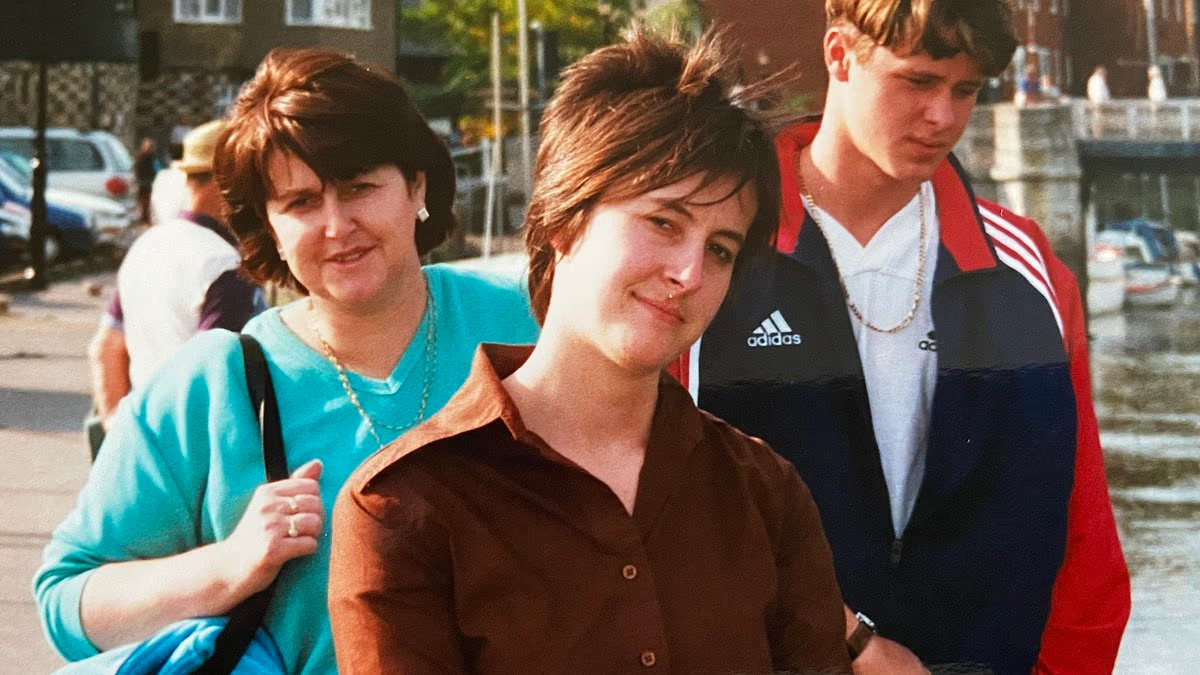
Justine Megan: ‘It wasn’t until I went to Trinity that I was diagnosed as working-class’
Justine Megan: When Irish people have big ideas about themselves, you’re told ‘Oh, you’ve got notions’. We need to lose that
801 words~4 min read