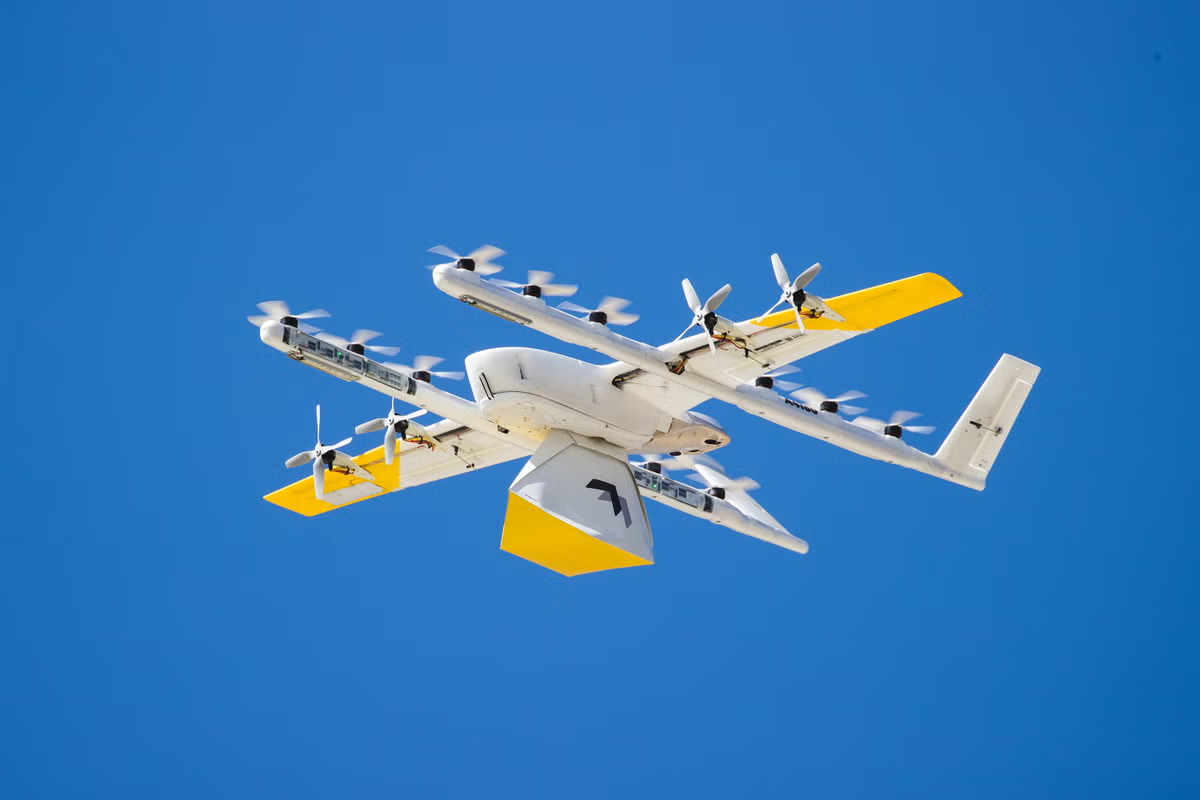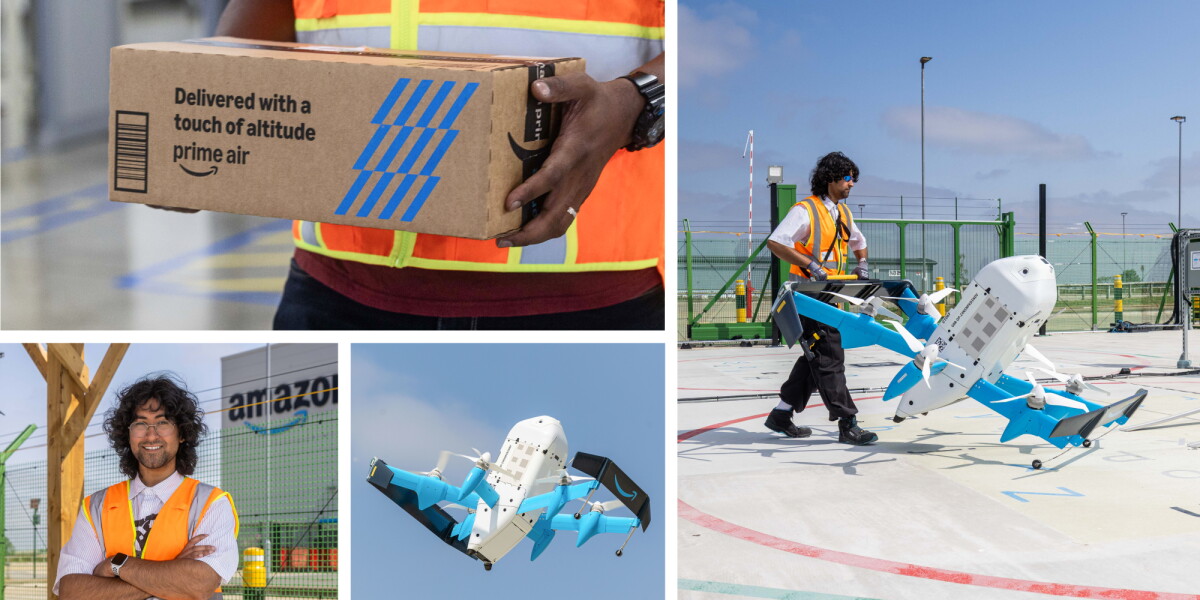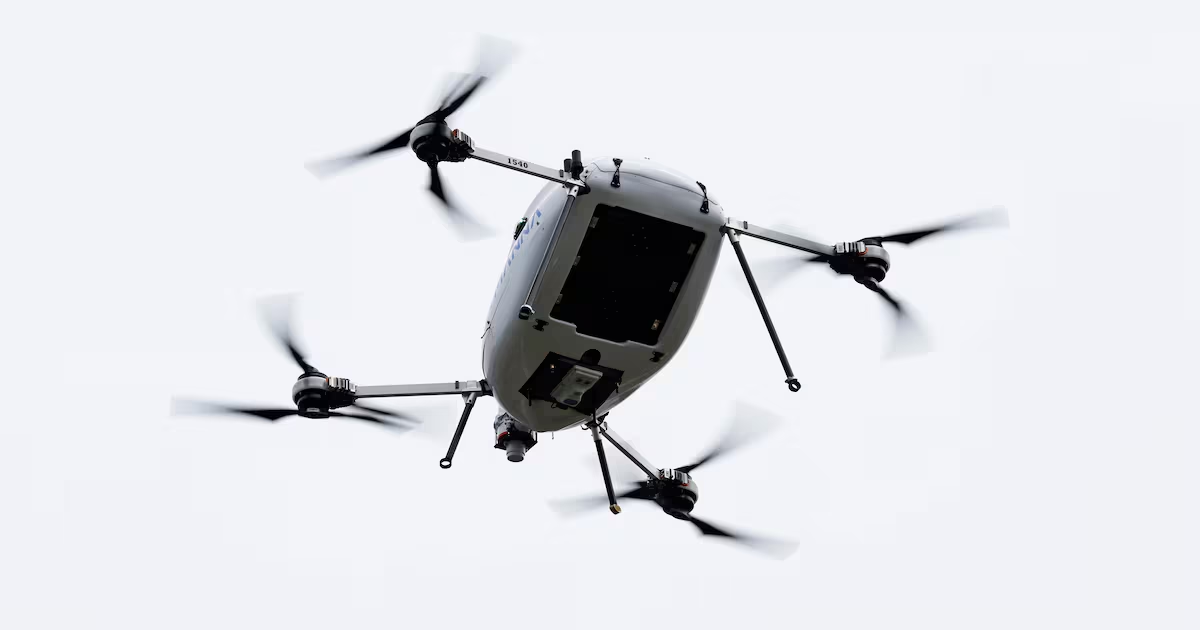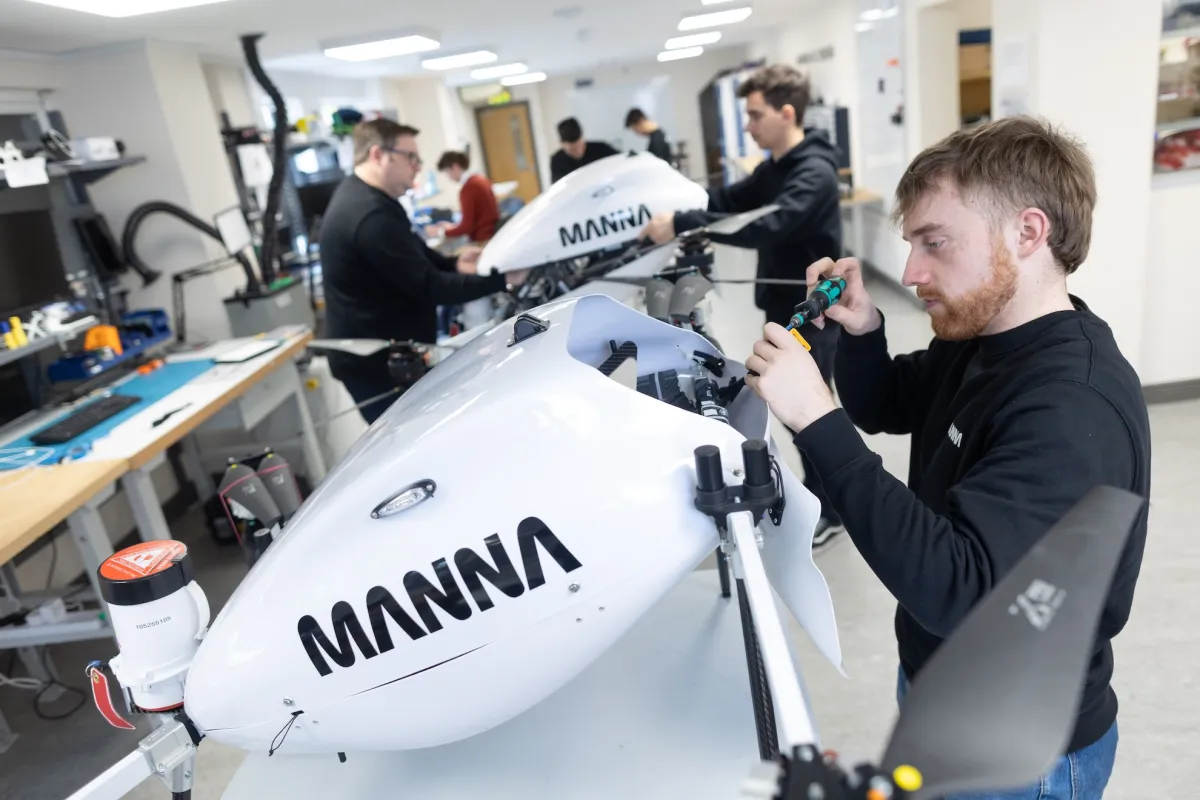
The first thing Angela Browning knew about a new drone operations base coming to her neighbourhood in Tulsa, Oklahoma was when a friend sent her an ad for the service.The lack of notification that large, loud aerial vehicles could soon be hovering over her house left her feeling like an “oversight” and “not important”.As the president of the Yorktown Neighborhood Association she held a community event to speak to other locals in the area: “There was a lot of people asking questions ... and nobody had any answers.”Browning, who works for a law firm, said she had compiled a list of concerns from her neighbours including: noise and visual pollution, disruption of sleep, risk of malfunction and accidents, interference with emergency services, surveillance above private property, data breaches concerning locations and package information, wildlife disruption of birds and other local native species, and reduced property values.“People are just confused, and they need more information,” she tells The Irish Times. She brought the litany of concerns to a recent townhall meeting organised by local representatives and attended by Manna representatives, which drew comfortably more than 100 people. Though the meeting was mostly “civil”, people who attend the meeting said there were occasions in which tempers flared and voices were raised, as residents raised many of the same questions that people living in Dundrum and Blanchardstown in Dublin have asked as the company sought to provide delivery services in those suburbs. One of those locals is John Spillyards, the secretary of the nearby Maple Ridge homeowner’s association.He has concerns about the potential impact on “wildlife, the displacement of local workers, and the broader question of technology advancing faster than we fully understand its long-term consequences”.“Innovation isn’t just about asking, ‘Can we do this?’ It’s also about asking, ‘What are the second- and third-order effects, and have we thought them through?’” he says.Diama Norris, a librarian at the local school, is concerned that had Manna not done their promotional videos, “we wouldn’t have known till the launch pad was going in”.She says residents need to have this conversation around compromises with Manna now, to create “some sort of blueprint of what might work” for other communities to look at in preparation for drone deliveries to move into their area.Martin Jensen, a local IT sector worker, says he is concerned that drone deliveries could “turn the very air around us into a buzzing, blustering highway system, without so much as a way to opt out”.Even if he chooses not to use the service, he feels he will inevitably be impacted by other people’s choice to do so.While the company has pointed to a poll on a regional outlet’s website indicating a large proportion of people in Tulsa may use the service, Jensen feels that is the wrong question.Jensen says the company had compared the sound of drones to a leaf blower, something he said was “super annoying” to hear in the neighbourhood.Maybe the proper question to ask people, he said, is: “How would you like hearing 10 times as many leaf blowers, if occasionally one of them brought you a hot cheeseburger?”“That’s a different question, and it would get a different answer,” he says.Déjà vu For Manna, the reaction of Tulsans is not new. Perhaps it is bringing forth feelings of déjà vu to the company’s experiences in Dublin 15.Not everything is the same, of course. Oklahoma brings forth some very new challenges, including that birds of prey, such as eagles, could attack the drones and get injured. Manna did not specify whether it had a plan to address this when queried.Locals were told their drones had never struck any birds while operating in Ireland – the Irish Air Accident Investigation Unit has investigated three incidents involving the company, including one in which a man was injured while cutting the grass in his garden.Jensen says he has heard some rhetoric from people threatening to “shoot down the drones” if they fly over their homes. Under US law, this would be a serious crime.Many of the locals who have raised concerns about the new service have decried a lack of notice and of engagement with the community.Manna sees things differently. A spokeswoman for the company says it was “actively engaging with Tulsa residents and local stakeholders and will continue to do so as we grow in Tulsa, creating local jobs and bringing a new delivery service to US consumers”.“Manna has not yet commenced operations in Tulsa. Nevertheless, the response to our investment and plans has been overwhelmingly supportive among residents, elected representatives and the wider community,” she said.“We will continue investing time and resources in engaging with all stakeholders. We also not [sic] the Tulsa World Poll showing nearly 75 per cent saying they would order by drone.” Manna attended the townhall meeting, listened to complaints, and has said it will engage directly with some of the more vocal opponents.Meanwhile, the City of Tulsa – the local authority – said it expects questions, “as with any new technology”, and welcomes the engagement with locals.“We’ve already began having meetings internally on what we can do to responsibly advance the industry and be receptive to feedback and concerns should they arise,” a spokesman says.“We’ll continue to monitor that feedback as this company, and the industry at large, really gets started here in Tulsa.” But why is Manna, an Irish drone company, which, just weeks ago, was involved in deliveries of everything from coffees to pizzas in Ireland, suddenly popping up in the middle of the US? Out of all of the places Manna could go, why Oklahoma?Tulsa is attempting to position itself as the “Drone Capital of the World”, having announced its intent three years ago to be the go-to city for the new technology as unmanned aerial systems took off.“It’s no secret that for quite some time now, the City of Tulsa has made intentional steps to make autonomous systems, like drones, a focal point of infrastructure and economic development,” a spokesman for the city says.To understand why, you need only look at a 2024 Blue Commission Report to the city government.“Tulsa – and Oklahoma more broadly – have struggled to compete nationally in advanced industries,” it states.“This has led to an economy that struggles to provide good jobs to Tulsans, with the median income in Oklahoma more than $15,000 (€13,100) less than the national median income.”Educationally, Oklahoma ranks 48th, or fourth worst, of 51 jurisdictions in the US using what a University of Oklahoma research paper describes as the “most credible yardstick of academic achievement”.The quality of life for Oklahomans is among the 10 worst US states, according to CNBC’s annual measure.Bringing drone operators, driving regulatory changes and leading the adoption of the technology, city planners hope, will lead to tens of thousands of jobs for all Tulsans and help to boost a struggling state.“The city cannot do it alone”, the Blue Ribbon report warns, and “numerous implementation partners” are needed to become the central hub for the technology that is hoped for.Key to this desire is the need for Tulsa to create a national model for drone adoption, accounting for concerns such as privacy, safety, transparency, and community engagement.PermitsDespite this drive for transparency, locals say they never received any notification of the new drone base until Healy and Tulsa mayor Monroe Nichols IV teamed up for a promotional flight three weeks ago.Manna has applied for city permits to build a drone hub on a vacant commercial lot on East 15th Street, which is directly beside a series of businesses and restaurants, but surrounded by homes on all sides.Manna told locals it intends to operate three drones from the site and that, as of last week, they had five businesses signed up as partners. The long-term plan is for rapid expansion, with 20 to 30 different drone sites across the city being the medium-term plan, perhaps in place as soon as mid-2027.It is more rapid expansion for Manna, which has already invested close to €50 million into its Irish operation since it was set up in 2019 by serial entrepreneur Bobby Healy. This expansion comes as the company’s hand has been somewhat forced. Its bases across Ireland were contentious, especially in Dublin 15, Dundrum village and Cork, but – as Healy himself says – their delivery services were critical to the business.“We do not consider [the D15 operation] a trial, if we stopped it, we would simply be out of business,” he said at the Oireachtas transport committee last year, and that the area was a “perfect environment” for its operation. Manna says it has completed more than 300,000 deliveries, including nearly 90,000 in Blanchardstown, Dublin 15.The company’s attempt to expand to Dundrum village – directly behind a church – managed to bring together local Catholic and Protestant churches in opposition of his plans with both Taney Parish’s Rev Nigel Pierpoint and Monsignor Paul Callan from Holy Cross Church expressing concerns.A year later, under Ireland’s glacial planning process, Manna’s hoped-for Dundrum drone base was refused permission. Days later, the company announced a temporary “strategic pause” to its Irish delivery operations, with redundancies at the operation here.“We are not ending operations in Ireland by choice,” Healy said on social media, claiming Ireland does not have the planning regulations needed to allow the company to scale, instead they are going to greener pastures where they can. Manna insists its decision was due to the “absence of a national regulatory and planning framework to support commercial drone delivery at scale” but public opposition was a significant thorn in its side.In 2024, its Irish-based company Manna Drones Limited racked up an annual loss of €16.3 million. Its lifetime losses ticked up to €48.1 million.It booked just €136,000 of turnover in 2024, up from €20,400 the previous year. Hefty costsWhile losses in the early years of a start-up tech business are not unusual, the accounts illustrate the hefty costs involved in getting Manna’s Irish operations off the ground and the long runway involved in achieving a financial return. To bolster its growth plans outside Ireland, Manna recently appointed the former head of State-owned Irish airport operator DAA, Kenny Jacobs, as its executive chairman.“Manna is one of the most exciting companies coming out of Ireland in a generation. Bobby and the team have built world-leading drone delivery technology and the opportunity now is to expand and commercialise that across a variety of industries in the US, UK and other markets where policy and regulation are more advanced,” Jacobs said last month.Healy’s focus now on the US is doubtlessly buoyed by Walmart recently completing its millionth drone delivery there.However, the US market is far more competitive – with Amazon’s Prime Air, Google-owned Wing and Israeli-based Flytrex already operating there – but a positive sign for the company is that Manna will join the latter pair as partners of DoorDash’s new Air offering for deliveries.Healy says Manna was “now all-in on USA growth”, but it remains unclear whether the gamble on the greener pastures of Oklahoma will pay off.
From Blanchardstown to Oklahoma: Manna’s US drone deliveries aren’t off to a flying start
Whether it’s in Tulsa or Dublin, the prospect of buzzing drones overhead concerns local residents
1,836 words~8 min read