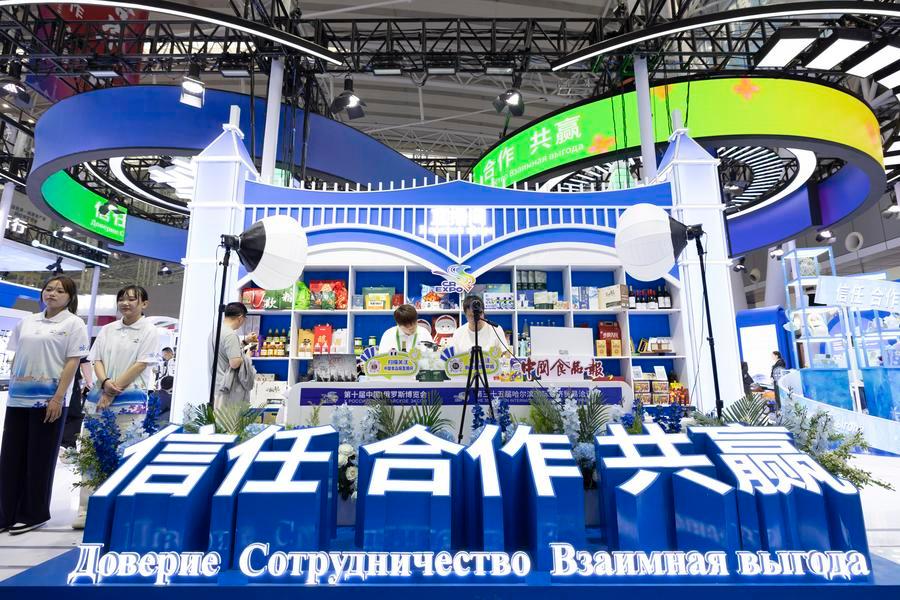
A Russian food booth attracts visitors during an expo in Harbin, Heilongjiang province. XINHUA
China's transition from rapid scale expansion to high-quality economic development, driven by the cultivation of new quality productive forces, is injecting new momentum into Sino-Russian cooperation and global economic stability, experts from both countries said.
The driving forces behind China's economic growth are undergoing profound changes, with high-quality development emerging as its defining feature. Bian Yongzu, a senior visiting scholar at Yale University, said the booming development of smart manufacturing and new energy industries is reshaping China's competitive edge in manufacturing.
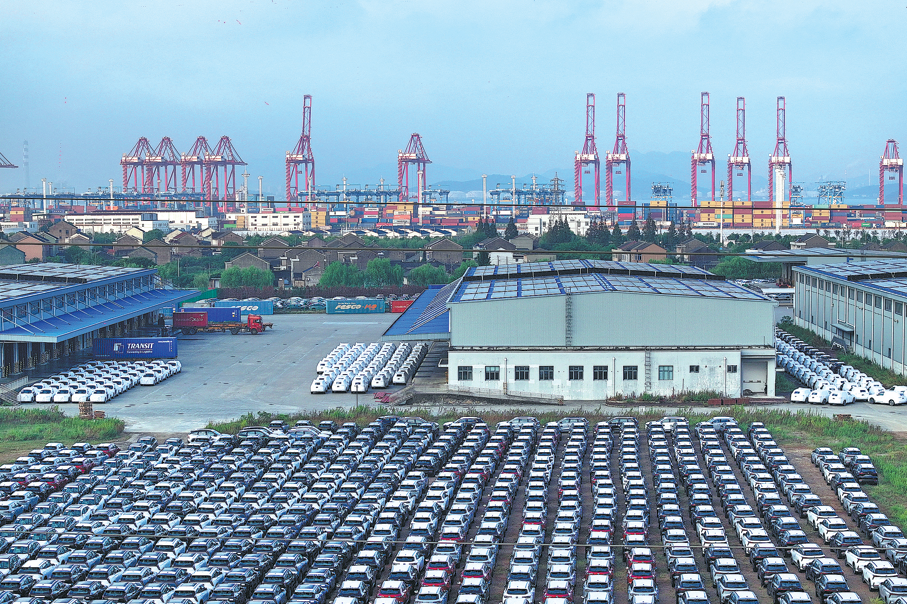
This competitive edge is clearly reflected in the new energy vehicle sector. A joint report released by research institute EVTank, Ivey Business School and the China Battery Industry Research Institute showed that global NEV sales reached 23.54 million units in 2025, up 29.1 percent year-on-year, with China accounting for 70.3 percent of the worldwide total.
Looking ahead, EVTank projects global NEV sales will hit 28.5 million units in 2026, with China contributing 19.8 million units. By 2030, global sales are expected to reach 42.65 million units, achieving an overall market penetration rate of over 40 percent. This transformation grants the Chinese economy stronger resilience amid the restructuring of global industrial chains, Bian said, emphasizing the country's unwavering commitment to expanding institutional opening-up.