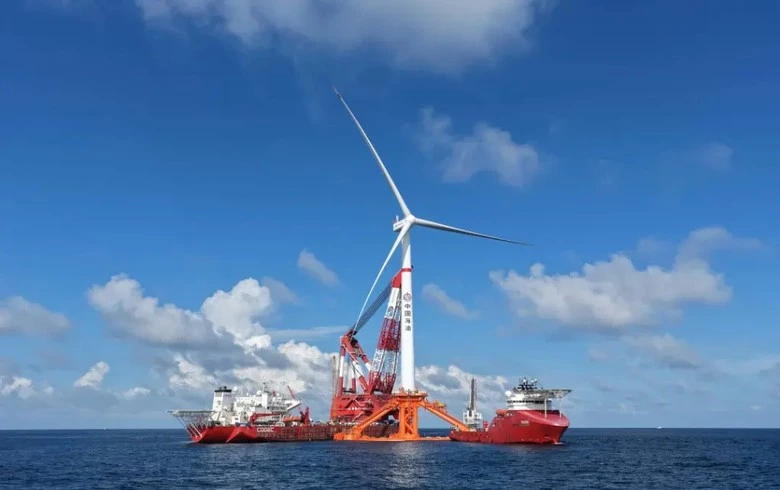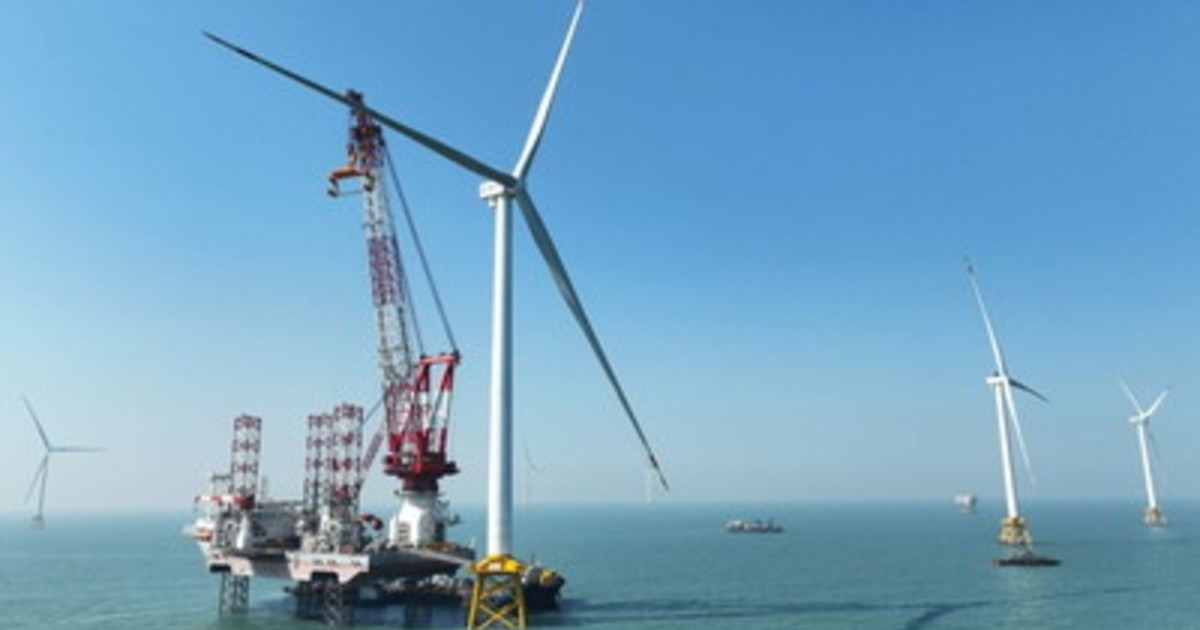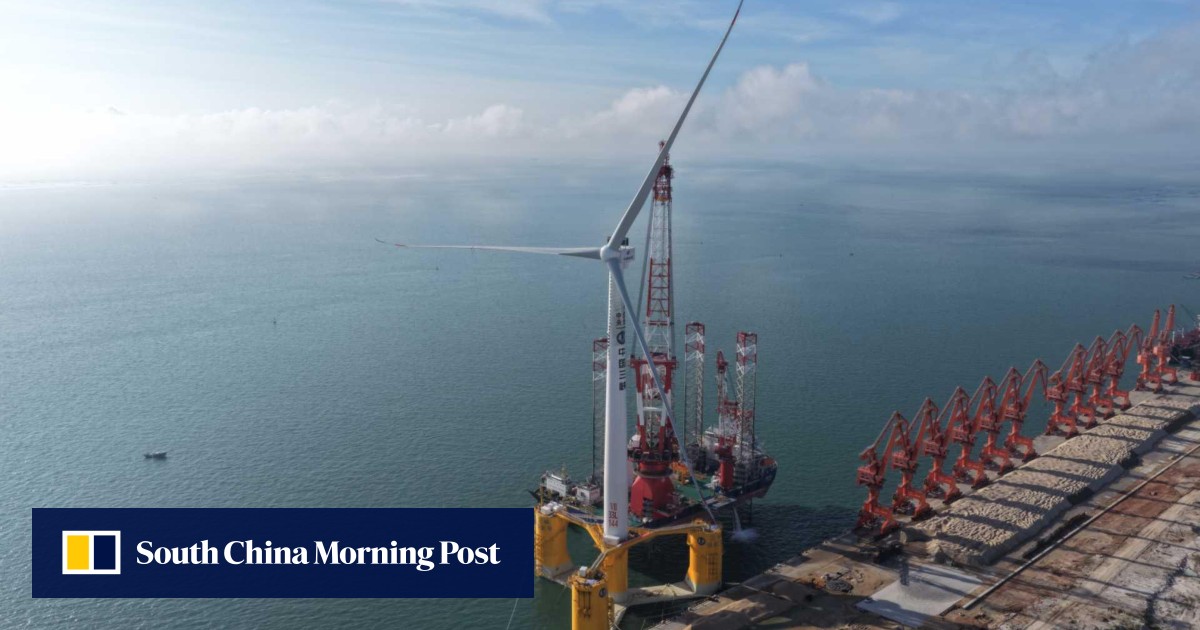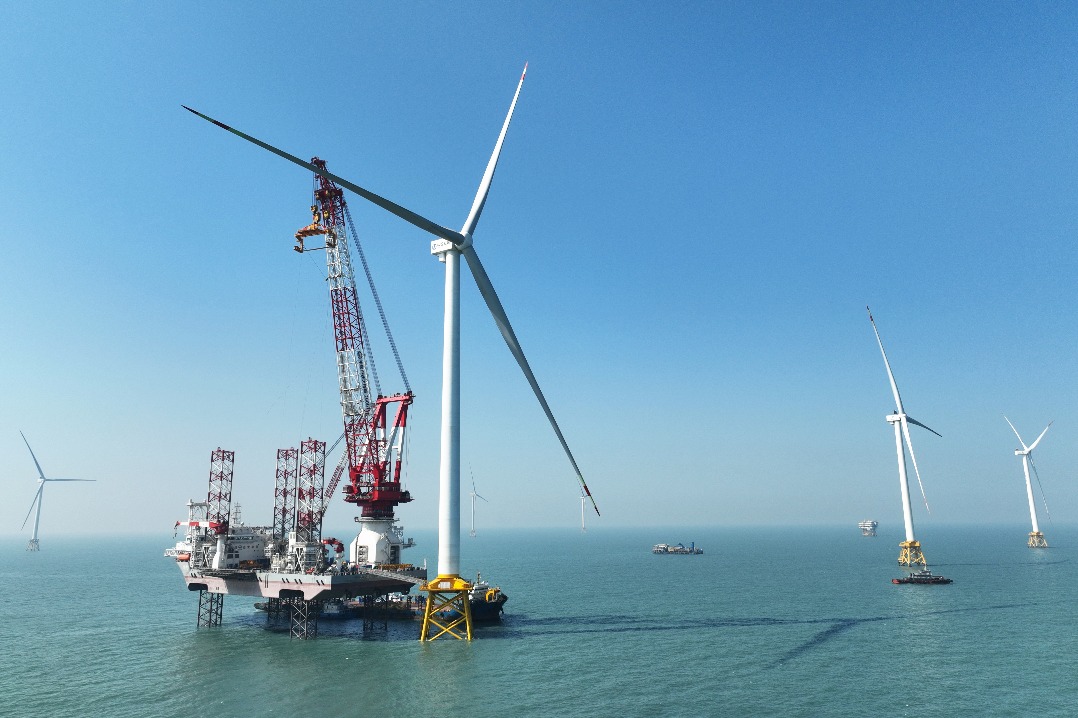
China has achieved another major milestone in its green energy transition as the world's first 16-megawatt tension-leg platform floating wind power unit officially commenced operations on Thursday, according to its operator China National Offshore Oil Corp.
Located in the Pearl River Mouth Basin in the South China Sea, about 200 kilometers southeast of Shenzhen, the structure stands at a height comparable to a 110-story building, said CNOOC, China's largest producer of offshore oil and gas.
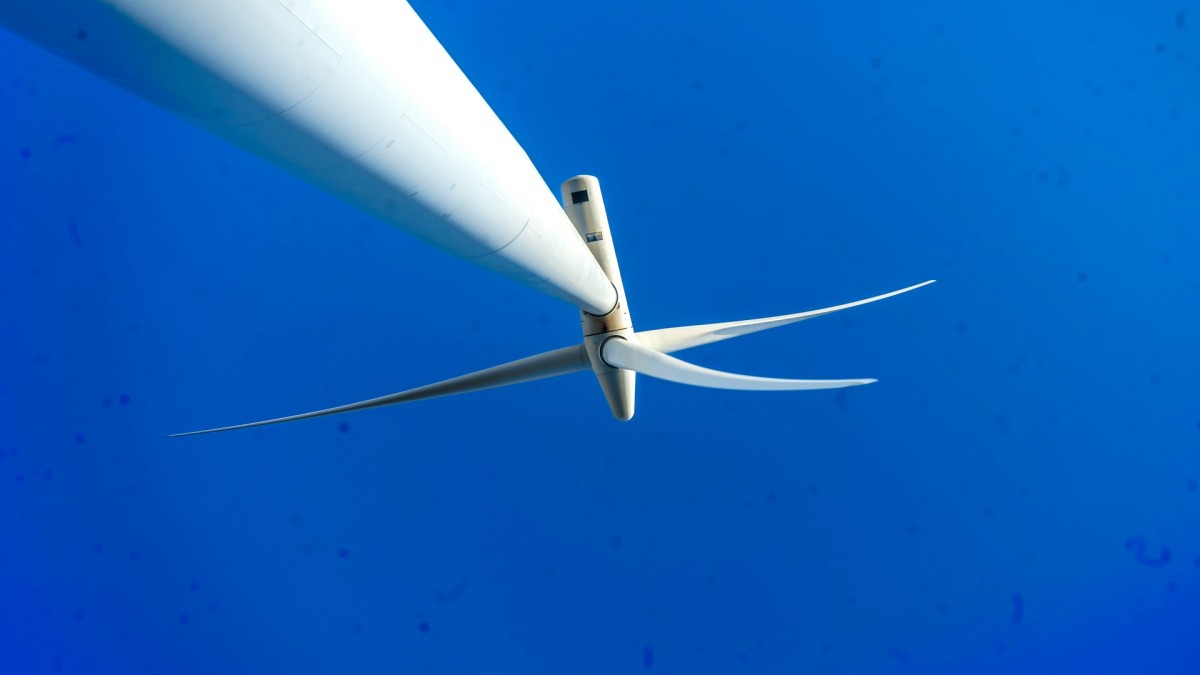
Operating in a water depth of 136 meters and 136 km offshore, the facility features a 16-MW anti-typhoon wind turbine. It is engineered to withstand extreme 17-level typhoons with an operational lifespan of 25 years, it said.
Once fully operational, the project is expected to supply 54 million kilowatt-hours of green electricity annually to the Lufeng Oilfield grid via a 4.3-km subsea cable. This output equates to saving 15,000 cubic meters of fuel oil and reducing carbon dioxide emissions by 35,000 metric tons per year.
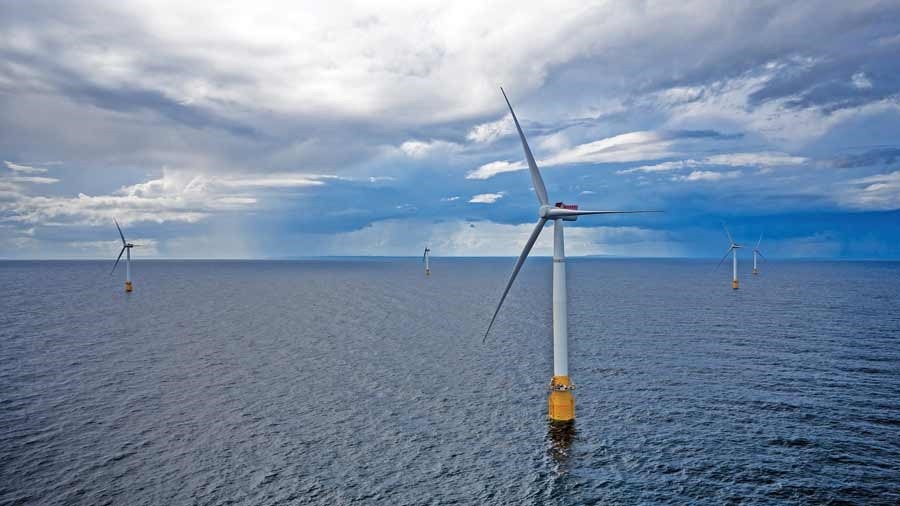
As an advanced offshore structure, a TLP floating wind platform comprises an upper floating body, subsea anchor foundations and a mooring system. Compared with semi-submersible platforms, TLP structures offer exceptional stability, lower steel consumption per MW, and a smaller sea-use footprint, alleviating conflicts between offshore wind development and traditional marine activities.