AI is about to walk out of the screen and into the physical world — robots on factory floors, machines servicing other machines, systems running power grids and water plants
| Photo Credit:
KIM HONG-JI
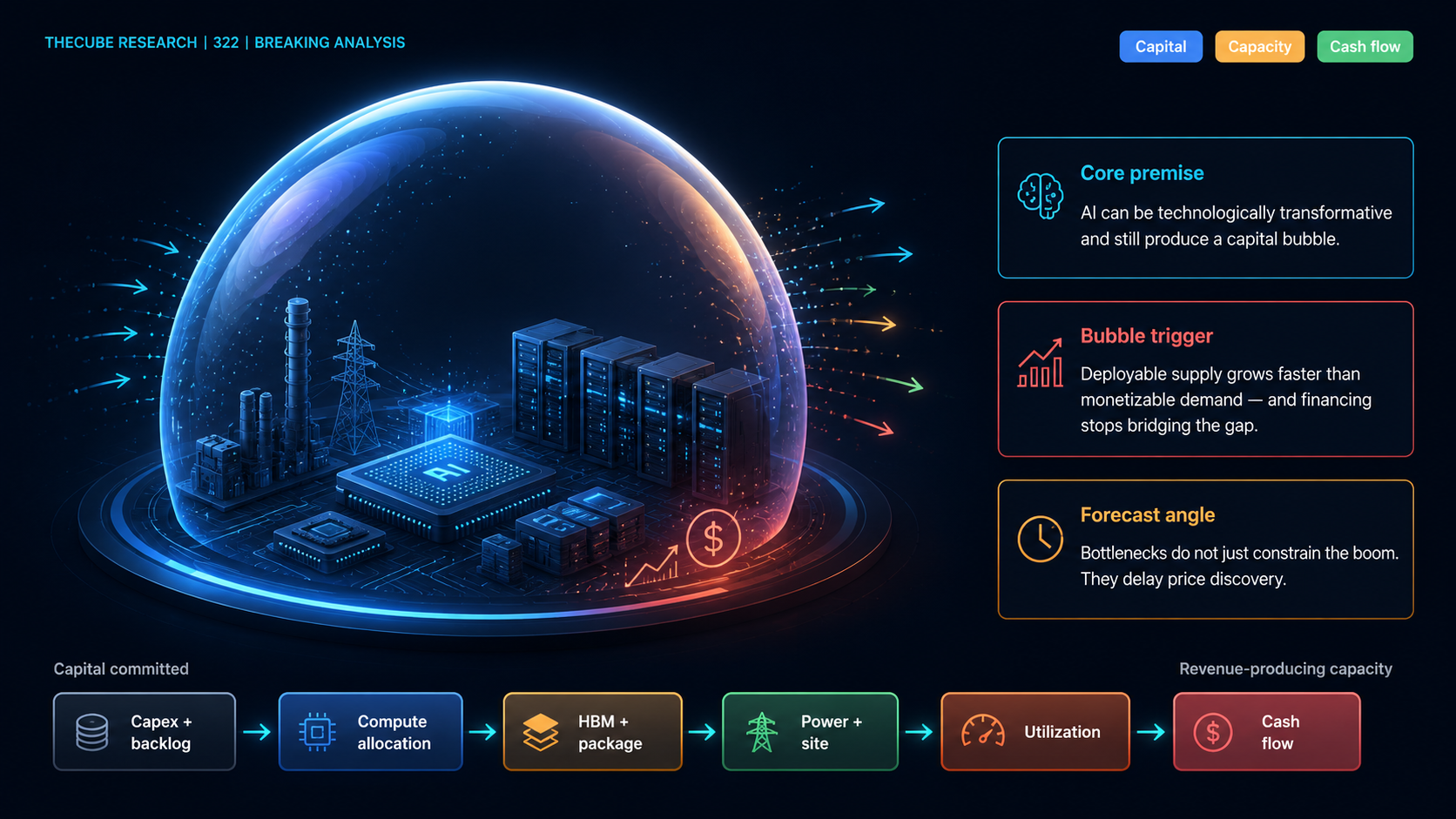
Here is an unfashionable thought: if the AI bubble bursts, India should be ready to celebrate.The bullish case for AI — argued most forcefully by the market’s boldest thinkers — is that this is not a contained technology story but a disruption that will remake every industry at once. They are right. But total disruption has a habit no one likes to mention: it eventually turns on the disruptors themselves. Economists call it creative destruction, capitalism tearing down the old to fund the new. A bust is not the opposite of progress; it is how progress clears its ground. The only question is who is standing in the right place when the dust settles.The most instructive example is the one that built modern India. In 2000, the dot-com crash wiped out trillions. Telecom firms had spent the late nineties laying fibre-optic cable in a frenzy of overbuilding; when the crash came, they went bankrupt, but the fibre stayed in the ground, sold off for cents on the dollar. The price of moving data across the world collapsed. That cheap bandwidth financed the next 20 years: streaming, cloud, the smartphone internet and its biggest beneficiary was arguably India, whose IT boom was possible only because a transcontinental data line, once ruinously expensive, had become nearly free. An entire middle class was built on the wreckage of someone else’s bubble.AI spendingNow look at today. Global AI spending is racing past $2.5 trillion this year, roughly half of it into data centres, chips, and power. The strain is already showing, The world’s most valuable chip stocks have seen more than $1 trillion wiped from their market caps last week. The pattern is familiar: too much capacity, built too fast, on borrowed conviction.So will the AI bust do for computing what the dot-com bust did for bandwidth? Likely. That is why the bust is generous, it floods the world with abundant, still-useful compute at a fraction of today’s cost.And yet cheap infrastructure has never, by itself, made anyone a winner. The firms that owned the fibre went bankrupt owning it. The winners took the cheap leftovers and redesigned the industry around them; Google reorganising the world’s information, Amazon rebuilding retail, cheap connectivity making software-as-a-service workable and cloud computing economical. None of it was the fibre; all of it was the redesign, powered by a data asset nobody else had: Google’s searches, Amazon’s purchases. Infrastructure became the commodity. Scarce data became the empire.The boom’s favourite belief is that AI models work better with more data. True for a while, but “more” quietly meant more of the same: internet text, images, video. That well is running dry; the web has been scraped to exhaustion, and every laboratory now holds the same corpus. Which is why the field’s own founders are in revolt. Yann LeCun, for 12 years Meta’s chief AI scientist, walked out declaring today’s language models a dead end and raised over a billion dollars for “world models” that learn from sensory data. And yet the designer got re-designed: look at what those models consume ‘video’. The rebellion against text and pixels is being waged with more pixels.Physical worldBecause the real shift is this: AI is about to walk out of the screen and into the physical world — robots on factory floors, machines servicing other machines, systems running power grids and water plants. And the physical world does not speak in sentences or selfies. It speaks in vibration, sound, pressure, heat, and current. A failing bearing announces itself as a faint tremor weeks before anything looks wrong; every seasoned mechanic knows this by ear. The most advanced AI on earth cannot hear it, because that data was never online. Nobody posts vibrations. And there lies a quiet mercy: the workers dismissed as most replaceable hold precisely the knowledge the machines cannot capture. The bust does not save their jobs from AI; it reveals that AI needs them.So run the logic forward. After the correction, compute will be cheap and abundant, and the scarce, appreciating asset will be the data that was never on the internet: the acoustic and vibrational signatures of the machines that run the real economy.This is India’s opening. We are the land of pumps, motors, looms, and lathes, hundreds of millions of machines, and millions of hands that already know their language. Silicon Valley has begun paying Indian workers to wear cameras and film everyday work; mining us once again, but harvesting only more video, the one thing it already owns. The seam nobody is mining is sound and vibration.So while the world argues about when the bubble pops, India should quietly build the world’s first national library of machine signals, its industrial base recorded, healthy and failing, at a scale no other economy can match. It would cost a rounding error beside a single data centre. And when compute finally becomes cheap, the country holding the data no scraper can reach will do what Google did in 2002: pick up the infrastructure for cents, and redesign the industry around the one thing money can no longer buy.India profited from the last bubble by accident. This time, it can prepare on purpose. The dot-com bust gave us cheap internet, and we built the world’s back office. Let the AI bust give us cheap compute and we can build the world’s industrial brain.The writer is General Manager & Head – AI Lab, Hitachi India. Views are personalPublished on August 7, 2026