Oil: Push for exploration
| Photo Credit:
ssuaphoto
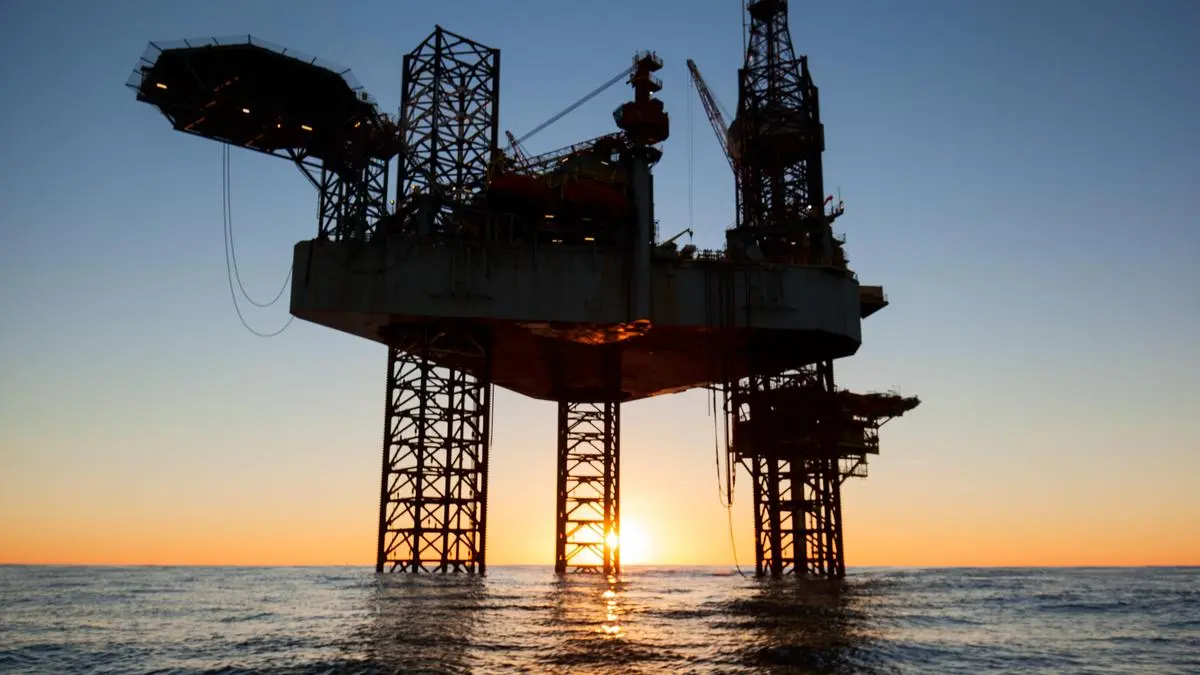
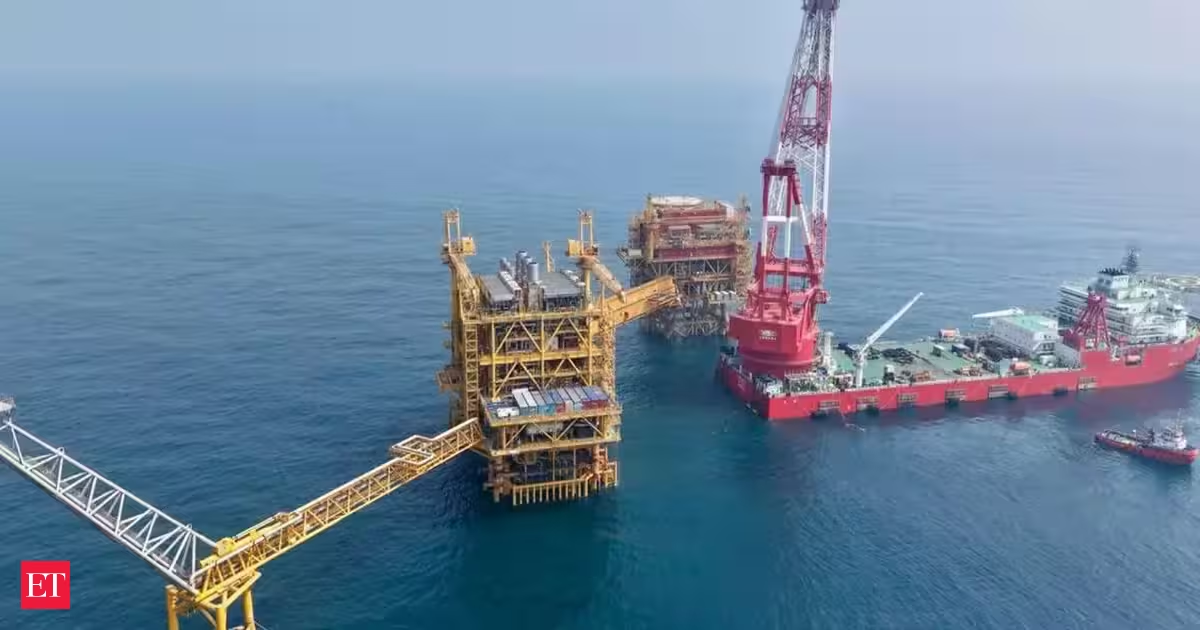
I spent several years of my working life in early stage petroleum exploration in India, working on deepwater plays off the west coast. When the Cabinet approved ‘Samudra Manthan’ — the National Offshore Exploration Scheme, I was pleasantly surprised, and genuinely excited.The timing of this announcement is notable. It comes close on the heels of the conflict in West Asia, which has once again reinforced the importance of finding and developing domestic resources. India’s crude import dependence has risen sharply to over 85%. Country imports close to half its natural gas and a substantial share of its LPG needs.What makes this announcement more striking is that it has been nearly a quarter century since India’s last major new basins i.e., the Krishna-Godavari basin and the Barmer fields were discovered.Liberalised regimeIndia has progressively liberalised its regime and the current fiscal terms are attractive. Royalty rates have been cut sharply, deepwater developments get a seven-year royalty holiday, and ultra-deepwater royalties can be as low as 2 percent against a 12.5 percent onshore rate. There is no oil cess, full marketing and pricing freedom. Further, the recent amendment in PNG rules recognises the principal of fiscal stability and have combined exploration licence with a mining lease.Fiscal terms are not a constraint, the question is what lies beneath the seabed, and how confidently anyone can say so.High risksFundamentally, petroleum exploration is a high-risk business. Management has to commit substantial time and money upfront, with an uncertain outcome. Returns accrue over a very long period of time. For real interest to build in any basin, a geologist, an explorer or an investor needs to feel genuine excitement looking at the geological data. In my experience, that spark matters enormously in driving exploration activity and investment. This is where the current policy comes in.Hydrocarbon searchThere are three parts to the scheme specifically with regard to finding and producing hydrocarbons.First, is the Government-funded seismic data acquisition. Non-exclusive, multi-client seismic surveys are typically the very first source of information on a new or underexplored area. They are shot ahead of licensing rounds, before any company has committed to acreage and allows a basin to be evaluated from the outside, by explorers without requiring them to first win a block first.While, the precise details of the data to be acquired are not public at the time of writing, it is important to note that between 2007 and 2009, a basin-scale multi client survey across both coasts shot nearly 30,000 line-kilometres of long-offset 2D data.In the years since, acquisition of multi client seismic data has been somewhat limited and sporadic. National Seismic Program launched in 2016 added roughly 47,000 line kilometres. Brazil offshore has nearly a million line kms of such 2D. Even though Brazil has a prolific upstream sector, this just illustrates the importance.Basin wide, non-commercial data acquisition is something that individual operators may not be willing to fund. Depending on the results that such data throws up, it is possible that the view of the Indian basins undergoes a change and much more capital is committed to petroleum exploration in India.Second is the direct financial support for up to 40 deepwater and ultra-deepwater exploratory drilling, of up to ₹650 crore per well subject to a cap of 50% of well cost. Given that ultra-deepwater wells can cost much more, this support covers only part of the cost in most cases. However, it can shift the risk calculus for an operator deciding whether to drill or not. The requirement that well design and location be validated by international experts is prudent risk management. Adequate analysis and work has to precede any well proposal, so the uptake would probably happen over a period of time.InfrastructureThird is the common infrastructure for evacuation and production. Its real value is in unlocking discoveries that are commercially marginal on a standalone basis. Mahanadi basin is the clearest example, where several discoveries exist but may not justify dedicated infrastructure. Shared infrastructure changes that arithmetic entirely.Taken together, this is a strongly positive move for the exploration and production sector.Whatever data is acquired should be made available at the lowest possible cost, and as widely as possible, through the National Data Repository. Multi-client-style data is disproportionately valuable to mid-sized and independent operators, and it is often those smaller nimbler players who take the early risk that eventually draws in larger capital. Ideally, the same openness could also apply to well results, though there may be confidentiality issues under the contracts for the block.This spending may be a more prudent capital allocation vis-à-vis using the capital to buy an oil and gas block overseas. For the data acquired can result in a multiplier impact through potentially higher interest in India and monetising some of the discoveries made.The announcement represents a bold move to reshape India’s energy landscape. Effective and timely implementation will now to critical to unlocking investments, accelerate exploration and realising the full value of the reform.The writer is Partner, Tax and Economic Policy Group, EY IndiaPublished on August 7, 2026