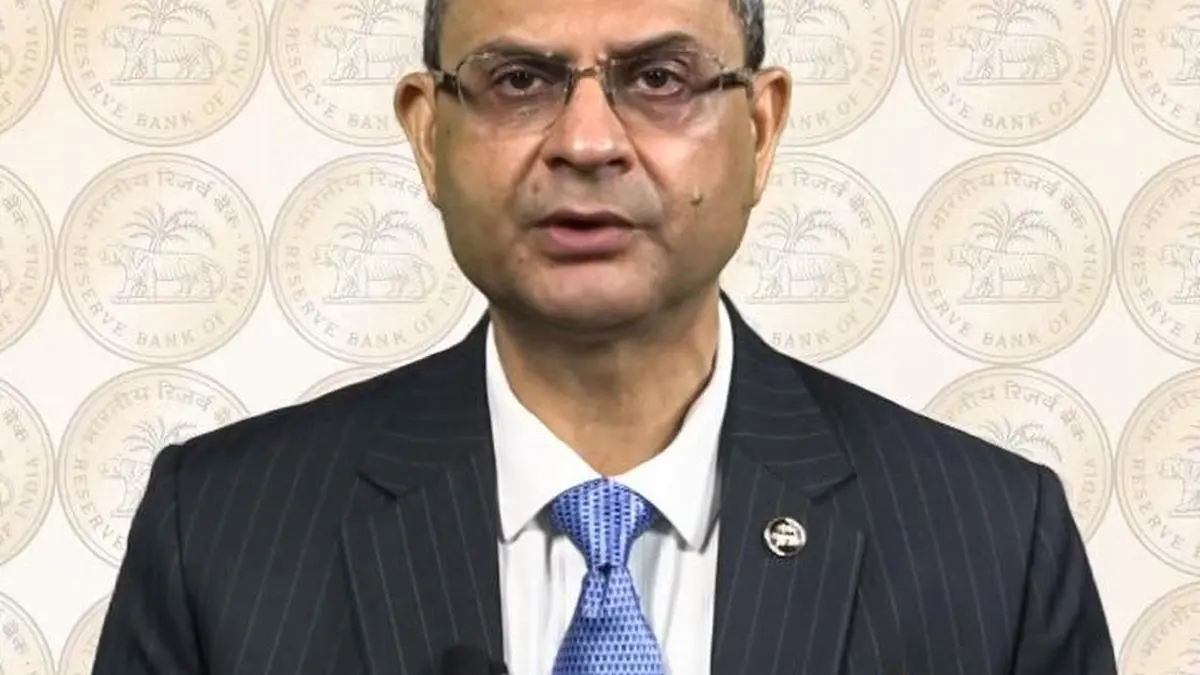
Mumbai: The Reserve Bank of India has named Tata Sons among 16 upper-layer non-banking financial companies, making it imperative for the holding company of India’s biggest and most diversified conglomerate to list its shares on domestic stock exchanges.However, the banking regulator has left the door open for a review, noting in a footnote to the list published Thursday that it is examining Tata Sons’ application for deregistration as a core investment company (CIC). Tata Sons had submitted its application to surrender its CIC registration in March 2024.In June 2026, the RBI had revised its scale-based regulations, setting a new asset threshold of ₹1 lakh crore for classification of an entity as an upper-layer NBFC, making listing mandatory.Read more: Tata Sons faces continued listing uncertainty after RBI classificationTata Sons had total assets of ₹2.01 lakh crore as of March 31, 2026.This makes its inclusion in the upper layer unavoidable under the revised framework.Its large asset base could also make it difficult for the holding company to secure deregistration as a CIC.RBI has stipulated that only entities that do not hold public funds, do not have customer interfaces, and have assets of less than ₹1,000 crore would be eligible for deregistration by December 31. Tata Sons, whose interests span sectors ranging from steel to semiconductors, repaid all its debt to avoid listing, even as it has remained among the top upper-layer NBFCs since 2022.Read more: RBI classifies Tata Sons as Upper-Layer NBFC under revised frameworkET BureauRBI also said once an NBFC is classified as an upper-layer NBFC (NBFC-UL), it would remain subject to stricter regulations for at least five years, even if it no longer meets the eligibility criteria in subsequent years.As a result, NBFCs that were classified as upper layer entities in previous years but do not qualify in the latest assessment will continue to remain in the upper layer and be governed by the enhanced regulatory norms.Responding to a media query on whether Tata Sons would feature in the list, RBI governor Sanjay Malhotra had said Wednesday that the new classification “is now principle-based. So, as per those principles, everyone knows what the list is. And so that is where the matter stands.”Tata Sons did not comment.Tata Sons and Tata Trusts remain watchful of RBI’s directives on Upper Layer (UL) NBFCs and are awaiting greater clarity on the developments, people familiar with the matter said. Tata Sons is understood to have worked on multiple scenarios, officials said.SP Group Exit OptionsTata Trusts, which owns a controlling 66% stake in Tata Sons through the Sir Ratan Tata Trust and Sir Dorabji Tata Trust, had passed a resolution in July 2025 that Tata Sons remain a privately held company. The Shapoorji-Pallonji (SP) Group owns a significant minority stake that has been partially pledged to raise significant credit.Two of Tata trustees, Vijay Singh and Venu Srinivasan have since publicly favoured a listing.Growing pressure to find a viable solution for SP Group’s exit — and to unlock value in the group holding company — have played a role in reshaping internal discussions, sources said.Against this backdrop, Tata Sons and the SP Group held fresh talks twice in the past two months on monetising an estimated 5-7% of the SP Group’s 18.37% stake. The discussions reflected their differing positions on value creation.Tata Trusts chairman Noel Tata, who does not want Tata Sons to be listed, has favoured a solution that avoids a Tata Sons share buyback or fresh borrowing, while the Mistry family that owns SP Group continues to view a Tata Sons listing as the most practical route to unlock value. SP Group has a 18.37% stake in Tata Sons and wants to sell some of that to repay part of its estimated debt of ₹60,000 crore.Avoiding IL&FS EncorePreviously, inclusion in the upper-layer NBFC category depended on whether a company ranked among the top 10 NBFCs by asset size.Following the collapse of unlisted infrastructure financier IL&FS in 2018, the RBI introduced a scale-based regulatory framework for NBFCs, linking regulatory requirements to asset size and mandating that upper-layer NBFCs be listed by September 2025.The objective was to improve disclosures and transparency among large conglomerates, which partly led to the series of defaults at IL&FS.Except for Tata Sons, all other companies named by the RBI as NBFC-UL are listed. In this list, the regulator added four finance companies in the upper-layer NBFC list published Thursday. These include REC, PFC, IRFC and Housing & Urban Development Corporation (Hudco). Piramal Finance and Aditya Birla Capital have replaced Piramal Enterprises and Aditya Birla Finance from the earlier list.The other finance companies that continue to be on the list include Bajaj Finance, Shriram Finance, LIC Housing Finance, Cholamandalam Investment and Finance, Tata Capital, HDB Finance, Muthoot Finance, Mahindra and Mahindra Finance, L&T Finance and Bajaj Housing Finance.RBI has said PNB Housing Finance and Sammaan Capital are no longer classified as UL-NBFC but they would be subject to enhanced regulatory requirements for five years.
Listing cloud still hangs over Tata sons with NBFC-UL tag
Tata Sons is now an upper-layer NBFC, requiring its stock market listing. The Reserve Bank of India is reviewing its deregistration application. This classification mandates stricter regulations for at least five years. Tata Trusts wants Tata Sons to remain privately held. The Shapoorji-Pallonji Group seeks to unlock value through a listing.
822 words~4 min read