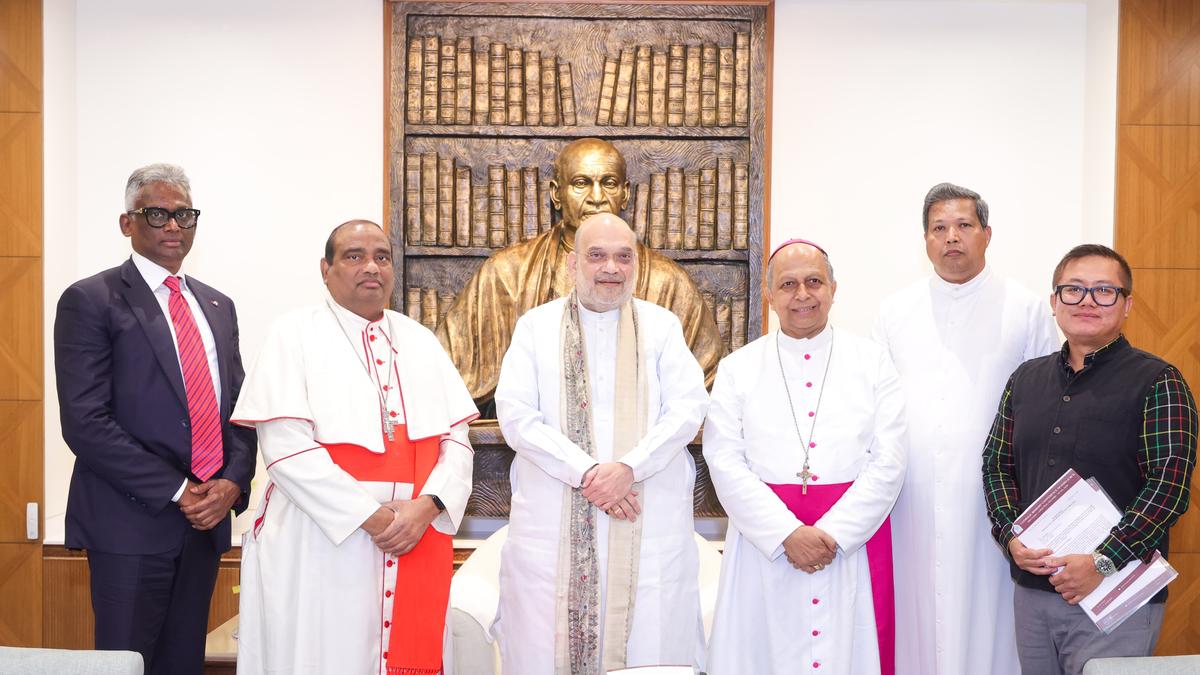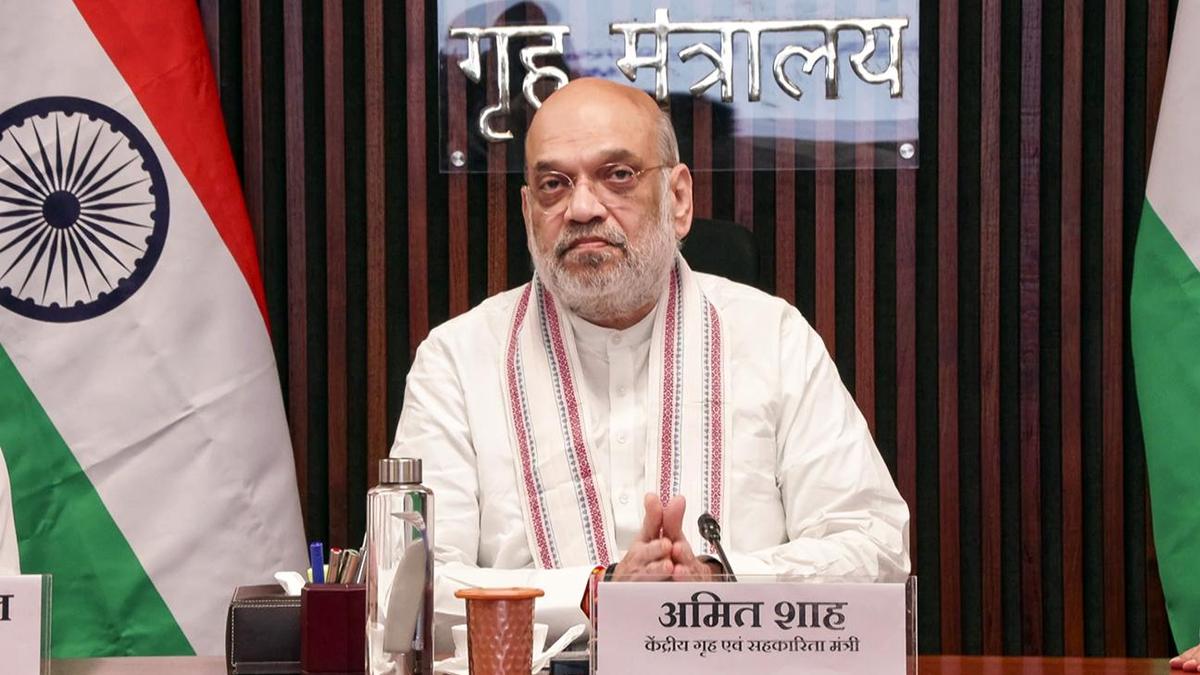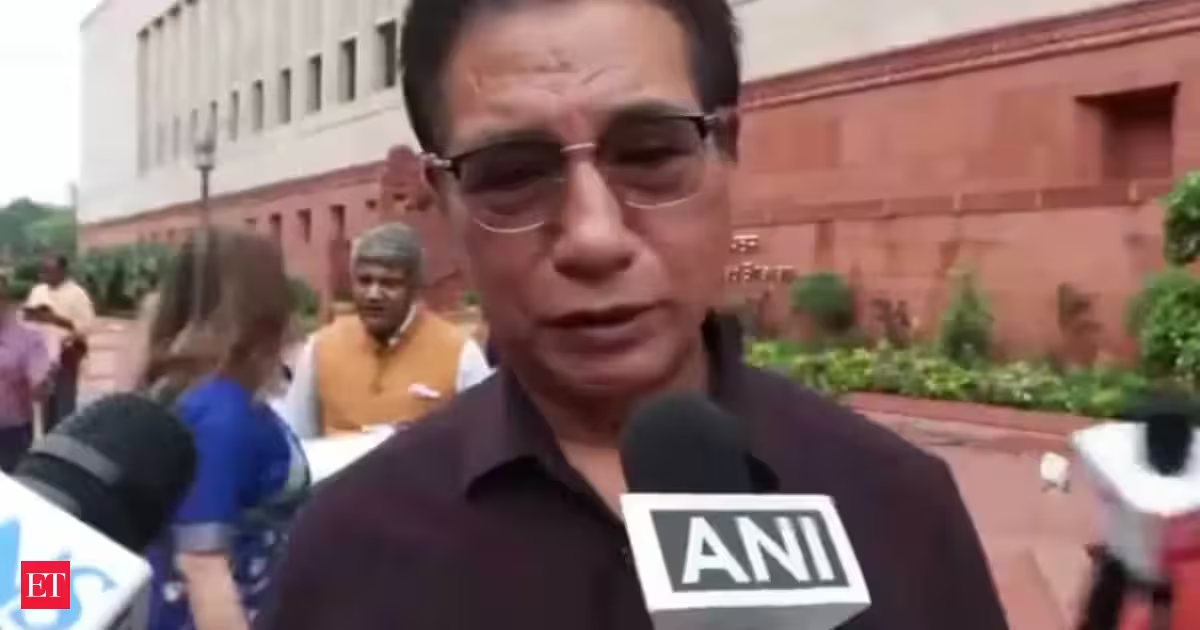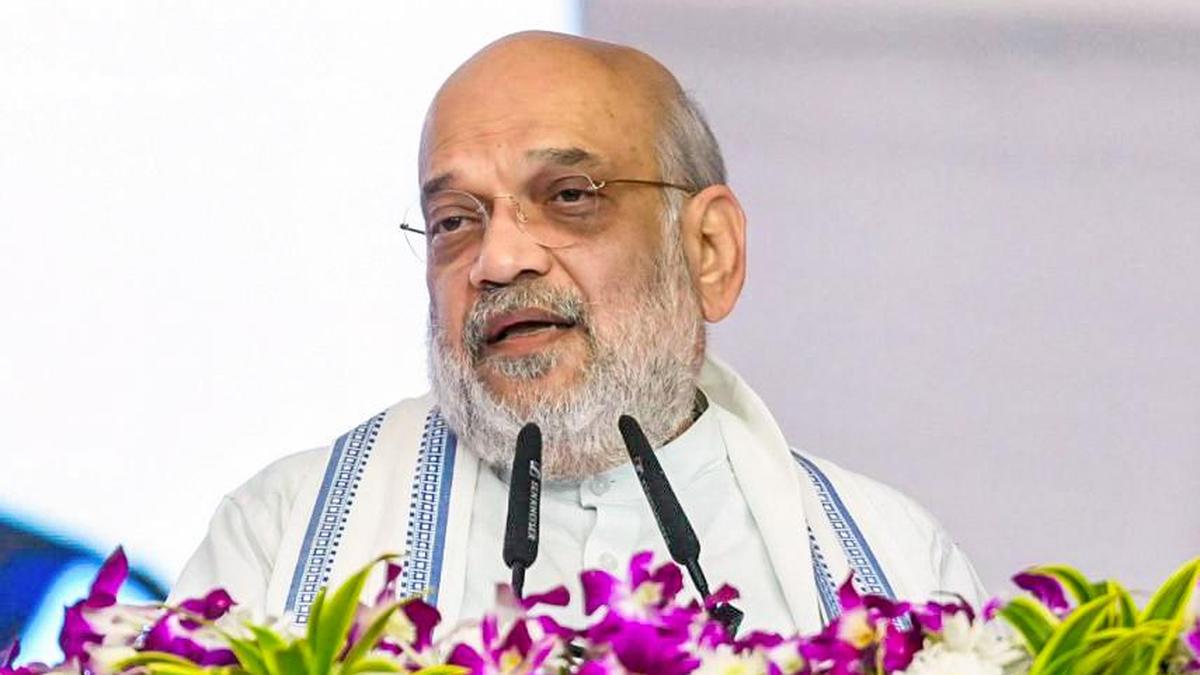
Amid concerns raised by Christian bodies over the Foreign Contribution (Regulation) Amendment Bill, 2026 (FCRA), Union Home Minister Amit Shah on Thursday (August 6, 2026) met two delegations, including one representing all Christian denominations and communities, and assured them that the proposed legislation was “religion-neutral”.A member of the delegation said the Home Minister asserted that the “government has no intention to harass the Christian community, or any faith (or) community for that matter.”The other delegation included Mizoram Chief Minister Lalduhoma, who said that Mr. Shah had conveyed that the Bill was likely to be taken up for discussion in Parliament on August 12, a day before the Monsoon Session ends. “We were given an assurance that the provisions of the Bill will not be applied retrospectively,” he said.Mizoram is a Christian-majority State.Reverend Asir Ebenezer, general secretary, National Council of Churches in India, who met Mr. Shah at the Parliament House complex, said that the 18-member delegation of the Joint Action Forum on Minorities included representatives from all the three Christian traditions – Catholic, Protestant, and Orthodox.“We had written to the Prime Minister to register our concerns against the FCRA Bill. The Home Minister gave us time and listened to us patiently for an hour. He said it is not against the Christian faith but against anyone who violates the law. We requested him that a comprehensive review of the Act that was introduced in 2010 is required,” Mr. Ebenezer told The Hindu.Main concernOne of the key provisions in the FCRA Bill, 2026, which was introduced in the Lok Sabha on March 25 but could not be passed following an uproar by the Opposition parties, is the appointment of a ‘designated authority’ to take over, manage, or dispose of assets created from foreign funds when an NGO’s FCRA registration is suspended, cancelled, or not renewed. This authority will have the powers of a civil court and can order the transfer or sale of assets owned by NGOs to either the government or any other body. The Bill was initially listed for passage in the ongoing Monsoon Session of the Parliament but did not figure in this week’s list of business.Mr. Ebenezer said that the “deemed cessation” of assets in case the FCRA registration is not renewed or cancelled by the government in absence of a formal order was also flagged at the meeting.“The Minister asked us for a list of cases where registrations of NGOs had been cancelled without any notice. We also sought clarity on the powers of the vesting authority to dispose the assets without a judicial oversight. How can a government authority just take over my property,” he asked.The meeting is among a series of interactions that the Home Minister has held with the Christian community to assuage their concerns over the Bill.Earlier, on July 10, Mr. Shah assured the Catholic Bishops Conference of India, the apex body of the Catholic church in India, that the Bill is not against the Christian NGOs, which receive a little under 15% of the total foreign donations.DMK MP P. Wilson, chairman of the Joint Forum and who led the delegation, said, “We had given a representation to the Prime Minister. The Prime Minister’s Office forwarded it to the Home Minister, and we were called by the Home Minister for a meeting today. We clearly spelt out the illegalities in the Bill. Even if a registration is going to be cancelled, there was no necessity to take over the properties of these organisations.... it was also clearly explained to the Home Minister that these bodies have employed expert hands for running these organisations, institutions, hospitals, and by taking over it will clearly destroy them, including the hospitals. It will impact the people we are serving. We explained the repercussions and how draconian it is, how it affects or violates the constitutional guarantees to the minorities, including to the extent of taking over the places of worship.”Government sources ruled out any further changes to the Bill, adding that the specifics on taking over assets by designated authority will be clarified when the Rules are notified. “The Rules will specify that whenever an NGO ceases to exist under FCRA, its assets, if built with foreign funds, will not be automatically taken over by the designated authority. A notice will be served, and the question of asset take over will arise only if the activities at the property deviate from the stated purpose.” FCRA registration is mandatory to receive foreign funds. The delegation submitted a detailed representation requesting the withdrawal of the Bill in its present form. In the alternative, it requested that the Bill be referred to a Joint Parliamentary Committee for comprehensive stakeholder consultation.On July 5, Meghalaya chief minster Conrad Sangma had met the Home Minister with similar concerns on FCRA. He had highlighted how the proposed changes could disrupt the functioning of religious, educational, and charitable institutions that have long complemented government efforts in education, healthcare, and community development.On July 22, the Press Information Bureau had said that the “designated authority” will retain the religious character of places of worship in all cases
FCRA Bill is ‘religion-neutral’, Shah assures Christian bodies
Amit Shah assures Christian groups that the FCRA Bill is religion-neutral and aims to address their concerns before Parliament discussion.
851 words~4 min read