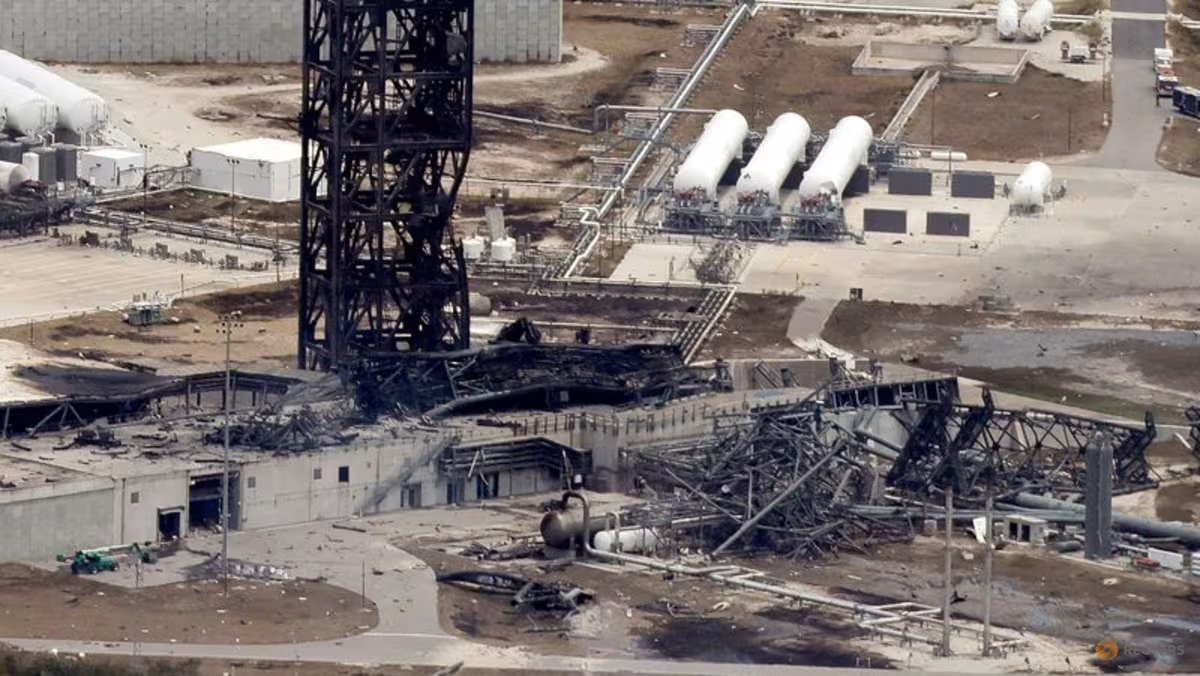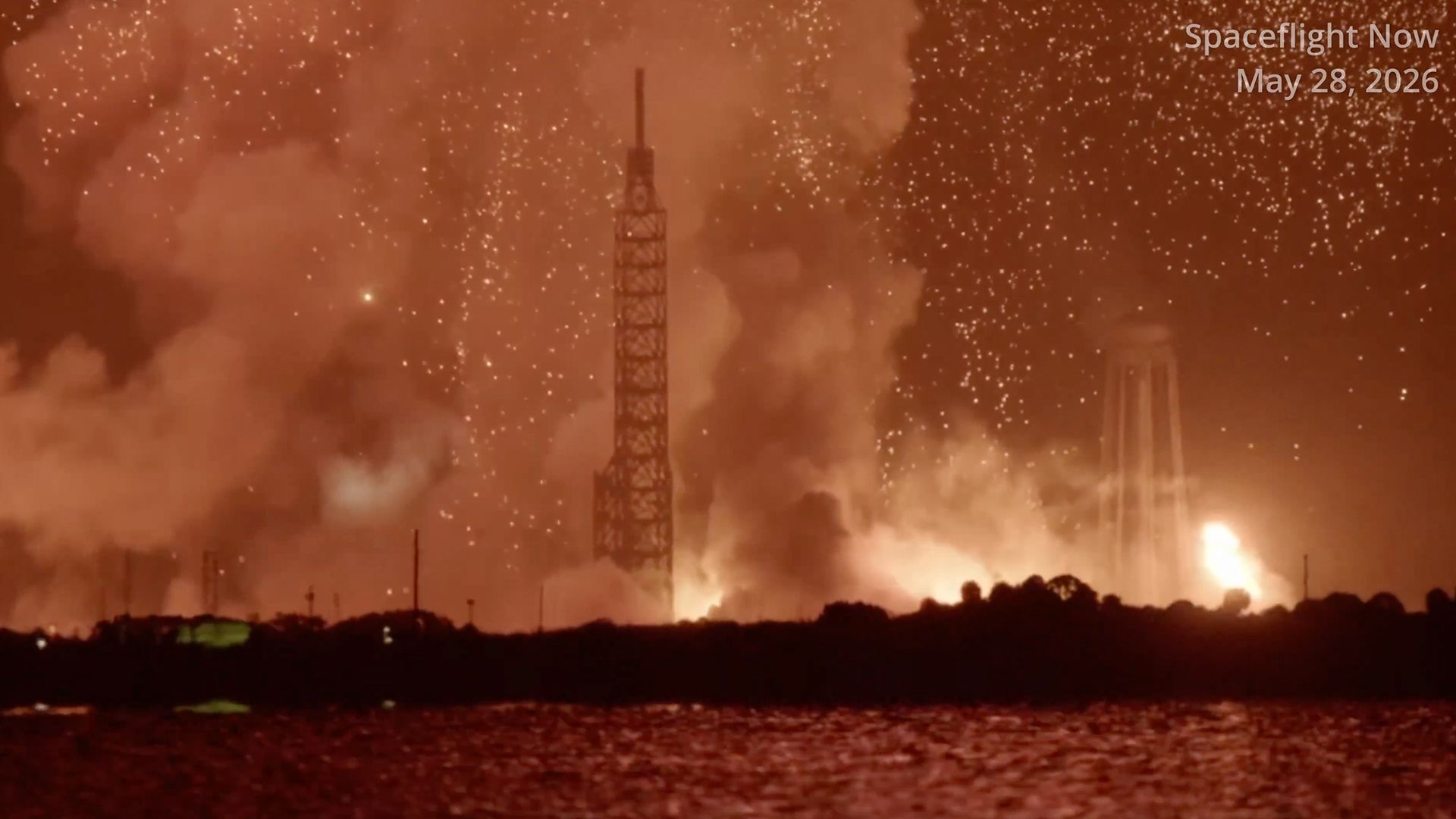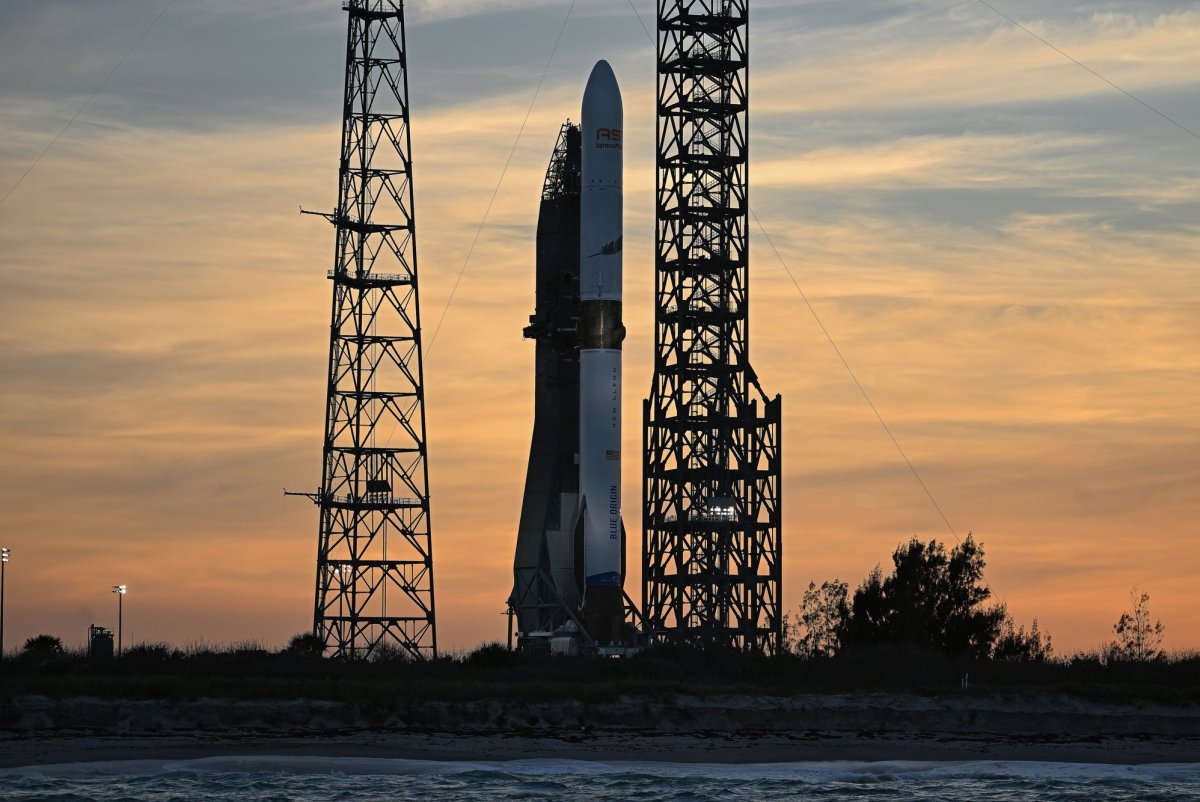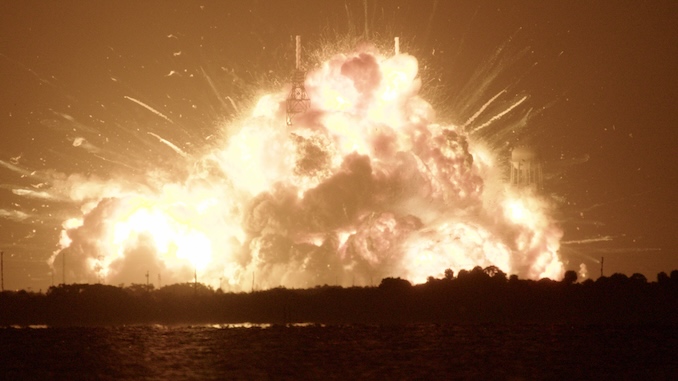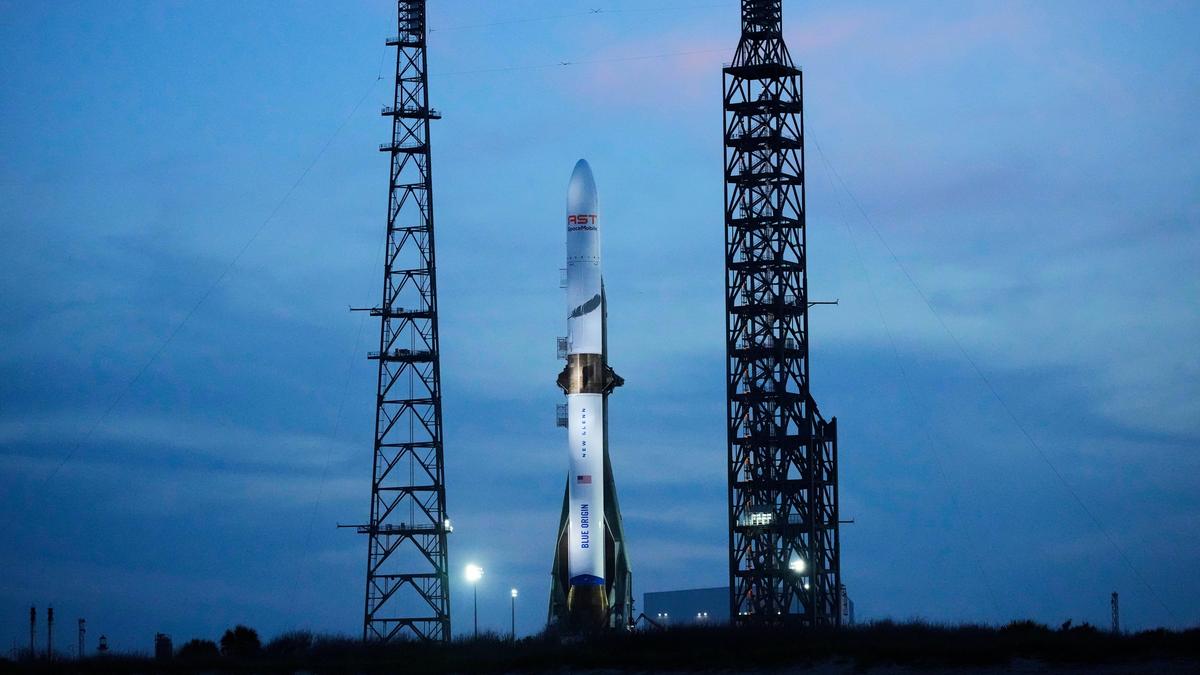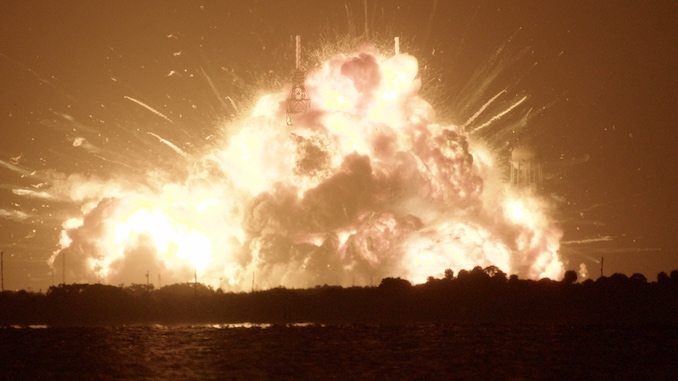
Blue Origin’s New Glenn rocket exploded on the pad at Launch Complex 36 at Cape Canaveral Space Force Station as the result of an anomaly during a static fire test on Thursday, May 28. The test was in preparation for a planned launch as soon as June 4. Image: Adam Bernstein/Spaceflight Now
Blue Origin CEO Dave Limp said an issue with the main oxygen valve on a BE-4 engine was the source of the explosion that destroyed a New Glenn rocket during a static fire in May ahead of the company’s fourth orbital flight.
“The anomaly originated at the main oxygen valve on one of the BE-4 engines, which was later confirmed by hardware recovery and inspections,” Limp wrote in a social media post that came more than two months after the blast that damaged Blue Origin’s sole orbital launch site, Launch Complex 36 at Cape Canaveral. “Extensive component-level and engine hotfire tests have been conducted to understand the failure mode better and inform mitigations.”
<span data-mce-type="bookmark" style="display: inline-block; width: 0px; overflow: hidden; line-height: 0;" class="mce_SELRES_start"> </span>
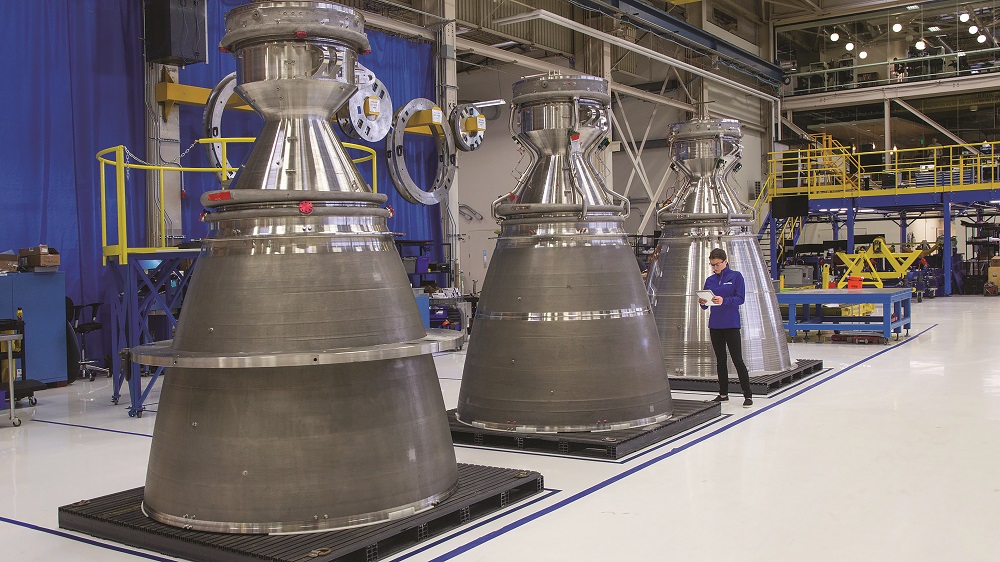
The New Glenn rocket is powered by a total of seven BE-4 engines on its first stage. They’re fueled by a combination of liquid methane and liquid oxygen and are each capable of producing 640,000 pounds of force at liftoff.