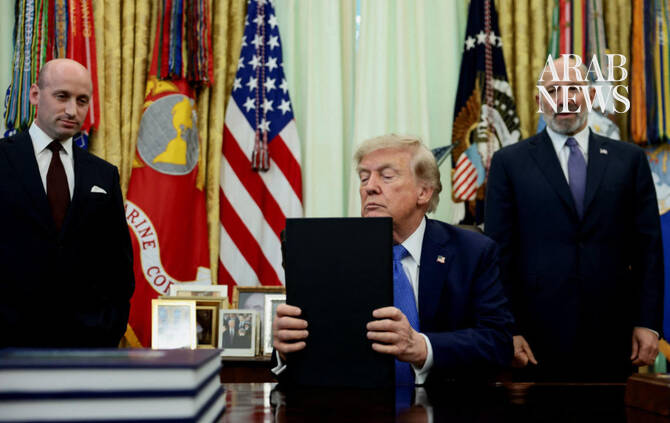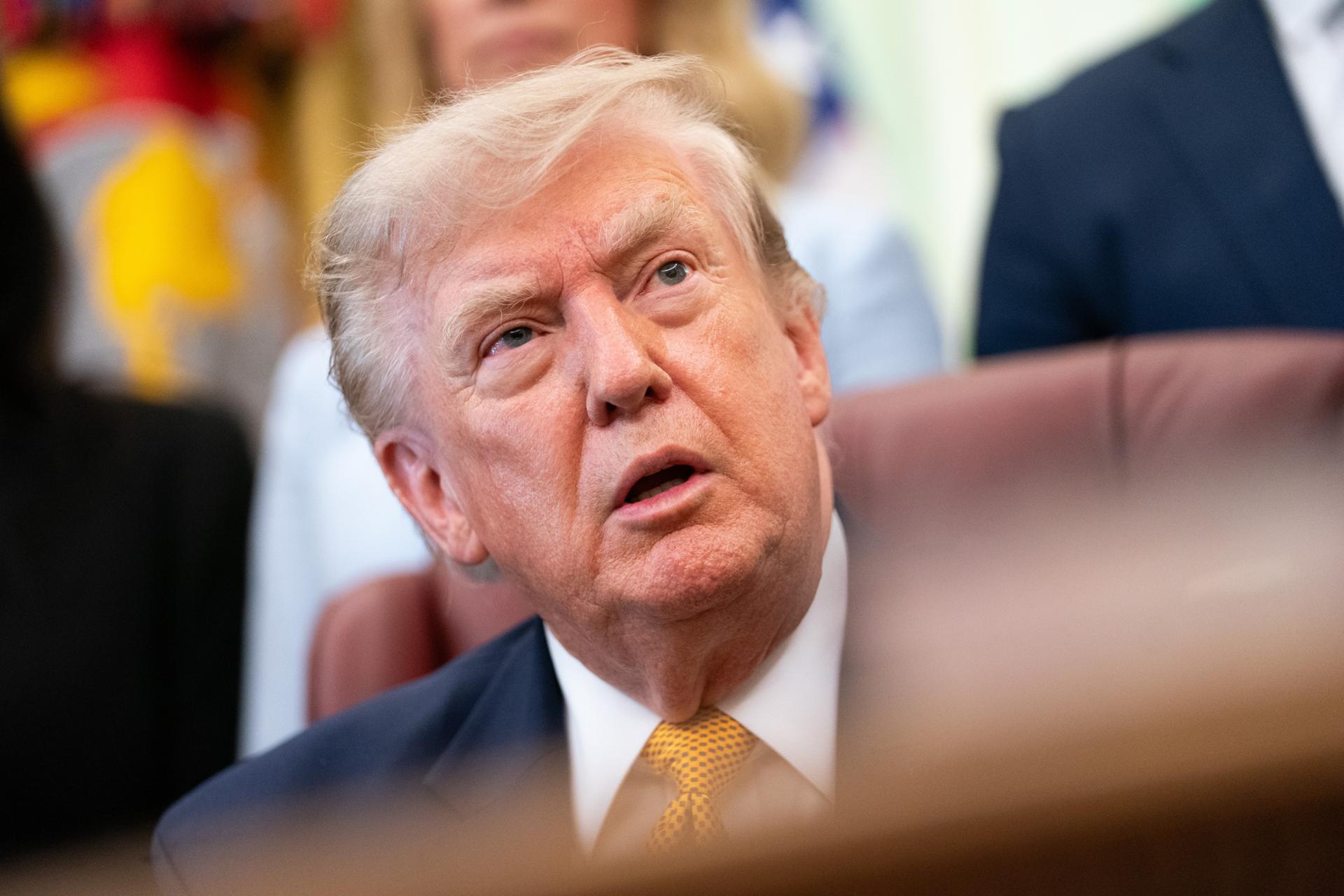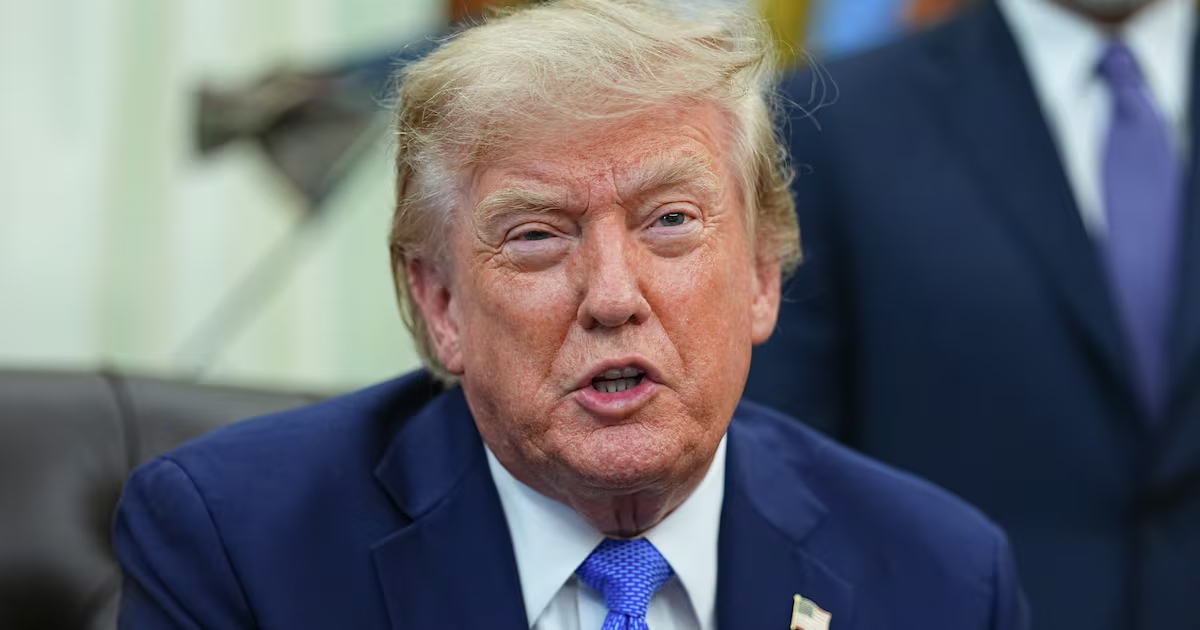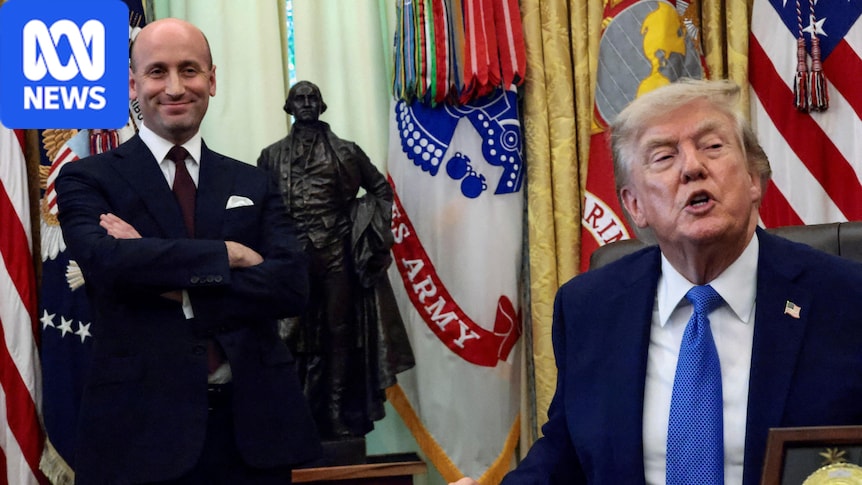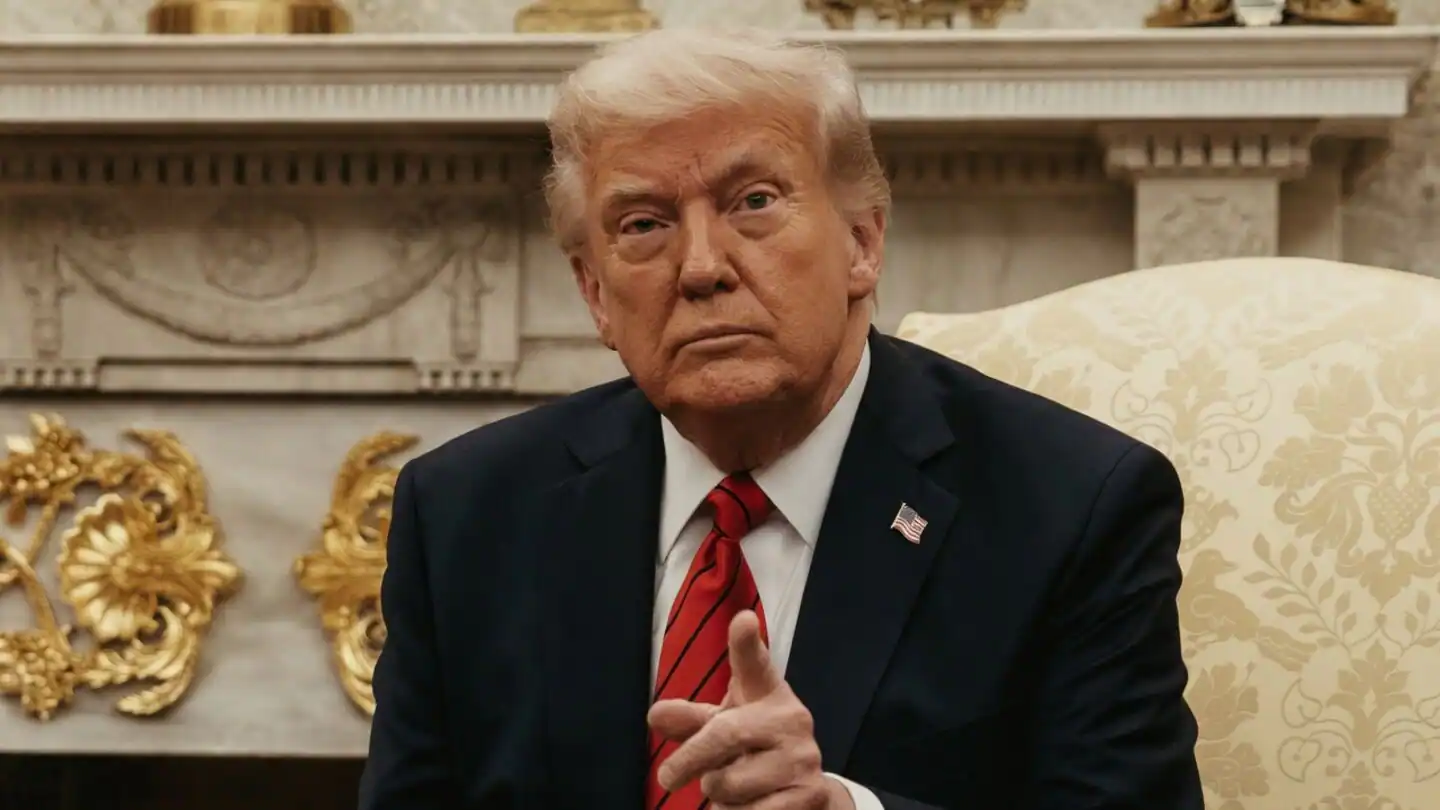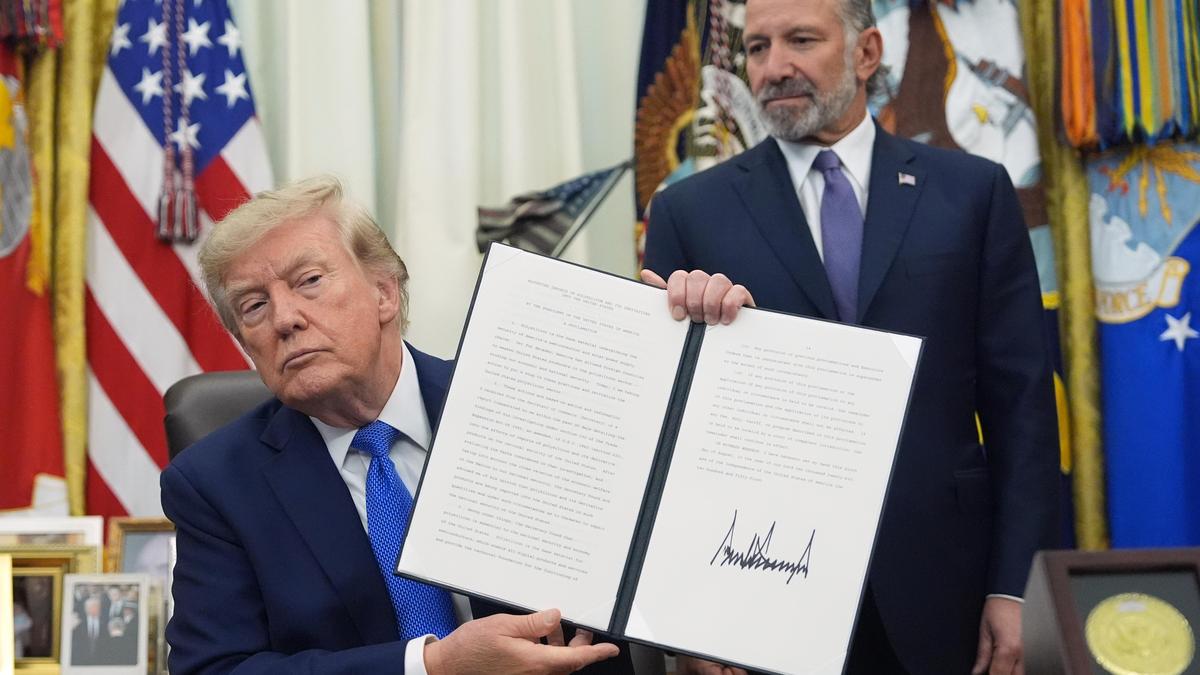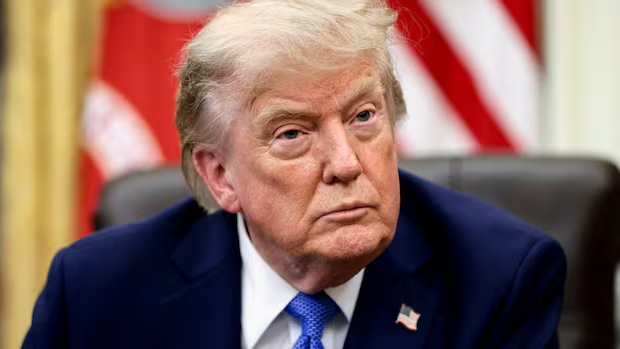
WorldU.S. President Donald Trump signed two executive orders on Thursday that the White House said expands the definition of people who are ineligible for birthright citizenship and bans 'birth tourism.'Orders expand definition of people ineligible for birthright citizenship, ban 'birth tourism': White HouseThomson Reuters · Posted: Aug 06, 2026 5:39 PM EDT | Last Updated: 36 minutes agoListen to this articleEstimated 2 minutesThe audio version of this article is generated by AI-based technology. Mispronunciations can occur. We are working with our partners to continually review and improve the results.U.S. President Donald Trump is seen in the Oval Office on Thursday. (Evelyn Hockstein/Reuters)U.S. President Donald Trump signed two executive orders on Thursday that the White House said expands the definition of people who are ineligible for birthright citizenship and bans "birth tourism."Limiting birthright citizenship has been one of the top priorities in the Republican president's crackdown on immigration.An earlier effort by Trump was rejected by the U.S. Supreme Court in June, prompting him to call upon Congress to act. No U.S. law outright bars birth tourism, but a federal regulation implemented in 2020 during Trump’s first term prohibits using temporary tourist and business visas for the primary purpose of obtaining U.S. citizenship for a newborn. People who engage in birth tourism schemes could be prosecuted for fraud or other related crimes.WATCH | Trump loses at U.S. Supreme Court on birthright citizenship issue:U.S. Supreme Court strikes down Trump’s executive order on birthright citizenshipJune 30|Duration 2:39The Supreme Court in the United States ruled against Donald Trump's executive order limiting birthright citizenship on Tuesday, in a highly anticipated decision that confirms a lower court finding. Trump's executive order would have denied citizenship to those born to parents who are in the U.S. without authorization, or whose presence is lawful but temporary, such as being in the country on a work or student visa.There are no official figures tallying the number of foreigners who come to the U.S. for the explicit purpose of giving birth and obtaining citizenship for their children, or the cost to taxpayers.The U.S.-based Center for Immigration Studies, which supports lower levels of immigration, estimated in an analysis in 2020 that between 20,000 and 25,000 mothers came to the U.S. for birth tourism in a yearlong period between 2016 and 2017.There were 3.6 million births in the U.S. in 2025.
Trump targets birthright citizenship with newly signed executive orders | CBC News
U.S. President Donald Trump signed two executive orders on Thursday that the White House said expands the definition of people who are ineligible for birthright citizenship and bans 'birth tourism.'
388 words~2 min read