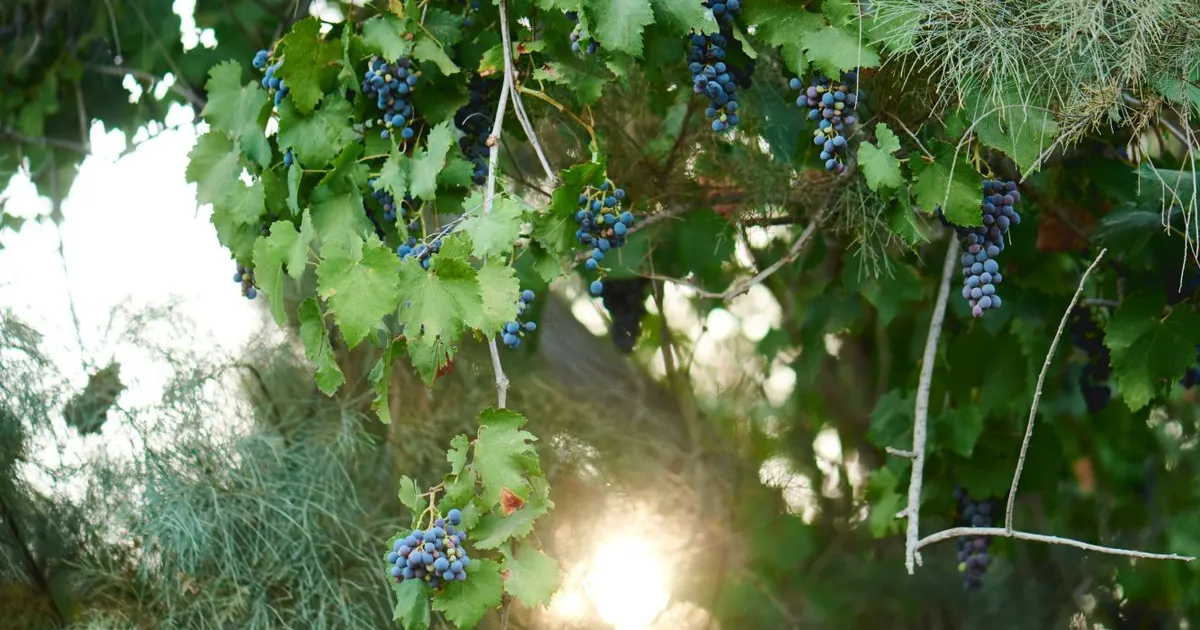
Current sectionFoodShare to FacebookShare to XArticle printing is available to subscribers onlyPrint in a simple, ad-free formatSubscribeComments: Zen reading is available to subscribers onlyAd-free and in a comfortable reading formatSubscribeGrapevines that survived in abandoned orchards in dunes along the southern coastal plain by climbing up trees. Credit: Dor KedmiGrapevines left uncultivated on Israel's coastal plain tell a forgotten story in the history of local farming, and offer a key to coping with the climate crisisRonit Vered12:33 AM • August 07 2026 IDTAt first, it looks like a mirage: tangled branches extend 6 to 8 meters into the air, where clusters of green and purple grapes hang in the heat of summer.Loading...Click the alert icon to follow topics:Israel agricultureGazaEnvironment & NatureClimate changeIsrael-PalestineCommentsLoading...In the NewsIn the News: Live UpdatesWest BankNetanyahuMichigan PrimaryLebanonElection PollsHaQuizHaaretz PodcastHow Grapevines Left Behind in 1948 Survived Against All OddsAliases and Unpaid Bills: How the Netanyahus Worked Israel's Healthcare SystemHaaretz CartoonBody of Missing Man Found in Central Israel; Friends Suspected of MurderMossad Chief Removes Senior Officials After Failed Iran OperationRemembering and rebuilding two years laterICYMIThis Israeli ultra-Orthodox Feminist Activist Has a Warning for U.S. JewsHow Israel's Elbit Armed the United Arab Emirates'I Tried, I Got Crushed by AIPAC': Andy Levin Is All-in for El-SayedIt's No Wonder Israelis Want War. Violence Has Become a Source of JoyIsrael Captured 230 Square Miles of Lebanon, Razed Villages and Built New BasesFormer Mossad Chief Appointed to Lead U.S. Defense Technology Company
How grapevines left behind in 1948 survived against all odds
Grapevines left uncultivated on Israel's coastal plain tell a forgotten story in the history of local farming, and offer a key to coping with the climate crisis
237 words~1 min read