Audio By Vocalize
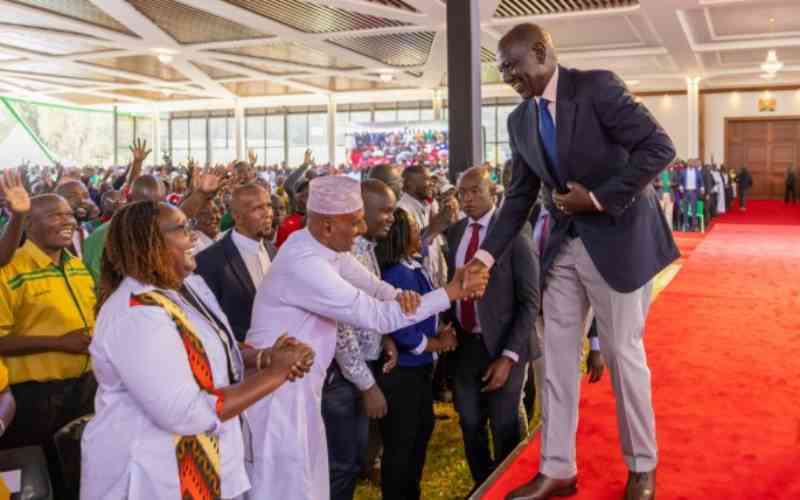
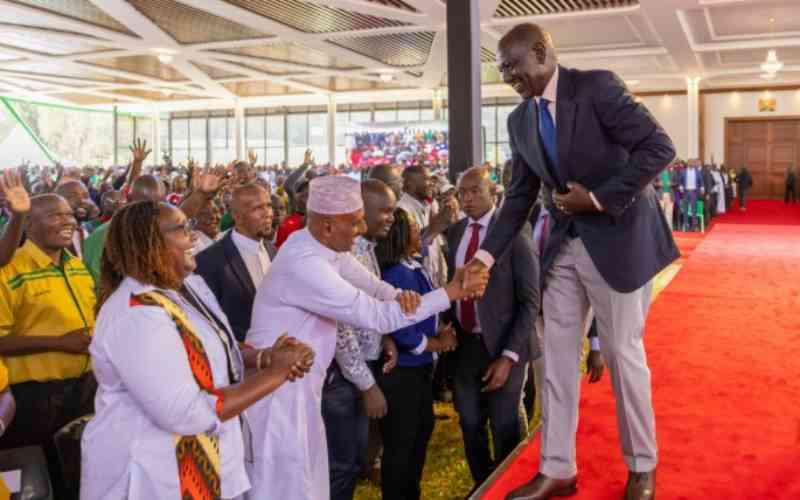
President William Ruto mmeets teachers in StateHouse Nairobi. [File, Standard]
The presidency, which is the seat of executive authority in Kenya, is inherently a public institution. Governed by the State House and Official Residences Act, Kenya’s state houses, from the principal residence in Nairobi to regional lodges spread across the country, exist as official workplaces and symbols of executive continuity.
Legally, no statute explicitly forbids President William Ruto, or any other incumbent, from opening these State houses’ gates to ordinary citizens, community groups, or professional associations that seek an appointment with the head of State. Receiving delegations is a standard exercise of executive discretion, and engaging directly with various interest groups can foster a sense of civic access that previous administrations often reserved for elites and foreign dignitaries.
Yet, hosting citizens to discuss policy is a different ball game altogether from using State House premises to dispense public resources to target groups. While the hostings themselves sit in a legal gray zone, the timing, manner, and financial footprint of these events have increasingly become suspect. At a time when the nation faces formidable economic headwinds, the practice of dishing out millions in facilitation fees, direct pledges, and political handouts transforms a noble public facility into a campaign tool funded at the taxpayers expense.