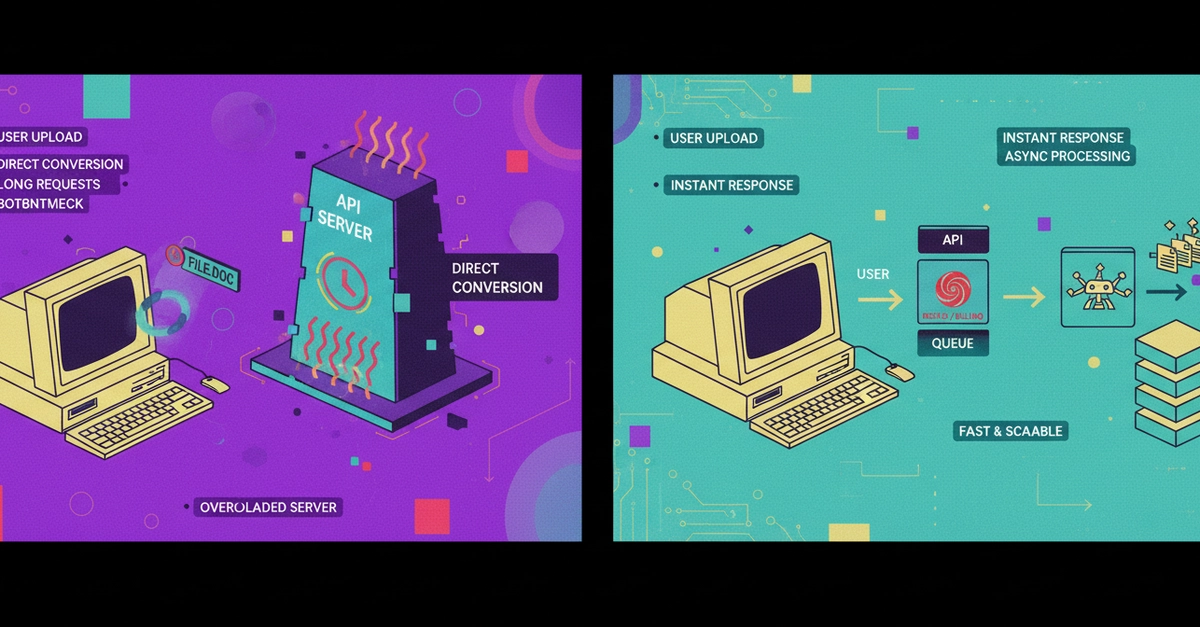
Every Node.js application that sends emails, processes images, generates PDFs, syncs data with third-party APIs, or runs any kind of deferred work eventually needs a job queue. Handling that work inline, inside an HTTP request handler, is a recipe for timeouts, dropped jobs, and unhappy users. That's where a Redis-backed queueing library comes in, and in the Node.js ecosystem two names dominate the conversation: Bull and BullMQ. Choosing between them is one of the most common architecture decisions Node.js teams face. Both are mature and production-proven, but they are not interchangeable, and picking the wrong one for your situation can cost real engineering time down the road.
This post is a practical comparison of how the two libraries are built, where they diverge, and how to decide which one fits a new project versus a codebase already running on the older tool, with real TypeScript code samples along the way.
What Bull and BullMQ Actually Are
Bull is a Node.js library for creating robust, Redis-backed job and message queues. It was one of the first libraries to bring a genuinely production-grade queueing abstraction to Node.js, with job prioritization, delayed jobs, retries, and rate limiting built on Redis's atomic operations and Lua scripting. For years, if a project needed a queue, Bull was simply the default answer.