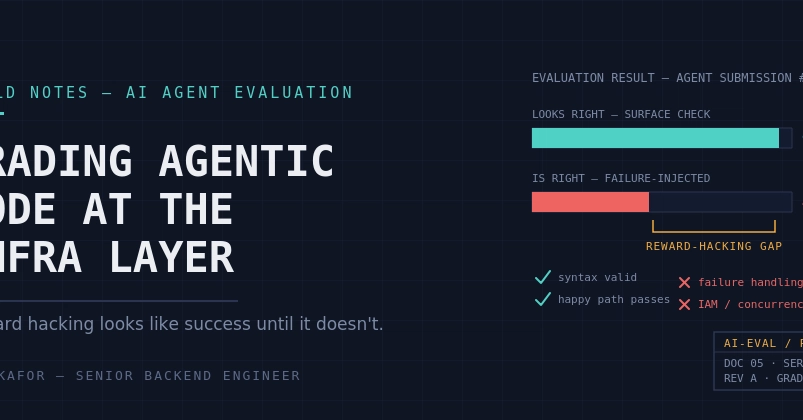
Everyone's talking about agentic AI shipping production code. Nobody's talking about what happens when you actually sit down and grade thousands of lines of it against a rubric, line by line, for months.
I have. And the failure pattern that shows up over and over isn't the one Twitter/X is arguing about.
The job title that didn't exist two years ago
"AI evaluator." "AI trainer." "Expert contributor to frontier model training data." None of these existed as job titles when I started my career. Now they're where a chunk of the most interesting engineering signal in the industry is actually happening — quietly, behind NDAs, far from the demo videos.
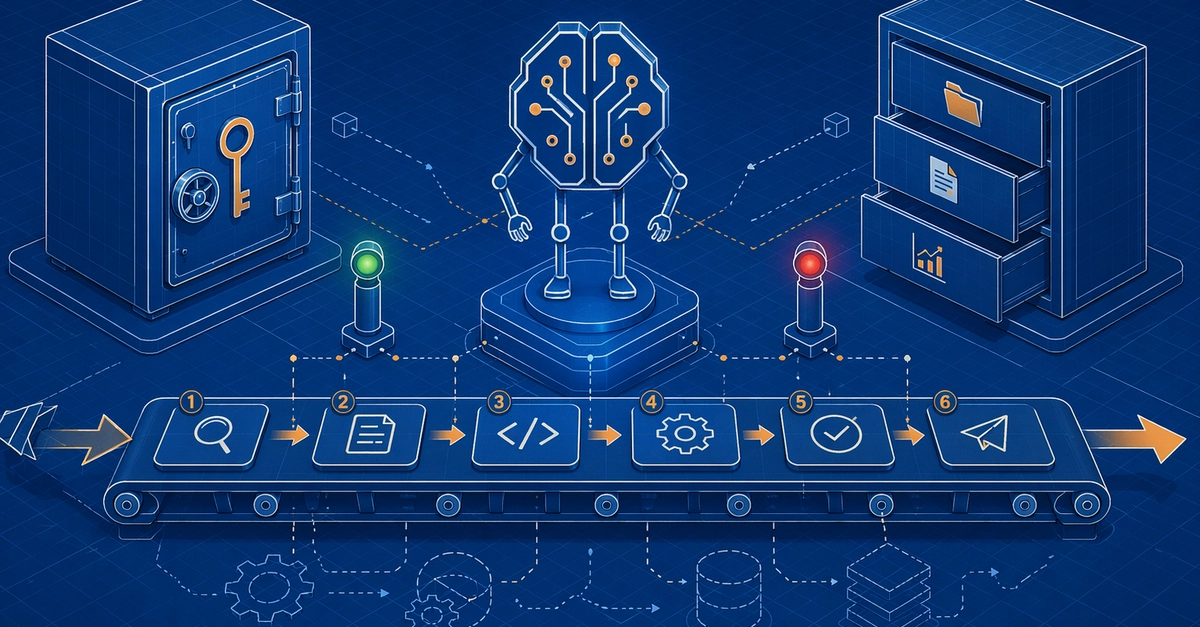
Here's what the job actually is: agentic coding outputs land on your desk, and you grade them against a structured rubric — correctness, instruction adherence, quality, edge-case handling. You design adversarial prompts to find where the model's reasoning breaks. You decide which checks can be programmatic and deterministic, and which genuinely need a human who's shipped production systems to make the call. This is RL environment design and LLMOps in its rawest form, and it's a completely different skill from "prompt engineer" or "ML researcher." It's closer to being a QA lead for a junior engineer who never sleeps, never gets embarrassed, and will confidently ship the wrong answer with perfect syntax.