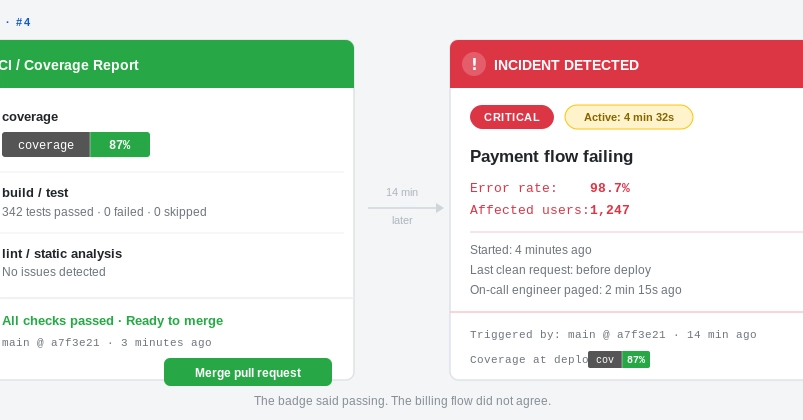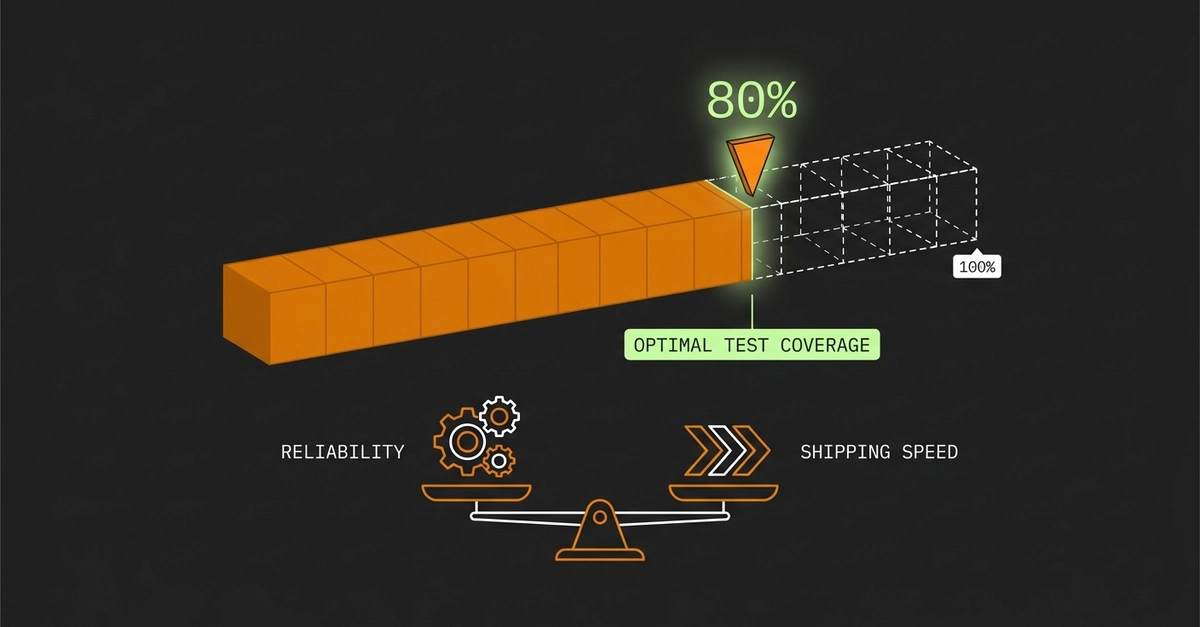
Many developers treat test coverage as a game where the only acceptable high score is 100%. But in the real world of software delivery, chasing absolute perfection often introduces diminishing returns.
While 100% test coverage sounds ideal, achieving it often introduces diminishing returns. For most applications, aiming for 70% to 80% coverage secures the happy paths and critical business logic without draining development time. Reserve 100% coverage strictly for high-stakes, mission-critical systems where software failure is not an option.
Imagine sitting down with a blank piece of paper and being asked to write a short story set in the Game of Thrones universe. Here is the catch: you cannot make a single grammatical error, break character continuity, or mismatch the lore. Not one slip-up.
Writing flawless prose is incredibly hard—yet as software engineers, we are expected to do exactly this with thousands of lines of code every single day. How do we keep our "story" from falling apart when someone else edits a chapter? We write tests. But the real debate isn't whether we should test; it is how much we should test.
Why is 100% test coverage usually a trap?