view more
Our bodies experience allergic reactions when the immune system mistakenly overreacts to harmless substances, known as allergens, such as pollen, dust, or certain foods. While this often causes mild symptoms such as sneezing or a runny nose, it can sometimes trigger a severe, life-threatening reaction called anaphylaxis.
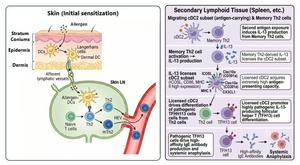
In people with atopic dermatitis, the skin's protective barrier is damaged, allowing allergens to enter the body through the skin. Once the immune system has been sensitized to an allergen, later exposure can trigger allergic reactions throughout the body, a progression known as the "atopic march." This entire process is primarily driven by cutaneous allergen sensitization (CAS). Though therapeutic approaches involving monoclonal antibodies are available, the detailed mechanism behind the trajectory remains elusive.
Now, researchers from Tokyo University of Science (TUS) and Kyoto University in Japan have uncovered a key mechanism explaining how allergic inflammation in the skin can progress to a body-wide allergic response.
The study was made available online on July 09, 2026, and published in Volume 123, Issue 28 of the journal Proceedings of the National Academy of Sciences (PNAS) on July 9, 2026. The research team was led by Professor Emeritus Masato Kubo (at the time of this research, affiliated with the Division of Molecular Pathology, TUS, RIKEN, IMS, and currently affiliated with the Kyoto University Immunomonitoring Center), together with Technical Staff Researcher Yasuyo Harada from the Division of Immunology and Allergy, TUS, and Dr. Takanori Sasaki from Keio University School of Medicine, and Associate Professor Yasutaka Motomura from the Division of Immunology and Allergy, TUS. A review article that provides a deeper discussion of these findings was published shortly afterward in Volume 2, Issue 2, of Barrier Immunity on July 23, 2026.